


Understanding a Roofing Contract: Payments and Obligations

Updated: 18 hours ago
A signed roofing contract generally binds you and the contractor to the agreed work and payment, but its title alone doesn’t determine its legal effect. Understanding a roofing contract before you sign means reading the signature language and every document it incorporates, not just the first page. The written terms matter.
It’s reasonable to want clarity on when payments are due and what work triggers each one, especially when insurance is involved. A contingency clause can affect whether the agreement proceeds if your insurer doesn’t approve the work.
This guide explains how to read down payments, progress payments, and final payment terms; what can make a roofing contract binding; and how insurance contingencies may affect your obligations. It also covers written details that help prevent confusion, including the work scope, materials, schedule, and warranty terms. With these points in view, you can make a more informed decision before signing.
Table of Contents
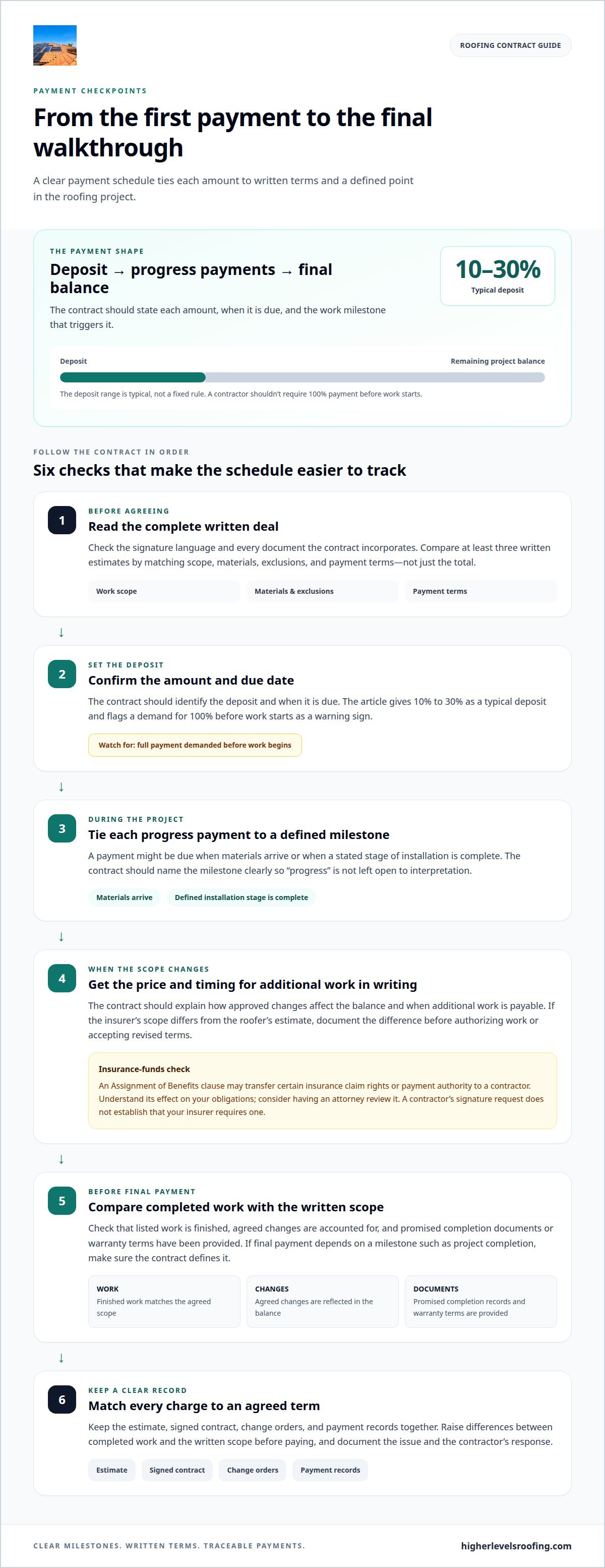
1. Down payment, progress payments, and final payment
For California home-improvement contracts, the down payment generally cannot exceed $1,000 or 10% of the contract price, whichever is less. CSLB notes a narrow exception for contractors with a qualifying blanket performance and payment bond on file. Progress payments must follow the written schedule and cannot exceed the value of completed work or delivered materials.
Read the payment terms alongside the timeline. For example, a progress payment might be due after materials arrive or a defined stage of installation is complete. The contract should identify that milestone clearly rather than leave “progress” open to interpretation. It should also explain how approved changes affect the balance and when payment is due for additional work.
Insurance doesn’t automatically determine who can collect or control claim funds. An Assignment of Benefits clause may transfer certain insurance claim rights or payment authority to a contractor. Have an attorney review that clause before signing, and make sure you understand how it affects your obligations. A contractor’s request for your signature doesn’t establish that your insurer requires one.
To verify a roofer’s license and insurance, look up the license number through the relevant state licensing regulator and confirm insurance details with the insurer. The written contract should identify the contractor’s license number and insurance information.
Before making the final payment, compare the completed work with the agreed scope and payment terms. Check that the listed work is finished, agreed changes are accounted for, and any completion documents or warranty terms promised in the contract have been provided. If final payment depends on a specific milestone, such as project completion, the contract should define it. Raise any difference between the finished work and written scope before paying, and document the issue and the contractor’s response.
A clear schedule helps both parties track what is due and why. Keep the estimate, signed contract, change orders, and payment records together so each charge can be matched to an agreed term.
2. How Binding Are Roofing Contracts?
A roofing agreement’s title alone doesn’t decide its legal effect. Read the signature language and any documents it incorporates. A signed contract generally binds both parties to the agreed work and payment, while a verbal agreement can also be binding if the parties’ agreement can be proven. Both parties should sign and date the written contract.
Compare at least three written estimates by matching scope, materials, exclusions, and payment terms, not just the total. A useful contract identifies the parties, describes the roof work, sets out materials and installation methods, and explains the schedule, permits, and change process. For example, it should clarify whether tear-off and disposal are included.
Define the project in enough detail to prevent a roof-size mismatch. In roofing, one square measures 100 square feet, so the estimate should show how the measured area relates to the work. The written scope should identify materials such as shingles, underlayment, and flashing, plus manufacturer and product line. It should also explain how damaged decking discovered after tear-off will be priced, such as by a per-sheet rate.
For a sale covered by the Federal Trade Commission’s Cooling-Off Rule, cancellation generally remains available until midnight of the third business day. Saturdays count; Sundays and federal holidays don’t. The rule doesn’t cover sales made entirely online or by phone, and some emergency transactions are excepted.
Warning signs include pressure to sign immediately, vague descriptions of work, or a demand for 100% payment before work starts. Don’t assume a contract is free to cancel simply because work hasn’t begun; cancellation terms and applicable rights matter. A sudden burst of reviews after a storm can also warrant careful consideration.
Clear written scope protects both sides when damaged areas or requested changes affect the job. For a roof project, review roofing work details alongside the written agreement.
3. Insurance contingencies and when a contract obligation begins
A roofing contingency contract makes the project dependent on insurance approval. Its written terms should explain what happens if the insurer denies the claim, approves only part of the work, or requires a change order. The contract should explain what happens if insurance approval is delayed or does not arrive before work begins. An expiration date can also let either party withdraw if approval takes too long.
A contractor’s request for your signature doesn’t mean your insurer requires you to sign. Read the contingency language closely: identify what counts as approval, who handles revisions, and whether a disagreement over the quoted fee changes the agreement. If the insurer’s scope differs from the roofer’s estimate, document the difference before authorizing work or accepting revised terms.
Homeowners insurance typically covers sudden damage from covered events, such as a severe storm, hail, or fire. It typically doesn’t cover deterioration caused by age, neglect, or general wear and tear. A full replacement is typically covered only when a covered peril destroyed the roof, so an aging roof alone doesn’t establish coverage.
To prepare a claim, document the damage with clear photographs and notes describing the affected areas and when you noticed them. Keep the estimate, insurer correspondence, and any change orders together. These records help show how the observed damage relates to the proposed work without treating a roofer’s estimate as insurance approval.
For an insurance inspection, coordinate the appointment details with the insurer and roofer. Ask whether the roofer can attend, and make sure the inspector can safely access the damaged areas. The roofer can point out observed conditions and explain the proposed scope; the insurer determines its coverage decision.
Before work begins, compare the approval decision with the contract’s scope, price, and expiration terms. If the insurer approves only part of the repairs, ask for the proposed change to be documented in writing. That keeps your payment obligation tied to agreed work, rather than an assumed claim outcome.
4. Benefits of written contract terms
A written contract gives the homeowner and roofer a shared record of what each party agreed to do. Before signing, compare the work description with the estimate and note any exclusions. For example, if the project covers one roof section, the language should identify that area rather than imply a full-roof replacement. Specific wording helps prevent different interpretations of the same commitment.
Warranty terms deserve clear, separate wording. The contract should state the terms for both materials and workmanship. It can identify the manufacturer’s shingle warranty separately from the roofer’s installation warranty, so you can see which coverage relates to the product and which relates to the installation. Keep the written warranty information with the signed agreement and project documents.
Material descriptions matter, too. A contract that names shingles, underlayment, and flashing gives the parties a more precise reference than a general promise to install a new roof. Manufacturer and product-line details, plus the installation method, can help distinguish the agreed materials from later substitutions. Read those terms against the estimate before committing.
Written terms make project changes easier to track. If hidden decking damage appears after tear-off, the contract can explain how replacement will be priced and approved. A written change order can record the added work, its effect on the schedule, and the revised payment obligation. That creates a clear record instead of relying on a conversation.
Keep the signed agreement, estimate, change orders, and warranty documents together. If a question comes up about the completion timeline or covered work, those records show the agreed language and any later revisions. Clear documentation supports a more orderly discussion and helps both parties follow the same project plan. To discuss a roofing project with terms tailored to its scope, talk through your roofing needs.
Higher Levels Roofing: Replacement and Tile Lift-and-Relay
Higher Levels Roofing focuses on roof replacements, new installations and tile lift-and-relay. The written proposal should connect the agreed scope, materials and payment schedule to your project.
For projects involving asphalt shingles, flat concrete tile, or concrete S tile, the agreed terms can specify the affected areas and included work. This gives you a practical basis for reviewing the proposal and understanding how the planned repair relates to your roof.
Contact Higher Levels Roofing to discuss your roof replacement or tile lift-and-relay project.
Choose a Thoughtful Next Step for Your Roof
Understanding a roofing contract before you sign is part of planning a project that fits your home, not just reviewing paperwork. A useful next step is to connect the roof’s condition and your priorities with a defined scope of work. Localized damage may call for repair, while a larger project can involve choosing materials that suit your home’s appearance and needs.
Higher Levels Roofing offers shingle, tile and low-slope roofing systems for San Diego properties. Compare the scope and written warranty terms before choosing materials or signing a replacement agreement.
When you’re ready to discuss your roof, contact Higher Levels Roofing. Take the next step at a pace that feels right and move forward with a plan for your home.
Frequently Asked Questions
How Binding Are Roofing Contracts?
A roofing contract can bind both parties to its agreed terms, but its title alone doesn’t settle its legal effect. Review the signature language and any attachments incorporated into the agreement. For example, a signed proposal may refer to a separate scope document that also shapes the commitment. Verbal agreements can also be binding, though proving what both parties agreed may be difficult.
Does signing an estimate commit me to the work?
It depends on the estimate’s wording and the documents it incorporates, not simply its title. Understanding a roofing contract before you sign includes checking whether an estimate authorizes work, sets payment obligations, or refers to attached terms. Some estimates are preliminary; others contain acceptance language and project details. If anything is unclear, request a written explanation before signing.
How will you protect my property?
A project plan should explain how the crew will protect landscaping, windows, and covered patios during roofing work. It should also describe debris removal and cleanup, including whether the crew will use a magnet sweep to look for nails. For a San Diego home with planting beds near the eaves, clear protection and cleanup expectations help define the worksite plan.
What roofing contract payment schedule is typical, and what deposits are legal?
For California home-improvement contracts, the down payment generally cannot exceed $1,000 or 10% of the contract price, whichever is less. CSLB notes a narrow exception for contractors with a qualifying blanket performance and payment bond on file. Progress payments must follow the written schedule and cannot exceed the value of completed work or delivered materials. See CSLB's Home Improvement Contracts Consumer Guide.
How should a roofing contract describe materials, underlayment, and installation?
The contract should identify materials precisely enough to distinguish the agreed roof system from a substitute. For example, it can name the manufacturer and product line, list components such as shingles, underlayment, and flashing, and describe the installation method. It should also clarify tear-off and disposal arrangements, so the project description covers preparation and removal as well as the finished roof.
What warranties should a roofing contract include, and what do they cover?
The contract should state warranty terms for both materials and workmanship. A manufacturer’s shingle warranty concerns the product, while a roofer’s installation warranty concerns workmanship. As part of understanding a roofing contract before you sign, read the written terms for covered issues, exclusions, claim steps, and applicable conditions. Keep warranty documents with the signed contract so you can identify relevant terms later.


Comments