


How Often to Get Your Roof Inspected by Age and Exposure

If you have asphalt shingles, an easy routine is to look over your roof from the ground in spring and fall. If a ceiling stain grows after rain, a tile slips or a branch hits the roof, call a roofer when you notice it. A roof’s age is most useful alongside its repair history and the last inspection report.
Inspection schedule at a glance
Find the installation date, the last report and any maintenance instructions for your roof. Mark the next check on your calendar. If you can’t find the records, tell the roofer which sections have leaked or been worked on so they can establish a starting point.
Table of Contents
How Often Should Residential Roofs Be Inspected in Southern California?
GAF’s homeowner guide recommends checking a shingle roof visually twice a year, once in spring or early summer and again in fall. You can do this from the ground. For a professional visit, follow the maintenance instructions for your particular roofing system and any follow-up date in your last report. Contact a roofer sooner if the roof changes.
What warning signs should homeowners watch for?
From the driveway
From a safe spot on the ground, look for a new gap in the shingle courses, a slipped tile, debris collecting where two slopes meet, or a gutter that pulls away from the fascia. Binoculars or your phone’s zoom can help. Take a wide photo showing which side of the house you’re looking at.
Inside the house
If a ceiling mark appears after rain, photograph it from the room and write down the date. Note whether it grew during the next shower and whether it is near a chimney, skylight or exterior wall. A roofer can use those observations to trace the leak even if the water entered farther upslope.
After wind or an impact
If a branch struck the roof or you find pieces of roofing on the ground after wind, tell the roofer where you found them. Photograph the affected side from the yard if it is safe to do so. Leave loose material on the roof for the professional to assess.
An active leak, a spreading ceiling stain or a sagging area needs prompt professional attention. Avoid the affected area and let a qualified professional identify the source. An isolated leak alone does not establish that the whole roof needs replacement.
What to send the roofer before a visit
Send the wide exterior photo, a close photo of the indoor mark and the date you first noticed it. Identify the room and the nearest exterior feature. Include the installation year if known, the previous repair invoice, and dates of recent work such as a solar or skylight installation.
What to ask for in the report
Ask the roofer to mark each finding on a photo, name the affected slope or roof section, and identify what was accessible during the visit. If a tile or membrane hides the suspected problem, ask what can be established visually and what further access would be needed.
Adjusting inspection schedules for roof age, material, and exposure
An older roof with dated repair photos gives an inspector something to compare. If a previous patch at the chimney is dry and a new stain appears across the house, give the roofer both locations. If the same ceiling mark grows during several storms, send its photo history.
For shingles, ask whether missing material or wear is confined to one slope. For tile, ask about the underlayment and the metal flashing at penetrations. For a low-slope roof, note where water lingers after rain if you can see it safely from a window. Your inspector can use the type and extent of the finding to recommend the next check.
When inspection findings point to roof replacement
One displaced tile or a damaged flashing does not automatically call for a new roof. Ask the inspector to document what failed, how far it extends and whether the surrounding roof is still serviceable.
If underlayment has deteriorated across a tile roof, ask whether sound tiles can be reused when the underlayment is replaced. On a shingle roof, compare the condition of all slopes before deciding the scope.
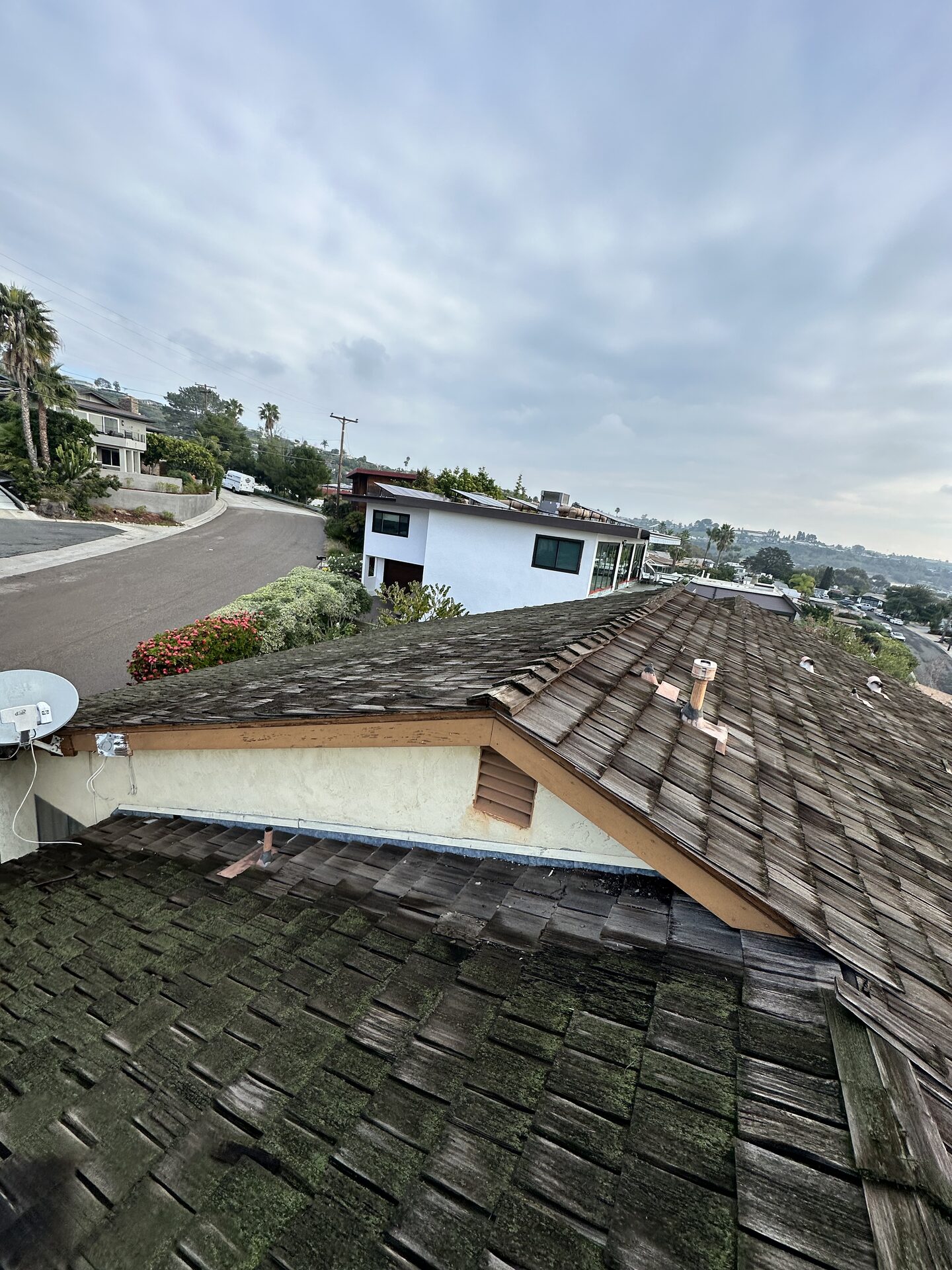
On our Pacific Beach wood-shake replacement, the pre-work photos show weathered shakes around a gable. After tear-off, the crew documented the spaced boards under the shakes and installed a new plywood deck for the shingles. The gallery shows what was visible at each stage. Ask for that same distinction if a bid includes work on concealed decking.
Preparing for a replacement estimate
When the inspection points to replacement, ask for a written estimate that identifies the affected roof areas, the proposed materials, and what happens if damaged decking is found after removal.
Request an on-site roof replacement estimate from Higher Levels Roofing. Bring any inspection photos and prior work records so we can discuss the findings with you.
Frequently Asked Questions
What Maintenance Does a California Roof Actually Need?
Keep the installation record, warranty, inspection photos and repair invoices together. Check the manufacturer’s maintenance instructions for your roof. If a drain or gutter regularly overflows, photograph where it happens and ask the roofer to include that location in the next assessment.
Can a roof look fine but leak?
Yes. A roof can appear intact while concealed flashing, underlayment, or penetrations allow water inside. A ceiling stain may appear some distance from the entry point, so its location doesn’t always reveal the source. If you notice moisture or a musty attic odor in your San Diego home without an obvious opening, arrange an inspection to help identify the problem.
Does Roofing Material Affect Inspection Frequency?
Yes. The maintenance instructions for a shingle roof, a tile roof and a low-slope membrane can differ. For example, a displaced tile after someone worked on the roof warrants a closer look, even if the tile roof was recently inspected.
Is More Than One Inspection Per Year Necessary?
It can be. A new leak, impact damage or displaced roofing warrants professional attention even if the roof was recently checked. For a roof with a maintenance agreement, use the visits and records specified for that system.
What About Older Roofs?
Find the installation date and compare the last two reports. A new leak on a previously dry slope or a repair that is leaking again gives the roofer a specific area to investigate. Ask them to recommend the next visit based on what they find.
How often should homeowners inspect a roof in California?
For asphalt shingles, a ground-level look in spring and fall is a practical routine. Follow the maintenance plan for your roof, keep photographs taken from the same viewpoint and contact a professional if a new stain, gap or displaced tile appears.


Comments