


The Ultimate Guide to Roof Tiles: Materials, Styles, and San Diego Performance

Updated: Jul 28
If you’re living along the San Diego coast, is your roof actually protecting your investment, or is the salt air slowly eating away at your peace of mind? Most local homeowners realize that selecting the right material isn't just about curb appeal; it's about structural integrity and long-term value. You might feel torn between the classic beauty of clay and the rugged versatility of concrete. Perhaps you're worried if your home can even support the weight of traditional roof tiles without expensive reinforcements. These are common anxieties, and we're here to provide the steady, expert hand you need to move forward with confidence.
In this guide, you'll discover the durability, aesthetic options, and climate benefits of various tile systems to help you make an informed choice. We understand that a roof is a lifecycle investment, so we'll break down the specific ROI of tile versus shingles and explain how different styles perform against the unique weather patterns of Carlsbad and La Jolla. From understanding fire zone regulations to identifying the best architectural match for your home, this overview ensures your next roofing decision is both beautiful and built to last.
Table of Contents
Understanding Roof Tiles: Materials, History, and Modern Benefits
A high-quality roof does more than keep the rain out; it defines the character and longevity of your home. Roof tiles are specialized, individual units designed to overlap in a precise sequence, creating a durable shield that sheds water effectively while allowing for natural thermal expansion. Historically, these systems relied on hand-molded terracotta. Today, the industry has evolved. We now utilize engineered concrete and high-fired clay that offer far greater consistency and strength than the materials used a century ago.
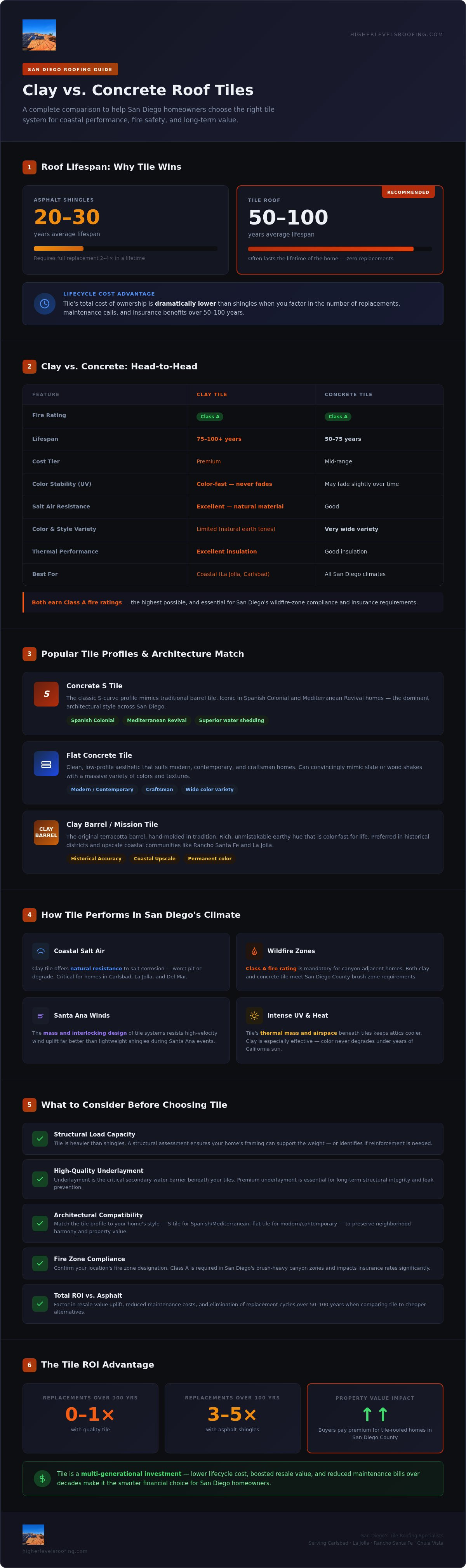
For many Southern California homeowners, tile is considered the gold standard. It provides a level of protection that standard materials simply can't match. While a typical asphalt roof might require replacement every 20 to 30 years, a professionally installed tile system can easily last between 50 and 100 years. This extreme durability makes it a favorite for those who view their home as a multi-generational asset rather than a temporary residence.
Why Tile Dominates San Diego Architecture
Drive through any neighborhood from Rancho Santa Fe to Chula Vista, and you'll see a clear pattern. San Diego’s architectural identity is deeply rooted in Mediterranean and Spanish Colonial Revival styles. These designs prioritize thick stucco walls, arched entryways, and stone accents, all of which require the visual weight of a tile roof to feel complete. The natural earthy tones of clay and the crisp lines of flat concrete tiles provide a balanced aesthetic that lighter materials often lack.
While some homeowners prefer the lower initial price point and the benefits of asphalt shingles, tile remains the preferred choice for those wanting to maintain historical accuracy and neighborhood harmony. It’s a design language that speaks to the region’s history while offering the modern performance necessary for our coastal environment.
The Core Benefits: Longevity and ROI
Investing in a tile roof is a strategic financial move. Because these systems often last over half a century, the need for a full tear-off and replacement is virtually eliminated for the average homeowner. This permanence significantly boosts property resale value throughout San Diego County. Buyers recognize the security of a Class A fire-rated roof that won't degrade under the intense California sun. It is a one-time investment that pays dividends through reduced maintenance and increased equity.
When evaluating your options, it helps to look at the lifecycle cost. Lifecycle cost is the total expense of owning a roof over its entire usable life, including the initial installation, routine maintenance, and the total number of times the system must be replaced. With roof tiles, that cost is remarkably low because the frequency of replacement is so rare. You're paying for peace of mind that lasts a lifetime.
Clay vs. Concrete Roof Tiles: Comparing Durability, Weight, and Cost
Deciding between clay and concrete is the most significant choice you'll make for your new system. Both materials are staples of the Southern California landscape. They share one critical feature: a Class A fire rating. In San Diego County, where wildfire risk is a constant reality, this rating isn't just a benefit; it's a necessity for your safety and insurance compliance. While both materials offer exceptional protection, they differ in how they age and how they impact your budget.
Clay Tile Roofing: The Timeless Terracotta Choice
Clay Tile Roofing represents the premium tier of the market. These tiles are created from natural earth and kiln-fired at extreme temperatures. This process makes them "color-fast," meaning the rich terracotta hue won't fade under decades of intense UV exposure. For homes in coastal areas like La Jolla, clay is often the superior choice. Its natural resistance to salt air corrosion ensures the material won't pit or degrade over time. Additionally, clay has excellent thermal properties, helping to keep your attic cooler during those inland heatwaves.
Concrete Tile Roofing: Versatility and Strength
Concrete Tile Roofing offers a versatile and budget-friendly alternative to traditional clay. We specialize in both Flat Concrete Tile and Concrete S Tile profiles to match any architectural vision. Unlike clay, concrete tiles are made from a mixture of Portland cement, sand, and water. This allows for a massive variety of colors and textures, even mimicking the look of wood shakes or slate. While they may require a color seal every few decades to maintain their peak vibrancy, they provide the same high-level structural protection as clay at a more accessible price point.
Structural Requirements and Weight Considerations
A common concern we hear from homeowners involves the weight of these materials. It’s true that roof tiles are significantly heavier than asphalt shingles. If you’re converting your home from a lighter material, a structural engineer may need to verify that your rafters can support the load. We never guess on safety. Higher Levels Roofing performs a meticulous inspection of your home’s framing before any installation begins to ensure your property can handle the weight safely and effectively.
If you're unsure which material fits your budget and home style, our team can provide a professional assessment to guide your decision and ensure a perfect match for your San Diego home.
Popular Roof Tile Profiles and Architectural Styles
Selecting the right look for your home goes beyond picking a color. In the roofing industry, we use the term "profile" to describe the specific shape and water-shedding design of the individual unit. The profile you choose dictates how your home handles heavy seasonal rains and how effectively air circulates beneath the surface. For San Diego homeowners, matching the profile to the architecture isn't just about tradition; it's about optimizing performance for our specific coastal and inland microclimates.
Customizing your home’s appearance often involves color blending. By mixing several shades of roof tiles during installation, we can create a variegated look that adds depth and character. This technique prevents the roof from looking like a single, flat block of color and instead mimics the natural weathering seen on historic European villas. Beyond aesthetics, the right profile helps prevent debris buildup in valleys and improves the overall thermal efficiency of your attic space.
Spanish S-Tile (High Profile)
The "S" shape is perhaps the most recognizable roofing silhouette in Southern California. Our Concrete S Tile Roofing offers a high-profile design that creates beautiful shadow lines across the roof surface. This style is a staple for Mediterranean-style homes in communities like Carlsbad and San Marcos. One of its primary functional benefits is the high arch, which allows for exceptional airflow. This natural ventilation helps dissipate heat, keeping your home more comfortable during the peak of summer.
Flat Tile Roofing (Low Profile)
If your home features modern, ranch, or craftsman architecture, Flat Concrete Tile is often the most appropriate choice. This low-profile design offers clean, minimalist lines that complement contemporary building materials. One of the greatest strengths of flat tiles is their versatility. They can be manufactured with textures that convincingly mimic the appearance of expensive slate or traditional wood shakes. You get the high-end look of premium materials with the superior fire resistance and durability of concrete.
Mission and Barrel Tiles
For those seeking the most authentic historic aesthetic, Mission-style Clay Tile Roofing is the standard. This is a traditional two-piece system, often referred to as "cap and pan." During installation, one curved tile (the pan) is laid down, and another (the cap) is placed over the joint. This method creates the deep, dramatic ridges seen on Spanish Colonial estates. It provides a timeless, handcrafted appearance that modern single-piece tiles struggle to replicate, making it ideal for high-end residential projects where architectural integrity is the top priority.
Performance in San Diegos Coastal and Inland Climates
San Diego residents live in a land of distinct microclimates. While a home in La Jolla faces constant salt spray and high humidity, a property in Escondido deals with blistering summer heat and the seasonal threat of Santa Ana winds. Selecting roof tiles isn't just an aesthetic upgrade; it’s a strategic defense against these local environmental pressures. Each material performs differently depending on its proximity to the ocean or the desert, making local expertise essential for a long-lasting installation.
Salt Air Resistance in Coastal San Diego
Coastal environments are notoriously harsh on building materials. Metal roofing components and even certain asphalt shingles can quickly corrode or degrade when exposed to the moisture-laden air of Encinitas or Del Mar. Clay is particularly resilient in these zones because it is naturally inert and completely unaffected by salt spray. To ensure your system remains secure for decades, we prioritize the use of high-quality, non-corrosive fasteners that won't rust or fail even after a lifetime of ocean breeze exposure.
Fire Safety and Wildfire Protection
Safety is a primary concern for homes located near brush-heavy canyons or inland valleys. Both clay and concrete roof tiles carry a Class A fire rating, which is the highest level of protection available in the industry. Beyond being non-combustible, the unique overlapping design of these tiles creates a physical barrier that protects your home's structure. This design prevents wind-blown embers from slipping beneath the surface and igniting the roof deck. Ensuring your home meets San Diego’s strict fire zone building codes is a standard part of our meticulous planning process.
Thermal Mass and Energy Efficiency
Inland residents understand how quickly air conditioning costs can spiral during a heatwave. Modern tile systems utilize the concept of "thermal mass" to naturally regulate your home's temperature. The tiles absorb solar heat during the day and release it slowly at night, preventing the attic from reaching extreme temperatures. This efficiency is further enhanced by Above-Sheathing Ventilation (ASV). This method creates a small air gap between the tile and the roof deck, allowing hot air to circulate and escape rather than soaking into your living space. This results in significant long-term energy savings for families in the hotter parts of the county.
Wind resistance is equally vital during Santa Ana wind events. Without meticulous, professional installation, even the best materials can be compromised by high-velocity gusts. If you want to ensure your home is fully protected against the next local weather event, schedule an inspection with our local experts to verify your roof's structural integrity.
Selecting and Installing Your Tile Roof with Higher Levels Roofing
Choosing the right material is only half the battle. A successful project requires a meticulous installation process that respects both the technical requirements of the material and the structural integrity of your home. While roof tiles are the most visible part of your defense, we focus heavily on what lies beneath. The underlayment is the true waterproof barrier of a tile system. We use high-performance materials designed to last as long as the tiles themselves, ensuring your home remains secure through every Santa Ana wind event and winter storm.
Our approach is built on professional assurance and neighborly warmth. We understand that a new roof is a significant investment, often a once-in-a-lifetime improvement. We treat every project with the craftsmanship it deserves, aiming to provide a result that enhances your property's value and your family's safety. You aren't just getting a contractor; you're gaining a local partner dedicated to the long-term health of your home.
The Inspection and Estimate Process
Carlos and our team start every project with a detailed, hands-on inspection. We don't believe in guesswork. We carefully evaluate your home’s structural readiness to ensure it can safely support the weight of clay or concrete. This includes checking for existing deck damage, assessing rafter strength, and identifying potential problem areas around chimneys and valleys. Our estimates are transparent and straightforward. We provide clear, uncomplicated communication so you understand every step of the process before we ever lift a single tile.
Choosing the Right Material for Your Neighborhood
San Diego’s neighborhoods have distinct personalities. The architectural trends in Carlsbad often differ from those in San Marcos or Rancho Bernardo. We help you navigate these styles to find a look that balances aesthetic pride with your practical budget. Whether you're drawn to the classic beauty of roof tiles made from clay or the clean lines of flat concrete, we provide the expert guidance necessary to make an informed choice. We invite you to reach out for a personalized consultation where we can discuss your vision and provide a steady, expert hand to guide your home improvement journey.
Secure Your San Diego Home for Decades
Choosing the right material for your specific microclimate and ensuring a structural match is the foundation of a successful project. Whether you opt for the premium salt-air resistance of clay or the versatile strength of concrete, modern roof tiles provide unmatched fire safety and energy efficiency. It’s an investment that pays dividends through increased property value and the peace of mind that comes with a one-time, lifetime improvement. Quality underlayment and meticulous craftsmanship ensure your defense stands strong against Santa Ana winds and coastal humidity alike.
As a locally owned and operated business, we take immense pride in every roof we install across San Diego County. We are a licensed and insured San Diego contractor, specializing in both clay and concrete tile systems. Carlos and the team are ready to provide the steady, expert hand you need to move forward with confidence. Get a Professional Tile Roof Estimate from Higher Levels Roofing and start your journey toward a more secure, beautiful home today. You deserve a roof that is built to last a lifetime.
Frequently Asked Questions
How long do roof tiles typically last in San Diego?
Roof tiles typically last between 50 and 100 years when installed by a professional. In San Diego’s mild climate, these materials don't suffer from the harsh freeze-thaw cycles found in other regions, which helps extend their natural lifespan. While the tiles themselves are incredibly durable, the underlayment beneath them usually needs replacement every 25 to 30 years to maintain a watertight seal. This longevity makes them a one-time investment for most homeowners.
Are clay tiles better than concrete tiles for coastal homes?
Clay tiles are often the superior choice for homes in coastal communities like La Jolla or Del Mar. Natural clay is inert and completely resistant to the corrosive effects of salt air, whereas concrete can sometimes experience surface pitting over several decades. Clay also retains its vibrant color indefinitely despite intense UV exposure. While concrete is a durable and budget-friendly alternative, clay provides the highest level of resilience against the unique challenges of a seaside environment.
Can my house handle the weight of a new tile roof?
Most homes can handle the weight, but a professional inspection is required if you're switching from a lighter material like asphalt. Standard tile systems weigh significantly more than shingles, so your home's framing must be verified for structural integrity. We often recommend a structural engineer's assessment during the planning phase. If your current structure needs support, reinforcements can be added to ensure your property remains safe and secure for the long term.
How much more does a tile roof cost compared to asphalt shingles?
A tile roof requires a higher initial investment than asphalt shingles due to the premium materials and specialized labor involved. However, the lifecycle cost is often much lower. Since you won't need to replace the entire system every 20 years, you save on long-term replacement and maintenance expenses. Many San Diego homeowners find that the increase in property resale value and energy savings quickly offsets the higher upfront price point.
Do roof tiles require a lot of maintenance?
Roof tiles are remarkably low-maintenance compared to other systems. Your primary focus should be keeping the valleys and gutters clear of debris to prevent water backup. We recommend a professional inspection every few years to check for cracked units or slipped tiles. Addressing these small issues early prevents moisture from reaching the underlayment.
Can I walk on my tile roof to clean it?
You should avoid walking on your tile roof whenever possible. Individual tiles are brittle and can easily crack under the weight of an inexperienced walker, leading to leaks that are difficult to spot. Walking on these surfaces is also a significant safety risk due to their steep pitch and often slippery texture. If you need to clean debris or inspect a high point, it's always safer to hire a professional with the proper equipment.
What is the best roof tile color for energy efficiency?
Lighter shades and traditional terracotta are the most energy-efficient options for Southern California homes. These colors reflect a higher percentage of solar radiation, which keeps your attic cooler and reduces the load on your air conditioning. Modern manufacturers also offer "cool roof" tiles with reflective pigments regardless of the specific color. Choosing a reflective profile helps inland residents manage the intense summer heat while lowering their monthly utility bills significantly.
Is a tile roof fireproof?
Tile is one of the most fire-resistant roofing materials available today. Both clay and concrete are non-combustible and carry a Class A fire rating, which is the highest standard for protection. The way these tiles overlap also creates a physical barrier that prevents flying embers from igniting the roof deck. This level of security is a vital feature for San Diego homes located near canyons or in designated high-fire-hazard zones.


Comments