


The Essential Roof Inspection Checklist for San Diego Homeowners (2026)

In San Diego, the sun is a more aggressive roof-killer than the rain. While many people wait for the first winter storm to worry about their overhead protection, the real damage often happens during our endless months of intense UV exposure and corrosive coastal salt air. By the time you notice a brown spot on your ceiling, you might already be looking at a repair that costs thousands. Utilizing a proactive roof inspection checklist for homeowners San Diego is the smartest way to stay ahead of the curve. It allows you to spot the subtle warning signs of material fatigue before they turn into a full-scale structural crisis.
You likely want to keep your property in peak condition without the stress of unexpected failures. It's common to feel a bit confused by the "rainy season" prep or the updated 2026 California Title 24 requirements. This guide offers a clear, professional roadmap to help you evaluate your roof's health with total confidence. We'll show you exactly which red flags to look for on your shingles or tiles, explain how San Diego's microclimates accelerate wear, and help you decide when an expert's perspective is necessary. Protecting your home starts with knowing what to look for today so you don't have to worry about tomorrow.
Table of Contents
Why San Diego Roofs Require a Specialized Inspection Checklist
San Diego weather feels perfect to us, but it's relentless on your home's exterior. While a standard home inspection provides a broad overview of a property, our local microclimates demand a much more targeted approach. Between the scorching inland heat and the damp coastal fog, your roof is in a constant state of thermal flux. Understanding these regional stressors is the first step in maintaining a secure, dry home.
The Impact of Intense UV Exposure
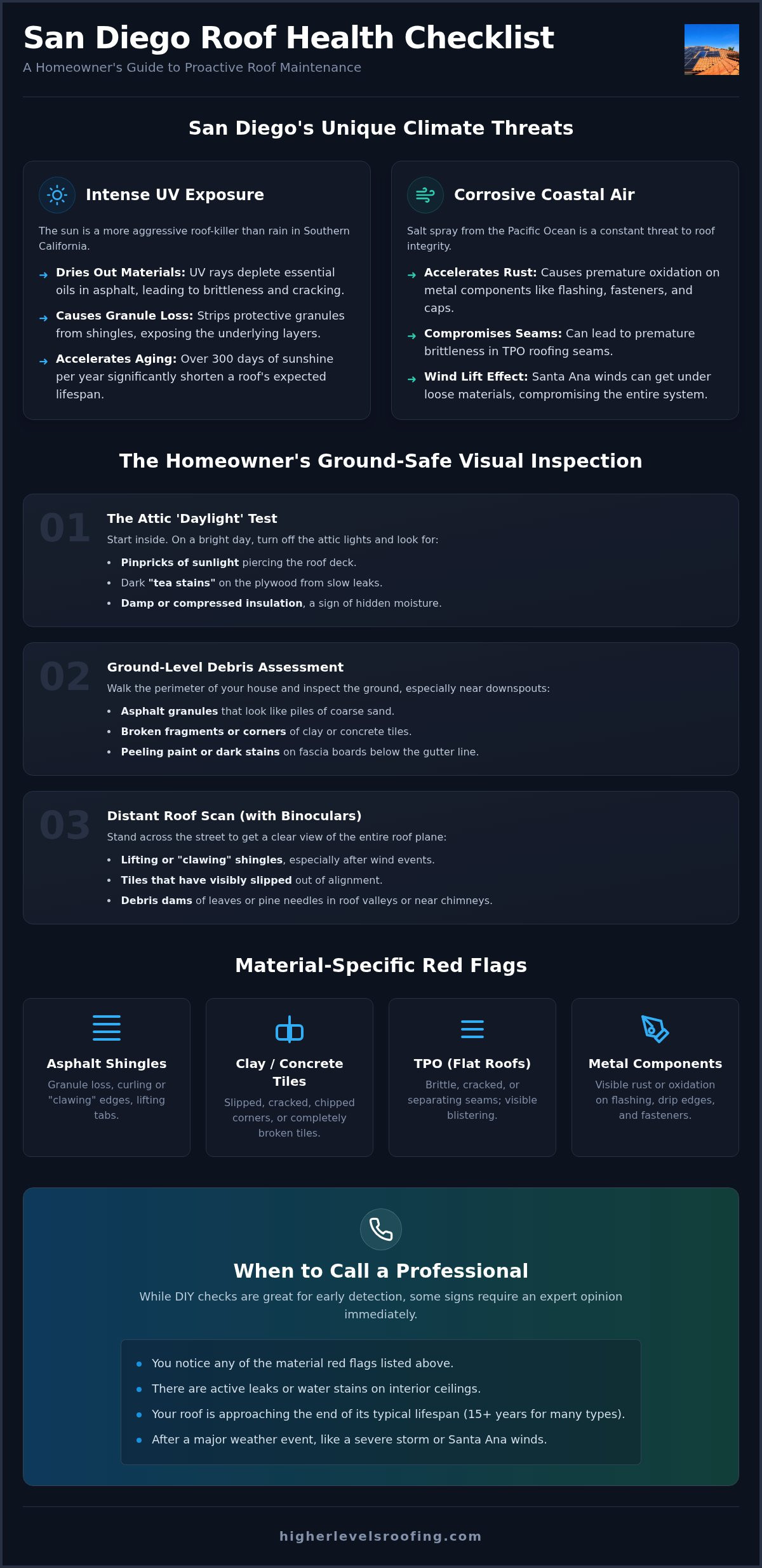
Southern California sees over 300 days of sunshine annually. This constant UV bombardment acts as a silent killer for asphalt shingle roofing. The sun's rays dry out the essential oils in asphalt binders, which eventually leads to significant granule loss. These granules aren't just for aesthetics; they protect the underlying bitumen from melting and cracking. Under the California Title 24 standards effective January 1, 2026, many new installations must utilize "Cool Roof" materials to reflect this heat. If your roof was installed before these requirements, it's likely absorbing more heat than it should, causing the joints to expand and contract until they eventually fail.
Coastal Salt Air and Hardware Integrity
If you live in La Jolla, Carlsbad, or Oceanside, salt air is your roof's greatest enemy. Salt spray accelerates oxidation on metal components like chimney caps, valley flashing, and drip edges. We frequently see standard galvanized fasteners fail prematurely within five miles of the Pacific. For homes with TPO roofing, salt can lead to premature brittleness at the seams. A specialized roof inspection checklist for homeowners San Diego must prioritize these metal components. Rust on a single flashing piece can allow water to bypass your shingles and rot the wooden deck underneath long before you see a leak in the living room.
Santa Ana wind events add another layer of stress by creating a "lift effect." High-pressure gusts can get underneath loose shingles or unseated clay tiles, compromising the entire system's integrity. Most homeowners only worry about their roof during the 90-day rainy window from December to February. However, those winter leaks are usually just revealing nine months of accumulated sun and wind damage. Catching these issues during a calm autumn afternoon is the difference between a minor repair and a total structural failure. A proactive approach ensures your home remains a sanctuary, regardless of what the Santa Anas bring our way.
The Homeowner’s 5-Step Visual Inspection (Safety-First)
Safety is our absolute priority during any home maintenance task. You don't need to climb a shaky ladder to perform an effective preliminary check of your home's exterior. By staying on the ground or inside your house, you can identify the majority of major issues without putting yourself at risk. This roof inspection checklist for homeowners San Diego focuses on visual cues that indicate your system's health before a professional needs to step onto the shingles.
Step 1: The Attic 'Daylight' Test
The best place to start is actually inside your home. Head into your attic during a bright San Diego afternoon with a flashlight, but keep the lights off initially. Look up toward the roof deck. If you see pinpricks of sunlight peeking through the wood, you have holes that will eventually allow water to enter. Beyond light, look for dark "tea stains" on the plywood or sagging sections of the roof deck. Check your insulation; if it looks compressed or feels damp to the touch, you likely have a slow, hidden leak that hasn't reached your interior ceilings yet.
Step 2: Ground-Level Debris Assessment
Walk the entire perimeter of your house and pay close attention to the ground. Look specifically at the ends of your downspouts. If you see a "pile of sand," those are asphalt granules. Excessive granule loss means your shingles are losing their essential UV protection. For homes with concrete or clay tiles, look for broken fragments or "corners" of tiles in the grass or flower beds. This often happens after high-wind events. Check your fascia boards for peeling paint or dark discoloration, which suggests water is overflowing from the gutters and rotting the wood from the inside out.
Once you've checked the ground, grab a pair of binoculars and stand across the street to get a better angle. Focus on the ridge caps at the very top and the valleys where two roof planes meet. Look for shingles that are lifting or tiles that have slipped out of place. This "lift effect" is common after intense Santa Ana wind events. Scan your roofline for debris dams; if you can see leaves or pine needles from the ground, they are likely trapping moisture against your eaves, leading to eave rot.
Finally, document everything you find with your smartphone. Take clear, high-resolution photos of any suspicious areas. These images are invaluable when requesting professional roof repair services or discussing potential issues with your insurance provider. Having a visual record allows for a much more accurate initial consultation and helps track the progression of wear over time. This proactive documentation ensures you're never caught off guard by a sudden failure.
Material-Specific Red Flags: Shingles, Tiles, and TPO
Every roofing material reacts differently to the unique environmental stressors of Southern California. While a broad types of roofing materials guide provides a solid foundation, you need to know the specific failure points for the system currently over your head. Your roof inspection checklist for homeowners San Diego must be tailored to catch material-specific degradation before the next winter storm arrives.
Asphalt Shingle Degradation Signs
Asphalt shingles are the most common choice for local homes, but they are highly susceptible to our intense UV rays. Look closely for "cupping," where the edges of the shingles turn upward, or "clawing," where the edges stay flat but the middle starts to bubble. Both are signs that the asphalt binders have dried out and the material is losing its structural integrity. This often happens first on south-facing roof planes that receive the most direct sunlight. If you notice bald spots where the protective granules have washed away, the shingle is no longer waterproof and requires immediate attention to protect your warranty.
Tile Roofing Vulnerabilities
Many San Diego residences utilize clay tile roofing or concrete alternatives for their longevity and aesthetic appeal. However, these systems have a hidden vulnerability: the underlayment. While the tiles themselves may last 50 years, the waterproof membrane underneath typically lasts about half that time. Look for "slipped" tiles that have moved out of alignment. Even a single slipped tile exposes the sensitive underlayment to sun damage and rapid rot. You should also check the mortar beds at the ridge caps and hips. If the mortar is cracked or crumbling, it can no longer effectively block wind-driven rain or pests from entering your attic.
For flat or low-slope areas featuring TPO or torch-down materials, the primary red flag is "ponding" water. If you see standing water more than 48 hours after a rain, your roof isn't draining correctly. Check the seams for any signs of lifting or separation, as these are the most common entry points for moisture. Regardless of your material, remember that roughly 90% of San Diego leaks start at penetrations like chimneys, skylights, or vent pipes. Inspect the flashing at these junctions for rust or gaps in the sealant. Catching these small issues early is the most effective way to extend the life of your entire roofing system.
When to Call a Professional San Diego Roofing Contractor
While a DIY roof inspection checklist for homeowners San Diego helps you monitor basic health, some situations demand an expert eye. If you spot active leaks, sagging rooflines, or widespread shingle damage, the time for observation has passed. These are non-negotiable signals that your home's structural integrity is at risk. We generally recommend the 10-year rule: once your roof passes a decade of service, it should be professionally evaluated every two years. This schedule catches the slow degradation caused by San Diego's UV intensity before it necessitates a full, costly replacement.
The Professional Advantage: Tools and Expertise
Expert contractors bring more than just ladders to your property. We utilize advanced tools like infrared cameras to detect moisture trapped deep under TPO membranes or tile underlayment. These thermal signatures reveal hidden leaks that the naked eye simply cannot see. Beyond the surface, a professional assesses the structural health of your rafters and roof deck. If you have a steep-slope home in North County or a multi-story coastal residence, hiring a roofing contractor San Diego County ensures the job is done safely and thoroughly without risking a fall.
Preparing for the Rainy Season
Timing is everything in Southern California. The ideal window to schedule a professional consultation is between September and November. Getting ahead of the December to February rainy season prevents the stress of emergency tarping services when a storm finally hits. Understanding the difference between a repair quote and a formal inspection report is also vital. A quote focuses on fixing a specific problem, while a comprehensive report provides a holistic view of your system's remaining lifespan. This clarity allows you to budget for future needs rather than reacting to a crisis.
Major weather events like Santa Anas or heavy winter rains often require a post-storm protocol. Even if you don't see water inside, high-velocity winds can unseat tiles or lift shingle edges. If you are in the process of selling your home, keep in mind that many lenders require a formal Roof Certification rather than a standard inspection. This document guarantees the roof's condition for a specific period, providing peace of mind for both the buyer and the insurance carrier. If you suspect your roof has reached its limit, reach out for a professional roofing consultation to secure your home’s future.
Maximizing Your Roof’s Lifespan in the San Diego Area
Establishing a bi-annual maintenance schedule is the single most effective way to protect your home investment. By performing a check in the Spring and again in the Fall, you prepare your property for the shift between intense summer heat and winter rains. A consistent roof inspection checklist for homeowners San Diego ensures that minor vulnerabilities, like a single cracked tile or a loose shingle, don't escalate into structural failures. Consistency is the key to longevity.
In Southern California, the return on investment for proactive repairs is substantial compared to a full roof replacement San Diego. Catching a small leak early might cost a few hundred dollars, whereas a reactive replacement after structural rot sets in can easily reach tens of thousands. Beyond the roof surface, tree management plays a vital role. Overhanging branches can scrape away protective granules on asphalt shingles or provide easy access for pests. Keeping a minimum five-foot clearance between your trees and your roofline prevents physical damage and reduces debris buildup.
Low-Cost Maintenance Wins
You can significantly extend your roof's life with a few simple, low-cost actions. Start by clearing debris from valleys and cricket flashings, as these areas are prone to "damming" that forces water under your roofing material. Ensure your attic ventilation is not blocked by insulation. Proper airflow prevents heat from building up and "baking" your shingles from the inside out. Finally, inspect your pipe boots. These rubber seals around plumbing vents often fail due to UV exposure long before the actual roofing material does. Replacing a failed boot is a quick fix that prevents a major interior ceiling stain.
The Higher Levels Difference
Choosing Higher Levels Roofing means opting for a meticulous, local assessment rather than a high-pressure sales pitch. Carlos and his team bring a deep understanding of San Diego's diverse residential materials, from historic clay tiles to modern TPO membranes. We view our inspections as neighborly consultations designed to provide professional assurance and long-term security. Our transparent reporting empowers you with the facts, allowing you to make informed decisions about your home's protection. When you need a steady, expert hand to evaluate your property, we are here to provide a thorough and respectful service that prioritizes your safety and aesthetic pride.
Securing Your Home Against the San Diego Elements
Your roof is your home's most important defense against the intense Southern California sun and corrosive coastal salt air. By following this roof inspection checklist for homeowners San Diego, you've taken the essential first step toward preventing costly structural damage. Remember that identifying minor issues like slipped tiles or brittle shingle edges today is far more manageable than dealing with a major failure during the next winter storm. Proactive care is the only way to ensure your property remains a safe, dry sanctuary for years to come.
While a visual check provides a great starting point, a professional's perspective offers the ultimate peace of mind. As a licensed and insured San Diego specialist, Higher Levels Roofing brings meticulous local craftsmanship to every assessment. We have extensive expertise in asphalt, tile, and TPO systems, ensuring your specific roof type gets the precise attention it deserves. Don't wait for a leak to tell you there's a problem. Schedule your professional San Diego roof inspection with Higher Levels Roofing today. We are here to help you protect your property with the confidence and care you deserve.
Frequently Asked Questions
How often should I inspect my roof in San Diego?
You should inspect your roof at least twice a year, ideally in the Spring and Fall. This schedule allows you to identify issues before the winter rains arrive and assess any damage caused by intense summer heat. Following a consistent roof inspection checklist for homeowners San Diego is particularly important for coastal properties. Regular checks help you catch minor problems like unseated tiles before they require a full structural repair.
Can I do my own roof inspection, or do I need a pro?
You can certainly perform a preliminary visual check from the ground or your attic. Looking for daylight in the attic or debris in the yard is a safe way to monitor your home's health. However, you should call a professional for any high-slope areas or if your roof is more than 10 years old. An expert has the specialized tools and safety equipment needed to conduct a thorough, risk-free evaluation.
What are the first signs of a roof leak inside the house?
The first signs of a leak often appear as faint, tea-colored stains on your ceiling or walls. You might also notice a musty odor in the attic, which suggests mold growth from trapped moisture. Check your insulation for any signs of compression or dampness. If you see peeling paint on your fascia boards or water marks on the rafters, moisture is likely bypassing your shingles and entering the structure.
How does the San Diego marine layer affect my roof's lifespan?
The San Diego marine layer introduces constant moisture and salt air, which accelerates the oxidation of metal components. Chimney caps, valley flashing, and fasteners often rust faster in coastal areas like La Jolla and Carlsbad. This corrosive environment can also make TPO seams more brittle over time. Regular inspections help ensure these critical metal and membrane junctions remain watertight despite the heavy salt exposure and damp morning fog.
What should a professional roof inspection report include?
A professional report should provide a comprehensive overview of your roof’s current condition. It typically includes high-resolution photos of any damage, an assessment of the flashing and penetrations, and a check of the structural integrity of the roof deck. The report should also estimate the remaining lifespan of your materials. This documentation is essential for making informed maintenance decisions or providing proof of condition to your insurance carrier.
Is granule loss normal for asphalt shingles in Southern California?
Minor granule loss is a normal part of the aging process for asphalt shingles under the intense Southern California sun. However, if you find significant "piles of sand" at the base of your downspouts, your shingles are likely nearing the end of their functional life. These granules protect the underlying asphalt from UV degradation. Once they're gone, the shingles will quickly become brittle, crack, and lose their ability to shed water.
How much does a typical roof repair cost in San Diego?
The cost of a roof repair in San Diego varies significantly based on the material type and the extent of the damage. Factors such as the height of your home, the pitch of the roof, and the specific components needing replacement all influence the final investment. Small repairs like replacing a pipe boot are relatively affordable, while structural fixes cost more. Obtaining a professional consultation is the best way to get an accurate, transparent quote.
What is a roof certification and do I need one for my home insurance?
A roof certification is a formal document that guarantees the roof's condition for a specific period, usually two to three years. Many insurance carriers in fire-hazard zones or coastal areas now require this certification before renewing a policy. It's also a common requirement during the escrow process in San Diego real estate transactions. This certification provides professional assurance that the roof is currently watertight and has been properly maintained.


Comments