


Peace of mind after roof replacement starts with home safety and installation checks

A new roof can offer peace of mind after roof replacement by giving your home a sound barrier against rain, wind, and other elements. Most new roofs provide 20 to 30 years of protection, and sometimes longer, but the result depends on the roof’s condition and the quality of the installation. The final walkthrough matters: look over the finished work and make sure flashing and trim are sealed and secure.
It’s natural to feel relieved when the work is done, while still wondering whether replacement was the right decision or if anything was missed. This guide weighs the benefits and drawbacks, explains how a new roof can support home safety, and walks through practical installation checks before you sign off. You’ll also learn when a professional inspection can help uncover damage that isn’t obvious at a glance. A careful review can turn a major home project into a more confident next step.
Table of Contents
1. Home safety and weather protection
A roof is your home's first defense against weather. After replacement, a complete roofing system can help protect your home from rain, wind, and moisture for many years. That protection depends on more than the visible surface: flashing, seals, and layers beneath shingles or tiles all contribute. Damage below the surface may escape notice during a quick look from the ground.
Severe weather can reveal weak points. Heavy rain may expose loose or missing shingles, compromised flashing, or failed seals around vents and chimneys. Strong winds can lift shingles, open gaps, or scatter debris across the roof. After intense weather, arrange a professional inspection because hidden damage may not be visible from the ground. Prompt repairs can address vulnerable areas before water reaches interior materials.
Roof lifespan varies with material and weather conditions. Most new roofs provide 20 to 30 years of protection, and sometimes longer. Mid-budget asphalt shingles last 15 to 20 years on average, while shingle manufacturers say their shingles should last 20-39 years. Local climate and exposure to severe weather affect how long roofing materials perform. Regular attention to visible damage helps you spot changes as conditions take their toll.
A new roof’s written warranty explains what it covers and lists exclusions. Warranty coverage can depend on the project, so understand whether it involves reroofing or full replacement before reviewing coverage.
To verify a roofing contractor’s license, use the state licensing authority’s public lookup and match the business name and status. Review the contractor’s insurance certificate and confirm policy details with the insurer.
To maintain a new roof, check for displaced shingles, damaged flashing, or storm debris from a safe vantage point, and arrange professional inspections after intense weather. Keep warranty documents and repair records together. These steps support informed maintenance and help preserve peace of mind after roof replacement.
2. Benefits and drawbacks of roof replacement
Replacing a roof can address problems across the roofing system instead of patching one visible area. A roofer may uncover water damage or structural weaknesses when old shingles and underlayment are removed. Identifying those issues allows repairs before new materials cover them. The tradeoff is that hidden damage can add work and affect the original project plan.
A replacement also creates an opportunity to choose roofing materials that suit the home and its conditions. Proper insulation and ventilation can help limit overheating and moisture-related mold or structural damage. Better moisture control may also support indoor air quality. Consider the complete assembly, not shingles alone: ventilation, underlayment, and installation details all affect how the roof performs.
Replacement isn’t automatically the best choice for every damaged roof. A roofer can assess whether a focused repair will address the problem or broader replacement makes more sense. Leaving minor damage unaddressed can lead to a more serious issue, but replacing sound sections unnecessarily adds cost and construction activity. Ask for a clear explanation of the damage and how each proposed step addresses it.
Homeowners insurance after roof replacement follows the policy’s terms, including covered causes of loss, exclusions, and the deductible. It is separate from a roofer’s workmanship or material warranty, so keep replacement records and review how your policy treats the new roof.
Before choosing, compare the expected benefits with the project’s cost, disruption, and any repairs uncovered during removal. A warranty’s terms can also affect the decision, so read the document for its coverage, exclusions, and maintenance requirements. If you’re weighing materials, explore roofing material options alongside the condition of your existing roof. That comparison helps connect the replacement decision to the home’s actual needs.
Beyond immediate performance, a new roof is described as increasing a home's value, with return on investment ranging from 60% to 85%, depending on the material. HomeLight says homeowners may recover as much as 94% of their initial roof replacement investment when they sell their home.
3. Final walkthrough and installation checks
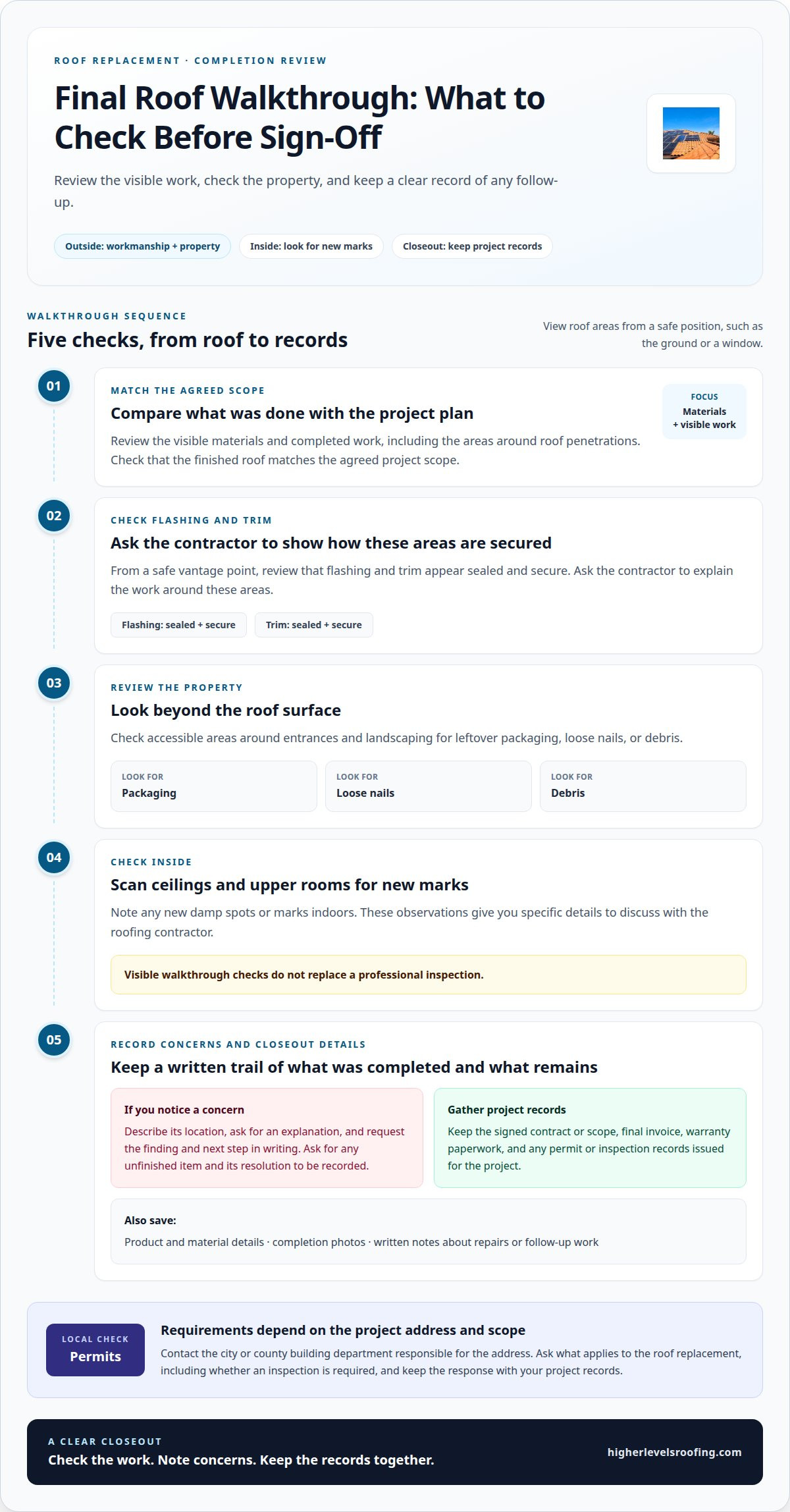
At the final walkthrough, review the installation and ask the contractor to show you how flashing and trim are sealed and secured. View these areas from a safe position, such as the ground or a window. Compare the finished roof with the agreed project scope, including the material and visible work around roof penetrations. If you notice a concern, describe its location and ask for the finding and next step in writing.
Use the walkthrough to review the property, not just the roof. Look for leftover packaging, loose nails, or debris around entrances and landscaping. Indoors, check ceilings and upper rooms for new damp spots or marks. These observations don’t replace a professional inspection, but they give you specific details to discuss with the roofing contractor before the crew leaves.
Confirm flashing and trim appear sealed and secure.
Compare visible materials and completed work with the project scope.
Ask the contractor to explain any unfinished item and record its resolution.
Check accessible areas for debris and note any new interior marks.
Permit and inspection requirements are set locally, so they depend on the project address and scope. Contact the city or county building department responsible for the address and ask what applies to a roof replacement, including whether an inspection is required. Keep the response with your project records.
Before closing the job, gather the signed contract or scope, final invoice, warranty paperwork, and any permit or inspection records issued for the project. Save product and material details, completion photos, and written notes about repairs or follow-up work. These documents help you identify what was installed and find the relevant paperwork if a repair or warranty question comes up later.
A roof inspection may help identify concerns before they lead to larger expenses. If anything remains uncertain after the walkthrough, ask whether a professional inspection is appropriate and what it would cover. Keep the observations with your project records and discuss recommended work with the contractor before considering the job complete. This gives you a clearer basis for deciding whether follow-up is needed and preserves a record of concerns and responses.
4. Peace of mind after roof replacement
Peace of mind after roof replacement comes from knowing what was done and how to respond if conditions change. A finished surface alone can’t show every detail beneath it. Keep the project scope, warranty paperwork, inspection notes, and completion photos together. These records give you a clear reference if you later notice a change or need to discuss the roof’s condition.
Turn that information into a simple home record. Note the installation date, roofing material, and any repair or inspection findings. After a storm, record visible changes, such as displaced material or a new ceiling mark, and when you noticed them. A dated note helps distinguish a new concern from an old one and gives a roofing professional useful details to assess.
Store project documents and photos in one place.
Record visible changes with the date and location.
Use a safe vantage point instead of walking on the roof.
Use evidence, not guesswork, to assess whether the work appears complete. Compare the finished work with the written agreement, note any unresolved items, and record the contractor’s response. If an inspection identifies a concern, ask for the finding and recommended next step in writing. This creates a clear record from observation to action, rather than leaving you to interpret an unfamiliar roof surface alone.
Confidence also means understanding the roof’s limits. Weather can affect any roofing system, and an inspection helps clarify whether a change reflects damage, wear, or another issue. Keep the warranty terms available, since coverage depends on the document’s conditions. If you want a professional perspective on your roof’s condition, contact us today to discuss the next step.
Higher Levels Roofing: Asphalt Shingle Roofing
Higher Levels Roofing provides asphalt shingle roofing for homeowners planning a replacement or addressing roofing concerns. If your walkthrough raised questions about the roof’s condition, a roofing professional can help you understand whether repair or replacement is the practical next step. Material choice matters too: Higher Levels Roofing also offers flat concrete tile, concrete tile, and clay tile roofing.
Bring your project scope, inspection notes, and photos of any concerns to the conversation. These details clarify what you’ve observed and the work you’re considering, without relying on guesswork. A clear discussion can help you compare suitable roofing options for your home in San Diego, La Jolla, San Marcos, Encinitas, or Carlsbad.
For help discussing your roofing project, contact Higher Levels Roofing.
Make your next roofing decision with confidence
Peace of mind after roof replacement comes from treating your roof as part of your home’s ongoing care, not a project to forget once the crew leaves. Keep your records accessible, watch for changes after severe weather, and arrange a professional inspection when a concern needs closer assessment. A clear next step can make future decisions feel more manageable.
Higher Levels Roofing offers asphalt shingle, flat concrete tile, and concrete tile roofing. If you’re planning a replacement or want to discuss roofing options for your home in San Diego, La Jolla, San Marcos, Encinitas, or Carlsbad, start a conversation about the work you have in mind and the details that matter to you.
Contact Higher Levels Roofing today to discuss your roofing project. A thoughtful plan can help you move forward with greater confidence.
Frequently Asked Questions
How can I verify a roof replacement was completed correctly?
Review the finished roof, interior, and project records, then ask the roofer to discuss any concerns with you. From the ground, look for consistent shingle or tile placement and clear roof edges; indoors, check for new water stains after rainfall. Confirm you have documents identifying the installed materials and completed work. This review can support peace of mind after roof replacement. If you spot a concern, Higher Levels Roofing provides roof repair services in San Diego and nearby communities.
How long should a new roof last by material?
There’s no single reliable lifespan for every roofing material because service life depends on the system, installation, roof design, and upkeep. Asphalt shingles provide lasting protection; concrete and clay tile offer durability and lasting performance. Rolled asphalt torch-down provides reliable waterproofing for low-slope roofs, while TPO delivers energy-efficient performance on flat roofs. For a home in San Diego, La Jolla, San Marcos, Encinitas, or Carlsbad, ask about the expected service life of the specific product being installed.
What should homeowners insurance cover after roof replacement
Homeowners insurance after roof replacement follows the policy’s terms, including covered causes of loss, exclusions, and the deductible. It is separate from the roofer’s workmanship or material warranty.
Comments