


Roof Weathering in San Diego: When to Evaluate Replacement

Updated: Sep 28
A weathered roof does not automatically need replacement, and a faded color alone cannot diagnose a leak. A useful assessment considers the material, installation details, visible deterioration and condition of the concealed components. Higher Levels Roofing focuses on replacement, new installation and tile lift-and-relay projects where the existing tiles are suitable for reuse.
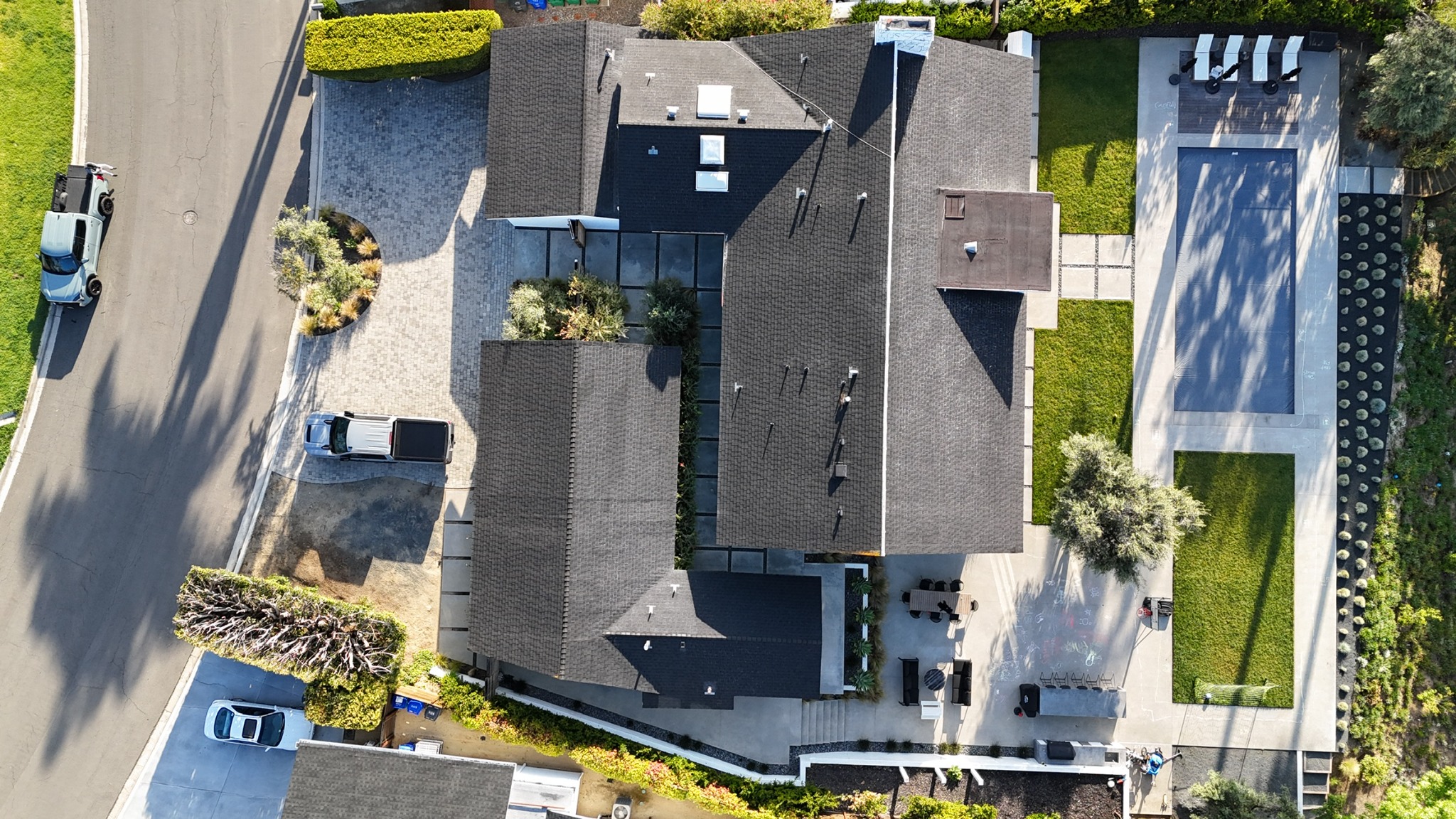
Project photo: Aerial view of a GAF architectural shingle roof installed by Higher Levels Roofing in Carlsbad.
Separate appearance from roof condition
Look for patterns rather than one cosmetic change. Widespread damaged shingles, exposed areas, deteriorated flashing or repeated leaks deserve evaluation. Document changes from a safe location and share the roof's age and history of work with the contractor. Do not walk on a roof to inspect it yourself.
A claim that coastal air or sunshine removes a fixed number of years from every roof's lifespan is not a reliable basis for a project. Product choice, installation, roof design, exposure and maintenance history all influence condition. A contractor should explain the observed evidence behind a replacement recommendation.
What to review for each roofing material
Asphalt shingles
Assess the extent of missing, cracked or brittle shingles and areas of substantial granule loss. The underlying assembly, flashing, ventilation and deck condition matter alongside the visible shingle surface. One damaged area and deterioration across multiple slopes can require different scopes.
Clay and concrete tile
Sound-looking tiles do not establish the condition of the underlayment or flashing beneath them. Compare full replacement with lift and relay when tiles may be reusable. The assessment should account for breakage, matching replacement tiles, attachment and the concealed water-management components.
Low-slope roofing
Review the membrane or cap sheet, seams, penetrations, edges and drainage. Surface appearance alone does not reveal whether insulation or decking has been affected by moisture. The investigation and replacement scope should reflect the actual assembly.
Can a reflective roof help?
A reflective product can reduce solar heat absorbed by the roof, but it does not reverse deterioration already present. Energy savings vary with the building and use. Compare the selected product's tested ratings and the complete roof assembly instead of treating color as proof of performance.
Check applicable California Energy Commission guidance for the property's building type, climate zone, roof slope and project scope. Cool-roof requirements and permitted alternatives vary; there is no single rating that applies to every San Diego reroof.
What should the assessment produce?
Photographs and an explanation of the conditions observed.
A comparison of localized conditions with deterioration across the roof.
Suitable replacement or tile reuse options.
A written scope for materials, flashing, deck allowances and ventilation.
Clear warranty terms and responsibilities for approvals or other trades.
See the work and plan the next step
Our roofing case studies show real shingle, tile and low-slope projects. The shingle photograph in this guide is a completed Carlsbad project, not an example of a currently damaged roof. Review our roof replacement warning signs guide, then discuss your property's condition with Higher Levels Roofing.
Comments