


Lightweight Roofing Options for Older Homes in Encinitas

Updated: Sep 28
The lightest roofing material on a product sheet may not make the lightest complete roof. If you’re comparing lightweight roofing options for older homes Encinitas homeowners can consider, start with the total roof assembly and the structure supporting it.
It’s understandable to want less added weight without sacrificing durability or changing an older home’s character. But a material label alone can’t confirm what the framing can support. Underlayment and other assembly components matter, and an existing roof may need a closer assessment before you choose a replacement.
This guide compares asphalt shingles with concrete and clay tile, explains how to think about overall roof load, and outlines questions to raise about your home’s framing, coastal exposure, appearance, and local approval requirements. You’ll also learn what to ask a roofing contractor so the recommendation reflects your home and the specified assembly, rather than a broad claim that one material is always suitable.
Key takeaways
Compare complete roof assemblies, not material labels, when evaluating added weight.
Use verified specifications for asphalt shingles and tile options before comparing their weight.
Gather roof records and note visible concerns, then ask a professional to assess existing layers and decking condition.
Ask how appearance, coastal exposure, and current local approval requirements may affect your material choice.
When comparing lightweight roofing options for older homes Encinitas homeowners may consider, review each proposal’s assessment, materials, and work scope.
Table of Contents
Why roof weight matters when replacing an older home’s roof in Encinitas
Choosing a roof for an older home isn’t just a matter of picking a material that sounds light. The framing supports the installed roof system, which includes more than the visible shingles or tiles. Underlayment, decking, and any existing layers that remain can all contribute to the load.
That distinction matters when comparing lightweight roofing options for older homes Encinitas homeowners may be considering. A product description can help narrow the choices, but it can’t confirm that a particular assembly suits a specific roof. Material weight is one specification; verified roof-system suitability depends on the assembly and the home’s existing structure.
What does lightweight roofing mean for an older home?
“Lightweight” is a relative comparison between specified roofing assemblies, not a universal product category or a promise of structural suitability. A fair comparison accounts for the products and layers included in each proposed assembly. Check the manufacturer’s documentation for the exact products, and don’t compare weight figures unless they describe comparable assemblies.
A comprehensive list of roofing materials can help you become familiar with material types, but it doesn’t establish the installed load or suitability of a roof system. For that, ask for documentation tied to the specific proposed assembly.
Why should Encinitas homeowners assess existing roof framing?
A home’s age alone doesn’t reveal the framing’s capacity or current condition. Homes of similar age can have different framing, maintenance histories, and roof alterations. Before choosing a replacement, ask a roofing professional to identify existing layers and review accessible framing and decking for visible concerns, such as sagging or deterioration. Past alterations are relevant too, because changes to the roof may need closer review.
A roofer can describe observed conditions and explain whether further structural review may be needed. A qualified professional should determine whether that evaluation is appropriate. Don’t treat a material choice or a visual check as proof of structural capacity.
Gather available records about previous roof work or structural alterations.
Ask which existing layers will be removed and which, if any, are proposed to remain.
Request that visible concerns and decking condition be documented in the assessment.
Verify current Encinitas permit and code requirements before specifying the work.
A clear assessment turns “lightweight” from a label into a useful comparison. It gives you a sounder basis for discussing material trade-offs, appearance, and next steps for your home.
Comparing lightweight roofing options for older homes Encinitas homeowners can consider
Asphalt shingles and concrete or clay tile can all be part of a replacement conversation, but material names alone don’t tell you how much the completed roof will weigh or whether it suits your home. Compare complete, specified assemblies: roofing material, underlayment, decking changes, and any layers proposed to remain. Treat weight figures as comparable only when they refer to comparable assemblies and are supported by current manufacturer documentation.
Appearance matters, too. Asphalt shingles have a different surface and profile from flat concrete tile, concrete S tile, and clay tile. Tile shapes create distinct rooflines, so consider how a proposed profile will look with your older home’s proportions and character. For wider background on roof types and design considerations, see this roofing materials guide.
Can asphalt shingles reduce added roof weight?
Asphalt shingles may be worth including in a lighter-assembly comparison, but don’t assume every shingle system is lighter than every tile system. Ask for product documentation and proposed assembly details, then compare like with like. Also distinguish a new roof installation from adding shingles over an existing layer. Retained materials contribute to the overall load, and the existing roof’s condition and applicable requirements must be checked before choosing a plan.
How should tile options be evaluated on an older structure?
Flat concrete tile, concrete S tile, and clay tile differ in material and appearance. Individual products and assemblies can differ too, so don’t infer weight from a category or profile. Request specifications for the actual products and layers under consideration, and have the structure reviewed before deciding whether a tile assembly is appropriate. A National Park Service brief on historic roofs can also help frame preservation questions for a home with distinctive architectural features.
For more detail on tile materials and design choices, explore this roof tile materials and styles guide. Then compare proposals by specified products, assembly layers, installation scope, and assessment findings, not by a broad “lightweight” label. That’s a practical way to evaluate lightweight roofing options for older homes Encinitas residents may be considering without assuming one material is a universal winner.
If you’d like to discuss the trade-offs for your home, you can ask Higher Levels Roofing about an assessment.
Lightweight roofing trade-offs: what older-home owners should not assume
A roof described as lightweight isn’t automatically stronger, safer, or more durable. Those qualities depend on more than the covering. The roof’s condition, compatible materials, sound decking, properly detailed flashing, adequate ventilation, and careful installation all matter. A lighter assembly may be worth evaluating, but it can’t compensate for damaged components or poor workmanship.
The lightest option is not automatically the right roof for every older home. A sound choice balances verified assembly details with the home’s framing, appearance, maintenance needs, and the condition of what’s already in place. The International Residential Code offers model-code provisions for residential roof assemblies, but homeowners should verify which current state and local requirements apply to their project.
Does lighter roofing always mean less structural work?
No. Existing damage, questionable decking, or framing concerns may need attention regardless of the proposed material. A lighter covering doesn’t guarantee that repairs or further structural evaluation can be avoided. Ask the roofing professional to document observed conditions, identify what was and wasn’t assessed, and clarify whether any concern needs review by another qualified professional.
Before approving a proposal, check that its scope states which roof layers will be removed or retained, how the decking will be handled if a problem is found, and what assumptions the recommendation relies on. Clear documentation helps you compare the actual work, not just the material name.
How do Encinitas conditions affect material selection?
Encinitas isn’t a single exposure condition. A home’s immediate surroundings and roof design can affect which product requirements deserve attention. Ask the contractor to consider the property’s observed exposure and check the manufacturer’s current installation instructions for the specified roofing materials and components. Don’t assume that a general claim about coastal weather, or a material’s reputation, makes it suitable for every neighborhood.
Appearance deserves the same care. A profile that suits one older home may alter the proportions or character of another, while maintenance needs and existing roof details can influence the practical fit. Discuss those trade-offs alongside assembly specifications and roof condition. For homeowners comparing lightweight roofing options for older homes Encinitas, a documented, home-specific assessment is more useful than a blanket recommendation.
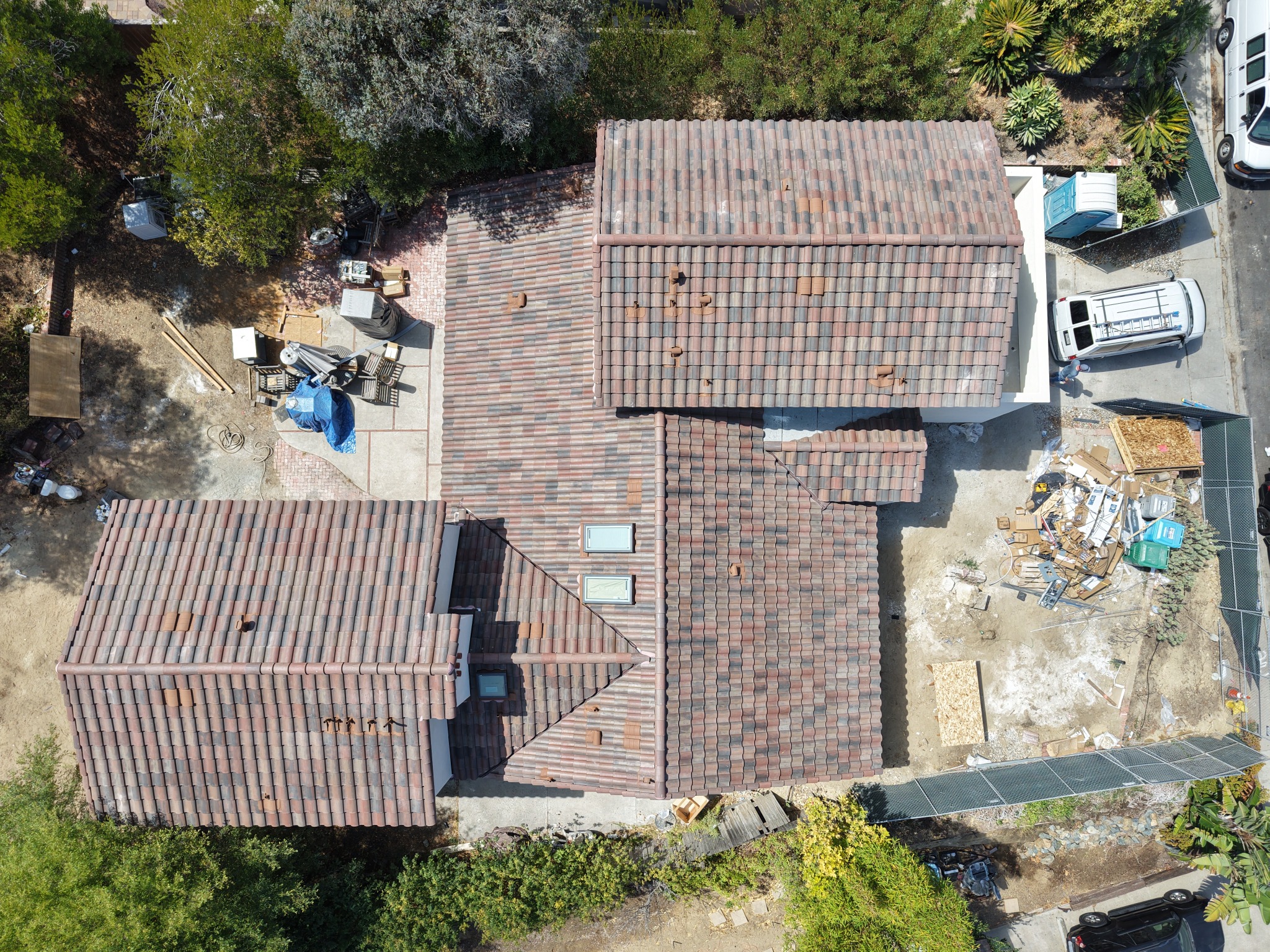
Project photo: Aerial view of an Eagle lightweight concrete tile roof installation by Higher Levels Roofing in San Diego. Explore our roofing case studies for the project scope and gallery.
How to assess an older Encinitas roof before choosing a lighter option
A useful roof assessment should record what’s there, what appears to need attention, and what still requires verification. Before comparing lightweight roofing options for older homes Encinitas, gather available information and ask for an assessment of the existing roof and proposed complete assembly.
1. Gather roof records. Look for past replacement or repair documents, product information, and records of changes to the roof or framing. Note anything you don’t know so the roofer can help identify it.
2. Record visible concerns. From the ground, note apparent sagging, damaged areas, or signs of water entry. Don’t climb onto the roof to inspect it yourself.
3. Request a professional review. Ask the roofer to identify existing roof layers and document visible roof, flashing, and decking conditions. Ask which areas could not be assessed and whether any findings call for further review.
4. Compare documented assemblies. Request the exact proposed materials, manufacturer specifications, installation requirements, and a written description of layers to be removed or retained.
5. Confirm project requirements. Check applicable permit and code requirements with the relevant Encinitas authority before finalizing the scope.
What should a roof assessment document?
Ask for photographs and a plain-language explanation of the observed roof condition, existing layers, flashing details, and any visible decking concerns. The report should distinguish what the roofer directly observed from conclusions that require structural expertise. If there are signs of sagging or deterioration, ask what additional assessment may be appropriate and who is qualified to provide it.
Clear notes also make proposals easier to compare. Look for a defined scope, including how concealed or damaged decking will be addressed if it’s discovered during the work. Don’t treat an initial visual review as confirmation of hidden conditions.
What questions should homeowners ask about materials and approvals?
Ask which exact roofing material and assembly are proposed, which manufacturer instructions apply, and what assumptions were used to compare options. Clarify who will evaluate any structural concern and what further review may be needed. Then verify permit and code requirements directly with the relevant city office. Don’t rely on a material label or an informal assurance.
For broader planning context, see this San Diego roof replacement guide. To discuss an assessment and material trade-offs for your home, contact Higher Levels Roofing.
Choosing an Encinitas roofing contractor for an older-home project
For an older home, a useful roofing proposal should make clear what the contractor observed, what work is included, and which material assembly is recommended. Those details help you compare bids on the same basis. A “lightweight” label alone doesn’t explain what will be installed or how the project accounts for the existing roof.
What should an older-home roofing proposal explain?
Review the written scope before comparing totals. It should identify the proposed roofing material and assembly, describe preparation and installation work, and explain how existing layers will be handled. Ask how decking repairs or other unexpected findings will be documented and approved before additional work proceeds. The proposal should also state who will confirm applicable permits and requirements, so responsibilities are clear.
Check that the contractor’s assessment notes support the recommendation. If the proposal relies on assumptions about hidden conditions, ask what happens if those assumptions prove incorrect. You should also be able to distinguish observations from any structural conclusion that may require a separate qualified professional.
How can a homeowner compare contractors with confidence?
Verify a contractor’s California license through the Contractors State License Board’s official lookup. Ask for relevant project references, a clear description of the work, and written explanations of any workmanship terms and manufacturer coverage. Coverage can depend on the specific materials and installation requirements, so request the applicable documents rather than relying on a verbal summary.
Compare the specified materials and complete assembly, not just terms such as “lightweight” or “tile.”
Check that removal, preparation, and potential decking repairs are addressed consistently across proposals.
Ask how the contractor will document assessment findings and communicate unexpected conditions.
Confirm who is responsible for checking permits and applicable local requirements.
For more hiring questions, review this San Diego County roofing contractor checklist. Higher Levels Roofing provides residential and commercial roofing replacement, new installation and tile lift-and-relay in the San Diego area, including Encinitas, La Jolla, San Marcos, and Carlsbad. Its roofing options include asphalt shingles and clay tile, and its team can discuss material trade-offs and project needs without assuming one option fits every structure.
Have questions about your home’s roof or proposed assembly? Discuss your Encinitas roofing project with Higher Levels Roofing.
Make your next roofing decision with confidence
Choosing a roof for an older home starts with evidence, not a label. Compare complete assembly specifications, understand what the existing roof assessment found, and weigh appearance and maintenance alongside structural considerations. The best lightweight roofing options for older homes Encinitas residents consider are those evaluated for the specific house, not assumed suitable based on a material category alone.
A clear proposal can help you see how the work, materials, and assessment findings fit together. Higher Levels Roofing is a licensed contractor serving Encinitas and the wider San Diego area, including La Jolla, San Marcos, and Carlsbad, with residential and commercial replacement, new installation and tile lift-and-relay services. Its roofing options include asphalt shingles, concrete tile, and clay tile, so homeowners can discuss material trade-offs without presuming one choice is right for every structure.
Ready to talk through your home’s needs? Discuss your older-home roofing project with Higher Levels Roofing. Start with an assessment of your roof’s condition and proposed assembly, then compare material options for your home.
Frequently Asked Questions
Is asphalt shingle roofing a lightweight option for an older home?
Yes, asphalt shingles may be considered in a lighter-assembly comparison, but that doesn’t make them suitable for every older home. Compare current manufacturer specifications for the complete proposed roof assembly, including underlayment and any existing layers that will remain. Have qualified professionals assess the roof condition and framing, then check applicable local requirements and manufacturer installation instructions before selecting materials.
Can I install a new roof over the existing roof to avoid adding weight?
No, covering an existing roof doesn’t automatically reduce the load and may add material weight. Whether an overlay or another approach is appropriate depends on the current roof’s layers and condition, the proposed assembly, manufacturer instructions, and applicable requirements. Ask a roofing professional to assess the existing roof before deciding. Don’t treat installation over existing materials as a universal shortcut for an older home.
How do I know if an older roof can support a different roofing material?
A home’s age alone can’t establish whether its roof can support a different material. Ask a qualified professional to assess visible conditions, framing, decking, existing layers, and the complete proposed assembly. Further structural review may be appropriate if concerns arise. Request documented findings that separate observations from conclusions requiring additional expertise, and verify applicable local approval requirements before choosing a material or beginning work.
What is the lightest roofing option for an older home in Encinitas?
There isn’t a responsible universal answer for lightweight roofing options for older homes Encinitas residents may compare. The result depends on exact product specifications and the complete roof assembly, not a broad material label. Roof condition, structure, appearance, installation instructions, and the home’s specific setting also matter. Ask a roofing professional to compare documented options for your house rather than relying on unverified weight rankings.
Do Encinitas homeowners need a permit to replace an older roof?
Confirm permit requirements with the relevant City of Encinitas authority before planning the work, because requirements may depend on project scope and rules in effect at that time. Don’t rely on a general statement or an older online source as confirmation for your specific project. Ask your contractor who will verify applicable permits and requirements, and clarify that responsibility before work begins.
Should a contractor inspect the roof framing before recommending lightweight roofing?
A roofing recommendation should account for the existing roof condition and the proposed assembly. Ask the roofer to document visible findings and explain whether anything suggests a need for additional structural evaluation. A visual roof inspection isn’t the same as an engineering conclusion. Before choosing a material, clarify what was assessed, what remains uncertain, and who should address any structural questions that need further review.
Does coastal exposure in Encinitas change which roofing material I should choose?
It can inform the discussion, but homes across Encinitas don’t all have identical exposure. Consider the specific property and ask how its setting relates to the manufacturer’s instructions for the proposed materials and complete assembly. Avoid choosing based on blanket claims about salt air, wind, or a material’s performance. Any exposure-related recommendation should reflect the home’s actual conditions and reliable, current product guidance.
Comments