


The Ultimate San Diego County Roofing Contractor Hiring Checklist (2026)

Updated: Aug 24
San Diego can receive periods of heavy rain, including atmospheric-river and El Niño-influenced storms, but seasonal forecasts should not be stated as certain months in advance. The practical recommendation is to inspect drainage, flashings, penetrations, and vulnerable roof areas before the wet season and address documented problems promptly.
We understand the anxiety that follows a major home maintenance decision. You want a professional who values meticulous craftsmanship as much as you value your family's security. This guide provides a local-first framework to help you vet contractors for quality, compliance, and long-term durability. We'll walk you through the essential 2026 checklist, from verifying CSLB credentials to selecting climate-resilient materials like TPO or clay tile. You'll gain the confidence to choose a partner who delivers a high-performance roof that truly protects your property value and your peace of mind.
Table of Contents
Essential Credentials: The Legal and Safety Baseline
Hiring a roofing contractor san diego county residents can trust begins with a look at their paperwork. While discussing aesthetics is exciting, the legal foundation of your project determines your financial safety. In California, any roofing job exceeding $500 requires a state-issued license. For our industry, the C-39 Roofing Contractor license is the only acceptable standard. This isn't just a suggestion; it's a legal mandate that ensures the person on your roof has met specific experience and testing requirements. With over 400 licensed contractors in the region, verifying these credentials is your first line of defense against subpar work.
Verifying the CSLB License
Insurance coverage and underwriting decisions vary by carrier and policy. A contractor should not promise that a particular material, permit decision, repair, or maintenance plan will preserve coverage or reduce premiums. Property owners should obtain written guidance from their insurer for the specific building and proposed scope.
Insurance and Liability Protections
Safety is a major concern when working on a home. You must distinguish between General Liability and Workers’ Compensation insurance. General Liability protects your structure. If a crew accidentally damages your siding or a window, this policy covers the repairs. Workers’ Compensation is even more critical. If an uninsured worker is injured on your property, you could be held liable for their medical expenses and lost wages.
Request a Certificate of Insurance (COI) sent directly from the contractor's insurance agent to your email. This prevents the use of forged or expired documents. You should also understand that being "bonded" is not the same as being insured. A bond is a small pool of money (usually $25,000 in California) meant to protect the state against license violations. It won't cover a $50,000 medical bill or a full roof failure. Whether you are looking at commercially available roofing materials like asphalt or specialized clay tiles, these insurance protections remain your ultimate safety net.
Finally, look for a Local San Diego Business Tax Certificate. This confirms the company is a legitimate local entity rather than a "storm chaser" following the weather from out of state. Local accountability means your roofing contractor san diego county specialist will actually be here to honor their labor warranty five years down the road.
San Diego Climate Expertise: Vetting for Local Knowledge
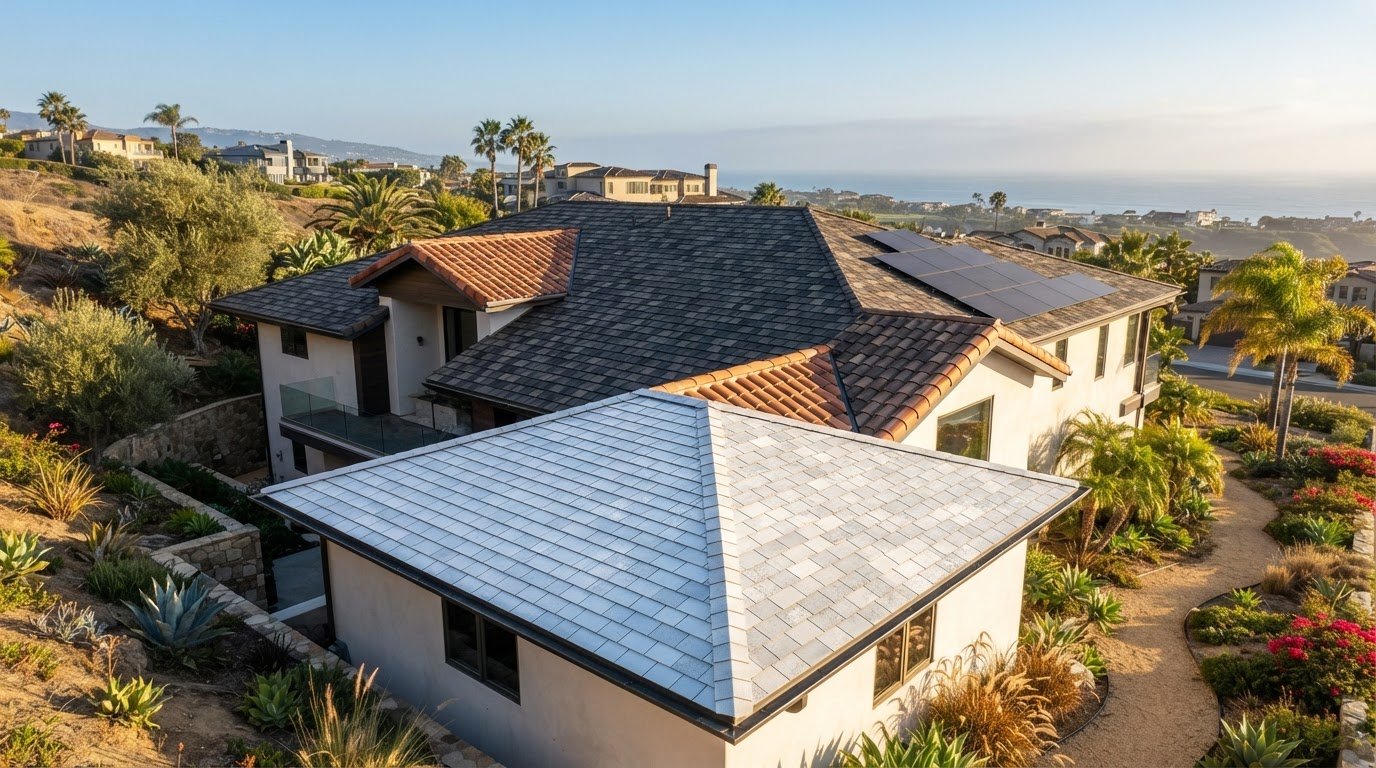
California does not impose one identical cool-roof rule on every residential reroof. Under the 2025 Building Energy Efficiency Standards, effective January 1, 2026, residential roof-replacement provisions are generally evaluated when 50% or more of the roof is replaced. Criteria then depend on roof slope and climate zone: steep-slope provisions apply in climate zones 4 and 8–15, while low-slope provisions apply in climate zones 4 and 6–15, with listed exceptions and alternative compliance paths. Verify the address, slope, assembly, and CRRC-rated product. Official CEC guidance: https://www.energy.ca.gov/filebrowser/download/8300?fid=8300.
Coastal Salt Air Challenges
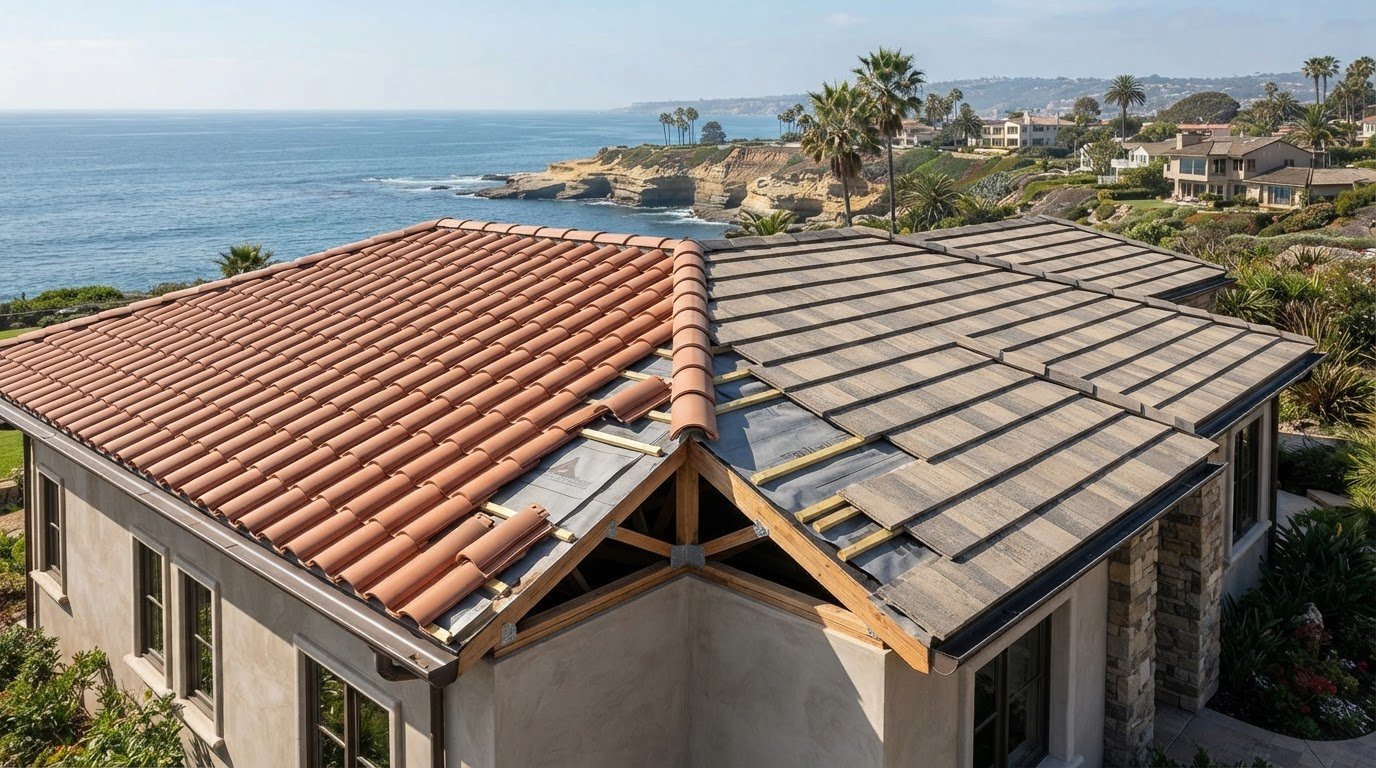
In neighborhoods like Encinitas and Carlsbad, salt air is the primary enemy. It corrodes standard fasteners and flashing, leading to structural failures long before the roofing material itself wears out. Meticulous contractors use stainless steel or high-grade galvanized components to prevent this "salt creep." For commercial properties along the coast, TPO roofing is often the superior choice. It offers excellent resistance to chemical exposure and the persistent marine layer. If you live within five miles of the Pacific, your maintenance checklist should include regular inspections to clear salt deposits from drainage paths and metal seams.
Heat and Ventilation Inland
Move inland to the East County heat, and the threat shifts to extreme UV exposure. Without proper attic ventilation, asphalt shingles can "bake" from the inside out. This heat buildup drastically shortens the lifespan of your system and spikes your cooling costs. Clay tile remains a premier option for its thermal mass, though flat concrete tile or concrete S-tiles provide excellent durability against the 300 plus days of Southern California sun. You can explore more about types of roofing materials to see which fits your specific neighborhood's heat profile.
San Diego can receive periods of heavy rain, including atmospheric-river and El Niño-influenced storms, but seasonal forecasts should not be stated as certain months in advance. The practical recommendation is to inspect drainage, flashings, penetrations, and vulnerable roof areas before the wet season and address documented problems promptly.
Material-Specific Proficiency Checklist
Finding a roofing contractor san diego county residents can trust means looking past a general "roofer" label. Expertise is material-specific. A crew that installs hundreds of asphalt shingle roofs every year might not have the specialized tools or training required for a high-end clay tile project. The National Roofing Contractors Association (NRCA) suggests that homeowners verify a contractor's specific experience with their chosen material. Before signing a contract, ask to see a portfolio of local projects completed in the last 24 months that match your desired style. This ensures the team has recent, hands-on experience with the technical demands of your specific system.
Tile Roofing Specialization
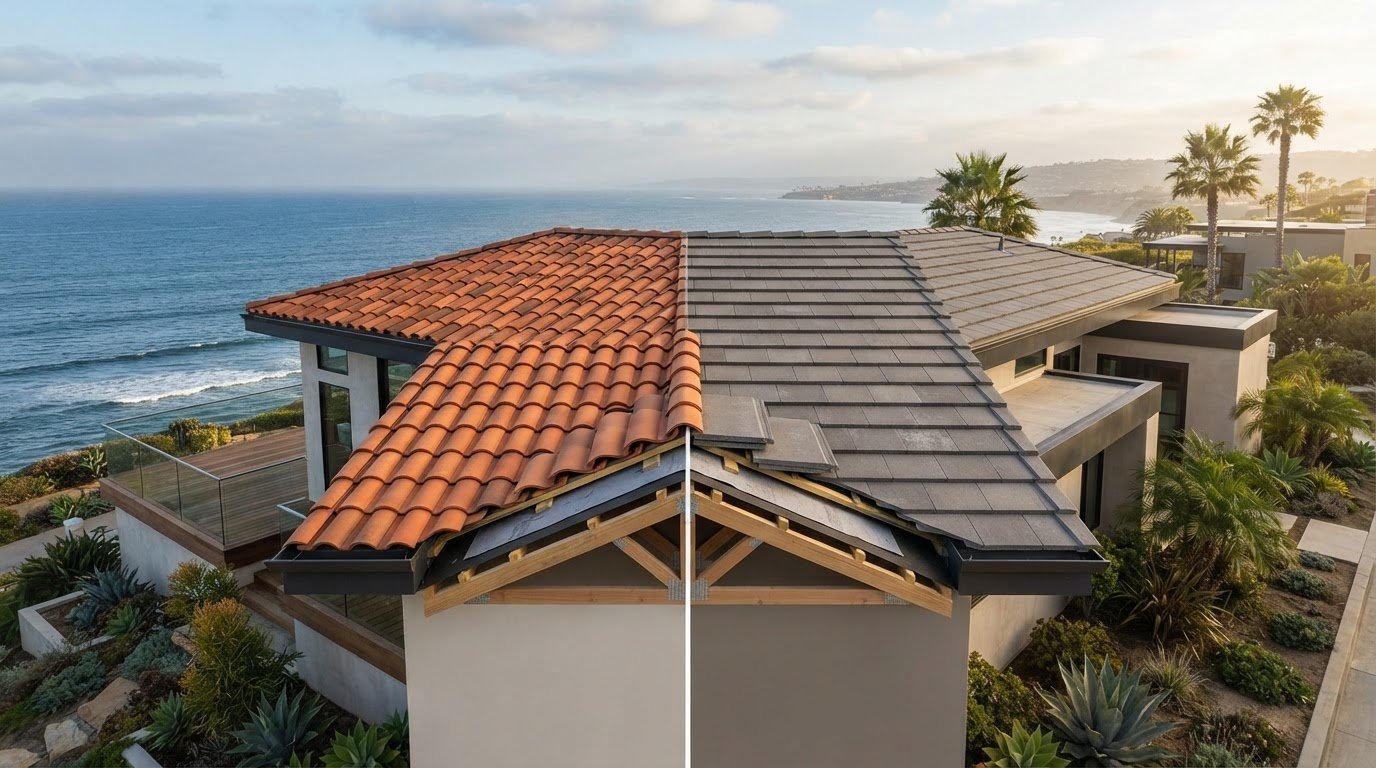
Tile roofing is a staple of San Diego architecture, but it requires a meticulous hand. Clay and concrete tile systems are significantly heavier than shingles. A professional must ensure your roof deck can handle the load, especially if you're switching from a lighter material to concrete S-tiles. Beyond the weight, the underlayment is the unsung hero of the system. While the tiles provide the aesthetic and primary shedding, the underlayment provides the actual waterproofing. If the underlayment is poor, the roof will fail regardless of how beautiful the tiles look. Check out our ultimate guide to roof tiles for a deep dive into these technical requirements.
Flat and Low-Slope Solutions
For businesses or modern homes with flat roofs, the vetting process changes. You must distinguish between TPO heat-welding and traditional rolled asphalt torch down roofing. TPO is a single-ply membrane that requires specialized robotic welders to fuse the seams together. It's highly reflective and durable, making it a favorite for 2026 energy standards. However, a poor installation leads to ponding water and seam separation. We've documented these challenges and solutions in our TPO commercial roofing case study. It's vital to choose a contractor who understands the slope and drainage requirements unique to flat systems.
Finally, prioritize contractors with manufacturer certifications. These are not easy to get. They require ongoing training and a history of clean inspections. When a contractor is certified by the manufacturer, they can offer extended warranties that unlicensed or uncertified crews simply can't provide. It's a layer of protection that ensures the manufacturer stands behind the installation. It's also a clear sign that your roofing contractor san diego county specialist is committed to the highest industry standards.
The Professional Estimate: What to Look For
Receiving a quote for a major home project can feel overwhelming. A professional estimate from a roofing contractor san diego county homeowners can rely on should be a detailed roadmap, not just a single number at the bottom of a page. Transparency is the hallmark of a quality professional. If a contractor provides a "lump sum" price without breaking down the costs, it's impossible to know what you're actually paying for. A thorough estimate protects both you and the contractor by setting clear expectations from the very first day.
A high-quality quote includes specific line items for materials, labor, permits, and debris removal. It should list the exact brand and series of the roofing material, the type of underlayment, and the specific metal used for flashing. You also need a clear answer to a vital question: how long should a San Diego roof replacement actually take? While every home is unique, most residential projects in our area take between three and seven days. If a timeline seems suspiciously short or vaguely long, ask for a day-by-day breakdown of the phases.
Payment schedules are another area where professionalism shines. In California, the law typically limits a down payment to 10% of the total project price or $1,000, whichever is less. Requests for large upfront deposits are a major red flag. Your contract should also clearly distinguish between the manufacturer's material warranty and the contractor's workmanship warranty. The former covers defects in the shingles or tiles, while the latter covers errors made during the installation process.
Red Flags in Roofing Quotes
Beware of any quote that lacks specific brand names or material series. Using generic terms like "30-year shingle" allows a contractor to swap in lower-quality materials at the last minute. A "handshake deal" or a contract missing a firm start and end date is a significant legal risk that can lead to project delays. Ensure the "scope of work" explicitly includes the removal and disposal of your old roof. You don't want to be surprised by extra fees for a dumpster or hauling services once the job is underway.
Comparing Apples to Apples
When you have two quotes with different price points, look closely at the components that aren't visible from the street. The long-term value of a roof often sits in high-quality underlayment and heavy-duty flashing. The lowest bid often excludes critical components like permit fees or city inspections to make the total appear more attractive. Choosing the cheaper option can lead to higher costs later if the system doesn't meet 2026 building codes. If you want a transparent, line-itemized look at your next project, request a professional consultation with Higher Levels Roofing today.
Why Higher Levels Roofing is San Diego’s Trusted Choice
Choosing a roofing contractor san diego county families can rely on means finding a partner who balances technical expertise with a genuine commitment to the community. Higher Levels Roofing exists to bridge the gap between high-end professional service and neighborly accountability. We understand that a roof is more than just a structural necessity; it's a safeguard for your family and a significant investment in your property’s value. Our team approaches every project with a meticulous eye for detail. We ensure that each shingle, tile, and membrane meets our rigorous standards for durability and aesthetic pride.
Our capabilities span the full spectrum of local needs. We handle residential asphalt shingle installations with the same precision we apply to large-scale commercial TPO systems. Because we specialize in materials suited for the Southern California coast, we know how to protect your property from salt air corrosion and intense UV exposure. We don't believe in high-pressure sales. Instead, we offer a service-oriented approach that prioritizes your safety and long-term security. We want you to feel informed and in control throughout the entire installation process.
The Carlos Guarantee: Personal Oversight
Quality control shouldn't be left to chance or a rotating cast of project managers. As a dedicated roofing contractor san diego county specialist, Carlos maintains direct involvement in every project we undertake. This principal oversight means that the person responsible for the company’s reputation is the same person ensuring your roof is installed correctly. We call this our "Neighborly Warmth" philosophy. We treat every structure as if it belonged to our own family. We emphasize safety and long-term security over quick profits. If you're still weighing your options, our guide on choosing a shingle roofing company in San Diego offers deeper insights into our specialized approach.
Next Steps for Your San Diego Property
The path to a leak-free, climate-resilient roof begins with an honest assessment. We offer a professional, no-obligation roof evaluation that focuses on your specific needs rather than a one-size-fits-all solution. During your first consultation, we'll walk through the current state of your system, discuss the best materials for your microclimate, and provide a transparent, line-itemized estimate. Whether you need a residential clay tile repair or a full commercial TPO installation, we provide the steady, expert hand you need. Request your San Diego County roofing estimate today! and experience the difference that meticulous craftsmanship makes for your home.
Securing Your San Diego Property for the Years Ahead
Your roof is a significant investment that requires more than just a surface-level inspection. By prioritizing CSLB compliance and verifying specialized insurance, you build a foundation of safety for your home or business. Remember that local expertise matters. A system designed to withstand the salt air of Encinitas or the intense heat of inland San Diego will always outperform a generic installation. When you're ready to partner with a roofing contractor san diego county specialist who values meticulous craftsmanship, look for direct owner involvement and transparent communication.
At Higher Levels Roofing, Carlos provides personal oversight on every project; serving neighbors in La Jolla, Carlsbad, and across the county. We specialize in residential and commercial systems that meet the latest 2026 standards, ensuring your property remains leak-free and climate-resilient. Don't leave your property's protection to chance. Get a Professional Roofing Estimate from Higher Levels Roofing today. We're here to provide the steady, expert hand your home deserves, helping you build a future defined by aesthetic pride and long-term security.
Frequently Asked Questions
How do I verify if a roofing contractor is licensed in San Diego County?
A roof’s effect on premiums, eligibility, or claim handling depends on the carrier and policy. Homeowners and property managers should ask the insurer for written, project-specific guidance rather than relying on a general roofing article.
What is the most durable roofing material for San Diego coastal homes?
Clay tile and TPO are the top contenders for coastal durability. Clay tile is exceptionally durable because it doesn't corrode when exposed to salt air and marine layers. For commercial or flat residential roofs, TPO membrane is a superior choice. It resists chemical degradation and reflects intense UV rays. While asphalt shingles are popular, coastal homes benefit from materials that won't warp or rust in high-moisture environments. Choosing high-grade stainless steel fasteners is also vital.
Do I need a permit for a roof replacement in San Diego?
Roofing permit requirements depend on the project scope and the authority having jurisdiction. Within the City of San Diego, Information Bulletin 123 states that qualifying nonstructural reroofing may be permit-exempt when the roof structure and diaphragm are not altered. Permits are required for specified structural changes, heavier replacement roofing, removal and replacement of skip sheathing, and designated historic properties. Other cities and unincorporated county areas may use different rules, so the project address and scope must be verified before work begins. Official City guidance: https://www.sandiego.gov/development-services/forms-publications/information-bulletins/123.
How much of a deposit should I pay a roofing contractor upfront?
In California, the maximum legal down payment for a home improvement project is 10% of the total cost or $1,000, whichever is less. If a roofing contractor san diego county company asks for a larger upfront deposit, it is a significant red flag. You should follow a progress-based payment schedule. This means you pay for materials once they arrive and for labor as specific phases of the project are successfully completed and inspected by the city.
What is Title 24, and does my new roof need to be "cool roof" certified?
Cool-roof benefits and code compliance should be evaluated separately. Reflective materials may reduce roof-surface heat, but savings vary, and product color alone does not establish compliance. Confirm the project climate zone, roof slope, complete assembly, CRRC rating, and any applicable exceptions before specifying material.
How long does a typical roof replacement take in San Diego?
A typical residential project usually takes three to seven working days. Asphalt shingle installations are often faster, sometimes finishing in just a few days. Clay or concrete tile systems require more time due to their weight and the precision needed for underlayment and batten installation. Factors like the size of your home, the roof's pitch, and the complexity of the structure will influence the final timeline. Your contractor should provide a clear schedule before work begins.
Should I repair or replace my roof if I have a small leak?
If your roof is less than 15 years old and the rest of the surface is in good shape, a professional repair is usually sufficient. However, if you're dealing with multiple leaks or if an asphalt roof is over 20 years old, a full replacement is often more cost-effective. Small leaks can hide significant structural rot or mold growth underneath. A thorough inspection will determine if a targeted fix or a new system is the safer long-term choice.
What kind of warranty should I expect from a San Diego roofer?
You should expect a manufacturer's material warranty and a separate workmanship warranty. Material warranties for shingles often range from 25 years to a lifetime, depending on the product. Workmanship warranties, provided by the contractor, typically cover labor for 5 to 10 years. It's important to get these promises in writing. Ensure the warranty is transferable if you plan to sell your home. A dedicated local specialist will stand behind their craft long after the project ends.
Comments