


Compare asphalt shingle cost and lifespan in Southern California

Asphalt shingles can be a practical choice for Southern California, but intense heat can shorten their service life. The best asphalt shingles for Southern California’s climate are reflective options suited to local energy requirements, and the expected lifespan is typically 15-25 years. Architectural shingles generally last longer than three-tab shingles, though neither offers the longevity of tile roofing.
It makes sense to weigh upfront cost against how long a roof may last, especially under strong sun. A lower initial investment may come with an earlier replacement, while a longer-lasting material can involve different structural and installation considerations. California’s Title 24 requires cool-roof performance on many new and replacement roofs in hotter climate zones, so the shingle type and roof design matter.
This guide compares asphalt shingles with other common roofing options, explains how architectural and three-tab shingles differ, and outlines what affects cost and lifespan. You’ll get a clearer way to weigh heat performance, durability, appearance, and long-term value for your home.
Table of Contents
Best Roofing Material for Southern California?
The right roofing material balances heat performance, expected service life, roof shape, and structural capacity. Asphalt shingles are a budget-friendly option, while tile and metal may last longer. When considering the best asphalt shingles for Southern California’s climate, pay close attention to reflective performance and the roof’s sun exposure.
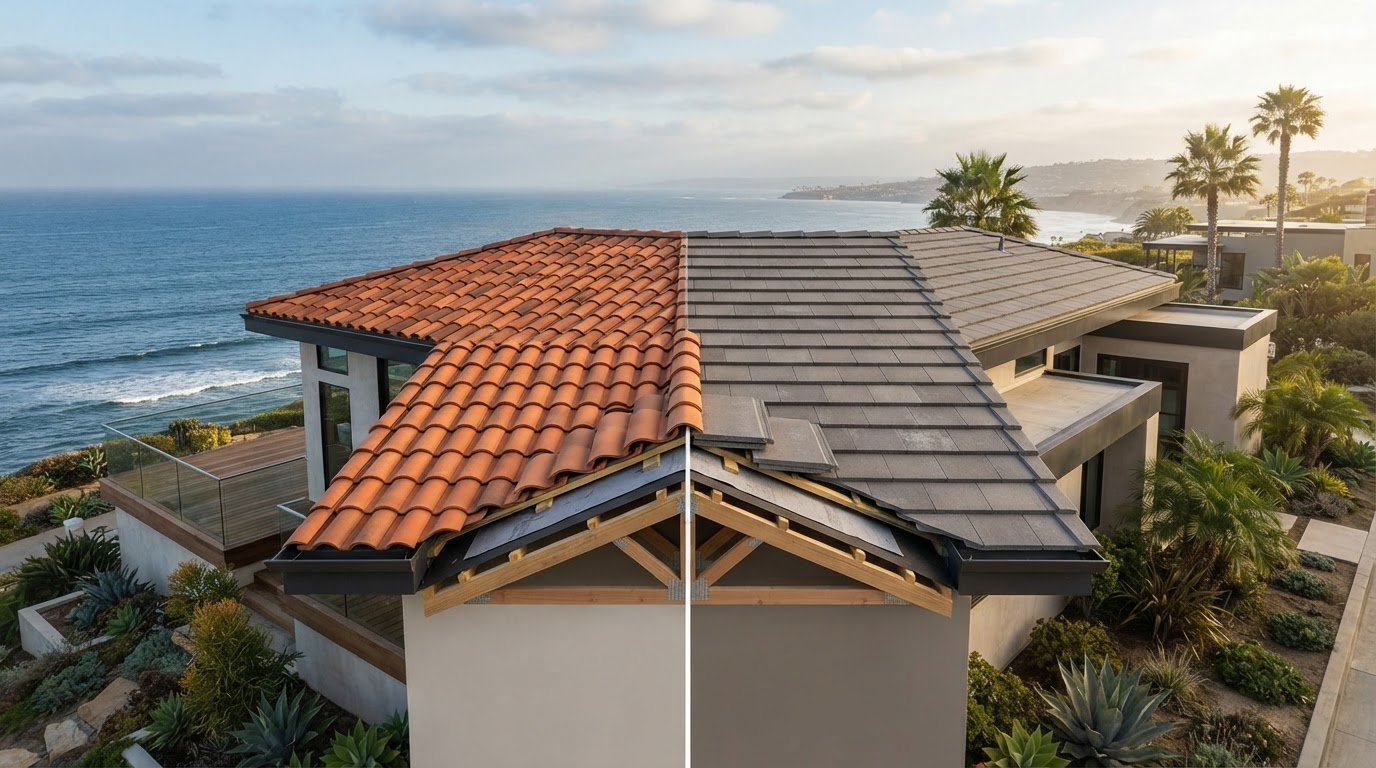
California’s Title 24 requires cool-roof performance on many new and replacement roofs in hotter climate zones. Reflective materials can help limit absorbed heat, but performance depends on the selected roofing system. In Mediterranean-style neighborhoods, clay and concrete tile also suit common architectural designs. Their weight matters: concrete tile can weigh three to four times as much as asphalt roofing, so the supporting structure is a key consideration.
Longevity is only one part of value. Metal roofing can reflect solar energy, while clay tile provides insulation and reflects heat. Concrete tile is durable and can mimic clay, slate, or wood shakes. Slate may last a long time, but its weight and higher installed cost make it a distinct choice. Asphalt can appeal when a lighter, budget-conscious roofing system is preferred.
Roof shape also narrows the options. Pitched sections commonly use shingles or tile, while flat and low-slope areas need systems designed for those surfaces, such as TPO or rolled asphalt torch-down roofing. These systems differ from steep-slope shingles and are not interchangeable. A roofing assessment can consider transitions between roof sections, drainage paths, support, and applicable code requirements.
Start by comparing the roof’s slope and structural capacity. Then weigh reflective performance, durability, and relative cost to identify a suitable option.
Are asphalt shingles worth it in Southern California?
Asphalt shingles can work in Southern California, but heat, ultraviolet exposure, and roof location affect durability. Cool-roof performance and fire-rating requirements also influence which options suit a home.
Three-Tab Shingles
Three-tab shingles use a flat, uniform profile and are typically rated to withstand winds up to 60 mph. Standard versions typically last 15 to 20 years, making them a shorter-life choice than architectural shingles. Their simpler construction may suit homeowners prioritizing a basic roofing option, but the expected service life and intense local sun belong in the comparison.
Architectural Shingles
Architectural shingles use a layered profile that creates more dimension than three-tab shingles. They typically last 25 to 40 years, although inland roofs exposed to full summer sun may see granule loss and curling after 15 to 25 years. That difference shows why a published lifespan is not a guarantee of service life under every roof’s weather and sun exposure.
Cool Shingles
Cool shingles are reflective asphalt options designed to absorb less heat than standard shingles. California Title 24 requires cool-roof performance on many new and replacement roofs in hotter climate zones; the Cool Roof Rating Council directory lists qualifying products. For wildfire-prone areas, look for a Class A roof assembly where required. Class A fire-rated asphalt shingles are an option when they are cool shingles.
Heat and ultraviolet exposure can accelerate shingle wear, including curling or cracking. Reflective shingles can support energy efficiency, while standard asphalt shingles are less energy-efficient without a specialized cool-roof option. Metal roofing also reflects solar energy, so compare the performance of specific products rather than assuming all shingles offer the same heat protection.
Recommended Brands and Product Lines
Examples include GAF Timberline CS, identified as ENERGY STAR certified, and GAF Timberline HDZ, which has a limited lifetime materials warranty and a 130 mph wind warranty. Owens Corning Supreme 3-Tab has a 25-year warranty. These examples differ in construction and stated warranty details, so match the product’s documentation to local heat, wind, and fire needs.
Warranty scope matters. Written terms may specify coverage for materials, wind, or a stated period, but that does not establish protection against heat damage, fading, or algae. Exclusions and conditions vary by product, so don’t assume a materials or wind warranty covers every type of shingle wear.
To compare options, identify the roof’s exposure and applicable fire requirements, then review cool-roof qualification and the exact warranty terms. A roofing assessment can help connect those factors to the roof’s shape and installation needs; explore asphalt shingle roofing as one option for a pitched roof.
Asphalt shingle cost and lifespan in Southern California
Asphalt shingles in Southern California typically last 15-25 years, with type and exposure influencing their lifespan. Compare the initial roofing cost with likely replacement timing, maintenance needs, and the roof’s structural requirements. Hot temperatures and direct sun can accelerate wear, so a product’s rating alone doesn’t tell the whole story.
Installation cost depends on roof area, slope, access, existing layers, deck condition, and details such as valleys and penetrations; pricing is provided after a quote request. These factors affect labor and material needs, so two roofs with similar floor areas can require different scopes. A contractor’s assessment should account for the roof itself, not just the home’s square footage.
Shingle type creates a useful lifespan comparison. Standard three-tab shingles typically last 15 to 20 years, while architectural shingles are described as typically lasting 25 to 40 years. Across California homes, asphalt shingles have a stated lifespan of 15-30 years. These ranges differ because product construction and roof conditions vary, so compare a specific product’s rating with its intended use.
Class 4 impact-resistant asphalt shingles carry the highest durability rating available for asphalt shingles. That rating distinguishes impact resistance, not lifespan or heat performance; standard shingles don’t have the same top impact classification. Consider the rating alongside local exposure and the roof’s other performance needs.
Maintenance can help identify trouble before a small defect lets water beneath the shingles. Look for lifted, cracked, or missing shingles, loose flashing, granule buildup in drainage areas, and signs of leaks inside. Pay attention to visible damage after severe weather. Keep the roof surface and drainage paths clear, and document changes with dated photos. Heat-related curling or granule loss can signal wear, but one damaged shingle doesn’t establish the condition of the entire roof.
Tile offers a longer potential lifespan, with clay roofs typically lasting 50 to 100 years and concrete tile roofs 30 to 50-plus years. That comparison must include structure: concrete tile can weigh three to four times as much as asphalt roofing, while clay tiles also require adequate roof support. A longer material lifespan doesn’t mean every roof component lasts equally long; tile underlayment typically ages out after 20 to 30 years.
For a practical comparison, weigh the shingle type’s expected lifespan, the impact rating suited to the roof’s exposure, and any work needed before installation. Then compare those findings with tile’s longevity and structural demands. This helps clarify whether asphalt’s lighter construction and shorter replacement cycle suit the home.
Asphalt shingles’ durability and ease of installation
Asphalt shingles are relatively straightforward to install and repair, which can simplify work on common pitched roofs. Their durability still depends on product construction, roof exposure, and installation quality. Some multilayered asphalt shingles are rated for winds up to 110 mph, while Class 4 impact-resistant shingles offer the highest impact rating available for asphalt shingles. Those ratings describe specific performance characteristics, not every aspect of roof life.
Installation details matter. The National Roofing Contractors Association notes that a roofing warranty is only as strong as the installation behind it. Installers need to follow the shingle manufacturer’s instructions for fastening, layout, and flashing at edges, valleys, and roof penetrations. Accurate alignment helps shingles form continuous water-shedding courses, while careful flashing protects transitions where leaks can begin.
To support asphalt shingles in Southern California, choose underlayment suited to the roof assembly and follow its installation requirements. Proper attic ventilation helps manage heat and moisture, while correct fastening and flashing reduce the risk of loose edges or water entry. The right details depend on the roof’s design and applicable requirements, not on one underlayment or ventilation setup for every home.
Concrete tile offers a different balance of durability and installation demands. Concrete tile roofs typically last 30 to 50-plus years, and the material is described as energy-efficient and durable. Tile can also resist fire and pests, while its profile may suit homes designed around Mediterranean architecture. However, concrete roofing can weigh three to four times as much as asphalt. That additional load makes structural support a central part of planning, not a minor installation detail.
Concrete tile can absorb water and become heavier after rain, so the roof structure must account for its installed load and local conditions. A roofing assessment considers the roof framing and existing assembly before selecting a system. Tile’s longer lifespan can be attractive, but structural support and installation scope shape its overall value. Installed cost depends on the project, with roof area, slope, access, and structural work all affecting the scope.
Before choosing either material, compare it with the roof’s needs. For asphalt shingles, review the impact and wind ratings, installation instructions, and warranty terms. For concrete tile, assess structural capacity and water management alongside durability. A cool-roof selection can support energy performance, but reflective properties don’t replace sound fastening, ventilation, or flashing.
Architectural versus three-tab asphalt shingles
Both options use asphalt, but their layered construction, appearance, and expected service life differ. Compare those features with the roof’s sun exposure, wind needs, and the look you want for your home.
Architectural Asphalt Shingles
Architectural shingles are multilayered, giving the roof a more dimensional aesthetic than a flat, uniform three-tab pattern. They’re typically described as lasting 25 to 40 years, although inland Southern California roofs in full summer sun may experience granule loss and curling after 15 to 25 years. Some multilayered shingles are rated for winds up to 110 mph, but that rating varies by product.
Three-Tab Asphalt Shingles
Three-tab shingles have a flatter profile, with regularly spaced cutouts that create a repeated pattern across the roof. Standard versions typically last 15 to 20 years and are typically rated to withstand winds up to 60 mph. Their simpler appearance may suit a more understated roof design, but their expected service life is generally shorter than architectural shingles’ stated range.
For a roof exposed to strong sunlight, compare the product’s stated lifespan with the conditions it is likely to face. Inland Southern California roofs in full summer sun may show granule loss and curling sooner than broad product-life estimates suggest. Architectural construction doesn’t eliminate heat exposure, so review the specific shingle’s documentation and the roof’s sun exposure before deciding.
Wind ratings also need context. A rating describes tested or stated wind resistance, not protection from every extreme-weather event or installation issue. Three-tab shingles’ 60 mph rating contrasts with some multilayered products rated up to 110 mph. Correct installation remains important: shingle alignment, fastening, and roof-edge details all affect how the finished system performs.
Appearance matters, too. Architectural shingles add visible depth that can complement varied home styles, while three-tab shingles create a more uniform, repeated pattern. Neither profile alone indicates cool-roof performance. Reflective properties and product qualification are separate factors to compare for California energy requirements.
To choose, weigh the roof’s sunlight and wind exposure, the desired aesthetic, and each product’s stated lifespan and ratings. For guidance comparing asphalt shingle choices, discuss your roofing options.
Higher Levels Roofing: Asphalt Shingle Roofing
Higher Levels Roofing provides asphalt shingle installation, replacement, and repair for homeowners. If you’re weighing architectural and three-tab shingles, an assessment can help connect your preferred appearance and performance needs with your roof’s slope, condition, and exposure.
Asphalt may suit a home where a lighter roofing material is preferred. If you’re also comparing tile, Higher Levels Roofing offers flat concrete tile, concrete S tile, and clay tile roofing. A useful comparison considers more than shingle type: roof structure, energy requirements, and the home’s style all matter. These factors help clarify whether asphalt or tile better fits the project.
Contact Higher Levels Roofing to discuss your roof and the options that suit your home.
Make Your Next Roofing Decision With Confidence
Turn your comparison into a clear project brief: note the roof’s condition, the look you prefer, and the performance priorities that matter most. This gives you a practical starting point for discussing material and installation choices instead of choosing by appearance alone.
As you decide whether the best asphalt shingles for Southern California’s climate suit your plans, consider how your priorities work together. A preference for shingles may point to one solution, while a different roof design or aesthetic may make tile worth comparing. The conversation should focus on your home and the outcome you want.
Higher Levels Roofing offers asphalt shingle, flat concrete tile, and concrete S tile roofing. Share what you’re weighing and discuss which option best fits your roofing project.
Contact Higher Levels Roofing today to take the next step toward a roof that feels right for your home.
Frequently Asked Questions
Asphalt Shingles: Affordable and Popular, But Are They the Best?
Asphalt shingles can be a sensible choice, but they aren’t automatically the best fit for every Southern California home. Their lighter construction and range of styles may suit homeowners seeking a familiar pitched-roof material. The trade-off is a shorter expected service life than tile or metal. Before choosing, compare the roof’s sun exposure, structural capacity, desired appearance, and replacement plans.
Do roofing shingles affect energy bills?
Yes. A reflective shingle can absorb less solar heat than a standard shingle, which may help reduce cooling demand. Cool roofs can lower roof surface temperatures by up to 50°F and cut cooling costs by 10-15%. Actual household energy use also depends on insulation, ventilation, windows, and cooling habits. For a San Diego home, consider the roof assembly and reflective performance together.
How long do architectural shingles last compared to three-tab shingles?
Architectural shingles are typically described as lasting 25 to 40 years, compared with 15 to 20 years for standard three-tab shingles. These are expected lifespans, not guarantees for a particular roof. For example, a roof with direct sun exposure, poor ventilation, or installation defects may wear differently from one with more favorable conditions. Compare the product warranty separately from its expected service life.
Which asphalt shingles perform best in Southern California heat and intense UV exposure?
Reflective cool shingles are worth considering for heat and sunlight exposure. The best asphalt shingles for Southern California’s climate should combine cool-roof performance with a design suited to the roof’s exposure and applicable requirements. Standard asphalt shingles can wear faster in intense heat, with curling or cracking among possible signs. Product reflectivity and installation details both influence roof performance.
Which asphalt shingles have the best wind, fire, and algae-resistance ratings for Southern California?
Compare each product’s ratings by performance type, since a wind or impact rating doesn’t establish fire or algae resistance. Some multilayered asphalt shingles are rated for winds up to 110 mph, while three-tab shingles are typically rated up to 60 mph. Class 4 is the highest impact-resistance rating for asphalt shingles. In covered high-fire-risk areas, the required roof assembly is Class A. Algae coverage depends on product warranty terms.
How do architectural shingles compare with 3-tab shingles for durability and value in Southern California?
Architectural shingles offer a layered profile and generally longer stated lifespan, while 3-tab shingles have a flatter, more uniform appearance. Value depends on how those features fit the home’s priorities, including visual style, exposure, and how soon replacement may be needed. For example, a homeowner planning to stay long-term may weigh service life differently from someone prioritizing a consistent, simple roof design.
What California Title 24, building-code, and fire-zone rules apply to asphalt shingle roofing?
Title 24 requires cool-roof performance on many new and replacement roofs in hotter climate zones. The California Building Code requires a Class A roof assembly for homes in Very High or High Fire Hazard Severity Zones or the wildland-urban interface. San Diego County interface standards also require at least a Class A roof covering in covered areas. Applicable requirements depend on the home’s location and project.
How long do asphalt shingles typically last in Southern California, and what factors shorten their lifespan?
Asphalt shingles in Southern California typically last 15-25 years. Direct sunlight and intense heat can accelerate deterioration; inland roofs exposed to full summer sun may show granule loss and curling after 15 to 25 years. Poor installation, damaged flashing, and ventilation problems can also undermine roof performance. Watch for missing or curling shingles, granules collecting in drainage areas, and signs of moisture indoors.
Comments