


S-Tile vs Flat Tile Roofing in La Jolla: Pros and Cons

Flat tile may be worth considering when performance matters. In a National Institute of Standards and Technology comparison, flat tile roof systems performed best for projectile damage and wind uplift, followed by contoured tile and composition shingles. For homeowners weighing the pros and cons of S-tile vs. flat tile roofing in La Jolla, the practical choice also depends on the look you want and how each profile suits the roof. S-tile has a curved, contoured appearance, while flat tile offers a flatter, shake-like look.
Both styles can add lasting character to a home, so look beyond curb appeal before deciding. The shape affects the finished appearance, while the roof design and installation details influence how the system performs.
This guide compares S-shaped pantiles and flat shake tiles by appearance, installation, maintenance, and trade-offs. Use the comparisons to decide which profile better fits your home and priorities.
Table of Contents
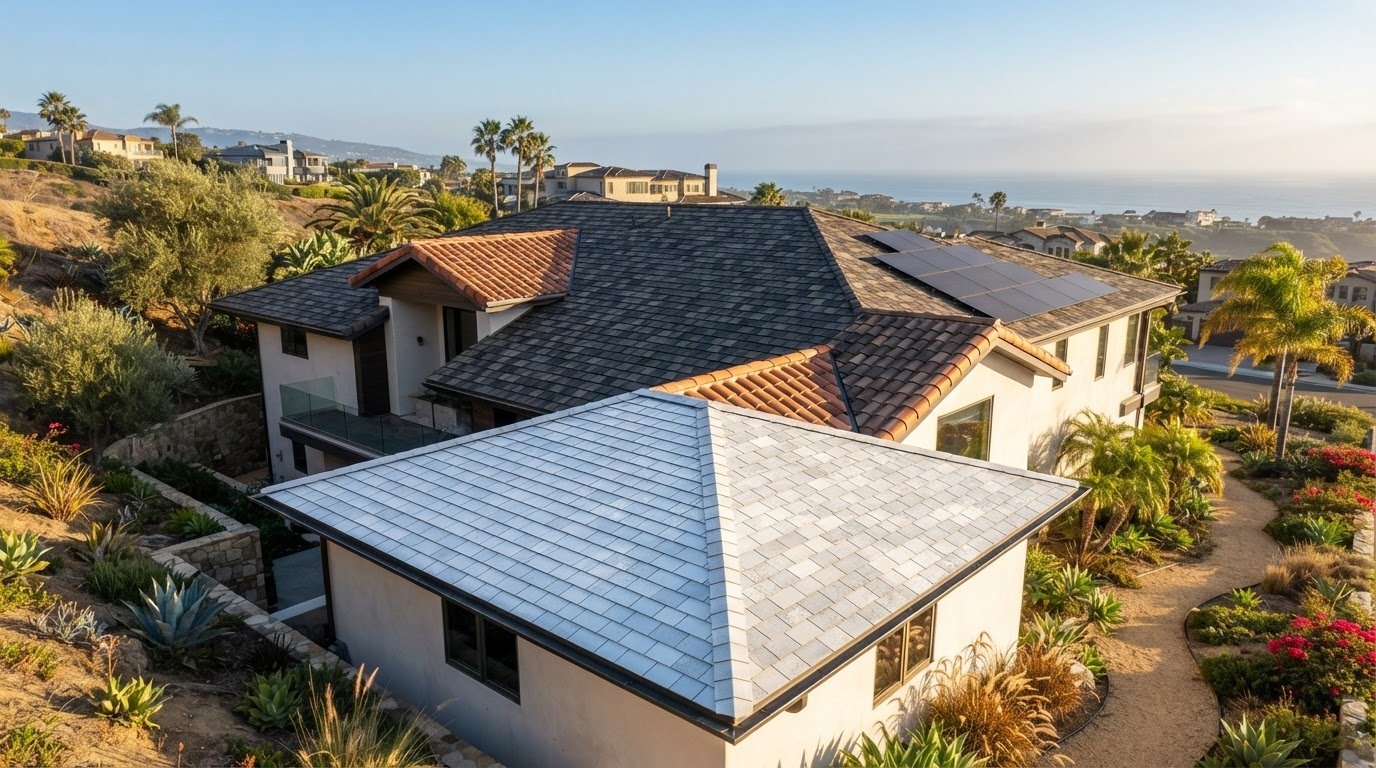
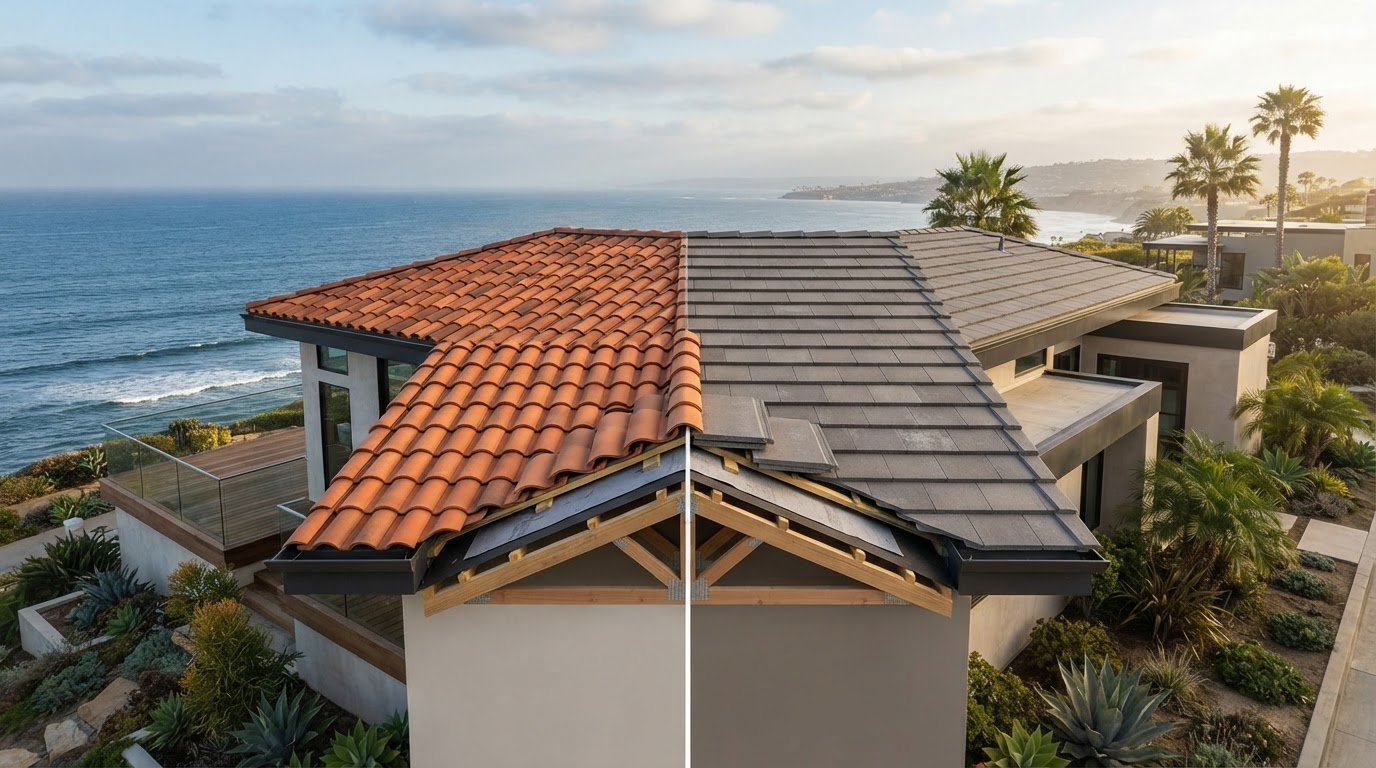
Tile roof styles, including S-shaped pantiles and flat shake tiles
For coastal wind, the National Institute of Standards and Technology found flat tile roof systems performed best for projectile damage and wind uplift, followed by contoured tile and composition shingles. Salt air and rain performance depend on the tile material, roof design, and installation details, not profile alone.
La Jolla historic districts and homeowners associations may have rules affecting roof styles or colors, and requirements can vary. Review the applicable design guidelines and governing documents before choosing a tile profile or finish.
S-shaped pantiles create a repeating pattern of raised curves and channels, giving a roof visible depth and a traditional appearance. Flat shake tiles have a flatter face that recalls the layered look of wood shakes, creating a more even roofline. Both profiles are available in materials such as clay and concrete, so choose the material and profile as separate decisions.
Material weight matters alongside style. Spanish clay tiles can weigh 8 to 15 pounds per square foot, depending on style and size. A roof’s supporting structure, tile material, profile, and chosen finish all influence planning. For a material budget, compare the full system requirements rather than focusing on tile alone. Roof preparation, underlayment, flashing, and the complexity of the roof can affect the work involved.
La Jolla’s coastal setting makes exposure and roof detailing important to consider. Wind uplift depends on how the roof system is assembled and secured, while drainage depends on roof slope and water-management details. Salt exposure also makes the selected material and surrounding roof components relevant. A tile profile alone does not determine how the complete roof will perform.
Use these steps to compare samples and narrow your choice:
View S-shaped and flat samples against the home’s architecture, not only as small pieces.
Compare the material, color, profile, and roof details as one system.
Account for structural considerations and the roof’s shape when weighing material choices.
Factor in district or association design requirements before settling on a finish.
Choose flat tile if you prefer its appearance and the NIST findings on wind uplift and projectile damage are important to your decision. Choose S-tile if its pronounced curves better suit the home’s architectural character, while also weighing material, exposure, and roof detailing.
Tile roofing installation and maintenance
For a tile replacement in La Jolla, applicable building-code and permit requirements depend on the property’s jurisdiction and project scope. Identify whether the work changes the roof covering, slope, or structure, as these details shape the review.
Roof pitch is a key installation factor. Tile roofs should not be used on roofs with a pitch of less than 4:12. Spanish clay tile roofing has a minimum slope requirement of 2.5/12 for adequate water drainage. For Spanish clay tile roofs with pitches from 2.5/12 up to a 4/12, two layers of underlayment are recommended. These requirements address different considerations, so slope and tile system must be assessed together.
Plan the installation around the whole roof, not just the visible tiles. The layout at valleys, ridges, hips, chimneys, and roof penetrations affects how tiles meet and water flows. Underlayment and flashing protect vulnerable transitions beneath or beside the tile surface. A clear plan should describe these components and how the selected profile fits the roof.
When hiring a tile roofing contractor in La Jolla, compare written scopes covering tile type, underlayment, flashing, roof preparation, and cleanup. Look for a clear explanation of how the existing tiles and roof details will be handled, rather than comparing proposals by material name alone.
Start maintenance by observing the roof carefully from the ground. Look for displaced or cracked tiles, debris in valleys, and visible damage around roof penetrations. Don’t walk on tile to inspect it, since foot traffic can damage tiles. A closer professional inspection can assess concealed components and determine whether an issue is limited to the surface or affects what lies beneath the roof covering.
Keep valleys and drainage paths clear of leaves and other debris.
Note visible tile movement or breakage, especially near ridges and roof edges.
Pay attention to stains or damp areas inside the home after rain.
Record the location of any concern so the inspection can focus on that roof area.
After repairs or replacement, retain the scope and material details with home records. They help homeowners understand what was installed and where future maintenance may be needed. For a clearer view of roofing installation options, compare how tile profile, slope, underlayment, and flashing work together before settling on a plan.
Requirements depend on the property’s jurisdiction and project scope. Whether the work changes the roof covering, slope, or structure shapes the review, so identify those details when determining applicable codes and permits.
Tile roofing pros and cons
Neither S-tile nor flat tile is automatically more energy-efficient or better ventilated in Southern California. Those results depend on the roof assembly, insulation, ventilation design, and installation, not the tile profile alone. When weighing the pros and cons of S-tile versus flat tile roofing in La Jolla, compare the complete system rather than shape alone.
S-Tile Roof Performance
S-tile has a contoured surface that gives a roof pronounced curves and shadow lines. Its durability and lifespan depend on the tile material and the complete roof system, while maintenance includes watching for cracked or displaced pieces. Clay tile roofing can remain structurally sound for over 100 years in suitable conditions. The profile itself doesn’t establish ventilation or energy performance; those depend on the assembly below it.
Flat Tile Roof Performance
Flat tile creates a more even surface and a restrained, shake-like appearance. As with S-tile, lifespan and maintenance needs depend on material, installation, and care, not shape alone. In the National Institute of Standards and Technology comparison, flat systems performed best for projectile damage and wind uplift. That finding concerns impact and uplift, not energy efficiency or ventilation.
Tile’s key advantages include a durable roof covering, strong design options, and fire resistance. Clay tiles often carry a Class A fire rating under UL 790. Some clay tile systems may be offered with warranties up to 50 years, and some tile manufacturers offer warranties of up to 50 years or more. A tile roof can last over 100 years when installed in the right climate, but the roof assembly still requires attention.
Weight is an important trade-off. Material selection is therefore a structural consideration, not simply a style decision. Check the roof support and condition of the existing structure before replacement.
Potential advantages: distinct architectural character, fire resistance, and the possibility of a long service life.
Potential drawbacks: substantial weight, careful installation requirements, and the need to maintain roof details and replace damaged tiles.
Energy and ventilation: the tile profile alone doesn’t determine indoor comfort; insulation and ventilation design also matter.
Long-term upkeep: cracked tiles can expose underlying roof components, so prompt assessment helps identify the scope of a repair.
When weighing S-tile versus flat tile roofing in La Jolla, compare complete systems rather than assuming one profile is best in every category. Choose based on the home’s structural needs, preferred appearance, and planned roof assembly beneath the tile. Longevity and performance depend on these factors working together.

Tile roofing types
Tile selection involves two separate choices: material and profile. Clay or concrete describes what the tile is made from; S-shaped or flat describes its visible form. Comparing these choices separately makes it easier to assess appearance, weight, and fit with the home.
Clay tile is made from fired clay and comes in varied colors and profiles. Spanish-style homes often pair curved clay tiles with a traditional roofline, while flatter shapes can suit a more restrained design. Spanish clay tiles can weigh 8 to 15 pounds per square foot, depending on style and size. That range makes the particular tile, not simply the label “clay”, important to structural planning.
Concrete tile is available in shapes including curved S profiles and flatter, shake-like profiles. Choose an appearance that complements the home’s architecture, while keeping the tile’s weight in mind. The roof structure and complete tile system matter alongside color and shape.
Profiles create different visual effects. S-shaped tile has alternating raised curves and channels that produce pronounced shadow lines. Flat shake tile has a flatter face and a layered appearance. Since both profiles can be made in different materials, comparing S-shaped clay with flat concrete means weighing differences in both material and profile.
Clay tile has a long history: clay roofing tiles were used in China as early as 10,000 B.C. and reached America during colonization in the 17th century. That history helps explain why clay is strongly associated with traditional architectural styles. Concrete tile provides another route to a tile roof, with profile and finish choices that can echo traditional forms or create a simpler surface.
Start with the home’s architecture: compare curved S profiles with flat shake-like faces against the roofline and exterior details.
Identify the material: decide whether clay or concrete better suits the project before comparing specific tile profiles.
Consider the structure: account for the selected tile’s weight as part of the roof design.
Compare complete samples: review the material, profile, and finish together, since each affects the finished appearance.
Compare clay S-tile with concrete flat tile, then reverse the pairing. This helps show whether your preference comes from the material, the shape, or both. For a La Jolla home, the best fit is a tile that complements its architecture and works with the roof structure.
How do S-tile and flat tile roofs compare in durability, lifespan, and maintenance?
S-tile and flat tile don’t have a fixed lifespan advantage based on shape alone. Material, installation, roof design, and ongoing care all affect durability. Spanish clay tile roofs can remain structurally sound for over 100 years, but that figure describes clay roofing, not every tile profile or roof assembly.
For a fair comparison, compare like with like: concrete S-tile with flat concrete tile, or S-shaped clay with flat clay. Material differences may matter more than the curved or flatter profile. A cracked tile in either system can expose underlying components, so address visible damage promptly to help protect the roof.
Maintenance depends on roof features as well as tile shape. Pay attention to valleys, ridges, roof edges, and penetrations, where roof surfaces meet. Debris in a valley, for example, can obstruct water flow, while a displaced tile near a roof penetration may expose a vulnerable area. Observe these locations from the ground and arrange a closer inspection if damage appears.
Durability: Compare the tile material and installation details before attributing a performance difference to S-tile or flat tile.
Lifespan: Treat the potential for clay roofs to remain structurally sound for over 100 years as material-specific, not a guarantee for either profile.
Maintenance: Look for cracked or displaced tiles, debris in valleys, and signs of water entry inside the home.
Repairs: Note the location and type of visible issue, such as a broken tile beside a chimney, to guide an inspection.
Flat and S-shaped tiles create different surfaces, but neither removes the need for routine care. A roof with complex valleys or several penetrations needs attention at those transitions, whatever the tile shape. Walking directly on tiles can damage them, so begin with observation from the ground.
Use this decision guide: first identify the tile material, then compare the roof’s installation and details, and finally consider the maintenance those features require. If both options use the same material and sound installation, choose between them based on the preferred appearance and the roof’s specific layout. For help evaluating tile roof repair and replacement options, review the roof’s condition and the tile system together.
Higher Levels Roofing: Asphalt Shingle Roofing
Higher Levels Roofing helps La Jolla homeowners turn a tile comparison into a practical roofing decision. If you’re replacing a roof, consider its structure, your preferred appearance, and the existing condition alongside options such as concrete S tile, flat concrete tile, and clay tile.
Tile may suit a home when its profile and material fit the roof design. Asphalt shingle roofing offers a different roofing category to consider for replacement. If tile is damaged or aging, roof repair services can address specific concerns without treating every issue as a full replacement.
Start by identifying the roof’s current material, noting visible damage, and clarifying the appearance you want. Higher Levels Roofing provides roof installation, replacement, and repair services to help address those needs.
Contact Higher Levels Roofing to discuss your roofing project, or visit higherlevelsroofing.com.
Choose the roof that fits your next chapter
The pros and cons of S-tile versus flat tile roofing in La Jolla are most useful when they help you plan for your home. Consider what matters most: the roof’s appearance, the condition of its structure, and your preferred material. Then use those priorities to guide a practical conversation about the roof.
Higher Levels Roofing offers Flat Concrete Tile Roofing and Concrete S Tile Roofing for homeowners considering these profiles, as well as Asphalt Shingle Roofing as another option. Discuss your home’s existing roof, design priorities, and whether repair or replacement suits the project.
Ready to take the next step? Contact Higher Levels Roofing to talk through your roofing plans. A thoughtful choice today can help you feel more confident about your home’s roof tomorrow.
Frequently Asked Questions
What is the difference between S-tile and flat tile roofing?
S-tile has a curved, wave-like profile, while flat tile has a flatter face. This difference changes the roof’s visible texture and shadow pattern. To compare the styles on a La Jolla home, view samples from the street and alongside details such as trim, stucco, and roofline. Compare tiles made from the same material to judge profile separately from clay or concrete.
What are the pros and cons of S-tile roofing compared with flat tile?
S-tile creates a more pronounced, traditional roofline, while flat tile offers a simpler, more even appearance. In findings from the National Institute of Standards and Technology, flat tile systems performed best for projectile damage and wind uplift, followed by contoured tile. This is not a blanket ranking for every roof. Compare the complete system, including material and installation, and consider how the profile fits the home’s architecture.
How do S-tile and flat tile roofs compare in cost in La Jolla, California?
There is no fixed cost difference between S-tile and flat tile in La Jolla. Price depends on the tile material, roof dimensions and layout, existing roof condition, and installation requirements. Request a quote for your project, then compare proposals with the same scope, including preparation and roof details, so the difference reflects the selected tile and work rather than missing items.
What is the installed cost per square foot for tile roofing in San Diego County?
Tile roofing costs depend on the project, so a single installed rate per square foot will not represent every San Diego County roof. Request a quote for your project. Roof size and shape, tile selection, existing conditions, and required installation work affect the estimate. Compare written scopes covering the same materials and work before weighing totals.
What roof pitch and underlayment are required for S-tile and flat tile roofs?
Tile roofs should not be used on roofs with a pitch of less than 4:12. Spanish clay tile has a minimum slope requirement of 2.5/12 for adequate water drainage. For Spanish clay tile roofs with pitches from 2.5/12 up to a 4/12, two layers of underlayment are recommended. These figures address tile use, drainage, and underlayment separately, so identify both the tile type and roof slope during planning.
Comments