


How to File a California Roof Claim and Review Replacement Coverage

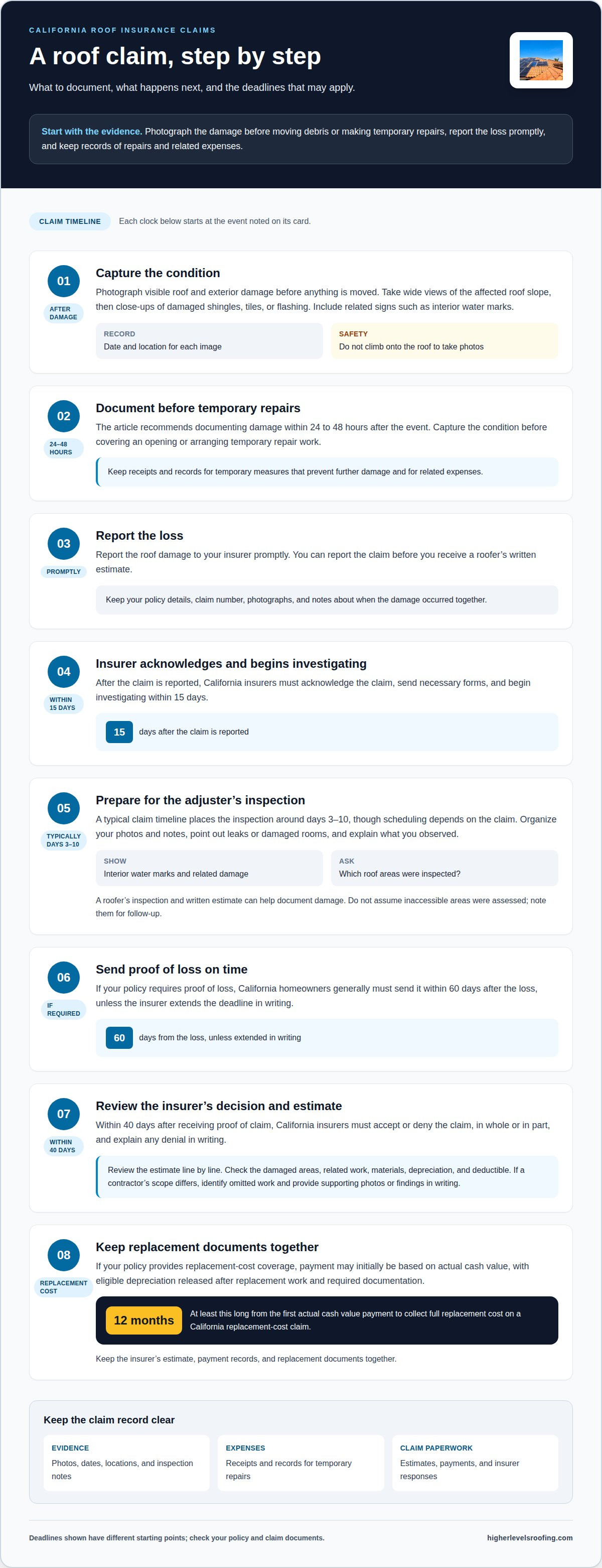
A well-documented roof claim gives the insurer a clear record of what happened and what needs repair. To file a roof damage insurance claim in California, photograph the damage, report the loss promptly, and keep records of temporary repairs and related expenses. According to the California Department of Insurance, insurers must acknowledge a claim, send necessary forms, and begin investigating within 15 days after it’s reported.
Coverage for replacement depends on the cause of the damage, your policy terms, and how the insurer assesses the loss. If your policy requires proof of loss, California homeowners generally must send it within 60 days after the loss, unless the insurer extends the deadline in writing, according to the California Legislature.
This guide explains how to file a roof damage insurance claim in California, what to expect during the adjuster’s inspection, and how replacement-cost coverage may work. You’ll also learn what to review in the insurer’s estimate and how a roofing inspection can help clarify the damage before repairs begin.
Table of Contents
Does Insurance Cover Roof Replacement in California?
Coverage depends on the cause of the damage, your policy terms, and whether it pays actual cash value or replacement cost. Use these steps to understand what may apply before arranging permanent repairs.
Identify Covered and Excluded CausesCheck how your policy treats the cause of the damage. California homeowners insurance usually covers sudden roof damage from hail, storms, falling trees or limbs, fire, smoke, and heat. It generally excludes damage caused by skipped maintenance or slow leaks left unrepaired. Earthquake damage usually requires separate earthquake coverage. For example, storm damage may qualify, while a leak that worsened over time may not.California homeowners insurance generally covers roof damage from sudden covered events, not every type of deterioration.
Consider Wildfire, Wear, and Roof AgeReview the policy language for fire and smoke, then document whether the damage followed a wildfire or another sudden event. Fire, smoke, and heat damage are usually covered causes. Age alone does not establish coverage; the insurer considers the damage’s cause and policy terms. Asphalt shingles commonly last two to three decades, while concrete and clay tiles can last 50-100 or more years. Tile underlayment may need replacement every 20-30 years in hot climates.Keep records that distinguish storm or fire damage from gradual wear. That difference can affect the insurer’s assessment.
Check Deductibles and Replacement CoverageFind the deductible and roof-loss terms in your policy declarations. A deductible may be a fixed amount or a percentage, and wind or hail may have a separate deductible. Don’t treat an offer to pay or waive your deductible as a discount. Keep the deductible visible in the claim accounting and ask your insurance company to explain how it applies.Replacement coverage depends on the policy and covered damage. California insurers must accept or deny a claim, in whole or in part, and explain any denial in writing within 40 days after receiving proof of claim, according to the California Department of Insurance.
Compare Cash Value and Replacement CostCheck whether payment is based on actual cash value (ACV) or replacement cost. ACV accounts for depreciation, so an older roof may receive less than the cost of replacing it. Replacement-cost coverage may initially pay ACV, then release eligible depreciation after replacement work and required documentation. For a California replacement-cost claim, the homeowner has at least 12 months from the first actual cash value payment to collect full replacement cost, according to the California Legislature.Keep the insurer’s estimate, payment records, and replacement documents together. Before accepting a settlement, compare the estimate’s scope with the covered damage.
How Does the Insurance Adjuster Process Work for Roof Damage?
Arrange a roofer’s inspection as soon as it’s safe, ideally before the adjuster visits. A written estimate can help document the damage, but you can report the claim before you receive one.
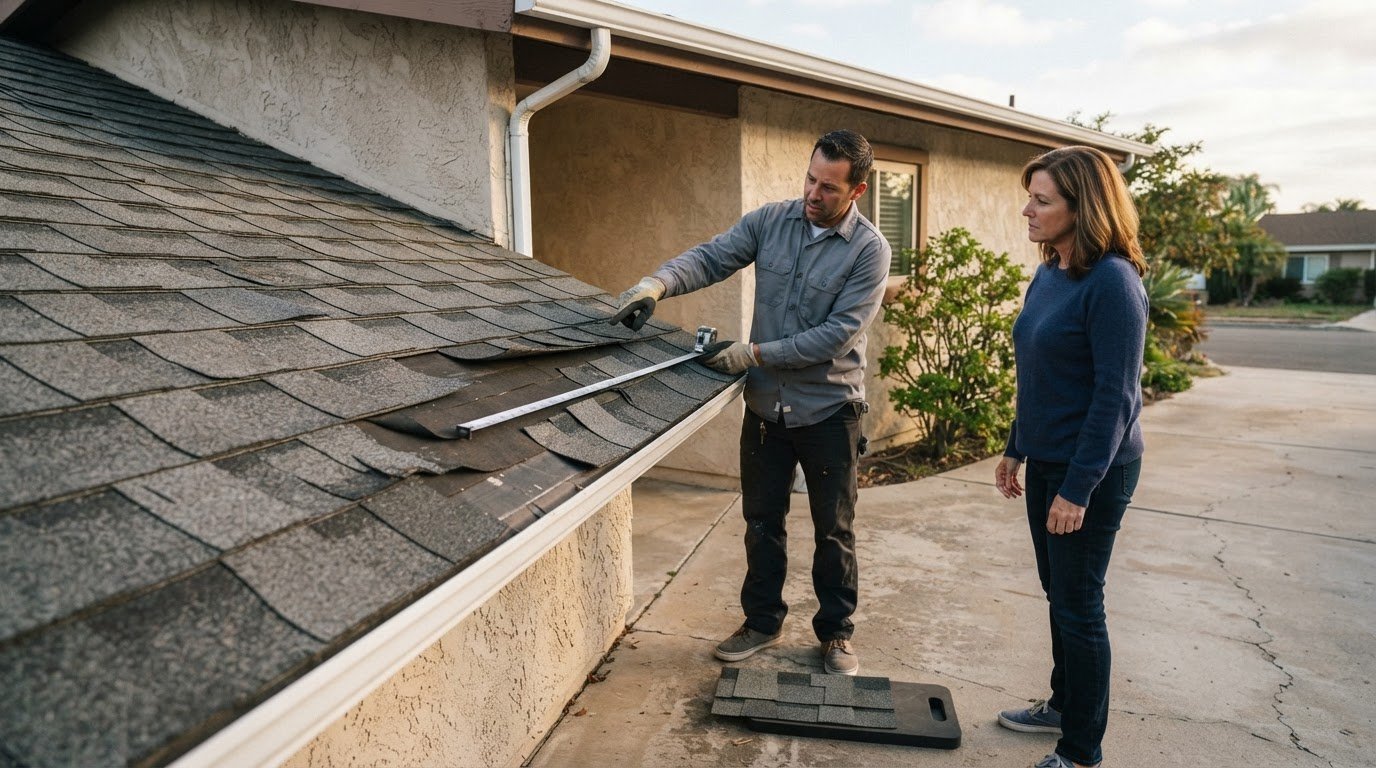
Prepare for the Adjuster VisitGather your policy details, claim number, photos, and notes about when the damage occurred. Mark visible leaks or damaged rooms to show how the roof condition affects the home. Keep receipts for temporary measures that prevent further damage. Don’t climb onto an unsafe roof. Ask a qualified professional to assess areas that cannot be viewed safely from the ground.
Meet the AdjusterWalk the adjuster through the damage and explain what you observed, including when it began and what may have caused it. Point out interior water marks or damaged belongings that connect to the roof issue. The adjuster assesses the loss and confirms details. A typical claim timeline places the inspection around days 3-10, though scheduling depends on the claim.
Review the Inspection FindingsAsk which roof areas the adjuster inspected and how the findings will appear in the written report. Insurers may use aerial imagery to review roof layout and visible conditions, but imagery may not show concealed damage beneath roofing materials. Compare the images with your ground-level photographs and the roofer’s observations. If an area was inaccessible, note it for follow-up rather than assuming it was assessed.
Review the Claim EstimateRead the estimate line by line before treating it as the final settlement. Check whether it includes the damaged roof areas, related work, materials, and any stated depreciation or deductible. If your contractor’s scope differs, identify the specific omitted work and provide supporting photos or findings in writing. Keep each version of the estimate and the insurer’s responses together. If documented damage needs repairs, review roof repair services as you consider next steps.
How do I file a claim for roof damage?
If you’re learning how to file a roof damage insurance claim in California, start by recording the roof’s condition before cleanup changes what you can see. Photograph the damage promptly and keep repair records and inspection notes together.
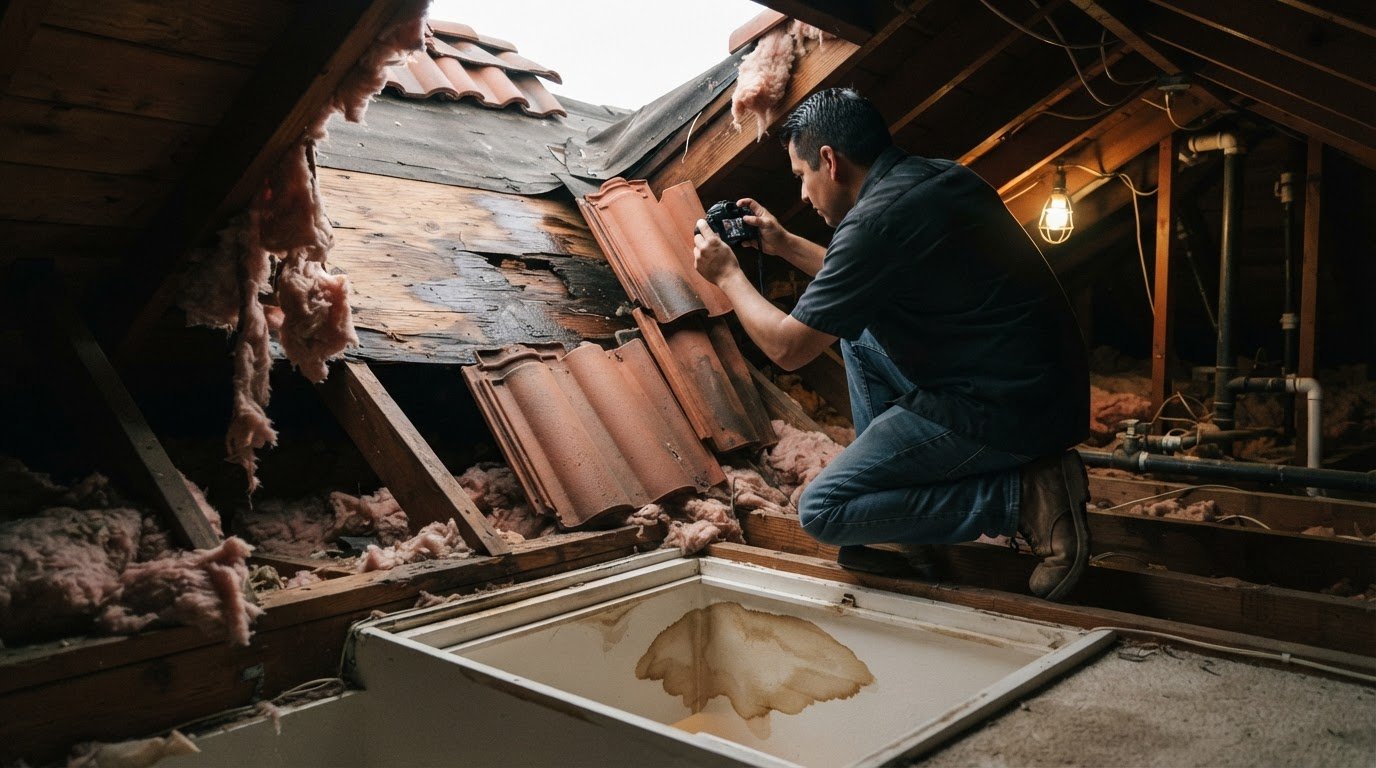
Record Roof and Exterior DamagePhotograph visible roof and exterior damage before anything is moved. Take wide shots showing the affected roof slope, followed by close-ups of cracked tiles, lifted shingles, or damaged flashing. Include related signs, such as a dented vent or a water mark on an interior ceiling. Record the date and location of each image, and don’t climb onto the roof to take photographs.
Document Damage Before Temporary RepairsCapture the condition before covering an opening or arranging temporary repair work. Documenting damage within 24 to 48 hours after the event creates a timely record. Photograph each area from more than one angle, and note visible water entry or changes after rain. Then take photos of the temporary repair and save receipts for materials or labor. Don’t delay necessary steps to prevent further damage.
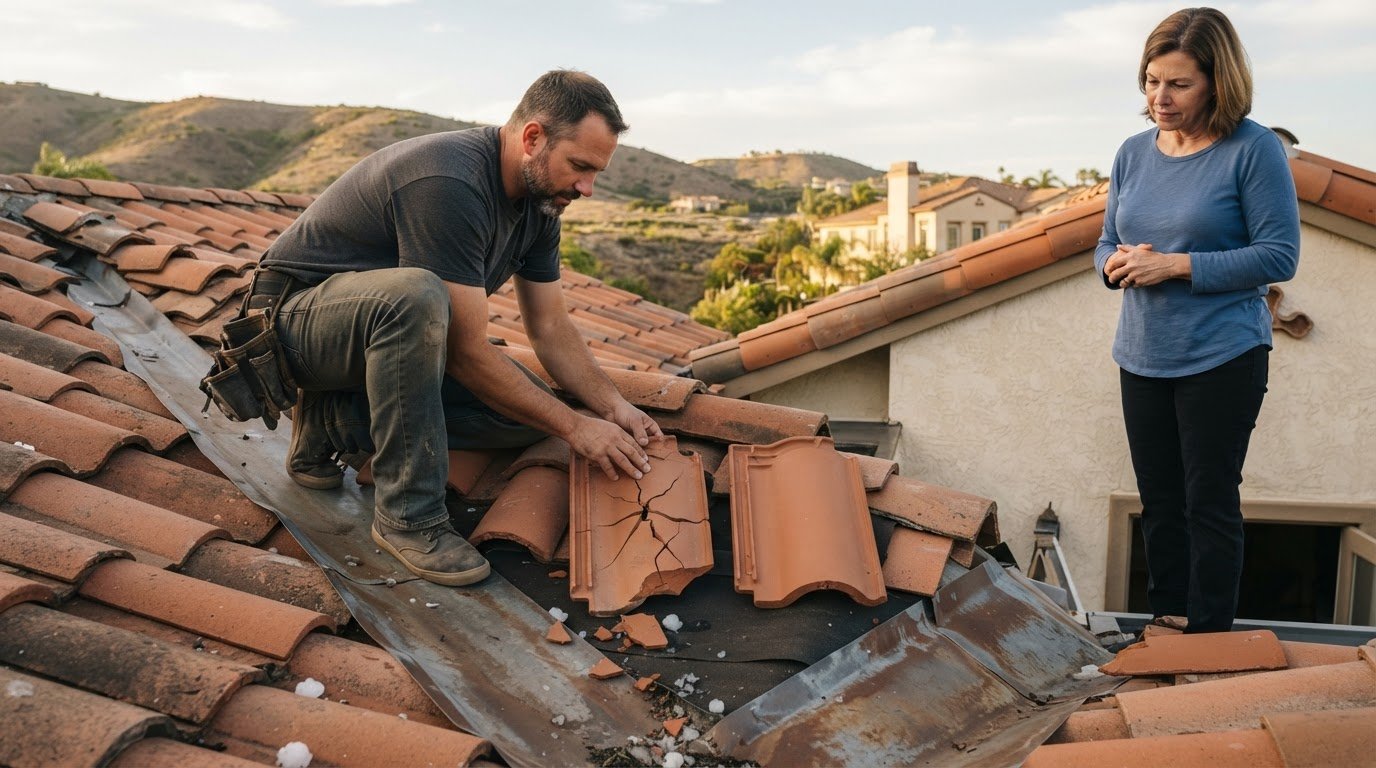
Keep Damaged MaterialsSet aside removed roofing materials, such as a broken tile or damaged shingle, if you can store them safely. Photograph each item in place before removal, then label it with its roof location and removal date. If keeping the material is hazardous or impractical, take clear photographs first and record why it was discarded. Document the evidence before disposal.
Organize Claim EvidenceKeep photos, inspection notes, repair receipts, and claim communications in one dated folder. Add a brief description to each image, such as “north roof slope” or “ceiling stain below leak.” An inspection by a licensed roofer can provide another record of visible damage and recommended repairs. Organized records make it easier to connect each document to the loss when filing a roof damage insurance claim in California.
Steps for filing a California roof insurance claim
Report the loss promptly, follow your policy’s notice requirements, and keep each claim document. This helps you track deadlines, decisions, and any payment owed.
Report the Damage to Your InsurerNotify your insurance company as soon as practicable after discovering roof damage. Your policy may set its own notice requirements, so record the reporting date, method, and claim number. California homeowners insurance policies can have different formal filing windows. Don’t wait for a complete repair estimate before giving notice. Reporting promptly starts the investigation and records when the insurer received your claim.
Follow the Claim Process and TimelineTrack each response, form, inspection, and written decision in a dated file. According to the California Department of Insurance, insurers must acknowledge a roof insurance claim, send necessary forms, and begin investigating within 15 days after the claim is reported. Straightforward claims may take 30 to 45 days from filing to initial payment; complex disputes or supplements can take 60 to 90 days.
Complete the insurer’s proof-of-loss form and submit supporting claim documents by the applicable deadline. In California, a homeowner generally must send proof of loss within 60 days after the loss unless the insurer extends the deadline in writing, according to the California Legislature. After a declared state of emergency in California, proof of loss is not required sooner than 100 days after the loss, according to the California Legislature. Save confirmation of delivery.
Compare the decision and payment with your policy, including the deductible and whether settlement uses actual cash value. If you believe the insurer mishandled the claim, file a complaint with the California Department of Insurance by contacting its consumer assistance line at 1-800-927-4357. Provide your claim number, insurer correspondence, and a concise account of the issue. For help assessing documented roof damage, consider arranging a roof repair assessment.
Higher Levels Roofing: Roof Repair Services
Higher Levels Roofing provides roof repair services when storm or other covered damage needs assessment and a practical repair plan. A roofer’s findings can help you understand the affected areas and describe the work needed. Your insurance company determines coverage under your policy.
For homes with asphalt shingles, concrete tile, or flat concrete tile, the repair approach depends on the roofing material and the damage. A clear scope of work can help you compare the physical repairs needed with the insurer’s estimate, without treating the repair assessment as a coverage decision.
If your claim identifies roof damage that needs professional attention, contact Higher Levels Roofing to discuss roof repair services.
Plan the Next Step for Your Roof
Next, connect the insurer’s scope with your roof’s longer-term needs. Consider whether the documented damage calls for focused repairs or a broader replacement plan, and account for the existing roofing material. The work should address the affected area while fitting the home’s overall roof system.
Higher Levels Roofing offers roof repair services, asphalt shingle roofing, flat concrete tile roofing, and concrete S tile roofing. These options help homeowners address an identified roof issue with work suited to the material. A clearly defined project also helps keep the repair scope and claim records organized as work proceeds.
Knowing how to file a roof damage insurance claim in California is one part of restoring confidence in your home; the next is shaping a clear roofing plan. Contact Higher Levels Roofing to discuss the roof work you need. Move forward with a thoughtful plan for your home.
Frequently Asked Questions
Can I tarp the roof before the adjuster comes?
Yes. A tarp can help limit additional water intrusion while you wait for an inspection. If it’s safe, photograph the opening and surrounding damage first, then record where the tarp was placed and keep related receipts. Tell the adjuster what was covered and when. Don’t climb onto an unsafe roof; arrange a safe temporary measure instead.
Where can I get help with a roof insurance claim?
For roof condition and repair questions, Higher Levels Roofing provides roof repair services in the San Diego area, including La Jolla, San Marcos, Encinitas, and Carlsbad. Your insurer handles coverage decisions and claim status. If you’re concerned about how a claim was handled, the California Department of Insurance offers consumer assistance. Keep your policy, claim number, and insurer correspondence together when seeking help.
Do I need an insurance-approved roofer?
A roofer’s estimate can document proposed repairs, but it doesn’t determine whether your policy covers the loss. The insurer evaluates the claim under your policy and may conduct its own inspection. Use a written estimate to identify specific work and materials, then compare it with the insurer’s scope. Keep coverage questions separate from the roofer’s assessment of the roof’s physical condition.
Do I need to be home when the adjuster inspects the roof?
Being home can help you explain where leaks appeared and point out related interior damage, such as a ceiling stain beneath a roof opening. If you can’t attend, arrange access with the insurer and share a concise list of areas to inspect. Make sure the adjuster can reach relevant exterior and interior locations, and keep a record of any access arrangements.
How long does the insurer have to respond?
California insurers must acknowledge a claim, send necessary forms, and begin investigating within 15 days after it’s reported, according to the California Department of Insurance. They must accept or deny a claim, in whole or in part, and explain a denial in writing within 40 days after receiving proof of claim. These are separate deadlines tied to different points in the process.
How long will it take to settle my claim?
A straightforward California roof claim usually takes 30 to 45 days from filing to initial payment. A claim involving disputes or supplements can take 60 to 90 days. The timeline depends on how quickly inspections, documents, and estimate questions are resolved. Track outstanding requests and response dates so you can follow up on specific items rather than asking only for a general status update.
Comments