


How to Choose a Roofing Contractor in San Diego: The 2026 Expert Guide

In San Diego, your roof isn't just a structural necessity; it's a specialized shield against corrosive salt air and intense Pacific sun. Understanding how to choose a roofing contractor San Diego homeowners can actually trust is the difference between decades of security and a series of expensive, leaking mistakes. You're right to feel cautious about the high costs of local home maintenance and the aggressive sales tactics that often follow a seasonal storm. It's a significant investment, and the confusion surrounding California's evolving building regulations only adds to the stress of making the right choice.
We're here to replace that anxiety with professional assurance and a clear path forward. This 2026 guide provides an expert checklist to help you find a reliable, licensed specialist who values craftsmanship over high-pressure quotas. You'll learn how to verify CSLB credentials, navigate the nuances of Title 24 "cool roof" requirements, and ensure your new system is built to last in our unique climate. We'll walk you through the essential steps to secure a durable roof and a stress-free installation process that respects both your property and your peace of mind.
Table of Contents
Understanding the San Diego Roofing Landscape in 2026
San Diego isn't just one climate; it's a collection of distinct micro-climates. A roof in La Jolla faces entirely different environmental stressors than one in San Marcos. When you're researching how to choose a roofing contractor San Diego homeowners should prioritize specialists who treat your home like a part of their own community. National franchises often rely on a one-size-fits-all strategy that ignores our local geography. A local craftsman knows the marine layer isn't just morning fog; it's a persistent chemical challenge for your home's exterior. This local insight is why San Diegans prefer neighborly specialists over distant corporations. You want someone who has seen how the Santa Ana winds affect shingles in Encinitas and knows exactly how to reinforce your home against them.
Beyond the weather, you need a partner who masters the local regulatory environment. Understanding what a roofing contractor does involves more than just physical labor; it's about navigating the complex web of San Diego building codes. In 2026, city and county permit fees typically range between $500 and $1,800. A local expert manages these filings seamlessly, ensuring your project meets every safety standard and fire code requirement. This meticulousness prevents legal headaches and protects your property value for the long term. It's about having a steady, expert hand guide you through a process that can otherwise feel overwhelming.
The Coastal Salt Air Factor
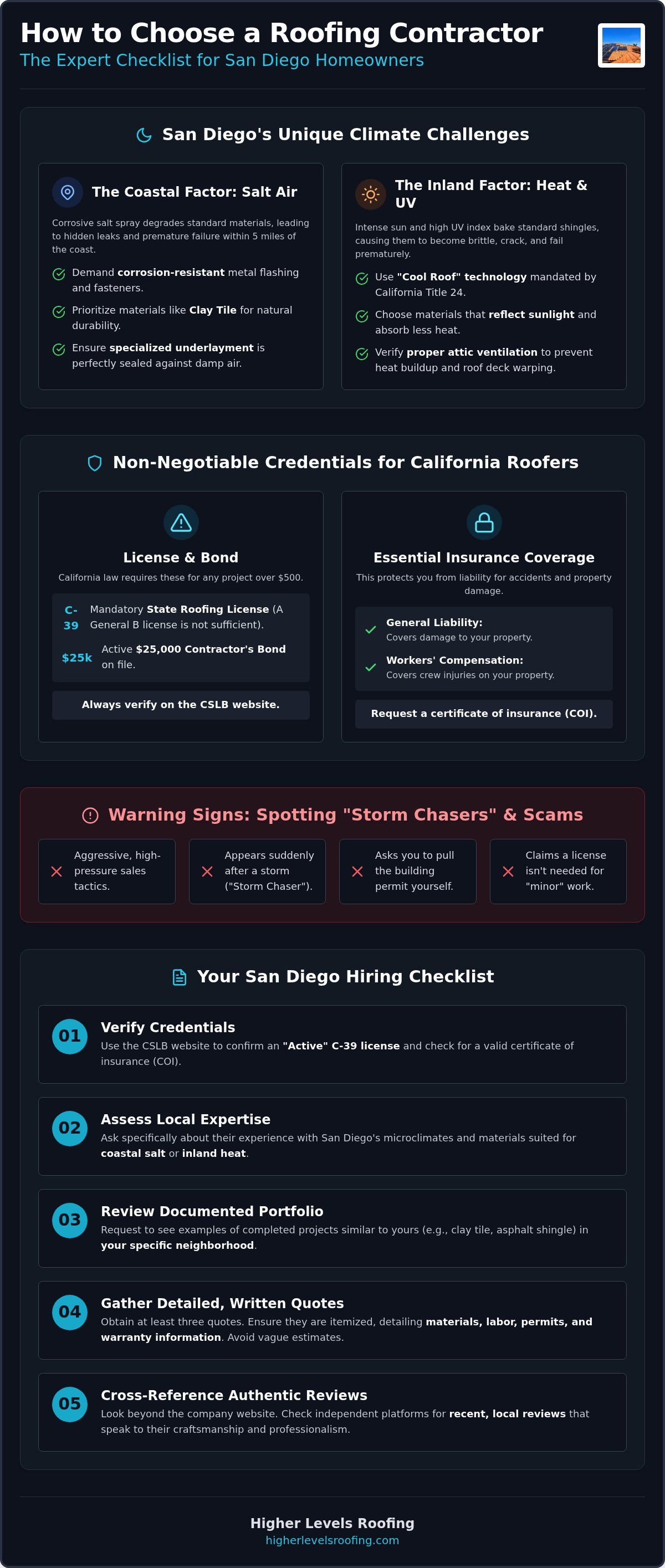
Salt spray can ruin a standard roof in half its expected lifespan if the wrong materials are used. In coastal areas like Carlsbad, every metal component must be high-grade and corrosion-resistant. Airborne salt accelerates the degradation of standard flashing and fasteners, leading to hidden leaks. We often recommend clay tile for these properties because of its natural durability against salt. However, the installation requires a dedicated local advocate who ensures the specialized underlayment is sealed perfectly against the damp Pacific air. Don't let a contractor use standard galvanized materials when your home is within five miles of the coast.
Inland Heat and UV Protection
Inland heat demands a different strategy. In the hotter corridors of San Diego, the high UV index is the primary cause of premature roof failure. Intense sun can bake standard asphalt shingles until they become brittle and crack. When deciding how to choose a roofing contractor San Diego residents in inland areas should ask specifically about thermal protection and "Cool Roof" technology. These materials are mandated by California’s Title 24 regulations because they reflect more sunlight and absorb less heat. A local specialist will also evaluate your attic’s ventilation system. Proper airflow prevents heat buildup that can warp your roof deck, a common issue that shortens the life of your entire roofing system.
The Non-Negotiable Credentials for California Roofers
Trust begins with paperwork. While coastal expertise is vital, legal compliance is the bedrock of a safe installation. When you're learning how to choose a roofing contractor San Diego homeowners shouldn't settle for verbal promises. In California, any roofing project exceeding $500 legally requires a C-39 roofing contractor license. This isn't a suggestion; it's the law. A general B license isn't enough for a standalone roof replacement. You need a specialist who has met California's official requirements for contractors, which includes passing a trade exam and maintaining a $25,000 contractor's bond. These regulations exist to protect your home and your investment from substandard work.
License Verification Steps
Don't take a license number at face value. Visit the Contractors State License Board (CSLB) website and enter the number provided on your estimate. Check that the status is "Active" and ensure the business name on the license perfectly matches the name on your written quote. If a contractor asks you to pull the permit yourself or claims they don't need a license for "minor" work, it's a major red flag. Hiring an unlicensed individual exposes you to massive financial risk and usually nullifies material warranties. A legitimate professional will always be proud to show you their active standing and bond history.
Insurance and Liability Protection
Insurance isn't just about the contractor; it's about your home's equity. You must verify two specific types of coverage: General Liability and Workers' Compensation. General Liability covers damage to your property, such as a heavy equipment accident. Workers' Compensation is even more critical. If a crew member is injured on your roof and the contractor lacks this insurance, you could be held liable for their medical expenses. Always request a Certificate of Insurance (COI) sent directly from the insurance agent to your email. This ensures the policy hasn't lapsed and provides a direct line of contact to the provider.
Beyond the legal minimums, look for manufacturer-backed certifications. Programs like GAF Master Elite indicate that a contractor has undergone rigorous training and maintains a high level of financial stability. These certifications often allow for extended warranties that uncertified roofers simply can't provide. At Higher Levels Roofing, we believe transparency is the highest form of service. We keep our credentials current and ready for your review because we know that a professional relationship is built on a foundation of accountability and craftsmanship.
Evaluating Material-Specific Expertise
Every roof is unique. When you're researching how to choose a roofing contractor San Diego homeowners often find that generalists lack the deep technical knowledge required for specific materials. A portfolio full of asphalt shingles doesn't prove an ability to handle heavy clay tiles or complex commercial membranes. You need a specialist whose past work mirrors your current needs. Choosing a contractor who understands the specific thermal expansion rates and weight requirements of your chosen material is the only way to guarantee a long-lasting installation.
Residential Pitch Roof Specialists
Asphalt Shingle Roofing is the most common choice in Southern California due to its balance of cost and performance. However, even these systems require a meticulous approach to ventilation to prevent inland heat damage. If your home has a classic Mediterranean aesthetic, clay tile roofing offers unmatched durability but introduces significant weight. A professional must perform a weight-bearing assessment before installation to ensure your home's structure can handle the load. Flat Concrete and Concrete S Tile systems also demand specific expertise in interlocking patterns to ensure they remain water-tight during our rare but heavy rain events. A steady, expert hand is required to align these tiles perfectly for both aesthetic pride and functional security.
Commercial and Flat Roof Proficiency
Flat roofs require an entirely different set of skills and tools than pitched residential structures. For business owners, TPO commercial roofing is a top-tier choice for energy efficiency, but the seams must be heat-welded with absolute precision. A small error in the welding process can lead to systemic failure and expensive interior damage. Similarly, Rolled Asphalt Torch Down applications involve open flames and strict safety standards that only experienced crews should handle. You should distinguish between a company that primarily does minor residential repairs and a full-scale replacement expert. A true flat roof specialist understands the unique drainage requirements and structural nuances of low-slope systems, ensuring your commercial property remains protected for decades.
Don't settle for a "jack of all trades" who claims to do everything but masters nothing. A generalist might miss the fine details, like the specific corrosion-resistant fasteners needed for coastal salt air or the proper flashing techniques for flat-to-pitched transitions. By matching your specific roof type to a contractor's documented proficiency, you ensure a durable installation that protects your property value. It's about finding that perfect intersection of functional necessity and visual appeal through specialized craftsmanship.
Warning Signs: Spotting Red Flags and "Storm Chasers"
Rain is rare in San Diego, but when a storm hits, out-of-state "storm chasers" often follow. These companies specialize in high-pressure tactics rather than high-quality craftsmanship. When you're determining how to choose a roofing contractor San Diego residents can actually trust, look for a permanent local office. A physical presence in San Diego County ensures the company will be here to honor their warranty long after the storm has passed. Avoid anyone offering a "today only" discount or pressuring you to sign a contract before you've had time to think. Genuine professionals provide a steady, expert hand and allow you the space to make an informed decision about your home's security.
Common Contractor Scams
Beware of door-to-door solicitations, especially those asking for large upfront deposits before any work begins. This is a common tactic used by fraudulent operators to secure funds and then disappear. Another significant red flag is the "leftover materials" pitch. A contractor might claim they have extra shingles from a nearby job in Carlsbad and can offer a steep discount. In reality, these materials are often mismatched, old, or damaged. Most importantly, never agree to pull your own permits. If a contractor asks you to do this, they're likely unlicensed or trying to avoid accountability for the work's quality and safety standards. A legitimate local specialist handles all filings to ensure the project meets every San Diego building code.
Transparency in Communication
A professional relationship is built on clear, written documentation. You should expect a detailed estimate that specifies the scope of work, material brands, and a firm payment schedule. Verbal quotes are meaningless when a dispute arises. Pay close attention to responsiveness during the bidding phase. If a contractor is slow to return calls now, they'll likely be impossible to reach once they have your deposit. A reliable specialist will also provide local references without hesitation. Speaking with past clients in neighborhoods like La Jolla or Encinitas provides a glimpse into the contractor's accountability and attention to detail. If they refuse to share local success stories, it's time to look elsewhere.
An extremely low bid might seem attractive in a high-cost-of-living area, but it often hides the use of inferior materials or uninsured labor. Choosing quality over a "bargain" protects your property value and ensures long-term durability. If you want a transparent, stress-free experience from a dedicated local advocate, reach out to Higher Levels Roofing for an estimate that reflects true craftsmanship and local expertise.
The Final Selection: Your San Diego Hiring Checklist
Now that you know the credentials to verify and the red flags to avoid, it's time to make your final decision. Mastering how to choose a roofing contractor San Diego homeowners can rely on requires a methodical approach to the final selection. This isn't just about finding the lowest price. It's about finding a partner who values your home's long-term security as much as you do. Follow these five steps to ensure your project stays on track.
Step 1: Gather at least three detailed quotes for roof replacement San Diego. Multiple estimates provide a clear picture of the local market rate.
Step 2: Cross-reference local reviews on Google and Yelp. Look for patterns in how the company handles challenges, not just their five-star ratings.
Step 3: Conduct a face-to-face consultation. Professionalism during the initial meeting often reflects the quality of the work on the roof.
Step 4: Review the specific warranty terms. Ensure you understand the difference between the manufacturer's material warranty and the contractor's labor guarantee.
Step 5: Finalize a contract. This document must include a clear timeline, a specific payment schedule, and a detailed list of materials.
Comparing Quotes Fairly
A common mistake is comparing a "bare-bones" estimate with a comprehensive one. Ensure all quotes specify the same material quality, such as high-performance asphalt shingles. Look for line items that others might omit, like debris removal, permit fees, and the cost of new flashing. Ask yourself: "Is this a meticulous craftsman or just a high-volume installer?" A craftsman accounts for every detail. A volume installer might cut corners to meet a monthly quota. Your home deserves the attention of a specialist who views the project as a contribution to the local community's landscape.
Sealing the Deal
We suggest using the "Carlos Test." You're looking for an authoritative expert who maintains a neighborly touch. This means someone who answers your technical questions with clarity but also treats your property with genuine respect. Verify who your on-site project manager will be before signing. You want a consistent point of contact who will be there daily to oversee the crew. Finally, confirm the cleanup process. A professional installation shouldn't come at the cost of your San Diego landscaping. Meticulous contractors use specialized equipment to catch falling debris and protect your plants. When the details are organized and the expectations are clear, you can move forward with calm confidence.
Securing Your San Diego Home for the Decades Ahead
Protecting your property in 2026 requires balancing local environmental knowledge with strict legal verification. You've now mastered the essentials of finding a specialist who understands our unique micro-climates and the technical nuances of San Diego building codes. From spotting the red flags of out-of-state "storm chasers" to comparing material-specific portfolios, you're equipped to make an informed decision. Understanding how to choose a roofing contractor San Diego residents can rely on is ultimately about finding a dedicated local advocate who values your home as much as you do.
Higher Levels Roofing is locally owned and operated by Carlos, offering an A+ commitment to craftsmanship and deep expertise in coastal tile and shingle systems. We believe every home deserves a steady, expert hand and a stress-free installation process that respects your property's value. Request a meticulous inspection from Higher Levels Roofing today to ensure your roof is built for long-term security and aesthetic pride. Your home is your most significant investment; let's give it the protection it deserves with a durable, professionally installed system.
Frequently Asked Questions
Do I need a permit for a roof replacement in San Diego?
Yes, a permit is legally required for almost all roof replacements within the City of San Diego and the surrounding county. These permits ensure your project complies with local safety standards and the latest building codes. Most homeowners spend between $500 and $1,800 on these fees. A professional specialist will handle the filing process for you. This meticulous attention to detail protects your property's legal standing and future resale value while avoiding expensive fines.
What is the most durable roofing material for coastal San Diego homes?
Clay tile is widely considered the most durable choice for homes in coastal neighborhoods like La Jolla and Carlsbad. It naturally resists the corrosive effects of Pacific salt air and intense UV exposure. For flat or low-slope structures, TPO membranes offer exceptional longevity and energy efficiency. These materials are specifically designed to withstand the unique environmental stressors of our coastline. Choosing the right material ensures your home remains secure and visually appealing for several decades.
How long should a typical roof replacement take in Southern California?
A standard residential roof replacement typically takes between three and seven days to complete. Simple asphalt shingle projects on average-sized homes often finish in the shorter window. However, heavier materials like clay tile or flat concrete tile require more time for structural checks and precision alignment. Unexpected weather or complex rooflines can also extend the timeline. Your contractor should provide a clear, written schedule before the crew begins work on your property to ensure total transparency.
Is it normal for a roofing contractor to ask for a deposit upfront?
It is common to pay a small deposit, but California law strictly limits this amount. Contractors cannot legally ask for more than 10% of the total project cost or $1,000, whichever is less. If someone asks for a massive upfront payment, it's a significant red flag. You should follow a structured payment schedule tied to specific project milestones. This approach keeps you in control and ensures the work progresses as promised throughout the installation.
What is the difference between a manufacturer warranty and a labor warranty?
A manufacturer warranty covers defects in the actual roofing materials, such as shingles or tiles that fail prematurely. A labor warranty, provided by the contractor, covers the quality of the installation itself. If your roof leaks because a flashing was installed incorrectly, the labor warranty is what protects you. When researching how to choose a roofing contractor San Diego homeowners should ensure both types of protection are clearly documented in the written contract before the project starts.
How do I know if a roofer is actually local to San Diego?
Verify their physical office address within San Diego County rather than relying on a P.O. Box or a toll-free number. A truly local business will have a history of projects in neighborhoods like Encinitas or San Marcos and can provide local references. You can also check the CSLB website to see where their license is registered. This ensures your contractor understands local building codes and will be available if you need future repairs or warranty work.
What should I do if my roofer discovers unexpected damage during the tear-off?
Your contractor should immediately document the issue with photos and provide a written explanation of the necessary repairs. Common discoveries include dry rot or damaged roof decking that wasn't visible during the initial inspection. A professional will present a formal change order that details the additional costs and labor required. This transparency prevents surprises on the final bill. It's a sign of a meticulous craftsman who prioritizes the long-term structural integrity of your home.
Can a roofing contractor also install solar panels in San Diego?
While some contractors offer combined services, many specialists focus exclusively on the roofing system to ensure maximum craftsmanship. Higher Levels Roofing does not install solar panels. We prioritize the integrity of your roof's surface and specialized materials like TPO and clay tile. If you plan to add solar, it's often best to have your roof replaced or repaired first by a dedicated specialist. This ensures the underlying structure is perfectly sealed before another company arrives.


Comments