


Hidden Costs of Roof Replacement in California: 2026 Homeowner’s Guide

What if the most expensive part of your new roof isn't the shingles or the labor, but the regulations you didn't know existed? It's a common frustration for San Diego homeowners. You receive a preliminary estimate that fits your budget, only to see the price tag swell as building codes and structural repairs come into play. It is natural to feel a bit of sticker shock when "change orders" for wood rot or permit fees start piling up before the first tile is even laid.
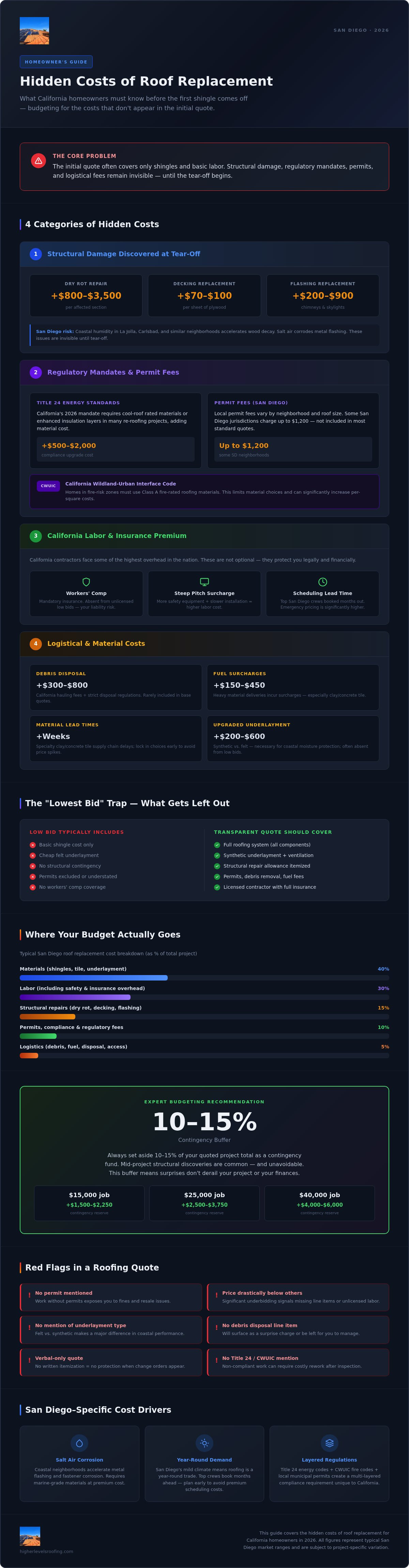
We believe you deserve total transparency. In this guide, we'll uncover the hidden costs of roof replacement California residents are navigating in 2026. You'll learn how the latest Title 24 energy standards and the updated California Wildland-Urban Interface Code (CWUIC) impact your bottom line. We will also explore the structural realities of our coastal climate, like salt-air rot and local permit fees that can reach $1,200 in some San Diego neighborhoods. By the end, you'll have a clear roadmap to build a budget that's both realistic and compliant, ensuring your home stays protected and beautiful for decades to come.
Table of Contents
Beyond the Shingles: Why California Roof Costs Vary
Many homeowners start their journey by browsing the price of raw materials. However, a high-quality roof is a total system, not just a collection of parts. This system includes specialized underlayment, drip edges, ice and water shields, and ventilation components that work together to protect your structure. Focusing solely on the retail cost of an Asphalt shingle often leads to a misunderstanding of the final invoice. In our San Diego coastal climate, choosing the wrong system can lead to premature failure from salt air and moisture penetration.
The "lowest bid" strategy is often a trap. Contractors who offer significantly lower prices usually do so by cutting corners on these essential system components or by miscalculating the labor required for your specific property. A steep roof pitch, for example, requires more safety equipment and slows down the installation process. These logistical realities are fixed costs. If they aren't in the initial quote, they will likely appear later as "change orders," contributing to the hidden costs of roof replacement California residents fear most.
The California Premium: Labor and Insurance
California roofing contractors face some of the highest overhead costs in the country. Strict labor laws and workers' compensation requirements ensure that if a worker is injured on your property, you aren't held liable. In 2026, maintaining these insurance standards is a significant part of a professional's operating budget. Hiring a licensed and insured professional provides a safety net for your home and your finances. In San Diego, high demand for skilled trades often means that reputable teams are booked months in advance. This local demand influences scheduling and pricing, making it vital to plan your project well before a leak becomes an emergency.
Material Volatility and Supply Chain Factors
The availability of materials like asphalt shingles and clay tile fluctuates based on global logistics and regional manufacturing capacity. While shingles are generally accessible, specialized concrete or clay tiles may require longer lead times due to their weight and manufacturing complexity. Fuel surcharges for heavy deliveries and strict California hauling fees for debris removal add layers to the final budget. Regional supply chain constraints in 2026 continue to dictate the timing and expense of material deliveries to Southern California job sites. We recommend securing your material choices early to lock in current rates and avoid delays.
Structural Surprises: Hidden Damage Under the Surface
The "Tear-Off" phase is the moment of truth for any roofing project. Contractors cannot see through existing layers of shingles or tile during an initial walk-through. Once the old materials are removed, the actual state of your home's skeleton is revealed. This is where the hidden costs of roof replacement California homeowners often encounter begin to surface. If the underlying wood is compromised, it must be repaired before any new materials are installed to ensure a safe, long-lasting result.
Dry rot and termites are particularly aggressive in San Diego County. Coastal humidity in neighborhoods like La Jolla and Carlsbad accelerates wood decay, especially when salt air is present. If your roof deck is soft, crumbling, or infested, it won't hold the fasteners for your new roof. Beyond the decking, we often find issues with flashing and counter-flashing. These metal components redirect water away from vulnerable areas like chimneys and skylights. If they are rusted or improperly sealed, they must be replaced to prevent leaks from day one.
Identifying and Repairing Dry Rot
Signs of rot are often invisible from the ground. You might only notice subtle sagging in the roofline or staining on your eaves. Replacing structural rafters is a much larger undertaking than simply swapping out a few sheets of plywood. It requires more time, specialized labor, and higher material costs. Catching these issues during the tear-off is vital. Ignoring structural decay now only leads to more expensive repairs and potential safety hazards during the next heavy Southern California rainstorm.
The Importance of Underlayment Quality
Standard felt paper was the industry norm for decades, but it's often insufficient for the modern performance standards we expect. Synthetic underlayment offers far better protection. It's more durable, resistant to tearing, and provides a superior moisture barrier. This choice is a cornerstone of a successful roof replacement San Diego strategy, ensuring your home stays dry even if a shingle is damaged.
Investing in high-quality underlayment also simplifies compliance with California's Title 24 Building Energy Efficiency Standards. These regulations mandate specific material ratings to improve your home's thermal performance. By choosing code-compliant materials from the start, you avoid the hidden costs of roof replacement California inspectors might flag later. If you suspect your roof deck has seen better days, requesting a thorough attic inspection can help you prepare for what lies beneath the surface.
Regulatory Mandates: Title 24 and Permit Fees
Compliance isn't just about following the rules; it's about protecting your home's value and efficiency. In 2026, the updated Building Energy Efficiency Standards, better known as Title 24, have become a central factor in project planning. These mandates represent some of the most significant hidden costs of roof replacement California residents face today. California Title 24 is the state's mandatory energy conservation standard that requires all new and replacement roofs to meet specific "cool roof" performance metrics to lower indoor temperatures and reduce grid strain.
Beyond material standards, the role of the building department is more active than ever. Mandatory inspections occur at various stages, ensuring the tear-off, decking, and final installation meet safety codes. These inspections are tied to your building permit, which is a legal requirement for any major roofing work. While some might suggest "skipping the permit" to save money, doing so is a high-risk financial mistake. It can lead to heavy fines, issues with homeowners insurance, and significant complications when you eventually try to sell your property.
Cool Roof Requirements in Southern California
To meet the 2026 standards, your roofing materials must have specific ratings for Solar Reflectance and Thermal Emittance. Solar reflectance is the roof's ability to bounce solar energy back into the atmosphere, while thermal emittance is its ability to radiate absorbed heat. Modern asphalt shingles and high-performance clay tile roofing are engineered to meet these California Title 24 cool roof requirements. Investing in these materials provides a long-term ROI through lower monthly cooling bills, which is a major advantage in San Diego’s warm, sunny climate.
Navigating Local Building Permits
Permit fees and timelines vary significantly across San Diego County. In cities like San Marcos, Encinitas, and Carlsbad, the administrative process can take anywhere from a few days to several weeks. In 2026, permit fees in the San Diego area typically range from $400 to over $1,200 depending on the complexity and size of the project. This cost covers the plan review and the multiple site visits required by city inspectors to sign off on the work. We handle these logistics as part of our meticulous service, ensuring your project stays on schedule and fully compliant with local law.
New for 2026, California law also includes "solar-ready" requirements for many residential re-roofing projects. This means your new roof structure must be prepared to support the weight and electrical needs of future solar panel installations, even if you aren't installing them immediately. These regulatory steps ensure your home remains modern and sustainable, but they do require careful budgeting and expert guidance to navigate without surprises.
Logistical Costs: Debris, Access, and Protection
Logistics often separate a professional, transparent quote from a bid that feels too good to be true. Getting heavy materials onto your roof and hauling old debris away requires more than just a truck and a ladder. These physical hurdles represent a significant portion of the hidden costs of roof replacement California homeowners must consider. If a contractor fails to plan for the specific constraints of your property, the project can quickly become disorganized and expensive.
We take pride in leaving your home better than we found it. This commitment requires "pre-staging" the site with protective barriers for your driveway and specialized netting for your landscaping. Moving several tons of old material across a yard without damaging your rose bushes or decorative pavers takes time and meticulous care. These protective measures are essential for maintaining your property's value during the construction process.
California Waste Diversion and Recycling
California maintains some of the highest landfill fees in the United States. State law mandates strict Construction and Demolition (C&D) debris diversion, meaning we cannot simply toss all old materials into a single bin. Asphalt shingles are frequently recycled into road paving materials, while heavy clay or concrete tiles require separate handling and specialized hauling tools. These recycling mandates are mandatory for every project. They ensure your old roof is repurposed responsibly, but the labor required to sort and transport these materials is a fixed logistical cost.
Complexity Factors: Pitch and Height
Not all roofs are created equal. A steep-slope roof requires advanced safety harnesses, scaffolding, and slower work rhythms to ensure crew safety. If your home is two or three stories tall, we often need to rent cranes or telehandlers to lift heavy pallets of tile or shingles to the roofline. In coastal San Diego neighborhoods, narrow streets and limited street parking can make staging this equipment a challenge. Sometimes, we identify necessary roof repairs to the structural framing that are best handled while this specialized equipment is already on-site.
If you are concerned about how your home’s unique height or lot size might impact your project, request a detailed site assessment from our team to ensure every logistical detail is accounted for from day one.
Budgeting for Success: How Higher Levels Roofing Ensures Transparency
A successful roofing project begins with a clear financial plan that accounts for both the known and the unknown. While we have discussed the regulatory and structural variables, the final step is translating that knowledge into a realistic budget. We always recommend that homeowners set aside a contingency fund of 10 to 15 percent of the total project estimate. This buffer specifically addresses the hidden costs of roof replacement California contractors often uncover during the tear-off phase, such as the coastal dry rot or termite damage we detailed earlier. Having this safety net ensures that structural repairs don't stall your project or cause unnecessary stress.
Choosing a roofing contractor San Diego County residents can rely on means finding a partner who values honesty over a quick sale. A reputable expert will walk you through the potential "what-ifs" before the first shingle is removed. This proactive approach transforms a daunting home improvement task into a structured, manageable investment in your property’s future.
Evaluating an Itemized Scope of Work
Lump sum quotes are a significant red flag in the roofing industry. If a bid provides a single total without breaking down the costs, it likely hides omissions that will surface later as expensive change orders. A professional scope of work should clearly itemize permit fees, the cost of wood replacement per sheet, and specific material brands. At Higher Levels Roofing, we handle mid-project discoveries with total transparency. If we find damaged decking, we provide photo proof from the roof immediately. This methodical process ensures you are informed and in control of your budget at every stage.
Investing in Long-Term Durability
The cheapest roof is often the most expensive choice over a 20 year period. Low-cost bids frequently skip the high-quality flashings or synthetic underlayments that are vital for our San Diego climate. Understanding the various types of roofing materials allows you to choose a system that balances aesthetic appeal with Title 24 compliance. Before signing any contract, ensure it includes both a manufacturer’s material warranty and a workmanship guarantee. This dual protection safeguards your investment against both material defects and installation errors, providing the long-term security every homeowner deserves.
Before you finalize your project, use this quick checklist: verify the contractor's license status, confirm their workers' compensation insurance is active, and ensure all permit costs are clearly stated. These final steps protect you from the hidden costs of roof replacement California homeowners sometimes face when working with less meticulous providers.
Secure Your Home’s Future with Confidence
Replacing a roof is one of the most significant investments you'll make in your property. By understanding the hidden costs of roof replacement California homeowners face, from 2026 Title 24 mandates to the structural realities of coastal dry rot, you've already taken the first step toward a successful project. A durable roof is more than just new shingles; it's a complete system designed to provide safety and energy efficiency for decades. Transparency is the key to avoiding mid-project surprises and ensuring your budget remains on track.
As a Licensed California Contractor (CSLB #1092628) with deep local San Diego expertise, we pride ourselves on 5-star rated craftsmanship and honest communication. We don't believe in guesswork or hidden fees. Instead, we provide the meticulous attention to detail your home deserves. Request a Transparent, Itemized Roof Estimate from Higher Levels Roofing today to start your project with clarity. You deserve a roof that stands the test of time, and we're here to help you build it with pride and peace of mind.
Frequently Asked Questions
How much are roofing permit fees in San Diego County?
In 2026, roofing permit fees in San Diego County generally range from $400 to over $1,200. These costs vary based on your specific municipality, such as San Marcos or Encinitas, and the overall complexity of the project. This fee covers the city’s administrative costs for plan reviews and the multiple safety inspections required to sign off on the work. We include these logistics in our itemized estimates to ensure you have a clear budget from the start.
What happens if a roofer finds dry rot after the project starts?
If dry rot is discovered after the tear-off, it must be repaired before the new roof is installed. This is one of the most common hidden costs of roof replacement California homeowners face, especially in coastal areas like La Jolla. We provide photo documentation of any damaged wood immediately so you can see the issue for yourself. Replacing rotted decking adds to the material and labor costs, but it's essential for your home's structural integrity.
Is a "Cool Roof" mandatory for all California roof replacements?
Yes, under the 2026 California Title 24 standards, "cool roof" materials are mandatory for most re-roofing projects. These materials must meet specific aged solar reflectance and thermal emittance values to reduce heat absorption. Whether you choose asphalt shingles or clay tile, we ensure your selections comply with these energy codes. This requirement helps lower your indoor temperatures and reduces the strain on our local San Diego power grid during our hot, sunny summer months.
Does California law require me to install solar panels when I replace my roof?
California law currently requires many re-roofing projects to be "solar-ready," but it doesn't mandate the actual installation of solar panels. Solar-ready means your roof structure and electrical pathways must be prepared to support a future system. While Higher Levels Roofing doesn't sell or install solar panels, we ensure your new roof is fully compliant with these structural readiness standards. This preparation protects your home's future value and utility without requiring an immediate, expensive solar investment.
Why is labor more expensive for tile roofs compared to shingles?
Labor is more expensive for tile roofs because the materials are significantly heavier and more fragile than shingles. Concrete and clay tiles require specialized handling, precise alignment, and often reinforced structural support. In San Diego, labor typically accounts for 40% to 60% of the total project cost. The meticulous craftsmanship needed to install tile correctly ensures a lifespan of 50 years or more, which justifies the higher initial investment in expert, locally-based labor.
What is a "decking allowance" and why is it in my roofing contract?
A decking allowance is a specific line item in your contract that sets aside a budget for replacing rotted or damaged wood. Since we can't see the condition of the plywood until the old roof is removed, this allowance acts as a safeguard. It typically covers a set number of plywood sheets. If more wood is needed, we provide a clear price per sheet, ensuring the hidden costs of roof replacement California residents encounter are managed transparently.
Can I save money by overlaying new shingles on my old roof in California?
You can technically save money initially with an overlay, as California building codes allow for a maximum of two layers of roofing. However, we rarely recommend this approach. An overlay prevents us from inspecting the decking for dry rot or termite damage, which are major concerns in Carlsbad. If a second layer already exists, a full tear-off is mandatory. A clean start ensures your new roof is installed on a solid, healthy foundation.
How do I verify if a San Diego roofing contractor is properly licensed?
You can verify a contractor's license by visiting the California Contractors State License Board (CSLB) website and entering their license number. For example, Higher Levels Roofing is a licensed California contractor, CSLB #1092628. It's vital to confirm that your roofer is active and carries workers' compensation insurance. Hiring a licensed local professional in San Diego ensures your project meets all state safety standards and protects you from liability during the installation process.


Comments