


Fire-Rated Roofing Requirements in San Marcos, CA: 2026 Guide

A roof can carry a Class A label and still fall short if the complete roof assembly doesn’t meet the applicable requirements. That distinction matters when checking the fire-rated roofing requirements San Marcos property owners may face. The rules can depend on the property’s location and the details of the roofing project. CAL FIRE updated its Fire Hazard Severity Zone maps in 2025, so an older understanding of a property’s status may no longer be reliable.
Before choosing materials or approving a reroof, identify which authority and code documents apply to your address. This guide explains how to check whether your property is in a regulated fire hazard area, what to ask the building department, and what documentation can help show that a proposed roof system meets the applicable standard.
You’ll also learn how to compare roofing options using test classifications and assembly documentation, rather than relying on a material label alone. Use the questions below to discuss the proposed system, permit review, and installation details with your contractor before work begins.
Key takeaways
Confirm the property’s jurisdiction and which building department or fire authority reviews the roofing project.
Check current local code documents and fire hazard maps before deciding which fire-rated roofing requirements may apply to your San Marcos property.
Compare asphalt shingles, clay or concrete tile, torch-down, and TPO using documentation for the exact product and proposed roof assembly.
Ask contractors to identify the proposed materials, provide relevant test or assembly documentation, and clarify who handles permit submissions.
Keep written scopes, installation details, permit records, and inspection documents together for future reference.
Table of Contents
What fire-rated roofing requirements mean for a San Marcos, California property
How California fire codes and local San Marcos conditions affect roofing
Compare fire-rated roofing materials by assembly evidence, not appearance
A San Marcos checklist for verifying fire-rated roofing before work begins
Plan a compliant San Marcos roofing project with clear documentation
What fire-rated roofing requirements mean for a San Marcos, California property
First, confirm which San Marcos you’re researching. San Marcos, California, has its own permitting jurisdiction and fire-safety context. Information from the City of San Marcos, Texas, doesn’t establish what applies to a California property. The fire-rated roofing requirements San Marcos homeowners need to check depend on the property’s address, the scope of work, the code currently adopted for the project, and whether the site is in a designated fire hazard area.
A fire rating describes how a roof covering or documented roof assembly performs under defined test conditions. It isn’t a blanket promise that a roof will withstand every wildfire, and it doesn’t mean every property or roofing project has identical requirements. San Marcos is near natural areas where the Wildland-Urban Interface (WUI) concept helps explain why authorities may pay close attention to wildfire exposure. The property’s actual designation and applicable rules still need to be confirmed.
What does a roof fire-resistance rating actually describe?
A rating describes tested performance under specified conditions, not the fire safety of every possible roof configuration. A roof includes more than its visible covering. Underlayment, roof deck, and other components or installation details may affect whether a documented assembly matches the proposed work.
A roof assembly rating applies to a tested combination of components installed as specified, not simply to the name of a roofing material. A product document may identify a covering classification, while assembly evidence describes a particular system. UL 790 and ASTM E108 are test standards used to evaluate roof-covering fire performance. Check the current product listing or manufacturer documentation to confirm which standard and classification apply to the exact product and assembly. Even a documented classification isn’t a guarantee against every wildfire condition.
Which San Marcos location and authority should you check?
Start with the complete property address. Confirm that it’s in San Marcos, California, and identify the permitting jurisdiction, responsible building department, and fire authority for that site. For properties within the city, verify current requirements with the City of San Marcos Building Division. Don’t assume a nearby address or general citywide description establishes the authority for your parcel.
Next, check the current CAL FIRE Fire Hazard Severity Zone map for the address and ask the relevant local authority how the designation affects the proposed work. Confirm the applicable code edition, local amendments, and permit requirements before choosing a covering or scheduling the project. A roofer can help identify proposed materials and gather supporting documents, but only the authority having jurisdiction can confirm how its rules apply.
How California fire codes and local San Marcos conditions affect roofing
California’s building and residential codes establish requirements that may apply to roofing work. Local adoption, amendments, property location, and project scope affect the details. Don’t assume that a code edition mentioned in an older estimate or online article governs your project. Ask the City of San Marcos building department which edition and amendments apply to your permit application, and whether the work is treated as new construction, reroofing, or another project type.
Wildfire hazard designations can also affect roof requirements, but a San Marcos mailing address alone doesn’t determine whether a particular rule applies. CAL FIRE’s California home hardening guidelines provide statewide context on ignition-resistant construction. For project decisions, use that guidance alongside the current code and direction from the authority responsible for your address. Confirm the fire-rated roofing requirements San Marcos property owners must follow at the address level before treating a rule as applicable.
How to check hazard-zone and code applicability
Look up the property on the current CAL FIRE Fire Hazard Severity Zone map, then confirm the result with the local building department. Ask which code edition and local amendments govern the work, and whether the proposed scope triggers provisions specific to new construction or reroofing. If the map result or project category is unclear, request a determination from the relevant authority before finalizing the roofing specification.
Ask direct questions: Is this parcel in a regulated hazard area? Which code provisions apply to this scope? What plans, product documentation, or inspections does the permit review require? A roofer can help identify proposed materials and gather supporting documents, but the building department makes the official permitting determination.
What local wildfire guidance does, and doesn’t, establish
Fire-authority guidance can explain local wildfire concerns and preparedness priorities, but it isn’t automatically a building-code requirement. Guidance from a nearby city or fire district may reflect different boundaries, adopted rules, or review procedures. Confirm before applying it to a San Marcos property.
Keep code compliance separate from insurer requests and voluntary resilience choices. An insurer may ask for documentation or roof features beyond the applicable code minimum. Check directly with the carrier to understand its underwriting conditions. A homeowner may also choose additional resilience measures that aren’t required by the permit. Keeping these categories distinct can prevent confusion during planning.
For replacement planning, a local roofer can help compare materials and organize product documentation for your review. Discuss roofing materials and project documentation as you prepare questions for the building department and your insurer.
Compare fire-rated roofing materials by assembly evidence, not appearance
Color, shape, and material name can’t confirm whether a roof meets a fire classification. Asphalt shingles, clay tile, concrete tile, rolled asphalt torch-down, and TPO each need to be evaluated using documentation for the exact product and proposed roof assembly. The CAL FIRE Building Materials Listing Program is one place to check for relevant listings. Verify that a listing matches the proposed product and installation, and confirm what the local authority requires.
Use this comparison to organize questions, not to assume an entire material category has a particular rating. For broader material-selection context, see this roofing materials homeowner’s guide.
Asphalt shingles
Evidence to request: Current product identification and applicable fire-test or assembly documentation
Details to match: Roof deck, underlayment, slope, and installation instructions
Clay tile
Evidence to request: Documentation for the exact tile and, where applicable, the complete assembly
Details to match: Deck, underlayment, attachment method, and specified installation
Concrete tile
Evidence to request: Product-specific records for the selected flat or S tile and proposed system
Details to match: Roof slope, deck, underlayment, attachment, and assembly configuration
Rolled asphalt torch-down
Evidence to request: Documentation identifying the roofing product and any tested assembly
Details to match: Deck, underlayment or system layers, and installation instructions
TPO
Evidence to request: Product-specific fire classification or assembly listing, as applicable
Details to match: Deck, slope, system components, attachment, and installation details
What documents prove a roofing system’s classification?
Ask for the current test listing or manufacturer documentation, exact product identification, and the assembly configuration covered by that evidence. Check that the specified deck, underlayment, slope, attachment, and installation method match the proposed work. Documentation for a similar product or a different assembly may not support the system in your estimate. Resolve missing, expired, or mismatched records with the manufacturer and permitting authority before approving the scope.
How do tile, shingles, and low-slope systems compare?
Tile and shingle options differ in form and installation, but appearance alone establishes no fire classification. This roof tile materials and styles guide offers additional selection context. For low-slope roofs, torch-down and TPO are distinct system types. Request documentation specific to the selected product and assembly rather than assuming evidence for one applies to the other. For fire-rated roofing requirements San Marcos, compare the written documents with the property’s code and permit direction.
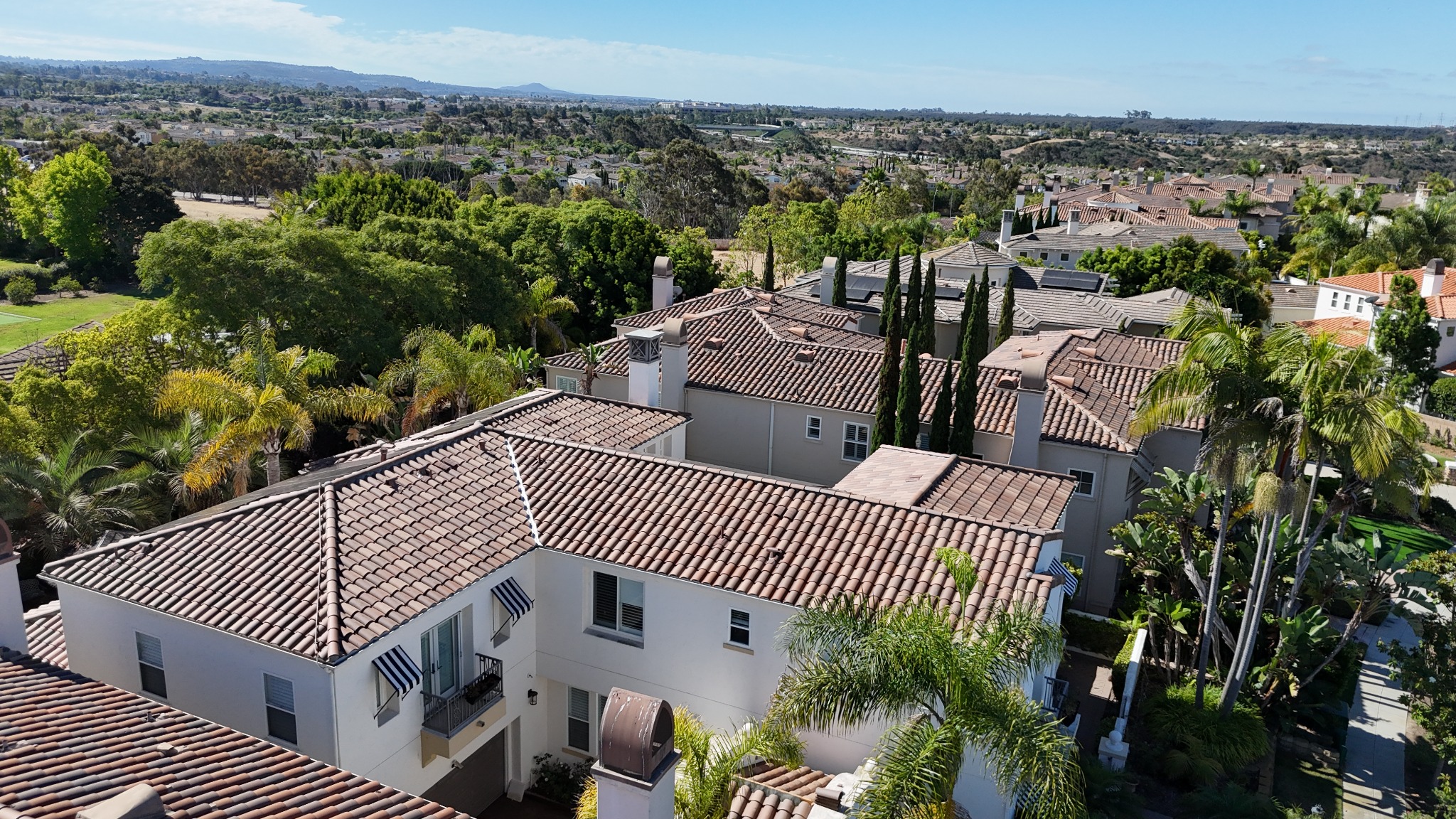
Project photo: Old World clay tile roofing project completed by Higher Levels Roofing in San Diego. Explore our roofing case studies for the project scope and gallery.
A San Marcos checklist for verifying fire-rated roofing before work begins
A short verification process can prevent confusion after materials have been selected or work is scheduled. The fire-rated roofing requirements San Marcos applies to a project depend on the property and scope. Confirm the details in writing before approving a roofing proposal.
Confirm the property address and jurisdiction. Make sure the project is in San Marcos, California, and identify the building department and fire authority responsible for that address.
Verify the applicable code. Ask the building department which code edition and local amendments apply to the planned work.
Check the hazard designation. Look up the address on the current CAL FIRE Fire Hazard Severity Zone map, then confirm with the relevant authority how the designation affects the project.
Clarify permit requirements. Before scheduling, ask which applications, supporting documents, inspections, and approvals the project scope requires.
Match the proposed roof to its documentation. Request the covering and assembly details in writing. Check that the documented roof slope, substrate or deck, underlayment, attachment, and other components match the planned installation.
Questions to ask the building department and fire authority
Keep your questions specific: Which code edition and amendments govern this scope? Is this address or project subject to additional hazard-area provisions? Which product submittals, plan details, inspections, or approvals are required, and at what stage? Confirm the answers with the authority responsible for the property rather than relying on requirements described for a nearby city or fire district.
Questions to ask a roofing contractor
Ask the contractor to identify the proposed product by name, describe the complete system configuration, and provide current classification or assembly documentation to support it. Ask how the installation will follow the manufacturer’s instructions, including the specified slope, deck, underlayment, attachment, and other components. If a product or assembly changes, request updated documentation before approving the revised scope.
For more context on planning a replacement project, review this San Diego roof replacement guide. Keep permit records, product submittals, and final inspection documents together as the project’s compliance record.
If you’re weighing options for a replacement, discuss material choices and project documentation with Higher Levels Roofing. Confirm final requirements and approval with the authority having jurisdiction.
Plan a compliant San Marcos roofing project with clear documentation
A roofing contractor can help identify proposed materials, explain the roof system configuration, and gather product documentation for review. That support is useful, but it doesn’t replace confirmation or approval from the building department or other authority responsible for the property. Verify the fire-rated roofing requirements San Marcos applies to your project with that authority before relying on a particular product or scope.
Compare written proposals carefully. Look for a clear description of the roofing work, named materials, supporting classification or assembly evidence, installation details, and who is responsible for permit coordination. A proposal should let you compare systems on the same basis, rather than requiring you to infer compliance from a material label or appearance. Neither a contractor’s assessment nor product paperwork alone guarantees permit approval, insurance acceptance, a particular fire classification, or protection from wildfire.
When a roofing assessment can help
Consider a project review when planning a replacement, tile lift-and-relay, or material change that could affect the assembly. Gather the property address, information about the existing roof, a description of the planned work, and any notices or requirements you’ve received from an agency or insurer. This gives a roofing professional useful context for discussing options and identifying documentation to verify.
If you’re comparing contractors, this San Diego County roofing contractor checklist can help you organize questions and evaluate written proposals.
What to prepare before requesting a project review
Property and scope: Provide the address, describe the planned replacement or tile lift-and-relay, and note the existing roofing material if known.
Project records: Include relevant permit correspondence, prior roofing documents, and any agency or insurer notices.
Proposal details: Ask the contractor to clarify the proposed materials, assembly configuration, supporting test or listing documents, and installation details.
Responsibilities: Confirm what the contractor will provide for permit coordination and which approvals or decisions must come from the authority having jurisdiction.
Organized records make it easier to spot gaps, check that documentation matches the proposed installation, and direct unresolved questions to the right authority. Higher Levels Roofing is a licensed roofing contractor serving San Diego, La Jolla, San Marcos, Encinitas, and Carlsbad, with residential and commercial replacement, new installation and tile lift-and-relay services. Its roofing work includes asphalt shingles, clay tile, rolled torch-down, and TPO systems. If you’re considering work in San Marcos, discuss your property, proposed roof system, and available documentation to clarify next steps. Final requirements and approvals must still be confirmed with the responsible authority.
Make your next roofing decision with confidence
Start by confirming which authority and code apply to your San Marcos address and project scope. Then compare roofing proposals using documentation for the exact product and assembly, including the specified installation details. A material name or appearance alone can’t establish that a roof system meets the requirements for your property.
Higher Levels Roofing is a licensed roofing contractor serving the San Diego area, with residential and commercial replacement, new installation and tile lift-and-relay services. Its roofing options include asphalt shingles, clay and concrete tile, rolled asphalt torch-down, and TPO. Confirm any product classification and code applicability for the specific project using current documentation and direction from the responsible authority.
If you’re planning a roof replacement or new installation, discuss your San Marcos roofing project with Higher Levels Roofing. Review the proposed materials, assembly documentation and responsibilities for confirming the applicable fire-rating requirements.
Frequently Asked Questions
Does every roof in San Marcos, California, need a Class A fire rating?
Confirm the required rating for your specific address and reroofing scope with the City of San Marcos building department. CAL FIRE recommends Class A-rated roofing when replacing a roof. A map designation alone is not a complete compliance determination: applicable state rules, local amendments and the proposed assembly also matter. Request the exact product and assembly documentation before approving the work.
How can I check whether my San Marcos home is in a fire hazard severity zone?
Look up your property address in CAL FIRE’s current Fire Hazard Severity Zone Viewer, then confirm how the map result applies with the authority responsible for your address. Maps can change, so don’t rely only on an older report, real estate listing, or a neighbor’s designation. Ask the City of San Marcos building department which code provisions and permit requirements apply to your planned roofing work.
Is a fire-rated roofing material enough to meet roofing requirements?
Not necessarily. A product’s fire classification doesn’t automatically establish that the complete roof assembly meets the requirements for your project. The applicable documentation may cover a particular combination of covering, underlayment, deck, slope, attachment, and installation details. Ask for current product and assembly evidence, then check that it matches the proposed installation. The local building authority determines which requirements apply and reviews permit materials.
Are tile roofs automatically fire-rated?
No. A clay or concrete tile label alone doesn’t establish a specific fire classification for the complete roof system. The rating depends on documentation for the product and, where applicable, the assembly in which it’s installed. Check the proposed tile, underlayment, roof deck, attachment, and installation instructions against current test or manufacturer documentation. Confirm with the permitting authority that the evidence addresses the requirements for your property and project.
Can asphalt shingles meet fire-rated roofing requirements in San Marcos?
They may, but the answer depends on the exact shingle product, supporting test or listing documents, and the assembly and installation details. Don’t assume all asphalt shingles share the same classification. Ask the contractor for documentation that identifies the product and any tested roof assembly, then verify that the deck, underlayment, slope, and installation match. Confirm the fire-rated roofing requirements San Marcos officials apply to your specific address and project.
What should I ask a roofer about fire-rated roofing documentation?
Ask for the exact product name, current classification or test-listing evidence, and documentation for the proposed assembly. Have the roofer explain how the specified roof deck, underlayment, slope, attachment, and installation instructions match that evidence. Clarify any exclusions or substitutions in the written scope, and ask who will coordinate permit documents. If the system changes, request updated records before approving the revised work.
Do California wildfire roofing rules apply to every San Marcos property?
No. California codes provide statewide requirements, but specific wildfire-related roofing provisions can depend on the property’s mapped hazard designation, project type, adopted code edition, and local amendments. A city address by itself doesn’t establish that every rule applies to every roof. Check the current CAL FIRE map for your parcel and ask the City of San Marcos building department to confirm which provisions govern your project.
Comments