


Eco-Friendly Roofing Materials San Diego: 2026 Sustainable Guide

Could your choice of shelter actually lower your monthly overhead while protecting the local coastline? In San Diego, we're all feeling the pressure of rising energy costs and the sting of summer heat waves. It's frustrating to watch your utility bill climb while worrying if your materials can actually survive the salty Pacific air or meet the strict 2026 Title 24 energy standards. Finding the right eco-friendly roofing materials San Diego homeowners can trust requires balancing aesthetics with heavy-duty performance. You want a home that stays cool without a massive carbon footprint or a constant fear of material degradation.
You deserve a roof that serves as a long-term investment rather than a recurring headache. This guide helps you discover the most durable, energy-efficient materials designed to meet California's rigorous 2026 standards while withstanding our unique climate. We'll show you how to achieve lower monthly utility bills and a roof that lasts 30 to 50 years. We'll preview the natural sustainability of clay and concrete tiles, the superior cooling power of TPO membranes, and the essential fire safety regulations like the new Zone Zero requirements that protect your property and ensure your home remains compliant for decades to come.
Table of Contents
What Makes a Roof "Eco-Friendly" in San Diego?
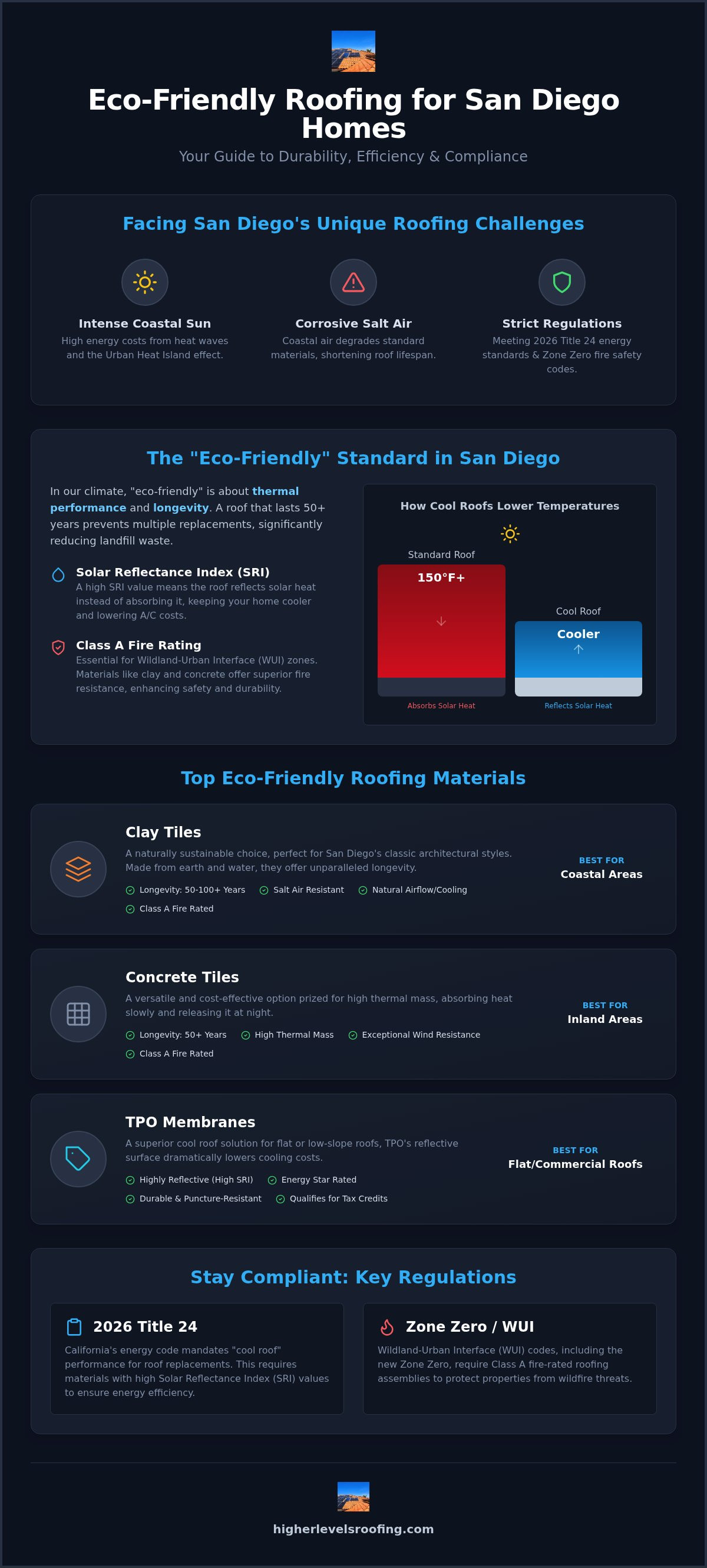
In San Diego, a roof's environmental impact isn't just about what it's made of; it's about how it handles our intense coastal sun. While a traditional green roof with living vegetation is rare in our semi-arid climate, "eco-friendly" here focuses on thermal performance. High-performance materials help combat the Urban Heat Island effect, where dense neighborhoods trap heat and drive up local temperatures. By choosing the right eco-friendly roofing materials San Diego homeowners can actually lower the temperature of their entire community while slashing their own cooling costs.
The 2026 California Title 24 standards have raised the bar for efficiency. If you're replacing more than half of your roof, you're legally required to meet specific "cool roof" metrics. In San Diego’s Climate Zone 7, this means your materials must reflect a significant portion of solar energy back into the atmosphere rather than absorbing it into your attic. We focus on a life-cycle assessment that prioritizes durability. A roof that lasts 50 years prevents multiple tear-offs from heading to the landfill, making longevity the most important green factor for any local home.
The Impact of Solar Reflectance Index (SRI)
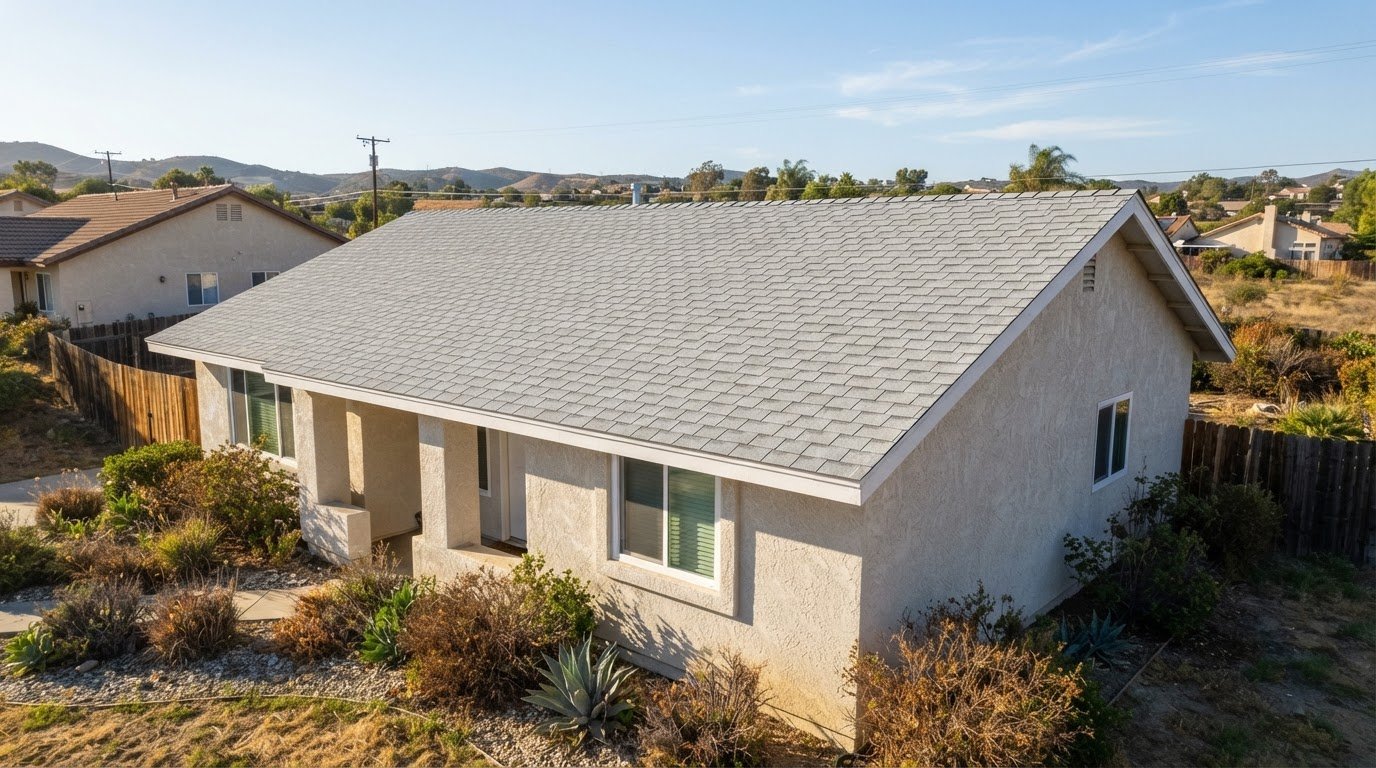
SRI is a mathematical value that measures a roof's ability to reject solar heat and release absorbed energy, serving as a critical metric for California energy code compliance. Standard asphalt shingles often trap heat; they can reach temperatures well over 150 degrees on a typical July afternoon. Modern "cool shingle" technology uses specialized, reflective granules to bounce that energy away. For homeowners, a higher SRI rating translates directly into a cooler attic and a lighter load on your air conditioning system.
Fire Safety and Sustainability
True sustainability requires extreme durability. In San Diego, that means your roof must survive more than just the sun. It has to withstand the threat of wildfires. The 2026 California Wildland-Urban Interface (WUI) Code mandates Class A fire-rated assemblies for many local communities. We ensure every material we install meets these strict fire marshal standards. There's a natural intersection between fire resistance and material longevity. Materials like clay and concrete tile don't just resist flames; they also resist the degrading effects of coastal salt air. Higher Levels Roofing prioritizes these high-performance systems to ensure your eco-friendly roofing materials San Diego investment remains safe and compliant for decades.
Top Eco-Friendly Residential Materials: Clay and Concrete Tiles
When selecting eco-friendly roofing materials San Diego residents often look for a balance between historical charm and modern performance. Clay and concrete tiles are the cornerstone of Southern California architecture, specifically for Mediterranean and Spanish Colonial homes. These materials don't just look right; they perform exceptionally well in our climate. Unlike petroleum-based products, these tiles are built to last 50 to 100 years, effectively reducing the environmental impact of frequent roof replacements.
Clay Tile: San Diego’s Naturally Sustainable Choice
Clay is a 100% natural product, essentially composed of earth and water. Its sustainability stems from its incredible longevity and its natural breathability. The curved shape of traditional barrel tiles allows for constant airflow, which creates a thermal barrier between the sun and your home. This design is particularly effective in coastal communities like La Jolla and Del Mar, where the material resists the corrosive effects of salt air. For a deep dive into how these shapes impact your home, explore The Ultimate Guide to Roof Tiles. It's a "buy once, cry once" investment that pays dividends in durability.
Concrete S-Tile and Flat Concrete Options
Concrete tiles offer a versatile and cost-effective alternative to clay while maintaining high eco-friendly standards. They're prized for their high thermal mass, which means they absorb heat slowly during the day and release it gradually at night. This property is a game-changer for inland areas like San Marcos or Escondido, where daytime temperatures often soar. Whether you prefer the classic look of S-tiles or the clean lines of flat concrete, these options provide a Class A fire rating and exceptional wind resistance. You can learn more about these selections in our guide to Types of Roofing Materials.
The end-of-life plan for these materials is just as sustainable as their performance. When a tile roof eventually reaches the end of its 50-year lifespan, the materials are fully recyclable. They're often crushed and repurposed for road bases or new construction projects. This circular lifecycle is a key component of Using Cool Roofs to Reduce Heat Islands. By choosing these high-mass materials, you're investing in a system that keeps your home comfortable and your community cooler. If you're ready to see how these tiles can transform your property, our team is here to help you find the perfect match.
Sustainable Solutions for Commercial and Flat Roofs
Flat roofs in San Diego present a unique environmental challenge. Because they lack the pitch of traditional homes, they absorb the sun's rays directly for most of the day. For modern residential homes and local businesses, selecting eco-friendly roofing materials San Diego experts recommend often leads to Thermoplastic Polyolefin (TPO). While we also offer Rolled Asphalt Torch Down roofing, TPO is the clear winner for sustainability. It's a single-ply reflective membrane. It turns your roof into a shield rather than a heat sponge.
Choosing TPO over traditional asphalt-based systems significantly reduces landfill waste. Asphalt-based rolled roofing typically requires replacement every 10 to 15 years. In contrast, a professionally installed TPO system can last 20 to 30 years with proper care. This doubled lifespan means half the material ends up in a landfill over the life of the building. It's a smarter, cleaner choice for our local environment.
The Benefits of TPO Membranes
TPO is engineered for the intense UV radiation we experience in Southern California. Its heat-reflective properties are so effective they can reduce cooling costs by up to 30% during our peak summer months. By reflecting sunlight, TPO lowers the HVAC load. This prevents your air conditioning equipment from overworking and failing prematurely. Our team is certified for these high-performance installations, ensuring every seam is heat-welded for a watertight, energy-efficient finish. You can see how this performs in the real world by reading our TPO Commercial Roofing in San Diego case study.
Cool Roof Coatings and Maintenance
The greenest roof is the one you don't have to tear off. For many San Diego businesses, applying a high-quality cool roof coating can restore an aging flat roof without the environmental cost of a full replacement. These coatings are verified by the Cool Roof Rating Council to ensure they meet strict solar reflectance and thermal emittance standards. Restoring a roof uses fewer raw materials. It keeps old roofing out of the waste stream. Regular maintenance is a core sustainability strategy. By catching small leaks and keeping the reflective surface clean, you ensure your eco-friendly roofing materials San Diego investment continues to perform at its peak efficiency for decades. It's about being a meticulous steward of your property and our local landscape.
Comparing Durability and ROI of Green Roofing Materials
Choosing a roof is a long-term financial decision that impacts your home's efficiency for decades. While the initial investment for premium eco-friendly roofing materials San Diego homeowners select can be higher than standard asphalt, the return on investment (ROI) is undeniable. You have to look beyond the installation day to the 30-year energy savings and the avoided costs of mid-life replacements. A roof that lasts twice as long isn't just twice as good; it's a massive reduction in your home's total carbon footprint and your personal stress levels.
Material Lifespan and Environmental Impact
Standard asphalt shingles typically operate on a 20-year cycle in our sun-drenched climate before they begin to shed granules and lose their protective qualities. In contrast, clay and concrete tile systems are designed for a 50-year cycle, often lasting much longer with proper underlayment care. Frequent roof replacements carry a heavy carbon footprint due to manufacturing, transportation, and landfill waste. A clay tile roof in San Diego typically lasts between 50 and 100 years, making it the ultimate sustainable choice for those who want to "buy once" and never worry about their roof again.
San Diego Microclimates: The Salt vs. Heat Debate
Your specific ZIP code dictates which material will provide the best ROI. In coastal communities like Carlsbad and Encinitas, salt spray resistance is the priority. Materials that won't corrode or degrade in damp, salty air ensure your investment doesn't literally dissolve over time. For inland areas like Escondido, the focus shifts to maximum heat reflection. High-mass concrete tiles or reflective TPO membranes prevent your home from becoming a heat trap during triple-digit summer days. Higher Levels Roofing tailors material recommendations to your specific neighborhood's environmental stressors.
Maintenance plays a critical role in maintaining these eco-benefits. A dirty roof absorbs more heat. By keeping your tiles or membranes clean, you preserve the Solar Reflectance Index (SRI) that keeps your cooling costs low. In 2026, a Title 24 compliant roof also significantly boosts your property's resale value. Buyers prioritize homes with documented energy efficiency and long-term durability. If you are ready to calculate the long-term value for your specific property, contact Higher Levels Roofing for a professional consultation today.
Sustainable Installation: Choosing the Right San Diego Contractor
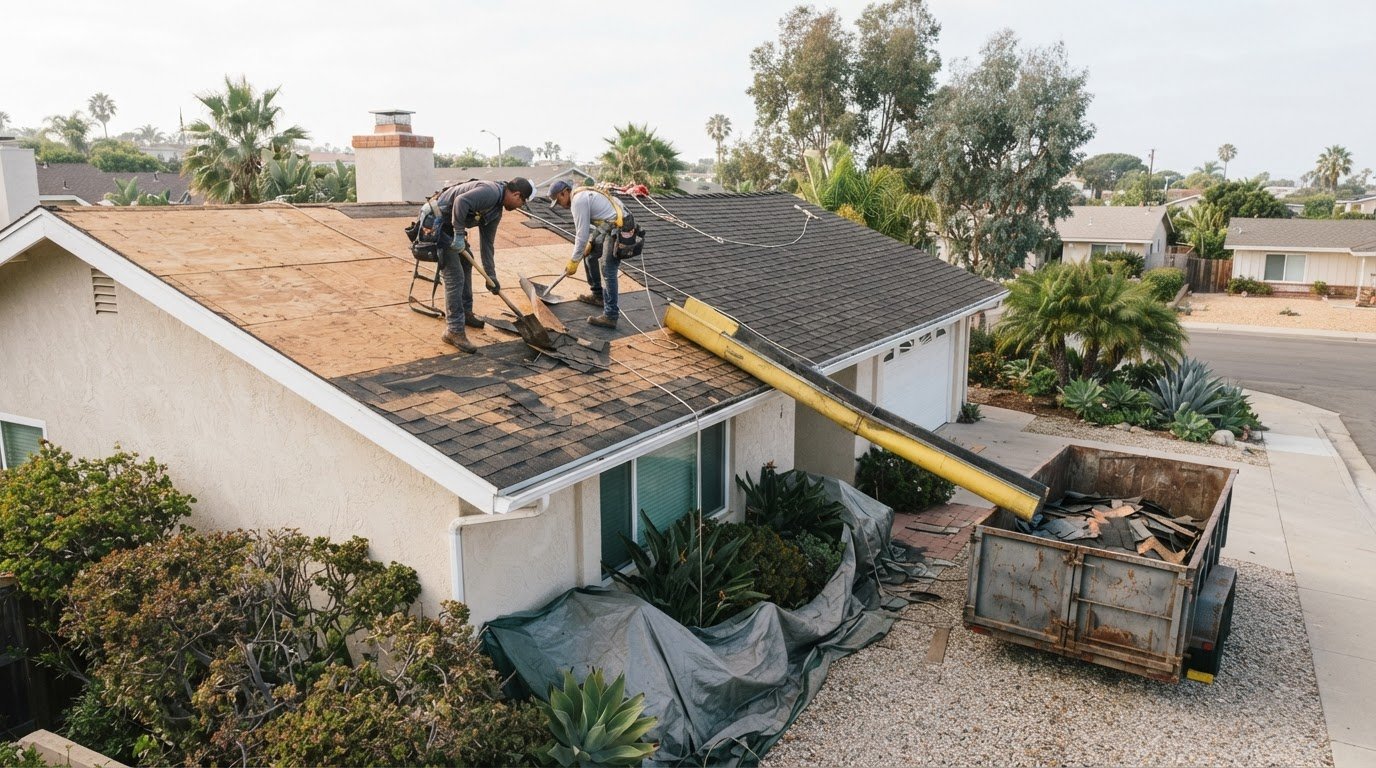
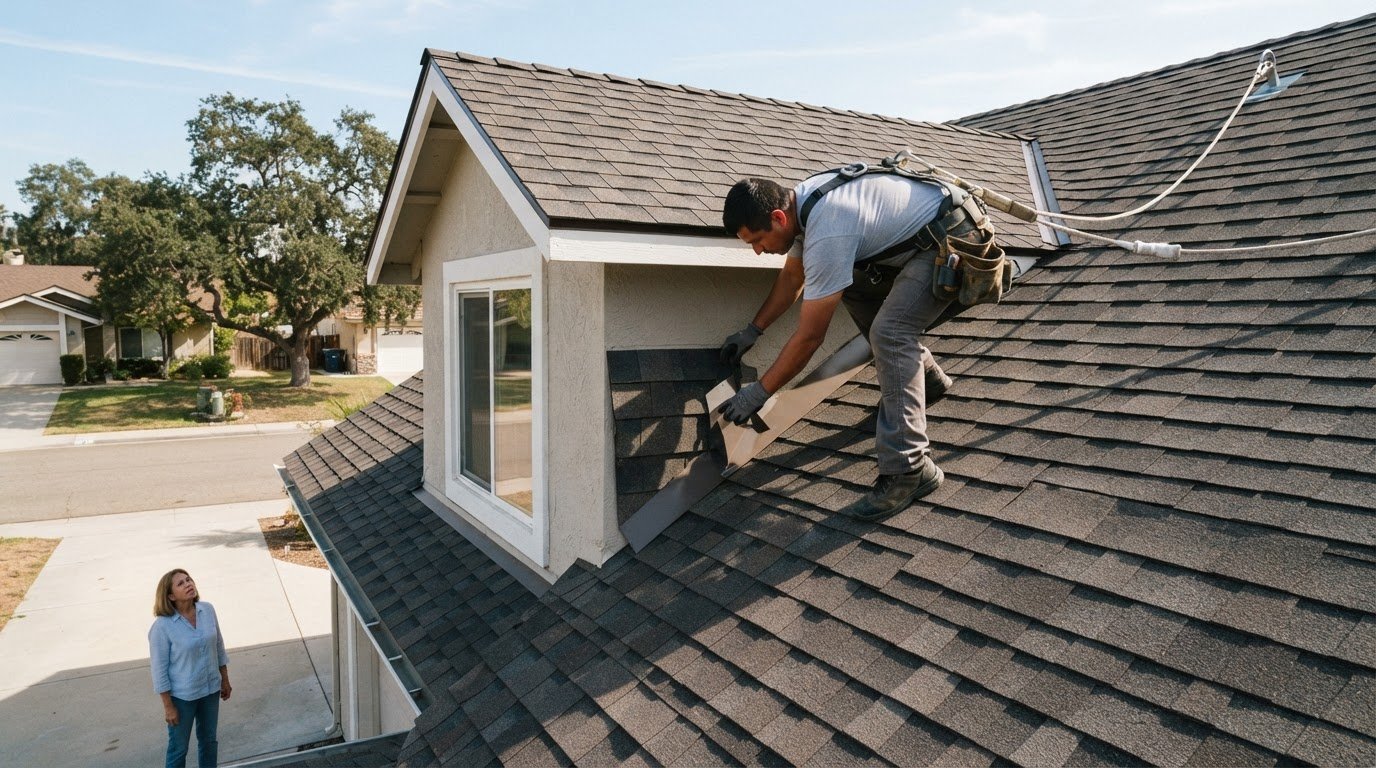
Selecting high-performance materials is only the first half of a sustainable project. The second half relies on the hands that install them. Poorly executed seams on a TPO membrane or incorrectly laid tiles can lead to thermal leaks that negate your energy savings. Higher Levels Roofing takes a meticulous approach to every project, ensuring that your investment in eco-friendly roofing materials San Diego meets its full potential. We prioritize local building codes and focus on waste reduction, aiming to recycle as much old material as possible during the replacement process. A local, licensed contractor understands the nuances of our specific coastal and inland requirements, providing a level of accountability that national firms simply cannot match.
Meticulous Craftsmanship and Ventilation
A "cool roof" is more than a reflective surface; it's a breathing system. Without proper intake and exhaust balance, heat remains trapped in your attic, forcing your air conditioner to work harder despite your new reflective tiles. Our team designs integrated ventilation systems that move hot air out while pulling cool air in. This balance is critical for the longevity of your roof deck and the overall energy performance of your home. It's a small detail that makes a massive difference in your monthly utility costs. To ensure you're asking the right questions before you sign a contract, review The Ultimate San Diego County Roofing Contractor Hiring Checklist.
Your Next Steps Toward a Greener Home
Transitioning to a more efficient home shouldn't feel overwhelming. We act as your professional partner, helping you navigate the complex world of San Diego permits and Title 24 compliance paperwork. The process begins with a professional inspection to assess your current roof’s energy performance and structural integrity. We'll provide a clear, honest assessment of which materials best suit your property's microclimate and your long-term goals. Every home is a contribution to our local community's landscape, and we take pride in helping you make it more resilient. Schedule your eco-friendly roofing consultation with Higher Levels Roofing today to start your journey toward a cooler, more sustainable future.
Investing in a Cooler, More Resilient Future
Your home is your most significant investment, and choosing the right roof ensures it remains a sanctuary for decades. By prioritizing eco-friendly roofing materials San Diego homeowners can balance aesthetic pride with modern energy performance. Whether you choose the timeless durability of clay tile or the heat-reflective power of TPO membranes, you're making a choice that lowers utility bills and meets the strict 2026 Title 24 standards. These materials don't just protect your property; they contribute to a cooler, more sustainable community.
Higher Levels Roofing brings professional assurance to every project. As a licensed San Diego C-39 Roofing Contractor, we offer specialized expertise in Title 24 compliance and fire safety regulations. We're locally owned and operated in San Diego County, which means we understand exactly how our microclimates affect your roof's lifespan. We take pride in our meticulous craftsmanship and transparent communication. It's time to stop worrying about rising energy costs and start enjoying a home that works for you. Get a Free Estimate on Your Eco-Friendly Roof Replacement and take the first step toward a more secure, energy-efficient future.
Frequently Asked Questions
Does California require a "Cool Roof" for all residential replacements?
Yes, under the 2026 California Title 24 standards, most residential roof replacements in San Diego must meet "cool roof" requirements if you are replacing more than 50% of the existing surface. San Diego is primarily in Climate Zone 7, which mandates specific levels of solar reflectance and thermal emittance. These regulations ensure that new roofing systems reflect more sunlight and absorb less heat, helping to reduce energy consumption across the state.
What is the most eco-friendly roofing material for a home in San Diego?
Clay and concrete tiles are often considered the most eco-friendly roofing materials San Diego homeowners can choose due to their natural composition and incredible lifespan. These materials can last 50 to 100 years, which significantly reduces the environmental impact associated with frequent replacements. They are also 100% recyclable at the end of their life cycle. For modern flat roofs, TPO membranes offer superior energy efficiency by reflecting most solar radiation.
How much can I save on my energy bills with a cool roof in Southern California?
Homeowners in Southern California typically see a reduction in cooling costs of up to 30% after installing a certified cool roof system. By reflecting solar energy away from the building, these materials keep attics significantly cooler during peak summer months. This reduces the workload on your air conditioning system, leading to lower monthly utility bills and extending the lifespan of your HVAC equipment. Actual savings depend on your home's insulation and local microclimate.
Are clay tiles more sustainable than asphalt shingles?
Clay tiles are substantially more sustainable than asphalt shingles because of their longevity and material composition. While asphalt shingles are petroleum based and usually require replacement every 20 years, clay tiles are made from natural earth and can last a century. This long life cycle prevents multiple rounds of roofing debris from entering local landfills. Clay tiles also provide better natural thermal insulation, which helps regulate indoor temperatures more effectively than traditional shingles.
Is TPO roofing considered eco-friendly for residential homes?
TPO roofing is an excellent eco-friendly choice for modern residential homes with flat or low slope roof designs. It's a highly reflective, single ply membrane that prevents heat absorption, helping homes stay cool without excessive air conditioning. TPO is also 100% recyclable and contains no toxic chemicals or plasticizers. For San Diego residents looking for a sustainable, energy efficient solution for contemporary architecture, TPO provides a durable and environmentally responsible alternative to traditional rolled roofing.
What is Title 24 and how does it affect my roofing project in San Diego?
Title 24 is California's Energy Code designed to reduce the state's energy consumption. For your San Diego roofing project, it mandates the use of materials that meet specific Solar Reflectance Index (SRI) ratings. These requirements apply to most new construction and significant reroofing projects. Working with a contractor who understands these 2026 standards is essential to ensure your project is compliant and that all necessary energy documentation is properly filed with local building departments.
Can I get a tax credit or rebate for installing an eco-friendly roof in 2026?
Yes, the federal Energy Efficient Home Improvement Tax Credit allows homeowners to claim up to 30% of the cost of qualifying energy efficient roofing materials, with a maximum annual credit of $1,200. To qualify, the materials must be ENERGY STAR certified. Additionally, some San Diego residents may be eligible for local programs like the SDG&E Energy Savings Assistance program, which provides no cost energy upgrades, including high performance cool roofs, for income qualified households.
How does salt air affect the lifespan of sustainable roofing materials?
Coastal salt air can be highly corrosive to certain materials, but clay and concrete tiles are naturally resistant to salt spray, making them ideal for La Jolla and Carlsbad homes. These materials don't rust or degrade when exposed to marine environments. TPO membranes also perform exceptionally well in coastal zones because they are chemically inert. Choosing salt resistant eco-friendly roofing materials San Diego experts recommend ensures that your sustainable investment won't fail prematurely due to our unique seaside conditions.
Comments