


Comparing Roofing Bids: Why Prices Differ and What to Compare

The lowest roofing bid isn’t automatically the best value. When comparing roofing bids, what you should look for is whether each proposal covers the same roof problem, materials, work scope, and protections, not just the total. Start with at least three written bids based on the same scope of work.
A wide price gap can feel unsettling, especially when proposals seem to describe the same project. Often, the difference is in what’s included: removal and disposal, replacement of damaged decking, flashing details, or warranty terms. An estimate is an approximation, so understand how the contractor will handle concealed damage before work begins.
This guide explains how to compare scope and materials, review contractor credentials and insurance, and understand warranty terms for a San Diego-area project. You’ll be better equipped to spot meaningful differences and choose based on the work your roof needs, not price alone.
Table of Contents
1. How Do You Compare Roofing Bids?
Start by matching the complete roofing system, not just the visible surface. Each estimate should identify the material manufacturer, product line, grade, and color, plus the underlayment, flashing, ventilation, and installation method. For shingles, ask the bid to name the specific shingle type; “asphalt shingles” alone doesn’t show whether proposals use comparable products. No single standard method covers every roof, so written details make differences easier to spot.
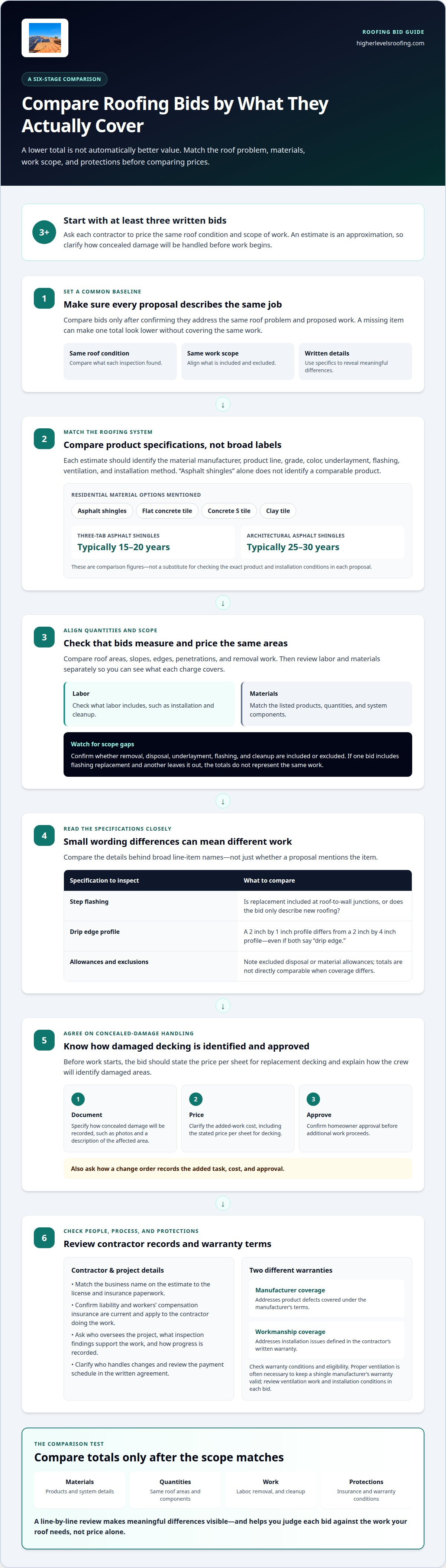
Compare the roof measurements and quantities next. Check that each roofing contractor is pricing the same roof areas, slopes, edges, penetrations, and removal work. Then review material and labor line items separately. A bid should make clear what labor covers, including installation and cleanup, and what materials are included. If one estimate lists replacement of flashing while another leaves it out, the totals don’t represent the same work.
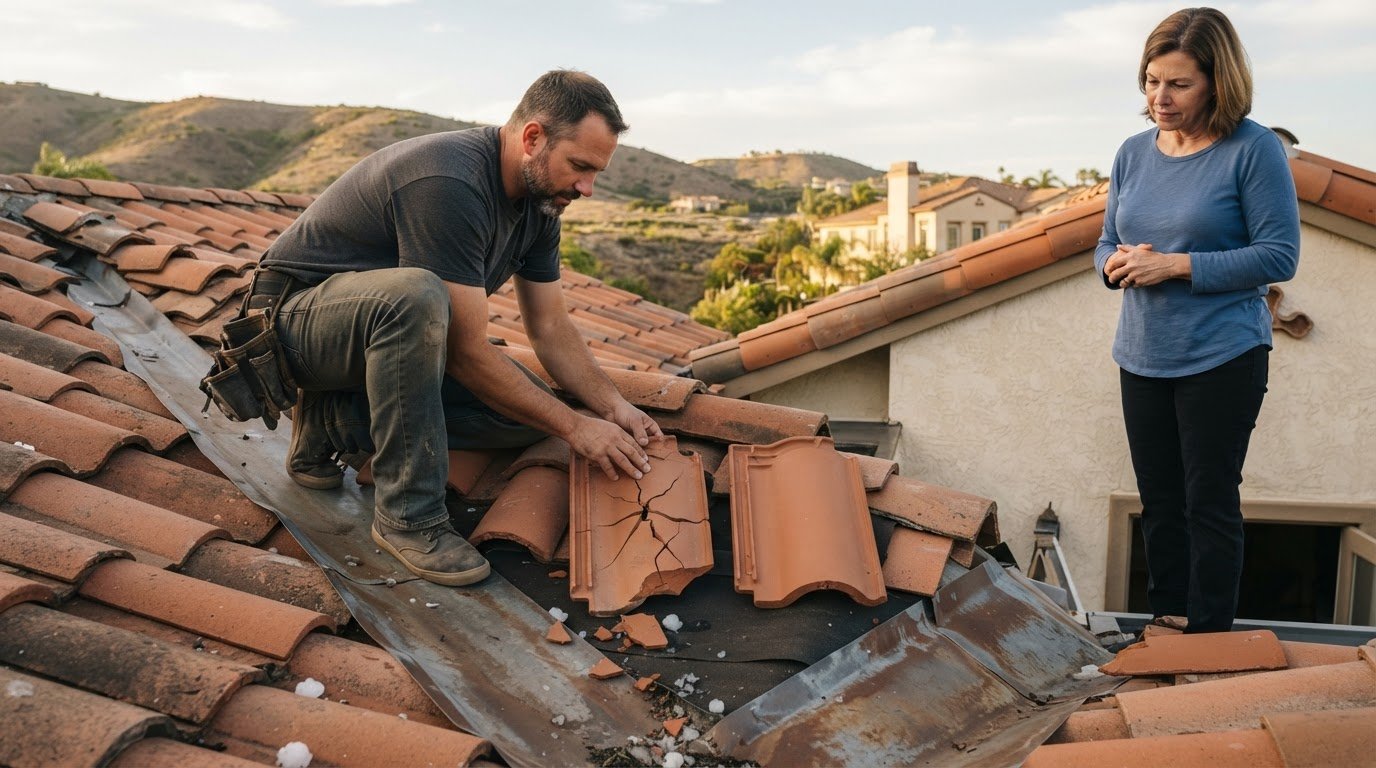
Material choice affects more than appearance. Residential options include asphalt shingles, flat concrete tile, concrete S tile, and clay tile. Three-tab asphalt shingles typically last 15-20 years, while architectural asphalt shingles typically last 25-30 years. Those figures are useful comparisons, not a substitute for checking the exact product and installation conditions in each proposal. A lower initial estimate may specify a different material or system, so compare expected service life and stated warranty terms together.
Review warranty eligibility and conditions closely. Proper ventilation is often necessary to keep a shingle manufacturer’s warranty valid, so check that each bid describes ventilation work and any installation conditions tied to coverage. Compare manufacturer coverage separately from workmanship coverage: one concerns the product, the other the installation. Also confirm cleanup and disposal are included. Before choosing the lowest estimate, make sure its materials, quantities, labor, installation details, and warranty conditions are clear.
2. Florida contractor license and insurance verification
For a San Diego-area roofing project, review each contractor’s license details and insurance documents before choosing a bid. Match the business name on the estimate to the name on the license and coverage paperwork. Confirm that liability and workers’ compensation insurance are current and apply to the contractor doing the work. These records help clarify who is responsible for the project if questions arise during installation.
Ask practical questions before deciding: Who will oversee the roof replacement, what inspection findings support the proposed work, and how will progress be recorded? Clarify who handles project changes and what payment schedule appears in the written agreement. Request three written bids built around the same scope. That gives you a consistent basis for reviewing each contractor’s proposed work, terms, and communication process.
Insurance claims require a clear boundary. A roofing contractor can describe observed roof conditions and the work proposed in an estimate. Questions about policy interpretation or what an insurer will cover belong with the appropriate insurance professional. Keep the roofing proposal focused on the physical work, and be cautious of offers to waive or pay your insurance deductible. In a number of states, contractors are prohibited from offering to waive or cover a homeowner’s insurance deductible.
After a storm, pay attention to how a contractor documents the inspection and explains the proposal. Be cautious if anyone pressures you to sign the same day, gives a quote valid for only 48 hours, or requests full payment before work begins. Review the named parties, written scope, payment terms, and process for documenting changes. If the inspection points to repair rather than full replacement, review roof repair options as you consider the next step.
3. Comparing bid scope instead of total price
A roofing bid prices a defined scope of work, not simply a roof. Compare each line against the same roof condition and proposed work. Note whether removal, disposal, underlayment, flashing, and cleanup are included or excluded. A missing line isn’t automatically extra work, but it changes what the total covers. Identify those differences before comparing prices.
Read labor and material charges separately, then match each item across proposals. For example, one bid may include replacing step flashing at roof-to-wall junctions, while another only describes installing new roofing. Those scopes aren’t equivalent. Also compare the drip edge profile: a 2 inch by 1 inch edge differs from a 2 inch by 4 inch profile. The specification matters, even if both estimates simply say “drip edge.”
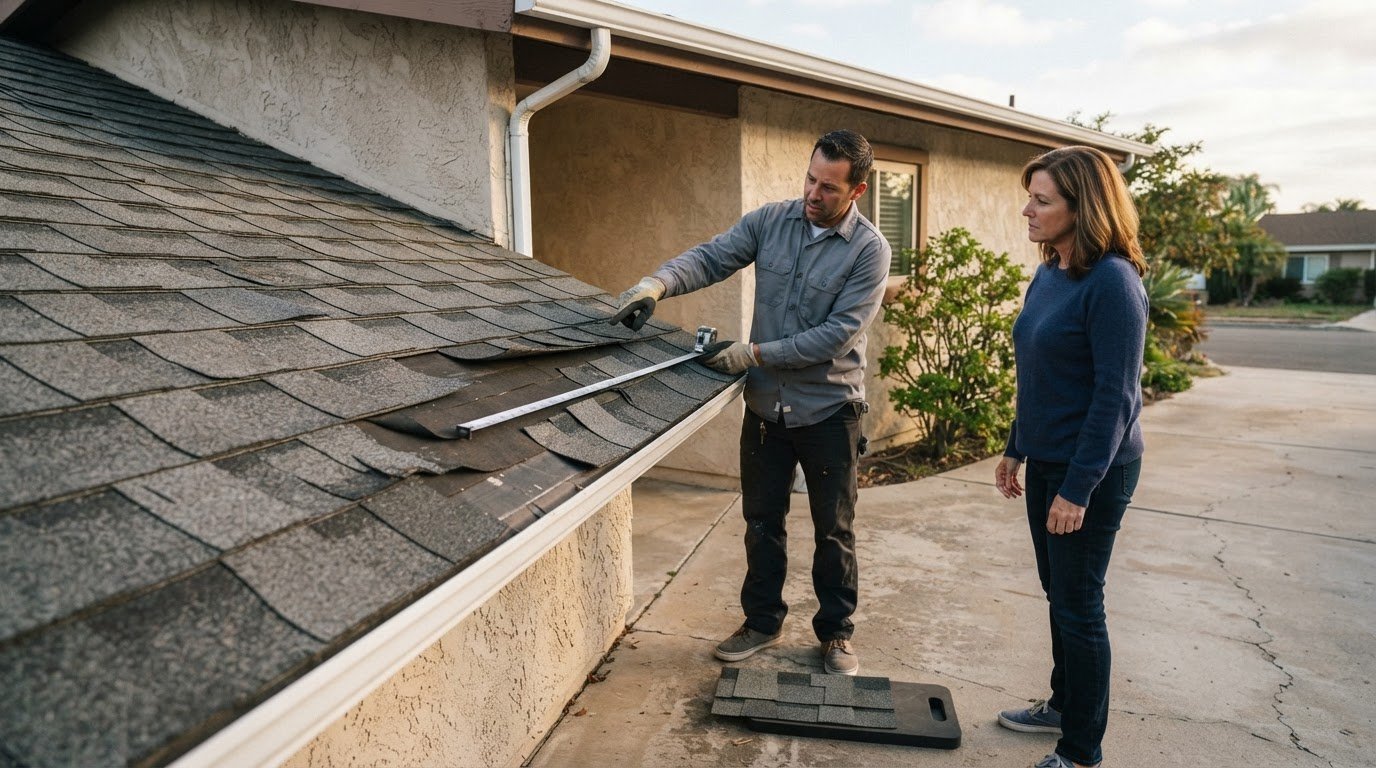
Damaged decking needs clear pricing before work starts. A roofing estimate should state the price per sheet for replacement decking and explain how the crew will identify damaged areas. It should also describe how concealed damage will be documented, priced, and approved before additional work begins. A written process might specify photos, a description of the affected area, and homeowner approval before the added work proceeds. That keeps the actual scope visible.
Review exclusions and allowances as carefully as included work. If one proposal excludes disposal or lists a material allowance while another includes those items, the totals aren’t directly comparable. Ask how a change order will record the added task, cost, and approval. Step flashing at roof-to-wall junctions can also affect the work. A line-by-line review shows what each bid covers and which decisions remain open.
4. Manufacturer and workmanship warranties
A roofing estimate should distinguish the manufacturer’s warranty from workmanship coverage. The manufacturer’s warranty addresses product defects covered under its terms. Workmanship coverage addresses installation issues defined in the contractor’s written warranty. These protections have different responsibilities, so a phrase such as “warranty included” doesn’t explain what coverage applies.
Compare the written terms, not just the warranty label. Check who provides coverage, which parts of the roof it applies to, how long it lasts, and what conditions or exclusions affect it. Verify whether the document identifies the installed product and required installation practices. For shingle systems, proper ventilation is often necessary to keep a manufacturer’s warranty valid. If a proposal leaves ventilation work unclear, warranty eligibility may be uncertain.
Review workmanship terms just as carefully. Look for how the contractor defines a covered installation defect, how to submit a claim, and what remedy the warranty provides. Note any maintenance duties, exclusions, or conditions that could limit coverage. Determine whether the warranty applies to the entire replacement or only specified work. These details clarify responsibility if a leak appears after installation.
Compare differences in writing. For example, one bid may describe product coverage but omit workmanship terms; another may state both protections and explain how to make a claim. Don’t assume that similar labels mean equal coverage. Ask for the actual warranty documents before signing, and retain them with the contract and completion records. A warranty doesn’t replace skilled installation, but clear terms help define liability and the process for addressing covered problems. To discuss roofing work and warranty considerations for your project, get help reviewing your roofing needs.
Higher Levels Roofing: Roof Repair Services
Higher Levels Roofing provides roof repairs for homeowners assessing damage or considering whether repair work may address the problem. For replacement projects, the company offers asphalt shingles, flat concrete tile, and concrete S tile. Matching the proposed work to the roof’s condition and material helps clarify which solution fits the project.
If reviewing bids has raised questions about a leak, damaged roofing, or whether repair work is appropriate, Higher Levels Roofing can help with the roofing work. Contact Higher Levels Roofing to discuss your repair or roofing project.
Choose with clarity and move forward confidently
Choose the proposal that best fits your priorities, not simply the one that feels easiest to accept. Weigh the quality of the written plan, the clarity of responsibilities, and your confidence in the contractor’s process. The purpose of comparing roofing bids is to understand what you’re agreeing to before you commit.
If questions remain, use them to guide a focused conversation about your project and suitable options. Higher Levels Roofing offers asphalt shingle, flat concrete tile, and concrete S tile roofing. Discuss your roof with the team to identify a practical next step.
Start a conversation with Higher Levels Roofing and take the next step with confidence.
Frequently Asked Questions
Why Are Roofing Estimates So Different?
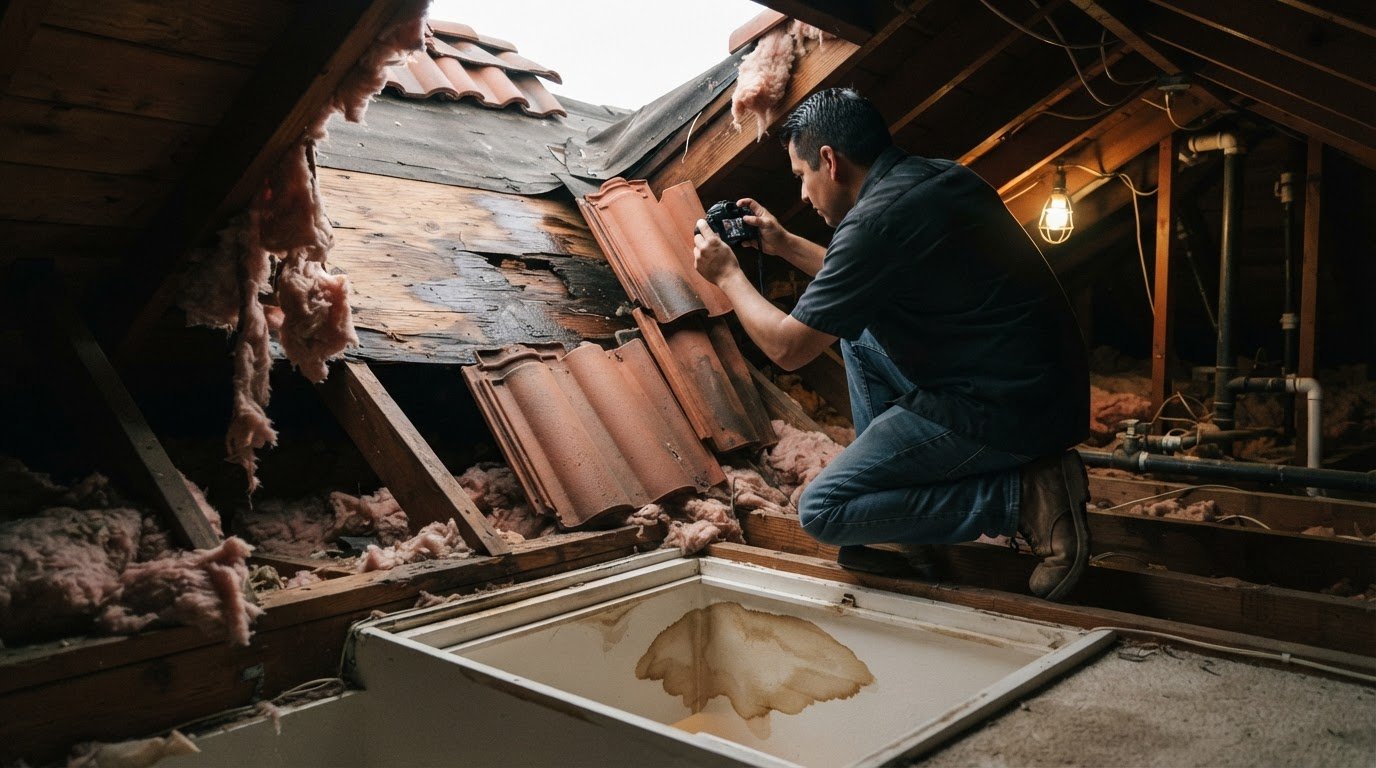
Roofing estimates differ because contractors may assess the roof differently or make different assumptions about the work. A roof with multiple valleys, penetrations, and roof-to-wall connections can require a different plan from a simpler roof. Material choices, access, removal needs, and how concealed damage is handled also affect a proposal. Compare what each contractor observed and assumed before interpreting the price gap.
How Do You Compare Roofing Bids?
When comparing roofing bids, first check whether each proposal addresses the same roof condition and intended result. Then review the contractor’s qualifications, written responsibilities, materials, and warranty documents. Consider how clearly the proposal explains the work sequence and how questions or changes will be handled. A clear bid makes it easier to decide with fewer unanswered questions.
How many roofing quotes should I get?
Get at least three written roofing bids, each based on the same requested work. This gives you a useful way to identify differences in assumptions, proposed materials, and contractor communication. If one proposal stands apart, look for the reason rather than averaging the figures. For instance, a contractor’s inspection may identify a roof condition another estimate didn’t address, which could explain a different recommendation.
Is Going With the Cheapest Bid Risky?
Not necessarily; a lower bid can be a reasonable choice if it suits the roof and clearly defines the work. Price alone doesn’t reveal whether a proposal has gaps. Look at the contractor’s documented experience with similar projects and ask for references from comparable work completed within the past 12-24 months. A clear explanation of responsibilities and a professional process can help you judge value beyond the amount quoted.
What should a roofing bid include?
A useful bid identifies the contractor, proposed work, selected products, and what to expect during the project. It should make exclusions and allowances understandable, explain how changes are recorded, and state how the contractor will communicate progress. Keep the estimate with related documents, such as product selections and warranty paperwork. Together, these records clarify what the proposal covers.
How to compare roofing estimates line by line?
Put matching categories side by side, then mark each as included, excluded, or described differently. Compare quantities and product descriptions instead of relying on broad labels such as “materials” or “labor.” Note any allowance, missing detail, or separate charge that changes the work being priced. If a line is unclear, request a written explanation and keep it with the estimate so your decision reflects the same documented scope.
Comments