


Commercial Roof Installation in San Diego: The 2026 Property Manager’s Guide

Last winter, a local property manager watched as a minor leak during an El Niño storm turned into a costly operational shutdown because their outdated roof couldn't handle the intense coastal moisture. You understand that managing a facility in San Diego means more than just keeping the lights on; it requires defending your investment against salt air corrosion and rising energy demands. Planning a commercial roof installation in 2026 feels more complex than ever with the new California Wildland-Urban Interface Code and stricter Title 24 requirements now in full effect.
We're here to provide the clarity you need to master these complexities, from selecting high-reflectivity TPO membranes to securing the right long-term warranty protection for your building. This guide covers everything from the latest permitting timelines in San Diego County to the specific benefits of rolled asphalt torch-down roofing for our unique climate. You'll learn how to minimize construction downtime while achieving a leak-free, energy-efficient result that stands up to the Pacific breeze. By the end, you'll have a clear path to a successful project that protects both your tenants and your bottom line.
Table of Contents
Understanding Commercial Roof Installation in San Diego’s Climate
A commercial roof installation isn't simply a scaled-up version of a residential project. It involves specialized systems engineered specifically for flat or low-slope structures. These buildings face unique structural demands, requiring materials that can withstand standing water and the weight of heavy HVAC equipment. In San Diego, your roof is the first line of defense for a high-value asset. Entrusting this to a local expert like Carlos and the team at Higher Levels Roofing ensures that every detail, from the structural deck to the top membrane, is handled with meticulous care. We view every project as a contribution to our community's landscape, focusing on long-term security over quick fixes.
The Coastal Factor: Salt Air and UV Protection
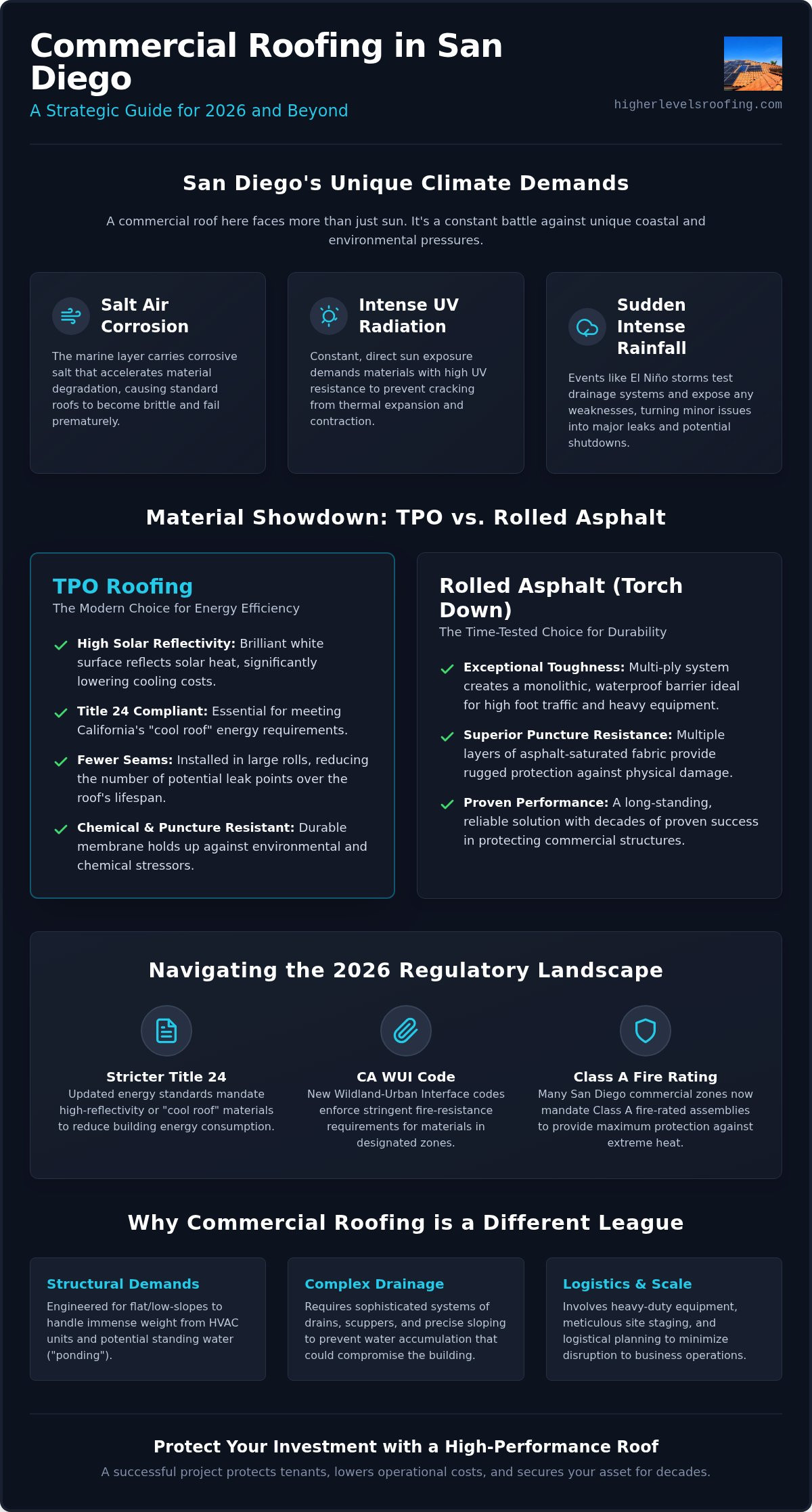
If your property is within five miles of the Pacific, it's constantly battling the marine layer. Salt air isn't just a scenic feature; it's a corrosive force that accelerates material degradation far faster than in inland regions. Standard materials often turn brittle or fail prematurely due to this chemical stress. Membrane roofing systems like TPO are specifically designed to resist this corrosion while providing the high UV resistance necessary for Southern California. San Diego's temperature swings also cause constant thermal expansion and contraction. Without the right flexibility, a roof will develop micro-cracks that invite leaks during our winter storms. We prioritize materials that remain pliable and reflective, even after years of intense sun exposure.
Commercial vs. Residential: Key Differences
The scale of a commercial roof installation requires heavy-duty equipment and specialized logistics that residential contractors simply don't use. While a house sheds water through simple gravity and shingles, a large-acreage flat roof requires complex drainage systems to prevent "ponding." If water sits too long, the weight can compromise the building's integrity. Additionally, fire safety is a paramount concern. Under the 2026 California building codes, many commercial zones now mandate Class A fire-rated assemblies. These materials are tested to survive extreme heat, providing a critical layer of protection in our local Fire Hazard Severity Zones. Choosing a partner who understands these specific San Diego requirements is the difference between a compliant building and a costly legal headache. We focus on these technical details so you can focus on running your business.
TPO vs. Rolled Asphalt Torch Down: Choosing the Right Material
Selecting the right material for your commercial roof installation is a decision that impacts your building’s overhead for decades. In San Diego, the choice usually comes down to two heavyweights: Thermoplastic Polyolefin (TPO) and Rolled Asphalt Torch Down. While both systems offer excellent protection, they serve different operational goals. TPO is the modern answer to energy efficiency and thermal regulation. Conversely, torch-down systems provide the rugged, multi-ply resilience that traditional structures often require to handle heavy equipment or foot traffic.
The Benefits of TPO Roofing Membranes
TPO has rapidly become the industry standard for flat roofs across Southern California. Its primary advantage is its brilliant white surface, which reflects solar heat rather than absorbing it into the structure. This reflectivity is essential for meeting California's cool roof requirements under Title 24. By reducing the thermal load on your building, TPO can significantly lower monthly cooling costs during our hot inland summers. These membranes are also highly resistant to punctures, chemicals, and bacterial growth. Because TPO comes in large rolls, it allows for a faster install with fewer seams, which naturally reduces potential leak points over time. For a deeper look at how this material performs locally, explore our TPO Commercial Roofing in San Diego case study.
When to Choose Rolled Asphalt Torch Down
While TPO excels in reflectivity, Rolled Asphalt Torch Down remains a favorite for its sheer physical toughness. This system involves multiple layers of asphalt-saturated fabric that are heat-welded together to create a monolithic, waterproof barrier. It's an ideal choice for roofs with high foot traffic, such as those with frequent HVAC maintenance schedules or heavy equipment staging. The multi-ply nature of torch-down roofing means that even if the top layer is scuffed, the underlying layers continue to protect your deck. It’s a time-tested solution that offers a lifespan of 20 years or more when maintained properly. If your building has a complex layout with numerous penetrations, the flexibility of torch-down application often provides a more seamless fit than single-ply membranes. You can always reach out to the experts at Higher Levels Roofing to discuss which system fits your specific San Diego property best.
The Commercial Installation Process: Minimizing Business Disruption
Executing a commercial roof installation shouldn't mean hanging a "Closed" sign on your front door. For property managers, the greatest anxiety often stems from the potential for operational downtime, noise complaints, or blocked customer access. A structured, professional approach ensures that your building remains functional and safe throughout the project. We follow a methodical five-step process designed to maintain business continuity while delivering a high-performance roof.
Step 1: Site Inspection and Core Sampling. We begin by identifying the integrity of your existing deck. Core sampling allows us to see if moisture has trapped itself within the sub-layers, which dictates whether we need a full tear-off or if a recovery system is possible.
Step 2: Staging and Logistics. This is where we plan the "traffic flow" of the project. We coordinate the placement of dumpsters and material staging areas to ensure your tenants and customers have clear, safe paths to your entrance.
Step 3: Systematic Tear-off. We only remove what we can waterproof in a single day. This is a critical safeguard against San Diego’s unpredictable winter rains, ensuring your interior assets stay dry.
Step 4: Precision Membrane Installation. Whether we're heat-welding TPO seams or applying a multi-ply torch-down system, this phase focuses on creating a monolithic, leak-proof barrier.
Step 5: Final Inspection. Carlos and the team conduct a thorough walkthrough to verify every detail meets our high craftsmanship standards before providing your long-term warranty documentation.
Logistics and Safety Management
Managing a job site in a busy commercial district requires constant communication. We prioritize noise management by scheduling the loudest phases of the project during your off-peak hours whenever possible. Safety is our non-negotiable priority. We implement strict protocols to protect your employees and customers from debris and equipment. This includes careful coordination with HVAC and electrical contractors, as roof-mounted equipment often needs to be temporarily lifted or disconnected during the install. Integrating cool roofs for San Diego's climate during this process not only meets regulatory standards but also provides immediate relief for your building’s cooling systems.
The Local Contractor Advantage
A San Diego-based crew brings more than just tools to the job; they bring an intimate knowledge of local building codes and 2026 permitting timelines. Having a principal like Carlos oversee the project timeline ensures personal accountability that large, out-of-state corporations can't match. We understand the specific nuances of San Diego County’s zoning laws, which helps prevent costly delays. To ensure you're asking the right questions before your project begins, review our San Diego County Roofing Contractor Hiring Checklist to find a partner who values transparency as much as you do.
Cost Factors and ROI for San Diego Property Owners
Think of your roof as a shield for your revenue. A commercial roof installation isn't just a line item on a budget; it's a strategic move to preserve your building's equity. While the initial cost is a factor, the real story lies in the return on investment through long-term asset protection. Several variables dictate the specific project scope. Total square footage is the primary driver, but the density of roof penetrations, such as HVAC units, skylights, and plumbing vents, requires the kind of meticulous detail that defines a quality build. Each penetration is a potential leak point that demands expert flashing and sealing.
Beyond the surface area, the slope and existing drainage efficiency play a role in the final plan. We also emphasize that preventative maintenance is the secret to doubling a roof's lifespan. By catching minor seam issues or clearing drainage blockages early, you avoid the premature failure that plagues neglected properties.
Title 24 Compliance and Energy Rebates
California’s Title 24 energy standards are a significant factor for any San Diego project. These regulations mandate the use of "Cool Roofs" to combat rising urban temperatures. By opting for a high-reflectivity TPO membrane, you're doing more than just satisfying state law; you're actively reducing the thermal load on your building. This translates to lower monthly utility bills and less strain on your HVAC systems during our warm Southern California summers. Many property owners also find that these energy-efficient upgrades qualify for federal tax credits or local utility rebates, which helps offset the initial capital outlay.
The Long-Term Value of Quality Craftsmanship
A cheap roof is often the most expensive one you'll ever buy. When a low-bid contractor cuts corners on seam welding or perimeter flashing, the resulting leaks can cause catastrophic damage to your interior inventory and tenant relationships. Investing in a professional commercial roof installation ensures you're protected by comprehensive manufacturer warranties and superior craftsmanship. This adds tangible value to your property's resale price. Prospective buyers in San Diego look for buildings with documented maintenance and high-performance roofing systems. It’s about building a legacy of quality that lasts 20 years or more. If you're ready to secure your building's future, schedule a professional consultation with our local team today.
Why Higher Levels Roofing is San Diego’s Trusted Commercial Partner
Choosing a contractor for your commercial roof installation is a decision rooted in trust. While national roofing chains often prioritize volume, Higher Levels Roofing operates with a philosophy of personal accountability. We're a locally owned and operated San Diego business led by Carlos, who remains deeply involved in every project we undertake. This local presence means we aren't just working on a building; we're serving our neighbors from La Jolla to Carlsbad. Our team specializes in the specific systems that San Diego properties need most, particularly high-reflectivity TPO membranes and rugged rolled asphalt torch down roofing.
We understand the anxieties that property managers face, from permitting delays to the fear of premature material failure. Our approach is designed to alleviate those concerns through professional assurance and a calm, expert hand. We provide the technical expertise of a high-end service provider while maintaining the approachability of a local specialist. This balance ensures your project remains on schedule and compliant with the latest 2026 California building codes.
A Meticulous Approach to Every Square Foot
Carlos’s core philosophy is simple: treat every commercial project with the same meticulous care usually reserved for a family home. We don't view a flat roof as just a vast expanse of material. Instead, we see it as thousands of individual details that must work in perfect harmony. Unlike national conglomerates that may send a different crew every week, our steady team maintains a high degree of craftsmanship from the first core sample to the final inspection. Transparency is the bedrock of our service. We provide clear, honest communication throughout the entire process, ensuring you're never left wondering about the status of your investment. This level of customized attention is what creates long-term security for your capital assets.
Ready for a Higher Level of Service?
If your building is showing signs of age or you're preparing for the upcoming El Niño cycle, it's time for a professional assessment. We make the consultation process straightforward and stress-free. When you contact us, you can expect a methodical evaluation of your roof’s current condition, including a detailed look at drainage, seam integrity, and Title 24 compliance. We don't use high-pressure sales tactics. Instead, we provide a structured overview of your options, allowing you to make an informed decision that fits your budget and operational goals. Our goal is to leave you feeling in control and confident in your building’s future. Schedule your commercial roof inspection today!
Secure Your Property’s Future with a Modern Roofing Strategy
Your building's roof is more than just a structural necessity; it's a critical asset that requires a strategic approach to maintain its value in San Diego’s unique coastal environment. We've explored how mastering the balance between salt-resistant materials and Title 24 energy compliance can lead to significant long-term savings. Whether you choose the high reflectivity of TPO or the rugged durability of a multi-ply torch-down system, the success of your commercial roof installation depends on meticulous planning and local expertise.
As a locally owned San Diego specialist, Higher Levels Roofing brings a level of personal accountability that national firms can't replicate. Carlos personally oversees every project, ensuring that your installation meets our high standards for craftsmanship and efficiency. We focus on delivering energy-efficient Cool Roofs that protect your bottom line and your tenants' comfort. Take the first step toward a worry-free property by reaching out to a team that values your investment as much as you do.
Get a Professional Commercial Roof Quote from Higher Levels Roofing and experience the difference of a dedicated local partner.
Frequently Asked Questions
How long does a typical commercial roof installation take in San Diego?
A commercial roof installation typically takes between one and three weeks to complete. This timeline depends on the square footage of your building and whether we're performing a full tear-off or a recovery. Weather conditions in San Diego County and the complexity of roof-mounted HVAC systems also influence the schedule. We provide a detailed project timeline during your initial consultation to ensure your operations remain predictable and on track.
Can my business stay open during the roofing installation process?
Yes, your business can stay fully operational throughout the installation process. We prioritize logistical planning to ensure that customer access points and employee parking remain clear and safe. By staging materials and dumpsters in low-traffic areas, we'll minimize the impact on your daily revenue. Our team coordinates the loudest phases of construction during your off-peak hours to reduce noise disruption for your tenants and staff.
What is the best commercial roofing material for coastal San Diego properties?
TPO roofing is often the premier choice for coastal properties in La Jolla and Carlsbad due to its high reflectivity and resistance to salt air corrosion. For buildings with heavy foot traffic or numerous HVAC units, a multi-ply rolled asphalt torch down system provides the rugged durability needed to prevent punctures. Both systems offer excellent protection against the unique marine layer moisture that defines our local Southern California climate.
Does a new commercial roof need to comply with California Title 24?
Every new commercial roof installation in San Diego must comply with California’s Title 24 energy standards. These regulations require Cool Roof materials that reflect solar heat to reduce urban heat islands and lower building cooling costs. Utilizing white TPO membranes is a highly effective way to meet these mandatory requirements. We ensure all our projects align with the 2026 building codes to keep your property compliant and energy efficient.
How often should a commercial flat roof be inspected in San Diego County?
We recommend a professional inspection at least twice a year for commercial flat roofs in San Diego County. The best times are in the autumn before the winter rain cycle begins and again in the spring to assess any storm damage. Regular checks allow us to clear drainage systems and identify minor seam issues before they turn into costly leaks that disrupt your business operations or damage your inventory.
What are the signs that my commercial roof needs replacement instead of repair?
Persistent leaks after multiple repairs, widespread ponding water, and visible membrane shrinkage are clear indicators that a replacement is necessary. If your roof's approaching the end of its 15 to 25 year lifespan, the cost of ongoing maintenance often exceeds the value of a new system. We'll conduct core sampling to check for trapped moisture in the insulation, which helps determine if a full replacement is the safest path forward.
Do you offer warranties on TPO and Torch Down installations?
We provide comprehensive warranties for both TPO and rolled asphalt torch down installations to protect your capital investment. These typically include a manufacturer’s material warranty along with our own professional workmanship guarantee. Since Carlos personally oversees every project, we'll stand behind the meticulous detail of our seams and flashing. This dual layer of protection ensures you've got long-term security and peace of mind for your San Diego commercial property.
How does salt air affect the lifespan of my commercial roofing membrane?
Salt air acts as a corrosive agent that can accelerate the degradation of standard roofing materials and metal components. In coastal areas like Encinitas and Carlsbad, it's common for salt spray to cause some membranes to become brittle prematurely. We select high-quality TPO and modified bitumen systems specifically engineered to resist these chemical stresses. This specialized approach helps your roof reach its full expected lifespan despite the challenging maritime environment.


Comments