


Commercial Roof Inspection San Diego: Protecting Your Property in 2026

The 2026-2027 El Niño forecast isn't just a weather report; for local property owners, it's a countdown to the ultimate test of their building's envelope. You're likely already feeling the stress of unpredictable repair costs and the anxiety of meeting new Title 24 "Cool Roof" standards. A professional commercial roof inspection San Diego provides the clarity you need to manage these risks effectively. It's a lot to handle, especially when a single hidden leak can compromise tenant relations or damage expensive inventory. We understand that your roof is a massive investment that needs a steady, expert hand to stay ahead of our region's unique coastal and inland challenges.
This guide shows you how a detailed inspection serves as a strategic asset management tool rather than a simple damage check. You'll discover how a meticulous assessment identifies minor vulnerabilities before they trigger mandatory compliance resets or costly emergency repairs. We'll walk through the process of securing a documented condition report for your insurance provider and show you how to build a predictable five-year maintenance budget. By the end, you'll have a clear plan to extend your roof's lifespan and protect your bottom line against the elements.
Table of Contents
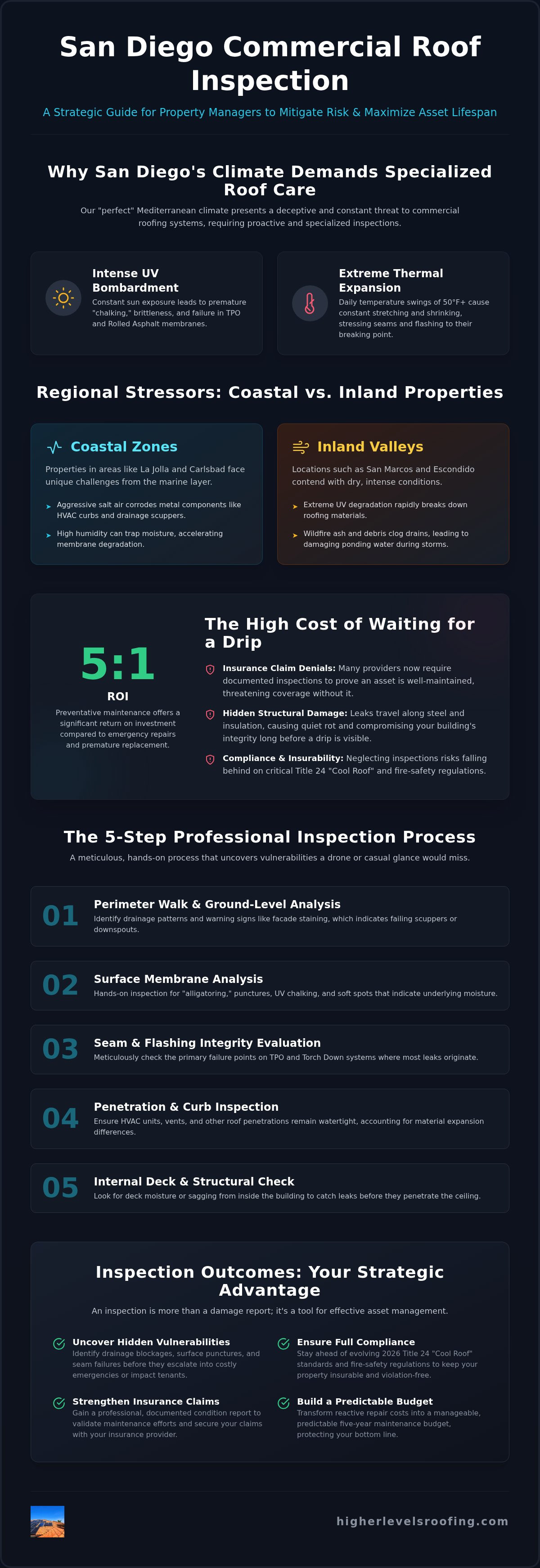
Why San Diego Commercial Roofs Require Specialized Inspections
San Diego's Mediterranean climate feels perfect to us, but it's a "deceptive" environment for commercial roofing systems. While we enjoy 300 days of sunshine, your roof's membrane is enduring a constant UV bombardment. This leads to "chalking" and premature brittleness in materials like TPO or Rolled Asphalt. A professional Building inspection is essential because it evaluates how these environmental factors impact your specific structure. Large-scale flat roofs are especially vulnerable to thermal expansion. On a typical day, the temperature on a roof surface can swing by 50 degrees or more. This constant stretching and shrinking puts immense pressure on seams and flashing. Seams fail. Seals crack. Without regular oversight, these tiny fractures become major liabilities.
Coastal vs. Inland Stressors
Property needs vary wildly depending on your zip code. In La Jolla and Carlsbad, the marine layer brings salt air that aggressively oxidizes metal components, including HVAC curbs and drainage scuppers. Move inland to San Marcos or Escondido, and the stressors shift. Here, the primary concern is extreme UV degradation and the accumulation of wildfire ash. This fine debris settles in drainage systems, creating blockages that cause ponding water during intense winter storms. A commercial roof inspection San Diego property managers rely on must account for these microclimates. A generic checklist won't catch the specific oxidation patterns found on the coast or the debris-clogged drains of the inland valleys.
The Cost of Procrastination
Waiting for a visible drip in the ceiling is a high-risk strategy. In high-occupancy commercial buildings, a small leak often travels along structural steel or insulation before appearing. This causes quiet rot and structural compromise. Insurance companies are also tightening their requirements. Many providers now demand a documented commercial roof inspection San Diego owners can present to prove the asset is well-maintained. Neglecting this documentation can lead to claim denials or spiked premiums. It's a simple calculation. Preventative maintenance is a 5:1 ROI investment that saves thousands in emergency repairs and premature replacement costs.
The 5-Step Professional Commercial Inspection Process
A thorough commercial roof inspection San Diego building owners trust begins on the ground. We perform an initial perimeter walk to identify drainage patterns and ground-level warning signs like staining on the building facade. These stains often indicate that scuppers or downspouts are failing to direct water away from the structure. Moving to the roof, we conduct a surface membrane analysis. We're looking for "alligatoring" in asphalt systems, punctures from foot traffic, or UV chalking in TPO membranes. This hands-on approach allows us to feel for soft spots that a drone might overlook. Physical touch reveals what a camera cannot see.
The third and most critical step is evaluating seam and flashing integrity. These are the primary failure points for TPO and Torch Down systems alike. We then inspect every penetration and curb, ensuring HVAC units and vents remain watertight. These areas are prone to leaks because of the different expansion rates between metal and roofing membranes. Finally, an internal evaluation checks for deck moisture or structural sagging. This internal look is vital for identifying leaks that haven't yet penetrated the ceiling but are already compromising the roof deck. Catching these issues early is why a professional commercial roof assessment is a vital part of your facility maintenance plan.
Specialized TPO Membrane Assessment
TPO systems require a specific technical eye to ensure they remain reflective and watertight. We test heat-welded seams for delamination or robotic weld failure. These failures often occur if the original installation didn't account for San Diego's ambient temperature during the weld process. We also look for "bridging," where the membrane pulls away from vertical surfaces due to improper fastening or high-wind uplift. In areas with ponding water, we check for microbial growth that can eventually eat through the membrane. This meticulousness ensures your "Cool Roof" continues to meet local reflectivity standards for years to come.
Rolled Asphalt and Torch Down Evaluation
Properties with rolled asphalt or torch down systems face material degradation caused by our intense UV exposure. We assess granule loss and bitumen degradation, which can leave the underlying fabric vulnerable to the elements. We meticulously inspect "lap" joints for proper adhesion and "bleed-out." This ensures the torching process created a permanent, waterproof seal. Finally, we evaluate the condition of the base sheet and underlayment to ensure the structural deck remains protected. This step-by-step evaluation provides a clear picture of your roof's remaining service life and helps you avoid the structural rot mentioned earlier.
Flat Roof vs. Sloped Commercial Systems: Key Differences
Flat and sloped systems require fundamentally different management strategies. While a sloped roof uses gravity to shed water, a flat roof relies on a complex network of drains and precise slopes to prevent standing water. This difference is why a commercial roof inspection San Diego experts perform focuses so heavily on drainage dynamics. Flat roofs are susceptible to ponding water, which adds significant weight to the building's structural steel. Just one inch of standing water across a large industrial roof can add thousands of pounds of unintended load, stressing the entire building envelope.
Longevity also varies significantly by system type. A modern TPO membrane typically offers a 20-year service cycle, whereas clay or concrete tiles can easily exceed 50 years. However, the maintenance frequency for flat systems is much higher. We recommend bi-annual checks for flat roofs, whereas sloped commercial systems might only need annual attention. This proactive schedule ensures that small punctures or seam failures don't lead to the structural issues discussed in previous sections. Regular oversight is the only way to balance the shorter lifespan of high-efficiency membranes with the needs of a large-scale commercial footprint.
The Challenges of Flat Roof Drainage
Efficient drainage is the lifeblood of a flat commercial roof. During an assessment, we look for scupper blockages and internal drain failures that allow water to collect. If water stands for more than 48 hours, it can void most commercial manufacturer warranties. To prevent this, we evaluate the role of "crickets." These are small, sloped structures built into the roof to direct water toward the drains and away from HVAC curbs. Without properly functioning crickets, water pools in stagnant pockets, leading to membrane degradation and eventual leaks.
When Sloped Roofs Make Sense
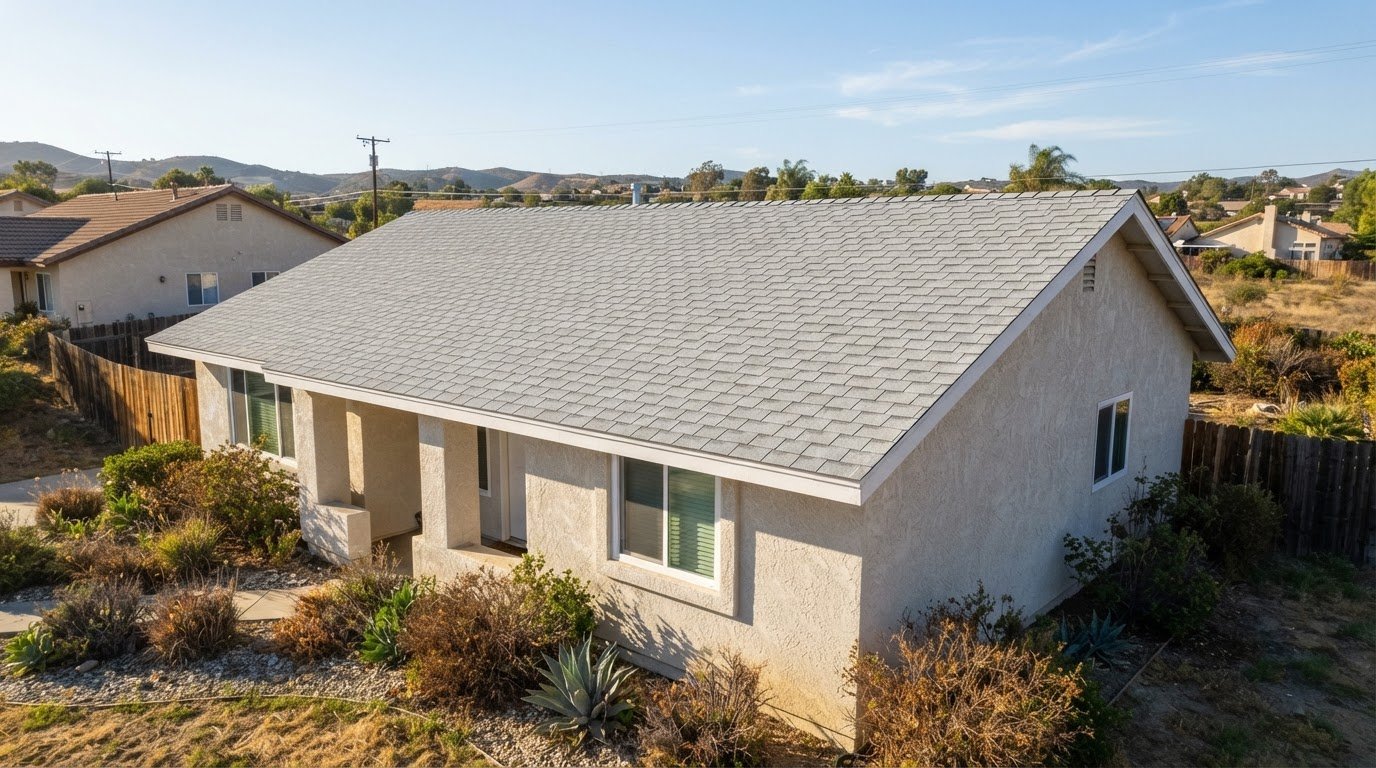
Sloped systems are common in specific San Diego commercial sectors. Multi-family complexes in La Jolla often utilize clay or concrete tile for their superior durability and coastal aesthetic. These materials resist salt air corrosion far better than exposed metal components on flat roofs. For smaller retail strips, asphalt shingles offer a balance of cost-efficiency and curb appeal. If you're managing a property with a sloped system, it's helpful to understand the specific material benefits. You can find more details in The Ultimate Guide to Roof Tiles. Regardless of the pitch, choosing the right material for your building's footprint is the first step toward long-term security.
Deciphering Your Inspection Report: A Manager's Guide
A detailed commercial roof inspection San Diego report is more than just a technical summary; it's a financial roadmap for your property. We translate complex data into clear condition ratings so you can prioritize your facilities' needs. A "Good" rating means the system is performing as intended, requiring only routine maintenance. A "Fair" status indicates that while the roof is currently watertight, specific repairs are necessary to prevent future failures. A "Critical" rating warns of immediate risks to your inventory or structural integrity. These ratings allow you to move from reactive "firefighting" to proactive asset management.
Visual proof is the backbone of any professional report. We include high-resolution photo documentation of every deficiency, which is essential when filing insurance claims after a major storm. The report also features an Estimated Remaining Service Life (ERSL) calculation. This metric helps you understand exactly how much time your current system has left before a full overhaul is required. By differentiating between "fix now" items and those we should simply "monitor," we help you allocate your repair budget where it matters most.
Budgeting for Future Replacements
Your inspection report is the foundation for a three-year or five-year capital plan. Knowing your ERSL allows you to set aside funds gradually rather than facing a massive, unexpected expense. If the report indicates widespread membrane failure or saturated insulation, it might be time to consider a roof replacement in San Diego. Keep in mind that 2026 Title 24 "Cool Roof" standards may impact your future costs. These regulations require specific reflectivity levels that can influence material choices and installation techniques, making early planning more important than ever.
Workmanship vs. Material Failure
We help you determine if a leak stems from a manufacturer defect or a previous installation error. In San Diego, flashing failure is the most common workmanship issue we encounter. Because metal and roofing membranes expand at different rates in our sun, poorly installed flashing eventually pulls away and creates a direct path for water. A professional report simplifies the vendor selection process by providing an objective third-party analysis of your roof's actual condition. If you're ready to gain full visibility into your building's health, schedule your professional consultation with our team today.
Why Higher Levels Roofing for Your Commercial Assessment?
Choosing a partner for your commercial roof inspection San Diego requires more than just a technician with a ladder. It requires a dedicated local advocate who understands how the salt spray in La Jolla differs from the dry heat of San Marcos. At Higher Levels Roofing, we combine this deep geographic knowledge with specialized mastery of TPO and Rolled Asphalt Torch Down systems. We aren't a cold corporate entity. We're a licensed local team. Our experts view every project as a contribution to our community's landscape, ensuring that your property remains secure for the long haul.
Meticulous craftsmanship is our baseline, not an upgrade. We focus on long-term security over quick, temporary fixes that only mask underlying structural issues. Our reports are designed for transparency. We provide documented evidence that is easy to present to owners, board members, or insurance adjusters. This clarity allows you to make informed decisions without the typical anxieties of major maintenance. We position ourselves as a steady, expert hand to help you manage your building's most critical asset.
Our Commitment to San Diego Businesses
We take pride in serving a wide range of local communities, including San Diego, La Jolla, San Marcos, Encinitas, and Carlsbad. Our approach blends professional authoritative standards with the neighborly warmth you expect from a local specialist. We want you to feel in control of your property's health. To help you evaluate your options, we've developed a Hiring a San Diego Roofing Contractor Checklist to guide your decision-making process.
Ready for a Strategic Assessment?
Scheduling your assessment is a straightforward, methodical process. When you reach out, it helps to have your building's blueprints and any previous repair history ready for our consultants. This information allows us to provide a more accurate ERSL calculation and a more effective five-year capital plan. We're here to provide the professional assurance you need to protect your investment. Schedule your commercial roof inspection San Diego with Higher Levels Roofing today to ensure your property is ready for whatever the 2026 season brings.
Securing Your Property’s Future in 2026
Your commercial roof is more than a shelter; it's a strategic asset that requires a steady hand to maintain. By prioritizing a regular commercial roof inspection San Diego property managers can navigate the upcoming El Niño cycle and evolving Title 24 standards with complete confidence. Identifying drainage blockages and seam vulnerabilities early prevents minor issues from becoming structural catastrophes. A documented condition report isn't just paperwork. It's your shield for insurance claims and your guide for a predictable five-year budget.
As a licensed and insured San Diego contractor, Higher Levels Roofing specializes in the technical nuances of TPO and Torch Down systems. We provide the detailed digital condition reports you need to present clear facts to your stakeholders. Our team is dedicated to meticulous craftsmanship and the long-term security of your building. We're here to help you move from reactive repairs to proactive management.
Book Your Professional Commercial Roof Inspection
Taking this proactive step today ensures your business remains protected and ready for whatever the San Diego sky brings next.
Frequently Asked Questions
How often should a commercial roof be inspected in San Diego?
Commercial properties in our region benefit most from bi-annual assessments. We recommend scheduling a commercial roof inspection San Diego building owners trust in the spring and autumn. This timing allows you to clear debris before the winter rains and assess UV damage after the intense summer sun. For flat systems like TPO or Torch Down, this frequency is vital to catch seam failures before they lead to interior leaks.
What is the average cost of a commercial roof inspection?
The investment for a professional assessment varies based on the building's total square footage and the complexity of the roofing system. Factors like the number of HVAC penetrations, the presence of internal drains, and the overall accessibility of the roof deck play a role in the final scope. We provide customized quotes that reflect the specific needs of your property rather than using a one-size-fits-all pricing model for every facility.
Can an inspection help with my commercial insurance premiums?
A documented inspection report serves as powerful evidence of proactive risk management for your insurance provider. By showing that you've addressed "Fair" or "Critical" issues, you demonstrate that the building is well-maintained and less likely to suffer a catastrophic failure. Many insurance carriers now require these reports to maintain coverage or to qualify for more favorable premium rates in high-risk coastal or fire zones across San Diego County.
Do you use drones for commercial roof inspections?
While we utilize modern technology to capture high-resolution overviews, we believe a hands-on approach is superior to a drone-only assessment. A drone can't feel for moisture under a TPO membrane or test the physical integrity of a heat-welded seam. Our team performs physical walkthroughs to check for "bridging" and drainage blockages that cameras often miss. This meticulousness ensures your report is based on physical facts rather than just aerial photos.
What are the most common commercial roof problems in San Diego?
Our unique climate causes specific issues like UV chalking on TPO membranes and salt air corrosion on coastal flashing. In inland areas like San Marcos, wildfire ash often clogs scuppers and internal drains, leading to ponding water. Thermal expansion is also a major factor. The constant stretching of the roof material during our 50-degree temperature swings can eventually cause seams to pull apart on large-scale flat systems over time.
How long does a professional commercial roof inspection take?
Most professional assessments take between two and six hours to complete on-site. The duration depends on the size of the facility and the number of specific penetrations, such as skylights or HVAC curbs, that require individual checking. After the physical walkthrough, we compile your digital condition report, which includes photo documentation and an Estimated Remaining Service Life calculation. We aim to be thorough without taking up your entire business day.
Will the inspection disrupt my business operations or tenants?
A standard commercial roof inspection San Diego is non-invasive and won't disrupt your daily business operations or tenant activities. Since our work is primarily external, we don't usually need access to the building's interior unless we're investigating specific moisture stains on the ceiling. We maintain a respectful and quiet presence on-site. Our goal is to provide professional assurance while allowing your team to focus on their work without any interruption.
What is the difference between a roof inspection and a roof certification?
An inspection is a detailed status report of your roof's current health, identifying any necessary repairs or maintenance needs. A roof certification is a separate document where a contractor guarantees the roof will remain watertight for a specific period, often two to five years. While an inspection provides the data needed for a long-term capital budget, a certification is typically required during a property sale to reassure the buyer and lender.
Comments