


Asphalt Shingles vs Tile Roof in San Diego: The Ultimate 2026 Homeowner’s Guide

Your neighbor’s stunning clay tile roof in La Jolla might be the worst possible choice for your home further inland. In San Diego, the best roof isn’t a universal standard. It’s a calculated response to your specific micro-climate. When weighing the performance of asphalt shingles vs tile roof San Diego systems, the decision often comes down to whether you’re battling corrosive coastal salt air or the intense UV exposure of the inland valleys.
We understand that choosing a material feels overwhelming, especially with strict HOA aesthetics and the 2026 Title 24 cool-roof mandates now in full effect. You want a roof that provides a 30 to 50 year lifespan and the curb appeal expected in San Diego's diverse communities. It’s about finding that perfect balance between long-term security, meticulous craftsmanship, and immediate value for your property.
This guide compares these two heavyweights on durability, maintenance, and San Diego-specific performance. We’ll help you navigate the latest fire-rating requirements and energy-saving technologies that keep attics cool during a heatwave. By the end, you’ll know exactly which material will serve as the ultimate shield for your home and your peace of mind.
Key Takeaways
Understand how San Diego’s unique micro-climates, from coastal salt spray to intense inland heat, dictate whether you should prioritize corrosion resistance or UV protection.
Discover why the asphalt shingles vs tile roof San Diego debate depends on balancing immediate affordability with the long-term Mediterranean aesthetics and 50-year lifespan of clay or concrete.
Learn about the 2026 Title 24 "Cool Roof" requirements and how modern materials can significantly lower your energy bills while meeting strict fire-safety standards.
Explore specialized solutions for modern and flat-roof architecture, including the high-performance benefits of TPO and Torch Down systems.
Gain insight into why meticulous installation and expert craftsmanship are the final, most critical steps in securing a reliable shield for your family home.
Table of Contents
Understanding the Modern Roofing System in Southern California
A high-performance roof is much more than a simple surface layer. It functions as an integrated shield, protecting your home's structural integrity from the top down. When homeowners weigh the pros and cons of asphalt shingles vs tile roof San Diego systems, they often focus on the look. However, the real performance happens beneath the visible material. In our local dry-heat environment, the underlayment acts as a critical thermal barrier. It prevents your attic from becoming a furnace during those long September heatwaves. A well-designed system balances ventilation, insulation, and reflective materials to ensure long-term security.
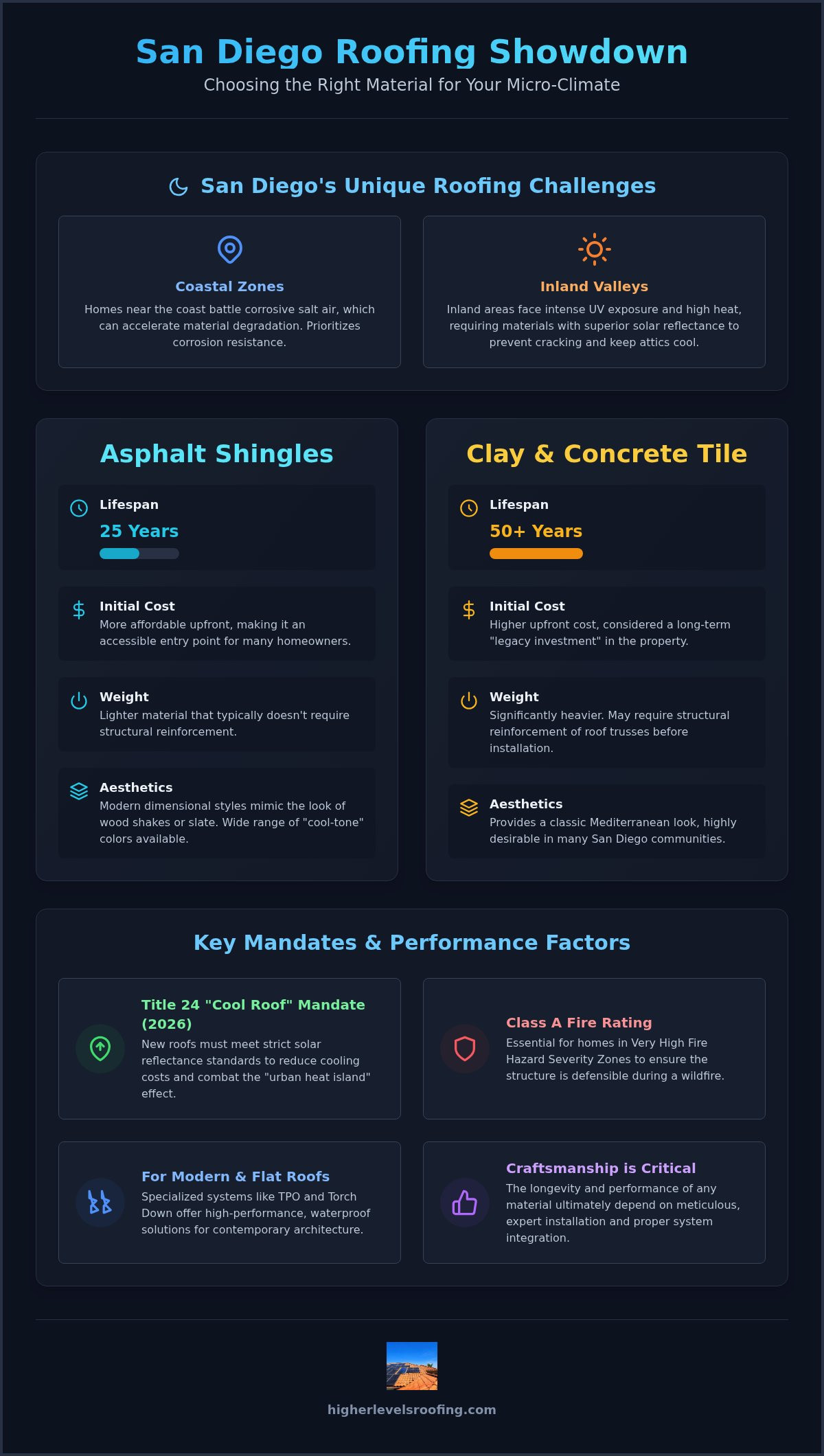
Local building codes now play a massive role in your material options. As of January 1, 2026, California Title 24 mandates specific energy-efficient standards for most re-roofing projects. These regulations prioritize materials that mitigate the "urban heat island" effect. Whether you choose shingles or tile, your roof must meet strict solar reflectance indexes to comply with state law. This shift ensures that every new installation contributes to a more sustainable and cooler neighborhood.
Why Material Choice Matters for San Diego ROI
Your roof is a significant factor in property valuation, especially in premium markets like La Jolla or Del Mar. Potential buyers look for a "Cool Roof" when assessing a home's value. A "Cool Roof" is a system that reflects UV rays to reduce cooling costs. Choosing a high-quality material isn't just about aesthetics; it's about preventing the long-term degradation caused by our intense coastal sun. While some might look for the lowest initial price, Asphalt Shingles Explained through a professional lens reveals that architectural grades offer far better resistance to UV-induced cracking than basic options. Investing in quality now prevents expensive premature replacements later.
The San Diego Climate Factor
Our micro-climates present unique challenges that vary from the coast to the canyons. Santa Ana winds can reach high speeds, testing the wind-uplift ratings of every shingle and tile. For homes located near canyons or in Very High Fire Hazard Severity Zones, fire resistance is non-negotiable. Most modern installations must achieve a Class A fire rating to ensure the home remains defensible during a wildfire. For a deeper look at these requirements, see The Homeowner’s Guide to Roof Replacement in San Diego (2026). This local expertise helps us determine whether the weight of a asphalt shingles vs tile roof San Diego installation is better suited for your specific property's wind exposure and fire risk.
Asphalt Shingles vs Tile Roof: The Residential Heavyweights
Choosing between the two most popular roofing materials in Southern California involves balancing your immediate budget with long-term performance. In the ongoing debate of asphalt shingles vs tile roof San Diego homeowners usually find that their choice impacts everything from attic temperatures to future maintenance schedules. Asphalt shingles provide an accessible entry point with a lifespan of roughly 25 years. Conversely, clay and concrete tiles are a legacy investment, often lasting 50 years or more. However, weight is a critical factor. Tile systems are significantly heavier than shingles, sometimes requiring structural reinforcement of the roof trusses before installation can begin.
Asphalt Shingles: A Versatile Standard
Modern asphalt shingles have evolved far beyond the flat, basic 3-tab versions of the past. Most San Diego homeowners now opt for architectural or dimensional shingles. These offer a thicker, multi-layered look that mimics the texture of wood shakes or slate. They are particularly popular in coastal areas because they handle high winds effectively and come in a wide range of "cool-tone" palettes. These colors stay vibrant under the bright San Diego sun without absorbing excessive heat. Selecting the right shingle roofing company is vital to ensure your system includes proper ridge ventilation. Without this airflow, heat builds up in the attic, which can bake the shingles from the inside out and shorten their usable life.
Clay and Concrete Tile: Premium Performance
The iconic Mediterranean aesthetic of San Diego is defined by the sweeping curves of clay and concrete tiles. Beyond their beauty, these materials offer exceptional thermal mass properties. They create a natural air gap between the tile and the roof deck, which helps keep your living space significantly cooler during the summer months. While clay tiles are prized for their color-fastness and traditional look, concrete tiles are a durable, cost-effective alternative that excels at resisting impact.
Maintenance for tile roofs is unique. While the tiles themselves may last a lifetime, the waterproof underlayment beneath them eventually wears out. A "lift and reset" service allows you to replace that underlayment while reusing your original tiles, preserving your home's character and saving on material costs. If you are curious about whether your home’s structure can support the weight of a new tile system, consulting with a professional local craftsman can help you make an informed decision with confidence.
Specialized Solutions: TPO and Torch Down for Modern Homes
San Diego’s architectural landscape is shifting toward modern, clean lines that often feature flat or low-slope roof sections. In neighborhoods like La Jolla and Encinitas, these flat surfaces are frequently used for rooftop decks or to maintain a minimalist coastal profile. However, these areas require different waterproofing strategies than a standard pitched roof. While you might be comparing asphalt shingles vs tile roof San Diego options for the main structure, your flat additions or modern sections need high-performance membranes like TPO or Rolled Asphalt Torch Down. These systems provide a seamless, watertight seal where traditional materials would fail due to water ponding.
Many homeowners now opt for a hybrid approach. This involves installing high-quality shingles or tiles on the visible pitches while using TPO on the flat, hidden sections. This strategy ensures your home meets the strict 2026 Title 24 requirements for low-slope roofs, which mandate an Aged Solar Reflectance of at least 0.63. By combining these materials, you get the aesthetic appeal of traditional roofing with the advanced engineering of modern waterproofing.
TPO for Residential and Commercial Use
TPO (Thermoplastic Polyolefin) has become the gold standard for flat-roof energy efficiency. While it’s widely known in the business sector, tpo commercial roofing standards are increasingly applied to modern residential designs. This white, highly reflective membrane is a "Cool Roof" champion. In inland areas like San Marcos and Escondido, TPO can slash air conditioning demand by reflecting the majority of UV radiation back into the atmosphere. Our team typically recommends a 60-mil membrane for residential projects. This thickness provides excellent puncture resistance and a robust lifespan, ensuring your modern addition stays dry and cool for decades.
The Strength of Concrete Tiles
If you prefer a contemporary look but want the durability of tile, flat concrete tiles offer a sophisticated alternative to traditional slate. They provide the same thermal mass benefits discussed in previous sections but with a sleek, low-profile appearance that complements modern San Diego homes. For those who want to maintain a classic Mediterranean feel, Concrete S-Tile profiles remain the top choice for Spanish-style curb appeal. You can explore various profiles and their specific benefits in The Ultimate Guide to Roof Tiles. Whether you choose flat or curved, concrete tiles offer a Class A fire rating, which is essential for protecting homes near San Diego’s canyon-adjacent properties.
The San Diego Decision Framework: Coastal vs. Inland
San Diego is a city of micro-climates. A home in the salt-heavy air of Carlsbad faces entirely different environmental stressors than a property in the sun-baked valleys of Escondido. When choosing between asphalt shingles vs tile roof San Diego homeowners must look beyond the price tag and evaluate how local conditions will age their investment. Your roof's hardware, ventilation needs, and even its fire resistance are dictated by your specific zip code. Failing to account for these variables often leads to premature repairs and compromised home security.
In coastal zones, salt air is a silent predator for roofing systems. It doesn't just affect the surface; it corrodes standard galvanized nails and flashings within years. For properties within five miles of the ocean, stainless steel fasteners are non-negotiable. While these components add a small margin to the initial cost, they prevent the structural failure that occurs when standard hardware rusts away. Conversely, inland residents must prioritize thermal management. On 100-degree days, an improperly ventilated roof can reach temperatures that bake shingles and degrade the plywood deck underneath.
Neighborhood aesthetics also play a major role. Many San Diego communities are governed by strict HOAs that mandate specific profiles or colors to maintain a cohesive look. Before finalizing your material choice, verify that your preferred shingle or tile meets your association's architectural guidelines. We often help homeowners navigate these restrictions by providing samples that satisfy both modern performance needs and traditional neighborhood standards.
Micro-Climate Specifics
In coastal Carlsbad and Oceanside, the morning marine layer creates a persistent dampness. This moisture often leads to moss and algae growth on shingles, which can trap water and cause rot. Choosing shingles with copper-infused granules or opting for non-porous tiles can mitigate this risk. In inland Escondido, the primary threat is extreme UV exposure. Intense sunlight causes shingle granules to loosen and wash away, leaving the asphalt mat vulnerable to cracking. Class A fire ratings provide a critical layer of protection for homes situated near flammable canyon brush by preventing embers from igniting the roof structure. This fire resistance is a legal requirement in many San Diego County fire hazard zones.
Budgeting for Total Cost of Ownership (TCO)
The "best" roof is the one that offers the highest return on investment for your specific timeline. If you plan to sell your home within the next decade, architectural asphalt shingles offer a tactical, cost-effective solution with excellent curb appeal. However, if this is your "forever home," the 50-year lifespan of a tile roof provides a lower annual cost over time. Tile roofs frequently recoup 60 to 70 percent of their cost at resale due to their perceived durability and premium status. To ensure you’re making the right financial move, use a roofing contractor San Diego county checklist to vet your installer and request a custom quote. For a personalized assessment of your home's micro-climate needs, contact Higher Levels Roofing today for a professional consultation.
The Higher Levels Approach: Meticulous Installation
Even the most premium materials will fail if the installation isn't handled with surgical precision. When you weigh the benefits of asphalt shingles vs tile roof San Diego, you're looking for a long-term shield, not a temporary patch. A single oversight in flashing or a poorly sealed penetration leads to leaks that compromise your home's structural integrity. At Higher Levels Roofing, we treat every project as a contribution to our local community's landscape. Our process begins with a comprehensive consultation where we assess your specific micro-climate and structural capacity. We don't just guess; we verify. Every detail matters because your family's safety depends on the reliability of our work.
A professional installation mirrors a steady, expert hand. We move methodically from the initial inspection through the final walkthrough. This structured approach allows you to feel informed and in control of your home maintenance. We believe that professional assurance comes from transparency. By explaining the "why" behind every technical requirement, we alleviate the typical anxieties associated with a major roof replacement. Our goal is to provide a service that emphasizes safety, long-term security, and aesthetic pride.
Expertise Across All Material Types
We maintain specialized crews for each material type. The skills required for concrete tile installation differ vastly from TPO membrane heat-welding or architectural shingle layering. This specialization ensures that your specific material choice is handled by a meticulous craftsman who understands its unique properties. Transparency is the cornerstone of our relationship with you. You'll never find hidden San Diego permit fees buried in our contracts; we provide clear, upfront information about the regulatory requirements in your jurisdiction. Our commitment to your property also includes a meticulous daily cleanup. We use magnetic sweeps and protective barriers to ensure your driveway and landscaping remain pristine. We respect your home as if it were our own.
Ready to Protect Your Investment?
The 2026 roofing landscape in San Diego is defined by strict energy efficiency and fire safety standards. Whether you choose the versatile affordability of asphalt shingles or the legacy performance of clay tile, your home deserves a craftsman's touch. Higher Levels Roofing is ready to help you navigate these choices with calm confidence. We provide a steady, expert hand from the first shingle to the final walkthrough. Secure your home’s future with a shield that matches the high standards of Carlsbad, La Jolla, or any of San Diego’s beautiful neighborhoods. Contact Higher Levels Roofing today for a meticulous estimate and let us build a roof that stands the test of time and the Southern California sun.
Securing Your San Diego Home for the Decades Ahead
Choosing the right material in the asphalt shingles vs tile roof San Diego debate is about more than just picking a color. It's a strategic decision that impacts your home’s energy efficiency, its resilience against salt air or canyon heat, and its compliance with 2026 safety standards. Whether you opt for the versatile affordability of architectural shingles or the legacy durability of clay tile, the success of your investment rests on a meticulous installation. A roof is only as strong as the craftsman who lays it.
As a locally owned and operated San Diego contractor, Higher Levels Roofing brings a dedicated craftsman's eye to every project. We are specialists in Tile, Shingle, and TPO systems, ensuring your specific micro-climate needs are met with precision and care. We believe that professional assurance is built through transparency and neighborly warmth. You deserve a roof that serves as a permanent shield, installed by an expert hand that values your property’s long-term security and aesthetic pride.
Ready to find the perfect fit for your home and lifestyle? Get Your Free Meticulous Roofing Estimate Today and take the first step toward a beautiful, code-compliant roof. We look forward to protecting your home with the meticulous craftsmanship it deserves.
Frequently Asked Questions
What is the most durable roofing material for San Diego coastal salt air?
Clay and concrete tiles are exceptionally durable in coastal areas like La Jolla and Carlsbad because they don't corrode. For those preferring shingles, high-quality architectural options are effective when installed with stainless steel fasteners. Standard galvanized hardware often fails prematurely near the ocean. Choosing a material that resists moisture and salt spray ensures your home remains protected against the unique environmental stressors of the Pacific coast.
How much does a typical roof replacement cost in San Diego in 2026?
Total project costs vary based on material choice, roof pitch, and current labor rates in San Diego County. Labor typically accounts for nearly half of the final bill. While we don't provide flat rates, factors like the 2026 Title 24 "Cool Roof" requirements and fire-safety compliance also influence the final investment. Every home is unique, so a professional consultation is necessary to determine the specific requirements for your property's micro-climate.
Can I switch from asphalt shingles to clay tiles on my existing home?
Switching requires a professional structural assessment because clay and concrete tiles are significantly heavier than shingles. Most homes originally designed for shingles need reinforcement of the roof trusses to support the added weight of a tile system. While it's a popular upgrade for Mediterranean aesthetics, safety is our priority. We evaluate your home's framing to ensure it can handle the load before recommending a transition between asphalt shingles vs tile roof San Diego systems.
What is TPO roofing, and is it suitable for San Diego residential homes?
TPO, or Thermoplastic Polyolefin, is a single-ply reflective membrane specifically designed for flat or low-slope roofs. It's an excellent choice for modern San Diego homes with rooftop decks or contemporary additions. TPO is a "Cool Roof" champion because its white surface reflects the majority of UV radiation. This helps homeowners in warmer areas like San Marcos and Escondido significantly reduce their indoor temperatures and lower their monthly cooling costs.
Are there specific "cool roof" regulations I need to follow in San Diego?
Yes, the 2026 California Title 24 Energy Code mandates specific solar reflectance standards for most re-roofing projects. These regulations require materials that reflect sunlight and emit heat more efficiently than traditional options. For steep-slope roofs, this often means choosing specific "cool" shingles or tiles. Meeting these standards isn't just about legal compliance; it's a practical way to enhance your home's comfort and energy efficiency in the Southern California sun.
How often should I have my tile roof inspected for leaks?
We recommend a professional inspection every two to three years. While the tiles themselves can last for decades, the waterproof underlayment beneath them eventually degrades. Early detection of slipped tiles or debris buildup in the valleys prevents water from reaching the wood deck. Regular maintenance is a proactive way to extend the life of your system and avoid the high costs of structural repairs caused by hidden, long-term moisture intrusion.
What is the difference between clay and concrete roof tiles?
Clay tiles are made from natural earth, fired in a kiln, and retain their vibrant color for a lifetime. They are a premium, lighter-weight option. Concrete tiles are a man-made alternative composed of sand, cement, and water. While concrete is more versatile in style and often more affordable, it's slightly heavier and more porous than clay. Both materials offer exceptional fire resistance and thermal mass benefits for San Diego properties.
How long does it take Higher Levels Roofing to install a new shingle roof?
Most residential shingle replacements are completed within two to four days. This timeline includes the removal of the old material, inspection of the wood decking, and the meticulous installation of the new system. Larger or more complex roofs may take slightly longer. We prioritize a methodical pace that ensures safety and craftsmanship while minimizing the disruption to your daily routine. Our crews maintain a clean site throughout the entire process.


Comments