


San Diego Rainy-Season Roof Preparation & Replacement Planning

Updated: Oct 5
A roof that looks sound through San Diego’s dry months can reveal vulnerable flashing, drainage details or aging materials when rain arrives. Preparing early gives you time to document concerns and, if the roof is nearing the end of its useful life, plan a replacement before wet weather complicates the project. Higher Levels Roofing focuses on roof replacements and new installations—not routine small repairs.
This guide explains safe ground-level and indoor checks, warning signs that deserve professional evaluation, and replacement-readiness considerations for shingle, clay or concrete tile, torch-down and TPO roofs. A stain or damaged tile does not automatically mean the whole roof needs replacement. The right decision depends on the condition of the complete roofing system, the extent and recurrence of problems, and the suitability of the existing materials.
Table of Contents
Why rainy-season roof maintenance matters for San Diego homes
In San Diego, roof care is less about preparing for months of steady rain and more about being ready for rain after a dry stretch. The region can experience long periods of drought followed by intense rainfall, including atmospheric-river events. Because rainfall and timing vary from year to year, use weather forecasts to guide your preparation instead of relying on a fixed date. The goal of roofing maintenance for rainy seasons is preventive observation: notice concerns, track changes, and decide when professional help is appropriate. It cannot guarantee that a roof won’t leak.
A roof protects the building by directing water toward intended drainage paths. Roof coverings, underlayment, flashing and drainage details work together; a ground-level view alone cannot confirm the condition of the layers below the surface.
When does San Diego’s rainy season affect roof maintenance?
Think in two stages rather than following a rigid calendar. Before forecast rain, look for visible changes from the ground and check indoors for signs of moisture. After a storm, wait until conditions are safe, then check again for new or changed signs. This approach suits San Diego’s variable, episodic rainfall without treating the area like a place with prolonged wet weather. It also gives you a useful timeline: prepare ahead of rain, then observe what it may have revealed.
What can rainy-season roof maintenance help prevent?
Existing damage or vulnerable roof details may let water enter during rain. Early observation can help you notice a concern, record it, and avoid mistaking it for routine seasonal change. Watch for new ceiling stains, recurring dampness, or visible damage from a safe vantage point. These signs don’t identify the cause on their own, but they’re reasons to document what you see and seek an assessment instead of guessing at a fix.
Seasonal observation can reveal changes before the next storm, but it cannot certify that a roof is watertight. Record visible concerns and ask a qualified roofing professional to evaluate the overall system. Recurring leaks, widespread deterioration or aging underlayment may justify replacement planning, while an isolated concern may call for a narrower solution from an appropriate service provider.
How rain reaches vulnerable roof areas on San Diego properties
A roof manages water as an assembly, not just as a surface. Its covering, flashing, seams, intersections, and drainage paths work together to direct rain away from the building. In San Diego, long dry periods can be followed by intense rainfall, including atmospheric-river events. Wind-driven rain can also reach roof details from different directions, so a surface that looks sound from the ground may not tell the whole story.
Roof details deserve attention before seasonal rain because water can find its way through a weak connection, not just across the broad, visible roof surface. That’s why roofing maintenance for rainy seasons should account for the material and the places where roof sections meet.
Why flashing, valleys, and roof penetrations deserve attention
Flashing helps direct water away from roof intersections and penetrations. From a safe vantage point, look for visible changes around vents, chimneys, skylights, valleys and roof-to-wall transitions, and note any related interior staining. Do not lift roofing materials or remove flashing. A professional evaluation should distinguish roof-system concerns from separate chimney, wall or drainage issues before a scope of work is proposed.
How different roofing materials respond to rain exposure
Roofing maintenance for rainy seasons should reflect the roof covering. Each material has its own visible signs and water-management details, but none is immune to leaks or free from maintenance.
Asphalt shingles: From the ground, look for shingles that appear lifted, missing, or uneven compared with nearby areas. Damage around edges and roof intersections may also warrant professional attention.
Clay and concrete tile: Note any tiles that look displaced, cracked, or missing, without walking on or handling them. Tile roofs also rely on the underlying roof assembly and details to manage water.
TPO and rolled asphalt torch-down systems: On flat or low-slope roofs, drainage paths and seams matter. Watch for visible areas where water appears to linger after rain or where the surface looks damaged. Leave close inspection and seam evaluation to a professional.
These ground-level observations are not a diagnosis. Photograph changes safely and record where and when moisture appears. A professional evaluation can help determine whether the concern is isolated or whether the roof’s overall condition supports replacement planning.
Rainy-season maintenance by roof type: shingles, tile, and flat systems
A useful seasonal check depends on what you can safely observe from the ground, not on climbing up to inspect the surface. Maintenance tasks should match the roofing material and roof condition. Roof design, age, past repairs, and installation details also affect what deserves attention. Treat visible clues as prompts for follow-up, not as a full diagnosis.
Use this comparison to focus your observations before and after rain. If something looks damaged or has changed, note its location and arrange a professional assessment instead of attempting a roof-level repair.
Rainy-season checks for asphalt shingle roofs
Shingle edges and roof slopes may show visible changes, but a ground-level view cannot establish the condition of the layers below. Avoid pressure washing or applying treatments not approved for the roof. Note blocked roof-edge drainage from a safe location and arrange appropriate help; do not climb onto the roof to clear it. When deterioration is widespread or leaks recur, evaluate the roof as a system rather than assuming another isolated patch will resolve the cause.
Rainy-season checks for tile and flat roofing systems
Clay and concrete tiles can be damaged by foot traffic, so leave close inspection to a professional. On TPO and torch-down roofs, drainage paths and membrane seams deserve attention, but an apparent issue isn’t an invitation to apply sealant or make a patch. These systems can differ in layout and condition. A professional review can identify the right next step for the specific roof.
A material-aware approach makes rainy-season preparation more useful: observe safely, record changes and evaluate the whole roof when concerns persist. For tile roofs, ask whether sound existing tiles can be retained in a lift-and-relay project while the underlayment and related waterproofing details are renewed.
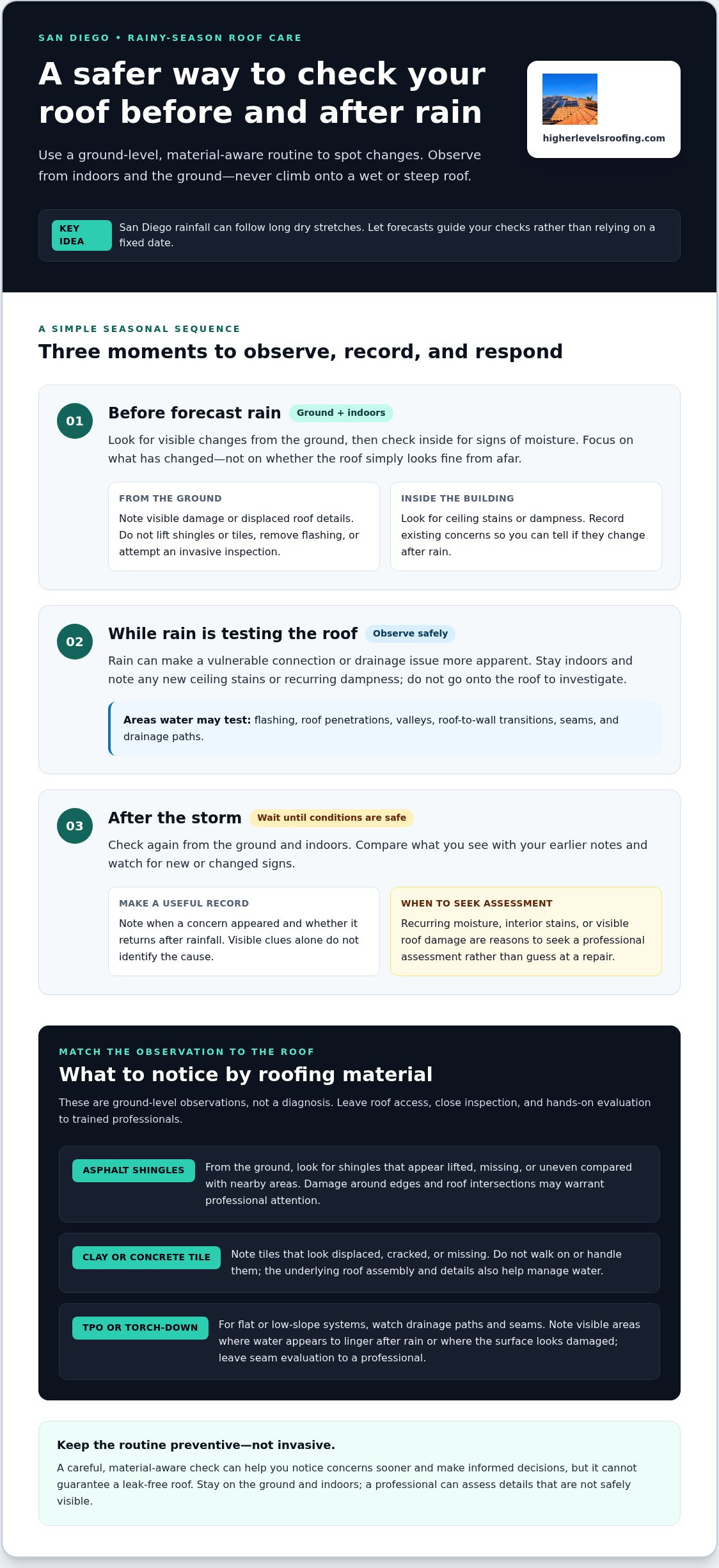
A safe San Diego rainy-season roof checklist: before, during, and after rain
Keep seasonal checks simple and safe. Your role is to notice changes from the ground and inside the home, then record what you find. Never climb onto a wet or steep roof, even to check a suspected problem. A roof can be slippery, and a ground-level view is not a substitute for a professional inspection.
Use this sequence: prepare before rain, observe from indoors during rain, and document changes after conditions clear. It gives you a practical routine without asking you to diagnose roof damage or take unnecessary risks.
Before seasonal rain begins
1. Walk the property from the ground. Look for visible roof damage, loose-looking materials, or changes around roof edges and drainage areas. Use a safe viewpoint and note where you see a concern rather than trying to reach it.
2. Check accessible interior spaces. Look at ceilings and, if it’s safe to enter, accessible attic areas for existing stains or signs of moisture. Record their locations so you can tell whether anything changes after rain.
3. Arrange assessment for visible concerns. If you notice damaged or displaced roofing or an existing sign of moisture, consider a professional review before rain makes roof access more hazardous.
During and after a rainy spell
4. Observe during rain from indoors. From a safe location, watch for new ceiling staining or visible water entering the home. Don’t go outside to inspect the roof in unsafe weather.
5. Recheck after conditions clear. From the ground and indoors, look for changes. Take a photo of a new stain or visible damage when it’s safe, and note the date and location. A photo records what you saw but doesn’t identify the cause.
6. Follow up on recurring signs. If moisture returns or a stain grows after rainfall, arrange a professional roof evaluation instead of guessing at a fix. Keep people away from areas where water is entering or materials appear unstable.
This ground-based routine makes roofing maintenance for rainy seasons manageable while keeping safety first. It can help you spot changes and share useful observations with a roofing professional, but it can’t guarantee that a roof won’t leak.
If your checks reveal recurring moisture or broad deterioration, plan a professional evaluation before committing to a roofing scope. Higher Levels Roofing can discuss replacement or suitable tile lift-and-relay options; isolated maintenance and small-repair needs may require a different service provider.
When recurring roof problems justify replacement planning
Seasonal monitoring helps you notice changes; a professional assessment helps determine what they mean. A new ceiling stain, recurring moisture, visible roofing material that appears displaced, or an active leak deserves attention rather than a guess or a do-it-yourself roof inspection. These signs don’t automatically mean the roof needs replacement. The source could be a vulnerable roof detail, a seam, or another part of the assembly, so the concern needs proper evaluation.
Signs that merit a professional roof assessment
New or recurring ceiling stains: Note where they appear and when you first noticed them. A stain can signal moisture, but it doesn’t identify the source by itself.
Visible material displacement or damage: Shingles or tiles that look missing, cracked, or out of place merit a closer review. Don’t climb up to confirm what you see.
Active or recurring leaks: Water entering indoors or moisture that returns after rain calls for prompt assessment. Keep clear of unsafe areas and document what you observe when it’s safe to do so.
Signs of water entering a roof can come from different details and locations. Guessing at the cause or applying an unqualified patch may leave the underlying concern unresolved. A professional can inspect the relevant areas safely and assess the roof as a system.
How Higher Levels Roofing plans roof replacements before rainy weather
Higher Levels Roofing focuses on roof replacements and new installations for San Diego homes and selected commercial properties, including shingle, tile and low-slope roofing systems. A replacement evaluation considers existing roof layers, visible condition, recurring problems, flashing and drainage details, and the proposed material. Where appropriate, tile lift and relay can retain suitable existing tiles while renewing the underlayment and related details. No single symptom establishes the right scope on its own.
When evaluation supports a larger project, the San Diego roof replacement guide explains the decisions involved. Ask for an itemized scope covering removal or retained materials, underlayment, flashing, ventilation where applicable, cleanup and installation sequencing. Request project-specific permit and product requirements rather than relying on a blanket rule.
Preparation includes knowing when observation is no longer enough. Recurring leaks or widespread deterioration deserve a whole-roof evaluation. A clear scope should explain why replacement or tile lift and relay is appropriate, what will be retained or renewed, and how installation and temporary weather protection will be planned. A limited concern should not be presented as proof that an entire roof must be replaced.
Prepare Your Roof With Confidence
San Diego’s rainy season calls for a practical routine: check visible roof areas from the ground before rain, watch for changes indoors during a storm, and document concerns once conditions clear. The right observations depend on your roof’s material and condition. Stains, recurring moisture, or visible damage deserve professional assessment rather than guesswork. Never climb onto a wet or steep roof to investigate.
Higher Levels Roofing brings a replacement-focused approach to planning shingle, tile and low-slope roofing projects in San Diego. Discuss the existing roof’s condition, material options, project access, timing and weather contingencies before work begins. Scheduling depends on the agreed scope, material availability and suitable installation conditions—not a promise that every project can be completed before a particular storm.
If your roof is aging or problems keep returning, request a roof replacement evaluation from Higher Levels Roofing. Discuss the roof’s overall condition and an appropriate project scope before deciding how to proceed.
Frequently Asked Questions
Is roof maintenance necessary before San Diego’s rainy season?
Yes. A safe visual check before rain can help you notice existing concerns while conditions are dry. From the ground, look for visibly displaced or damaged roofing, then check accessible ceilings and attic areas for signs of moisture. San Diego can have long dry stretches followed by intense rainfall, so preparation is useful even if rain isn’t frequent. These observations can help you plan next steps, but they can’t guarantee a leak-free roof.
How often should I check my roof during the rainy season?
There’s no single schedule that suits every roof, but make ground-level and interior observations before forecast rain and after storms once conditions are safe. Also check indoors if you notice a new odor, stain, or damp area. Roof material, condition, and design can affect what changes are visible. Don’t climb up for a closer look. Record what you see and seek a professional assessment if a concern appears or returns.
Can I inspect my roof safely after it rains?
You can look for visible changes from the ground and check indoors after conditions clear, but don’t walk on a wet roof. Wet surfaces can be slippery, and tile or other roofing materials may be damaged by foot traffic. Use a safe viewpoint to note apparent damage, standing water, or changes around roof edges. If you can’t see an area clearly, leave closer inspection to a roofing professional rather than using a ladder or climbing onto the roof.
What should I do if I notice a roof leak during a storm?
Stay clear of active water and any ceiling area that appears damaged or unstable. If it’s safe, move belongings away, place a container under a drip, and note where and when water appears. Don’t go onto the roof or attempt a repair during the storm. After conditions clear, arrange a professional assessment, especially if water continues entering or the moisture returns. A leak’s indoor location doesn’t always show where water is getting in.
Do tile roofs need rainy-season maintenance in San Diego?
Yes. Clay and concrete tile roofs still need seasonal observation because displaced, cracked, or missing tiles can be visible signs of concern, and rain can expose weaknesses in roof details beneath or around the tile. Look from the ground only. Don’t walk on or handle tiles, since that can create a safety risk or cause damage. If you notice a change or recurring indoor moisture, have a roofing professional assess the roof.
Can rain reveal a problem with a flat TPO roof?
Yes. Rain may make drainage concerns or visible membrane damage easier to notice on a TPO roof. From a safe vantage point, note areas where water appears to remain after rainfall or where the surface looks changed. These observations don’t confirm the cause, and seams can’t be reliably assessed from a distant view. Don’t puncture, seal, or patch the membrane yourself. Have a roofing professional evaluate concerns and recommend an appropriate next step.
When should I call a roofer for rainy-season roof damage?
Seek professional help for an active leak, a new or recurring ceiling stain, visible roofing damage, or moisture that returns after rain. These signs deserve evaluation but do not automatically mean replacement is needed. Higher Levels Roofing focuses on replacements, new installations and suitable tile lift-and-relay projects in San Diego and nearby communities. If the concern is limited to a small repair or routine maintenance, use a provider that offers that service.



Comments