


Choosing Cool Roof Materials for San Diego Properties

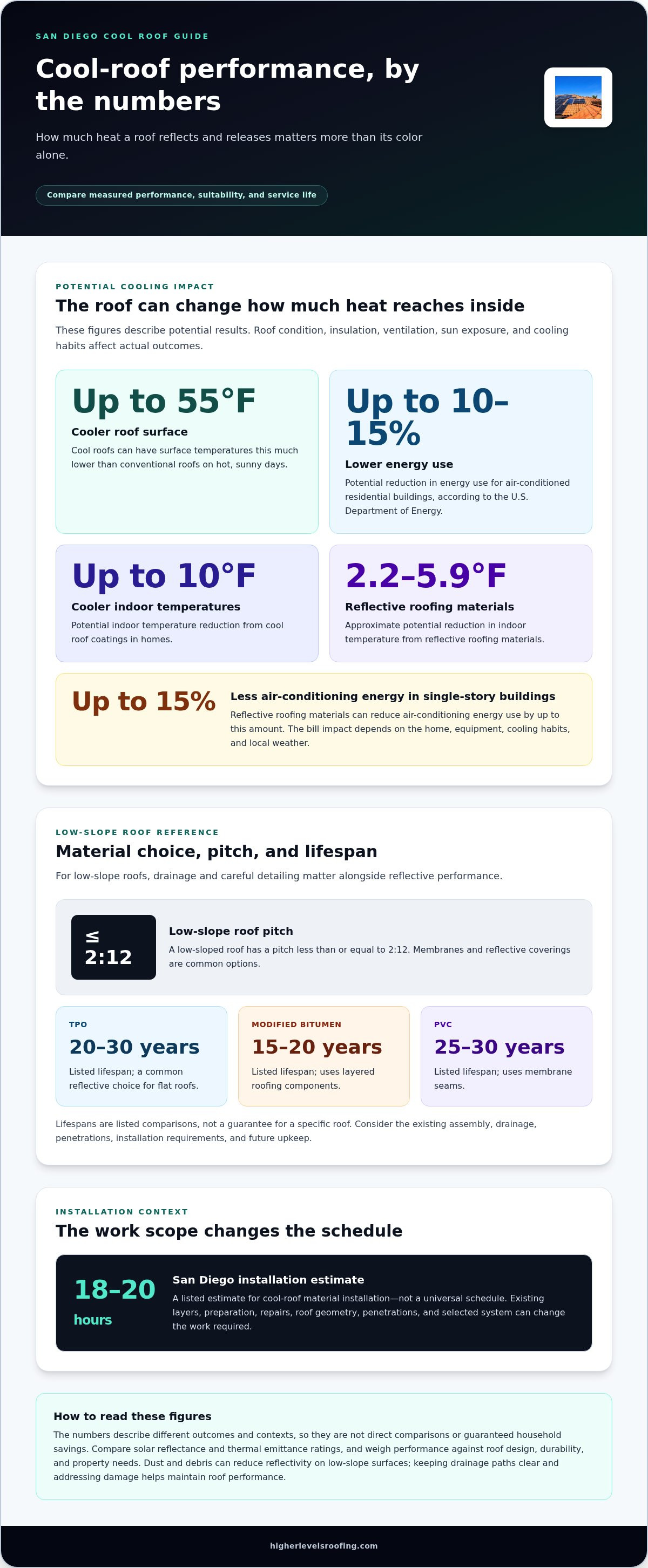
A roof’s color alone doesn’t make it cool. The right roofing material reflects sunlight and releases absorbed heat, and cool roofs can have surface temperatures up to 55°F lower on hot, sunny days. Cool roof options in San Diego include clay and concrete tile, as well as reflective shingles and low-slope roofing materials.
It makes sense to look beyond appearance when choosing a roof: the material’s performance ratings, roof slope and your property’s needs all matter. This guide explains how solar reflectance and thermal emittance work, compares common materials, and outlines which Title 24 requirements may apply to a San Diego reroof.
You’ll also learn why clay and concrete tile merit a closer look, how to interpret cool-roof ratings, and which details may affect compliance. With a clearer picture of the options, you can weigh cooling performance alongside durability and the look of your San Diego home.
Table of Contents
What makes a roof cool?
A cool roof limits heat entering through the roof surface by reflecting sunlight and releasing absorbed heat. On hot, sunny days, cool roofs can have surface temperatures up to 55°F lower than conventional roofs.
Cool Roof Energy Efficiency
Roofing affects how much solar heat reaches the attic and living spaces below. A reflective surface absorbs less heat, which can reduce the cooling load on air-conditioning equipment. The U.S. Department of Energy states that cool roofs can reduce energy use by up to 10-15% in air-conditioned residential buildings.
Roof performance is one part of a home’s energy efficiency. Insulation, ventilation, indoor temperature settings, and air-conditioning use also shape the result. For example, a home with less roof insulation may benefit more from reduced heat entering through the roof than a well-insulated home. Compare roofing materials by measured performance, not color alone.
Indoor Temperature Reduction
Less heat entering from above can make indoor rooms more comfortable during sunny weather. Cool roof coatings can lower indoor temperatures in homes by up to 10°F. Reflective roofing materials can lower indoor temperatures by approximately 2.2 to 5.9°F.
These figures describe potential reductions, not a guaranteed result for every room. Roof condition, insulation, ventilation, and sun exposure affect how heat moves indoors. Start by identifying which rooms get warmest during the day, then consider how replacing the roof could change heat absorption. The roof is one part of the home’s overall temperature control.
Cooling and Energy Savings
Lower heat gain can reduce the work an air conditioner needs to do, which may affect energy use and cooling bills. Reflective roofing materials can reduce air-conditioning energy use by up to 15% in single-story buildings. The actual bill impact depends on the home’s cooling habits, insulation, equipment, and local weather.
Use these figures to compare potential benefits, not to predict a particular household’s savings. Review cooling use alongside the roof material and its performance ratings. For example, when planning a replacement, weigh energy efficiency against the roof’s condition, appearance, and suitability for the building.
Tax incentives are separate from roofing performance. According to the Internal Revenue Service, the former federal residential energy credit for some building-envelope work ended for installations after December 31, 2025. Factor that change into planning, and assess a roof’s cooling benefits independently from any past credit.
Cool roof materials for low-slope roofs
For a low-slope roof, membrane systems and reflective coverings are common choices. A low-sloped roof has a pitch less than or equal to 2:12, so drainage and careful detailing matter alongside solar performance.
What are the drawbacks and maintenance needs of cool roofs in San Diego? Dust and debris can collect on low-slope surfaces, and soiling can reduce reflectivity. Keep drainage paths clear and address surface damage promptly to help maintain roof performance.
Material Costs and Lifespans
Compare the full roofing system, not just its visible membrane. Preparation, removal of existing material, insulation needs, roof penetrations, and edge details all affect the work involved. A San Diego installation estimate lists cool-roof material installation at 18-20 hours, but the actual scope depends on the roof and selected system.
TPO is a common reflective choice for flat roofs, with a listed lifespan of 20-30 years. Modified bitumen is listed at 15-20 years, while PVC is listed at 25-30 years. These comparisons help frame a lifecycle decision: consider the expected service life alongside installation requirements and future upkeep.
Roofing systems differ in their seams and details. TPO and PVC use membrane seams, while modified bitumen uses layered roofing components. For a useful comparison, note the existing roof assembly, drainage layout, and any penetrations that need flashing. These details affect material quantities and installation work, not just the roof’s square footage.
Drawbacks and Maintenance Needs
Reflective surfaces need basic upkeep. Dirt, leaves, and other debris can collect on a flat roof, interfere with drainage, or cover the reflective finish. Inspect the surface and drains, especially after debris-producing weather, and arrange repairs if seams, flashing, or membrane areas are damaged.
Reflective material still needs to suit the building and roof system. A membrane must match the roof’s slope, drainage, and existing structure. For example, a flat roof with multiple penetrations calls for careful seam and flashing details. Maintenance needs vary by material, so include roof access and repair considerations in your selection.
Installation is a sequence of preparation, surface work, membrane placement, and detailing. The San Diego estimate’s 18-20-hour installation figure shows why the work scope matters; it isn’t a universal schedule for every roof. Existing layers, repairs, and roof geometry can change the work required.
Pitched roofs use different roofing materials, including architectural shingles and tile, rather than a low-slope membrane system. Sunlight exposure, roof shape, and the covering’s measured performance help guide selection. A useful next step is to compare the roof profile with suitable roofing materials for your property, including options for flat or pitched designs.
Solar reflectance and thermal emittance
For homeowners comparing cool roof options in San Diego, reflective shingles, tile, membranes, and coatings are available choices. Compare solar reflectance and thermal emittance ratings, not color alone.
Reflective Shingles, Tile, and Membranes
Solar reflectance measures how much sunlight a roof surface sends away. Thermal emittance measures how well it releases absorbed heat. Both ratings use a scale from 0 to 1, equivalent to 0-100%. A high score in both measures indicates strong cool-roof performance.
Initial reflectance varies by roofing material: cool asphalt shingles rate 0.20-0.30, clay tile 0.40-0.50, and concrete tile 0.20-0.60. Single-ply membranes rate 0.70-0.85, while modified bitumen rates 0.60-0.75. These ranges show why a material category alone can’t predict the performance of a specific roof covering.
For a residential comparison, look for ratings for the precise product and finish under consideration. Asphalt shingles have initial thermal emittance of 0.85-0.90, while clay tile rates 0.80-0.90. A reflective surface with strong heat release can help a roof stay cooler than a darker, less reflective alternative.
Roof Coatings and Reflective Colors
Liquid-applied roof coatings have initial solar reflectance of 0.60-0.90 and an initial solar reflectance index (SRI) of 71-114. They can be considered for suitable existing roof surfaces, while coatings applied over an existing membrane follow a different path from a full reroof.
Color is only a visual clue, not proof of performance. A white roof reflecting 80% of sunlight stays about 50°F cooler than a grey roof reflecting 20% on a typical summer afternoon. But two coatings with similar colors can have different measured ratings, so compare the listed product data before choosing a finish.
Solar Reflectance Index
SRI combines solar reflectance and thermal emittance to estimate how hot a surface becomes under standard conditions. The summer-afternoon cool-roof calculation described here uses ASTM Standard E1980-11. Higher SRI values generally indicate surfaces that remain cooler under those conditions.
Initial SRI ranges vary widely: asphalt shingles rate 16-32, clay tile 41-58, and concrete tile 14-72. Single-ply membranes rate 85-108; liquid-applied coatings rate 71-114. Product-specific values matter because the concrete-tile range alone spans 14 to 72.
The Cool Roof Rating Council rates products for solar reflectance and thermal emittance. When weighing cool roof options in San Diego, consider those measures alongside SRI. Product-specific ratings provide a clearer basis for comparison than a color name or an “architectural” label, which describes appearance rather than measured cooling performance.
Title 24 cool-roof requirements for San Diego reroofs
California’s Building Energy Efficiency Standards are in Title 24, Part 6, according to the California Energy Commission. The former federal residential energy credit for some building-envelope work ended for installations after December 31, 2025, according to the Internal Revenue Service; choose a qualified contractor by their ability to assess code, roof slope, climate zone, and project scope.
California Title 24 Requirements
Title 24 compliance depends on the reroof’s climate zone, slope, and current Energy Code cycle. San Diego properties don’t all share the same conditions: coastal steep-slope homes are generally in Climate Zone 7, while inland parcels in the county can be in Climate Zone 10.
These differences matter when identifying applicable cool-roof criteria. Appearance alone doesn’t establish compliance, and choosing synthetic rather than felt underlayment doesn’t replace a listed cool-roof covering. Use the roof’s location and design to guide material selection before replacement begins.
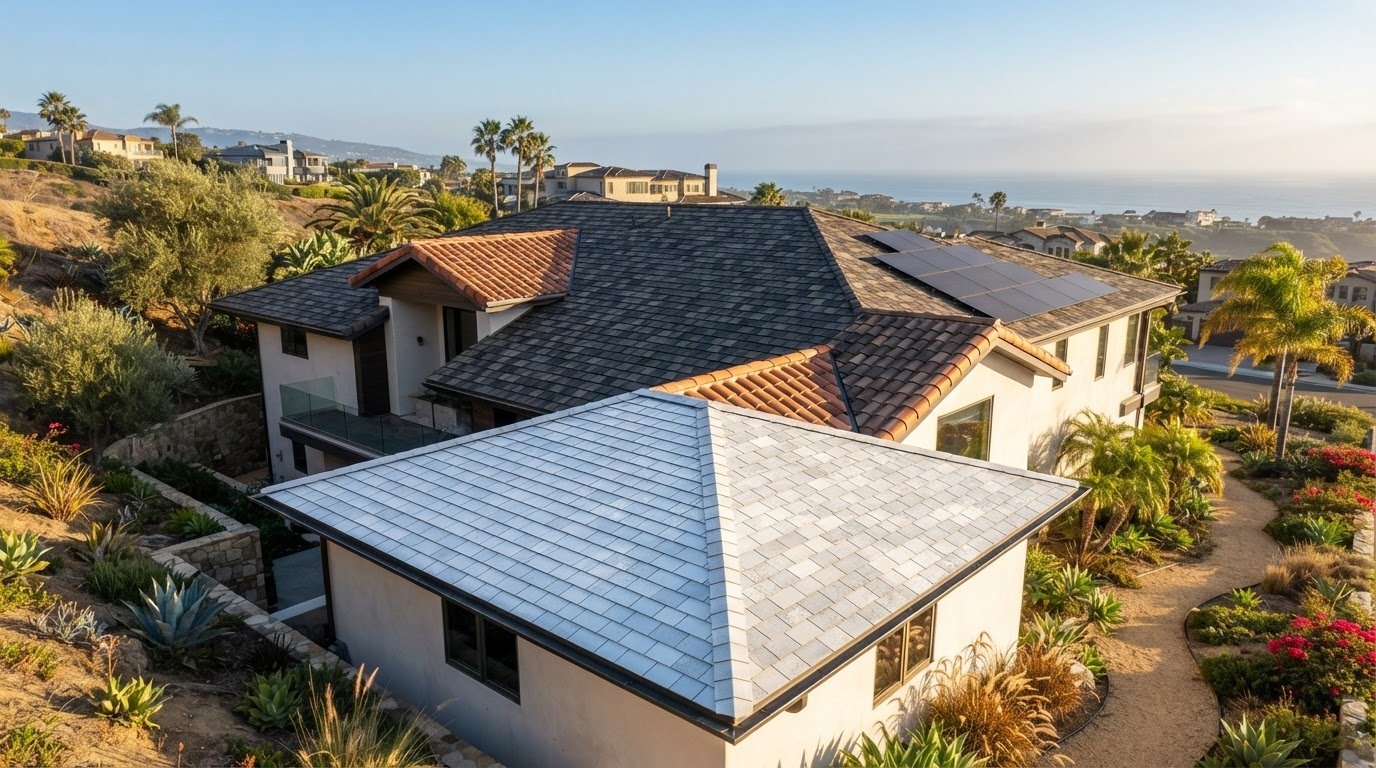
The Cool Roof Rating Council rates products for solar reflectance and thermal emittance. Its ratings can help compare coverings, but compliance depends on the applicable code criteria, not simply a high rating. Roof-mounted solar panels also don’t automatically exempt a San Diego reroof from cool-roof requirements.
Permits and Building Requirements
Permit requirements depend on the work and the authority having jurisdiction. A full replacement, a coating over an existing membrane, and a limited repair are different project scopes. Coatings applied to an existing membrane follow a different path from a full reroof.
For a small storm-area patch, the authority having jurisdiction may treat the work as a repair, allowing it to remain on the matching existing product. That differs from replacing the roof covering. A clear project description helps distinguish repair from replacement and identify the relevant code considerations.
Before work starts, organize the project details: property location, roof slope, existing covering, and whether the work is a repair, coating, or replacement. These details help frame permit review and material selection. For example, an inland San Diego reroof may need a different climate-zone assessment from a coastal, steep-slope home.
Incentives should be treated separately from code compliance. The former federal credit’s end date means it shouldn’t be counted for installations after December 31, 2025. A cool-roof rating, permit approval, and incentive eligibility serve different purposes; meeting one doesn’t establish the others.
Cool-roof clay and concrete tile
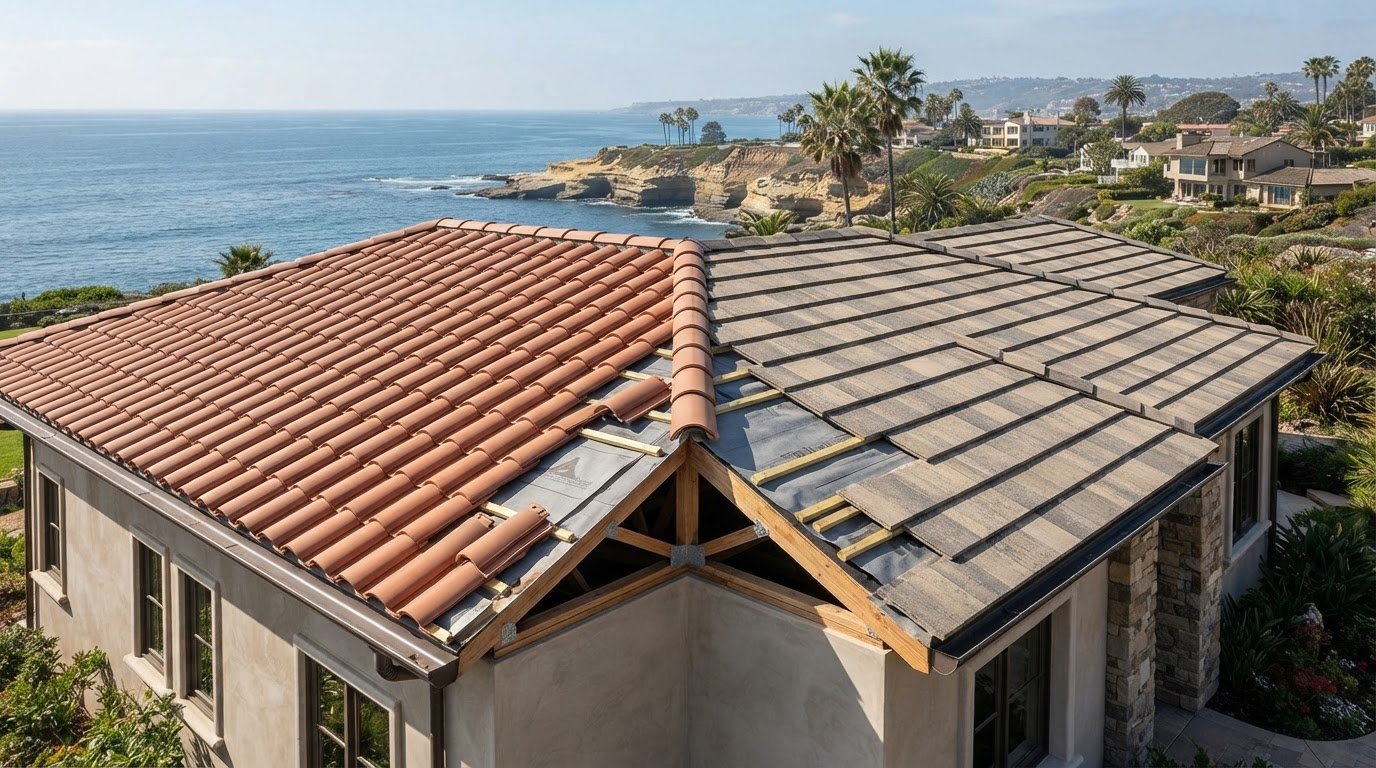
Clay and concrete tile can pair a traditional roof profile with reflective performance, but the material name alone doesn’t determine how cool the finished roof will be. Compare the specific product’s rating, surface finish, and compatibility with the roof assembly. Checking the product itself is the clearest way to decide whether tile suits your cool-roof plans.
Tile selection involves more than color. Clay and concrete products come in different profiles and finishes, affecting appearance and how the pieces fit together. A light finish may look reflective, but appearance doesn’t establish a cool-roof rating. Look for performance information for the exact tile and finish rather than relying on a broad label such as “concrete tile.”
Installation details matter just as much. Underlayment, flashing, valleys, and roof edges are all part of the complete system beneath and around the tile. For example, a roof with several valleys or penetrations needs careful detailing where water could collect or enter. Consider these features alongside material selection so the finished roof suits the home, not just its street-facing appearance.
Use a simple comparison process before choosing:
Identify the existing roof profile and the tile style that fits its design.
Compare product-specific cool-roof ratings and finish details.
Review the roof assembly, including underlayment, flashing, and drainage points.
Consider the home’s overall appearance and the maintenance involved in its roof details.
These steps help distinguish a true performance comparison from a color preference. They also put potential cooling savings in perspective: roof ratings describe material performance, while insulation, ventilation, and air-conditioning use influence household results. The Cool Roof Rating Council evaluates solar reflectance and thermal emittance, and its product information can support a more informed comparison.
Clay and concrete tile are distinct choices, not interchangeable labels. A flat-profile tile and a more curved concrete profile create different visual effects, while the selected product’s performance data determines its reflective characteristics. Review the complete roof design, not just a tile sample. This makes it easier to balance standards, appearance, and installation details.
For a practical next step, bring your roof profile and preferred finish into a tile discussion, then compare product ratings and assembly needs together. Discuss clay and concrete tile roofing to explore which tile approach fits your home’s roof design.
Higher Levels Roofing: Asphalt Shingle Roofing
Higher Levels Roofing offers Asphalt Shingle Roofing for San Diego property owners considering a replacement or addressing a roof concern. An assessment can help clarify the roof’s condition and how its slope, appearance, and material choice shape the next step.
For homes where tile suits the roof design, Higher Levels Roofing also offers Flat Concrete Tile Roofing, Concrete S Tile Roofing, and Clay Tile Roofing. Compare options by considering the roof assembly and product performance information, not color alone. This helps homeowners weigh appearance alongside cooling goals and project needs.
Contact Higher Levels Roofing to discuss your roofing project and material options.
Plan a Roof Choice That Fits Your Home
Choosing among cool roof options in San Diego is also an opportunity to set priorities for the project: the look you want, how you use your home, and what the roof design calls for. Before deciding, gather photos of the existing roof, note rooms that feel warm, and list visible repair concerns. These details make the material discussion more focused and turn a broad comparison into a practical plan.
Consider the balance you want between appearance and performance. Higher Levels Roofing offers Asphalt Shingle Roofing, Flat Concrete Tile Roofing, and Concrete S Tile Roofing. Comparing these options with your preferred architectural style can clarify which materials merit closer consideration. Bring your questions, roof photos, and preferred finishes to the conversation.
Contact Higher Levels Roofing to discuss your roofing project and next steps. A thoughtful plan can make it easier to move from research to a roof choice that feels right for your home.
Frequently Asked Questions
What is Title 24 roofing in California?
Title 24 roofing means considering California’s energy standards when planning roof work. The California Energy Commission places the Building Energy Efficiency Standards in Title 24, Part 6. For a San Diego project, identify the property’s climate zone, roof slope, and work scope first. Those details help distinguish a repair from a reroof and guide the review of applicable requirements before selecting materials.
Which Material Should You Choose?
Choose a roof material that fits the roof’s shape, the home’s appearance, and the project scope. For cool roof options in San Diego, compare product-level performance information with your preferred profile and finish. A low-slope roof needs a system suited to its design, while a pitched home may suit shingles or tile. Consider drainage, penetrations, and the existing roof assembly before narrowing your choices.
How do cool roof coatings, tiles, shingles, and metal roofs compare?
These materials differ in application, appearance, and measured performance. Coatings go on compatible roof surfaces, while tile, shingles, and metal serve as roof coverings. Compare the specific product and finish rather than relying on its material label. Performance can overlap across categories, so product ratings and suitability for the roof provide a more useful basis for selection.
What are the average costs to install a cool roof in San Diego?
Installation cost depends on roof area, slope, access, existing layers, repairs, and the selected roofing system. A replacement requiring removal and surface work has a different scope from work on a prepared roof. The price depends on the project and is provided after a quote request. A clear description of the roof’s condition and your material preference helps establish the work involved.
How much can a cool roof reduce indoor temperatures and energy bills in San Diego?
Potential energy and temperature changes depend on the home’s insulation, ventilation, sun exposure, and air-conditioning use. The U.S. Department of Energy states that cool roofs can reduce energy use by up to 10-15% in air-conditioned residential buildings. Treat that as potential performance, not a household-specific estimate. Comparing cooling bills across similar weather periods can help assess how the home’s energy use changes.
What California cool roof requirements apply to San Diego homes and re-roofing projects?
Applicable requirements depend on the property’s climate zone, roof slope, current Energy Code cycle, and whether the work is a repair or reroof. A small storm-area patch treated as a repair differs from replacing the roof covering. Roof-mounted solar doesn’t automatically exempt a reroof from cool-roof rules. Project scope and roof details help determine the applicable compliance path.
Which cool roofing materials work best for San Diego's coastal, inland, and fire-prone areas?
For cool roof options in San Diego, match material selection to the roof design, property location, and applicable requirements. Coastal steep-slope homes are generally in Climate Zone 7, while inland parcels in San Diego County can be in Climate Zone 10. In San Diego Wildland-Urban Interface zones, California Building Code requires Class A fire-rated roofing. These factors can narrow suitable choices.
How do roof color, solar reflectance, and thermal emittance affect cool roof performance?
Color alone doesn’t establish a roof’s cooling performance. Solar reflectance measures how much sunlight a surface reflects, while thermal emittance measures how well it releases absorbed heat. Compare ratings for the exact product and finish you’re considering. The Cool Roof Rating Council rates products for solar reflectance and thermal emittance, giving homeowners a practical reference when evaluating roofing samples and finish choices.
Comments