


San Diego Roofing Cost Estimator: Build a More Accurate Roof Budget in 2026

A roofing estimate can look precise and still miss what your home actually needs. A San Diego roofing cost estimator can help you organize an early budget, but a generic result may not reflect your roof’s actual area, shape, material, or condition. That uncertainty is common when the project scope is still taking shape.
A useful estimate starts with clear details, not just a headline number. This guide explains which roof and project factors influence an estimate, how to use an online estimator as a planning tool rather than a final quote, and what to gather before requesting a project-specific assessment. You’ll also learn how to compare estimates by checking that they describe the same work, including removal of existing roofing and potential repairs if concealed damage is found.
Whether you’re considering asphalt shingles, concrete or clay tile, or a low-slope roofing system, the right questions can make budgeting more manageable. With a clearer picture of your property and priorities, you can prepare for a roofing assessment and compare project scopes with greater confidence.
Table of Contents
What a San Diego roofing cost estimator can, and cannot, tell you
Which details make a San Diego roofing estimate more accurate?
How material and project scope change a San Diego roofing estimate
How to use a roofing cost estimator before requesting an assessment
Get a San Diego roofing assessment tailored to your property
What a San Diego roofing cost estimator can, and cannot, tell you
A San Diego roofing cost estimator is a planning tool. It uses the details you enter to frame a preliminary budget, not to provide a final quote for your property. Its usefulness depends on the accuracy of your inputs and how closely the tool’s assumptions match the work you need.
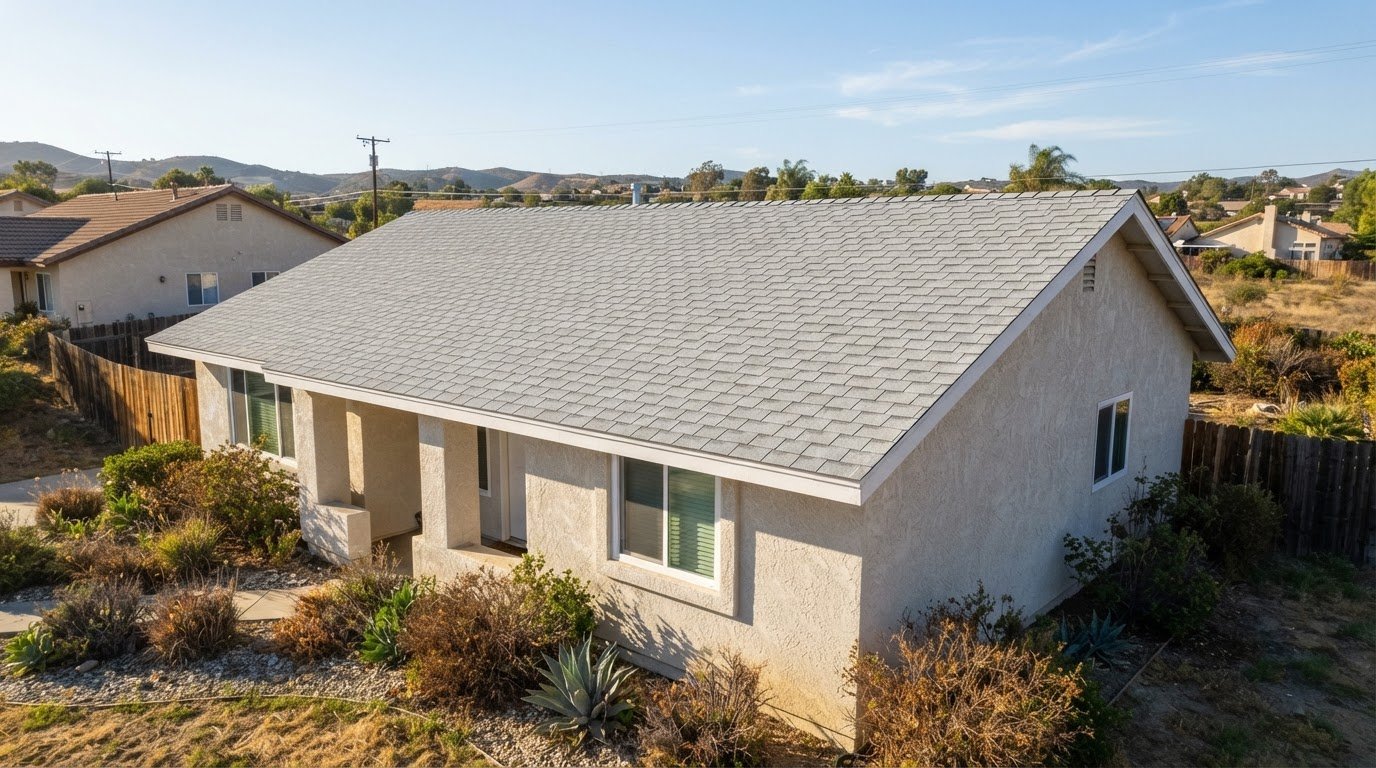
Two homes with similar visible roof areas may have different shapes, materials, access conditions, or existing layers. Replacing asphalt shingles involves a different scope from working on concrete tile or a low-slope roof. The types of roofing materials also affect the work involved. An online result can help organize early planning; a project assessment considers the actual roof and requested scope.
In brief: An online estimate is a planning aid based on supplied information. A project assessment is a property-specific review of the roof and work being considered.
When is a roofing estimate useful?
An early estimate can help you prepare questions, set a preliminary budget, and decide what information to gather before discussing the project. It can also help you explore repair versus replacement, or compare broad material categories such as asphalt shingles, tile, torch-down roofing, and TPO. Treat these as planning options, not commitments to a particular scope.
The estimate becomes more informative when you can provide reliable details about the roof and the work you want done. If you’re unsure about a measurement or condition, mark it as unknown instead of treating a guess as fact. That keeps the result in perspective and highlights what needs closer review.
Why can online estimates differ from the final project scope?
Some roof characteristics are visible from the ground or in property records; others require a closer look. Roof area is only one consideration. Pitch, intersecting sections, edges, and access can affect the work involved. Existing material matters too: a project involving tile is not the same scope as one involving shingles or a low-slope membrane.
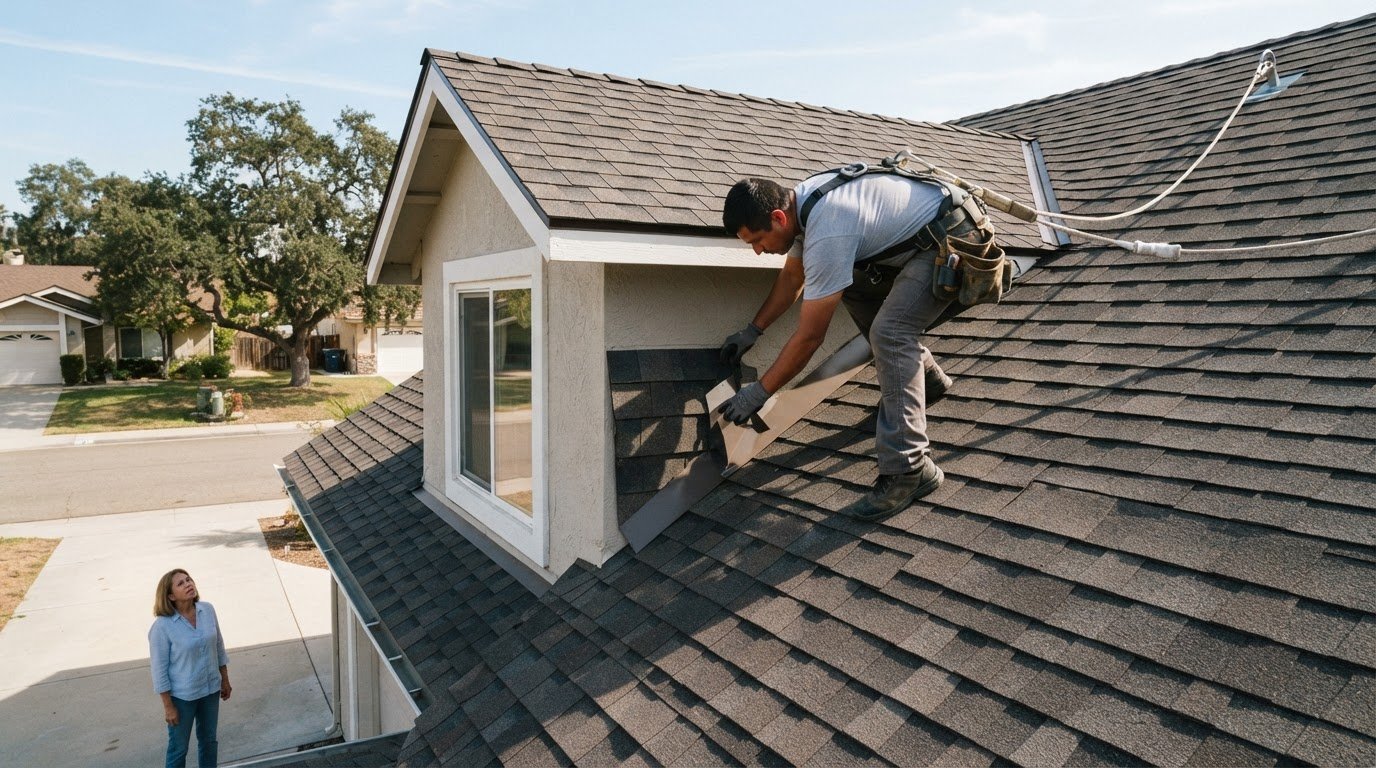
Geometry: A roof with several slopes, valleys, or sections can involve more complex work than a simple shape.
Access: The layout around the home may affect how crews and materials reach the roof.
Existing conditions: Visible wear may offer clues, but it cannot establish the condition of concealed layers or roof decking.
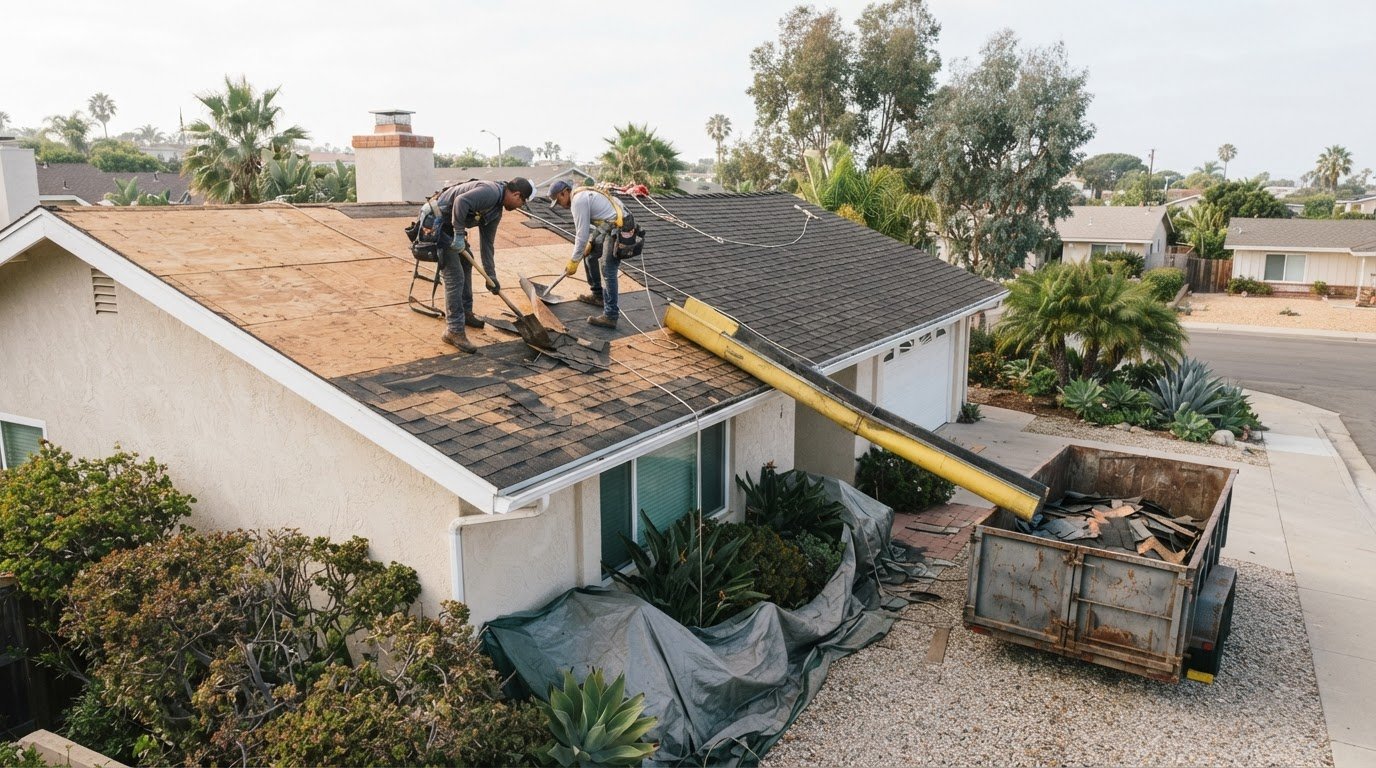
Requested work: A repair, a full replacement, and work that includes removing existing roofing are different scopes.
An estimator relies on the information you enter, so it cannot reliably identify concealed damage or determine what additional work may be needed. A project-specific assessment can clarify the roof’s condition and define the requested work. That clear scope is the starting point for comparing estimates on an equivalent basis.
Which details make a San Diego roofing estimate more accurate?
Before using a San Diego roofing cost estimator, gather what you know about the property and the work you have in mind. Clear inputs make the result more useful for planning and help you explain your needs during an assessment. Estimate quality depends on accurate roof details and a clearly described scope of work.
What roof measurements and features should you record?
Start with available property records, plans, or a measured roof plan. A home’s footprint is not the same as its roof surface area: slopes and overhangs change the area above the building. Don’t climb onto the roof to collect details. Use ground-level observations or existing documents, and label anything you can’t verify.
Roof area: Record a measured roof-surface figure if available. If you only know the building’s footprint, label it as a footprint estimate, not roof area.
Pitch and shape: Note whether the roof appears gently sloped or steep, and whether it has multiple sections, valleys, or dormers.
Access: Record visible obstacles or tight areas around the home that could affect roof access.
Existing material: Note what you can identify, such as shingles, tile, or a low-slope covering. Mark uncertain material as unknown.
These observations don’t replace a roof review, but they help prevent guesses from being entered as confirmed facts.
Which project details should you include?
Define the job before estimating: are you considering a repair, a full replacement, or a new installation? Describe the work you want and any visible concerns, such as missing or damaged roofing. Stick to what you can observe. An indoor stain or a worn-looking area may be worth mentioning, but it doesn’t establish what is happening beneath the roof surface.
Current and planned materials: Note the existing covering and the material you’re considering, if known.
Requested scope: State whether you’re seeking a repair, replacement, or installation, and identify any known removal work.
Property location: Include the address or community so the assessment reflects the specific San Diego-area property, whether it is in San Diego, La Jolla, San Marcos, Encinitas, or Carlsbad.
Unknown conditions: List questions or concerns without diagnosing concealed damage or assuming repairs are needed.
For background on contractor licensing and consumer information, the California Contractors State License Board is a useful reference as you prepare for a project-specific assessment.
Keep your notes together and share them when arranging a San Diego roofing assessment with Higher Levels Roofing. Measurements, visible features, material preferences, and requested work give the assessment a practical starting point. Unknowns can be reviewed while evaluating the property.
How material and project scope change a San Diego roofing estimate
A San Diego roofing cost estimator is useful for comparisons only when the inputs describe similar work. A repair figure can’t be fairly weighed against a full replacement, and two replacement estimates may still cover different materials, removal work, or repairs. Start with the scope, then compare the numbers.
Roofing materials involve different installation work. Asphalt shingles, concrete or clay tile, rolled asphalt torch-down, and TPO are distinct options, so each estimate should identify the material it covers. Don’t assume a lower headline figure is a better match for your project. It may describe a narrower scope or leave some work outside the estimate.
How should you compare estimates for different roofing materials?
For a fair comparison, use the same property area and requested work wherever possible. If you’re evaluating different materials, treat them as separate options rather than assuming the estimates are interchangeable. Focus on what each scope says will be done, not on unsupported assumptions about lifespan, performance, or value.
Use this checklist to spot differences:
Material: Is the estimate for asphalt shingles, concrete or clay tile, torch-down roofing, or TPO?
Work included: Does it describe a repair, replacement, or new installation?
Removal: Does the scope state whether existing roofing will be removed?
Identified repairs: Are known repairs described separately from the main roofing work?
Exclusions and unknowns: Does it identify work not included or conditions that may need review?
Keep the comparison focused on matching categories. If one estimate includes removal and another doesn’t say, they don’t yet describe the same scope. A clear written breakdown makes it easier to identify what questions remain.
How do repair, replacement, and roof conditions affect scope?
A repair estimate describes targeted work on a specific area or issue. A replacement estimate describes a broader project, while a new installation has a different starting point and scope. None is automatically the right choice; the appropriate work depends on the property’s condition and the assessment.
Separate documented facts from unknowns. A visible concern can be recorded as an observation, but it doesn’t establish the condition of concealed roofing layers or decking. If an assessment identifies additional work, compare that work as its own scope rather than assuming it was included in every estimate from the start.
For a useful side-by-side review, list each estimate’s material, defined work, removal, identified repairs, and exclusions in the same order. This helps keep unlike scopes from appearing equivalent and shows what each proposed project actually covers.
How to use a roofing cost estimator before requesting an assessment
Use an online estimator to organize your project, not as a substitute for reviewing the roof. These steps can help you enter useful details, spot assumptions, and prepare for a project-specific assessment.
Define the work. Decide whether you’re exploring a repair, replacement, or new installation. Describe the result you want without assuming which option the roof needs.
Collect property and roof details. Note the property location, available roof measurements, current material, and any material you’re considering. Add visible features such as slopes or roof sections, using observations or photos taken safely from the ground.
Use the San Diego roofing cost estimator. Enter information supported by records or clear observations. If roof area, pitch, or existing material is uncertain, label it “unknown” rather than entering a guess.
Review the assumptions. Check what the result includes, such as removal of existing roofing or identified repairs, and note any exclusions. The same headline result can represent different scopes if the assumptions differ.
Prepare questions. List details that need an on-site assessment, including concealed conditions an online tool can’t evaluate. Bring your notes and relevant property documents to the project discussion.
What should you do before entering details into an estimator?
Set up a simple project record with the address or community, available measurements or plans, current roofing material, and intended work. Ground-level photos can help describe visible roof sections, access limits, or areas of concern. Don’t climb onto the roof to take measurements or inspect damage. Mark uncertain details clearly so they aren’t mistaken for verified inputs.
How can you review an estimate without mistaking it for a quote?
Read the assumptions alongside the result. Check whether it describes the work you requested, which materials and removal tasks it includes, and what it excludes. Keep those points in writing. Information entered into an online calculator cannot confirm conditions beneath visible roofing; that requires a property-specific assessment. Treat the estimate as a planning reference until the roof and scope have been reviewed.
For a consistent comparison, record each estimate’s work type, material, removal, identified repairs, assumptions, and exclusions in the same order. If a detail isn’t stated, mark it as a question instead of assuming it’s included. This makes scope differences easier to identify and gives you a focused list for the assessment.
Once your notes are ready, the San Diego roofing contractor hiring checklist can help you prepare for the next part of the process. Higher Levels Roofing provides residential and commercial roofing assessments in the San Diego area, tailored to the property and requested work. Arrange a project-specific roofing assessment to discuss your roof and scope.
Get a San Diego roofing assessment tailored to your property
A useful roofing estimate begins with the property itself: its roof, the material under consideration, and the work you want done. A San Diego roofing cost estimator can help organize early information, but a generic local average can’t describe every roof or project. A property-specific assessment brings those details together so the scope reflects the home or building, not an assumption.
Higher Levels Roofing is a licensed roofing contractor serving San Diego and nearby communities, including La Jolla, San Marcos, Encinitas, and Carlsbad. Its residential and commercial work includes roofing installation, replacement, and repair. An assessment considers the existing roof and the work being considered.
What roofing work can Higher Levels Roofing assess?
Higher Levels Roofing works with asphalt shingles, flat concrete tile, concrete S tile, clay tile, rolled asphalt torch-down, and TPO roofing. These materials and project types involve different scopes, so identify both the existing roof and the work you’re exploring. Whether you need a repair, replacement, or installation, the assessment should be grounded in the specific property and requested work.
Residential and commercial properties each have distinct roof details. Share what you know about the building, visible roof features, and any concerns you’ve noticed. You don’t need to diagnose the roof or guess about concealed conditions. Clear observations give the project discussion a practical starting point, while unknown details can remain open for assessment.
What is the next step toward a property-specific estimate?
Gather a few practical details before discussing the project: the property’s location, whether you’re considering repair, replacement, or installation, the existing roofing material if known, and any measurements or records you have. Note uncertainties plainly. For example, identify an area measurement as a footprint estimate if it isn’t a measured roof-surface figure.
Then describe the work you want considered. A request to repair a specific visible area is different from a request to replace the roof, and the scope should make that distinction clear. If you’re still weighing materials, note the options you’re considering, such as asphalt shingles, tile, torch-down, or TPO. That gives the assessment useful context without forcing an early decision.
Higher Levels Roofing can discuss a project based on those property details and the work requested. Use an online estimate as a planning reference, then let the property and project details guide the assessment. A clear conversation keeps the next step focused on the work that matters for your roof.
Discuss your San Diego roofing project with Higher Levels Roofing to begin a property-specific conversation about your roofing needs.
Turn your roofing plans into a clear next step
A roofing project feels more manageable when you know what you want the next conversation to accomplish. Write down your main priority, the questions you still have, and any choices you’d like to explore. This short brief can keep the discussion focused, whether you’re addressing a concern or planning a larger project.
Think of a San Diego roofing cost estimator as a reference, not the decision itself. Your priorities and the property’s specific needs can shape a productive discussion about possible approaches and the work involved. You don’t need every answer before taking that step. Honest notes about what you know and what remains uncertain are a useful start.
Higher Levels Roofing is ready to discuss your project and help you consider the next steps for your property. Discuss your San Diego roofing project with Higher Levels Roofing to move forward with a plan suited to your needs.
Frequently Asked Questions
How accurate is an online roofing cost estimator in San Diego?
An online estimator can help you explore a project, but its result depends on the information entered and the assumptions built into the tool. A rough building measurement, for example, may not reflect the roof’s actual surface area. Use a San Diego roofing cost estimator to organize early planning, then treat uncertain inputs as questions for a property review, not as confirmed measurements or a final project figure.
What information do I need for a San Diego roofing estimate?
Have the property location, any roof plans or measurements, the existing material if known, and the kind of work you’re considering. Photos labeled by location, such as the front slope or a visible area of concern, can also help. Separate documented details from observations and unknowns. This makes it easier to explain what you know without implying that a visual clue is a diagnosis.
How much does roofing cost in San Diego?
There isn’t one reliable figure for every San Diego roofing project because the price depends on the roof and the work included. A repair in La Jolla, for example, shouldn’t be compared directly with a replacement project in San Marcos unless the scopes match. Define the work, material, and property details, then review an assessment based on that specific roof.
Does roof material change a roofing estimate?
Yes. Different materials involve different project requirements, so an estimate should name the system it covers. If you’re considering a material change, compare options for the same property and requested work rather than treating a material label as a complete scope. Check whether the description explains removal and other included tasks. This helps show whether you’re comparing like-for-like projects or different proposals.
Why can two San Diego roofing estimates be different?
Two estimates can differ because they may use different measurements, material assumptions, or definitions of the work. One may describe a targeted repair while another considers a broader replacement. Check each written scope for the roof area used, work included, assumptions, and exclusions. If the descriptions don’t align, clarify the scopes before comparing totals. A side-by-side review can show whether the difference reflects price or project boundaries.
Can a roofing estimator identify hidden roof damage?
No. An online tool can only work with the details supplied; it can’t establish the condition of concealed roof layers. If you notice an interior stain or a visible area of concern, record its location and describe what you observed without deciding what caused it. Share those notes during a property assessment. Keeping observations separate from conclusions helps prevent a preliminary estimate from being mistaken for a roof diagnosis.
Should I get a roofing estimate before choosing a material?
You can use an early estimate to explore material options, but keep the property and requested work consistent across each comparison. If you haven’t decided, note the alternatives rather than entering one as a firm choice. Then review material guidance separately from project scope. This helps show what changes when the material changes, without assuming one estimate represents the same work as another.
Comments