


Residential Roofs in San Diego: A 2026 Homeowner’s Material & Style Guide

Updated: Sep 28
What if your roof choice could actually pay for itself through increased property value and decades of worry-free protection? In San Diego, selecting the right roofs residential systems requires more than just picking a color. You need a material that stands up to the unique coastal environment, from the salt air in La Jolla to the intense sun in the inland valleys. It's natural to feel overwhelmed by the options or anxious about the long-term costs of a mistake. You want a solution that matches your neighborhood's aesthetic while providing a reliable shield for your family.
We understand that your home is your most significant investment. You deserve a roof that reflects your style while meeting strict local building codes. This guide reveals the best residential roofing materials engineered specifically for San Diego's 2026 standards, ensuring your choice lasts 30 years or more. We will explore the durability of asphalt shingles, the classic aesthetic of clay and concrete tiles, and the high-performance benefits of TPO for flat surfaces. By the end, you'll have a clear path to starting your project with absolute confidence and a full understanding of your return on investment.
Key takeaways
Learn how San Diego’s coastal salt air and intense UV exposure dictate which materials will actually last 30+ years on your home.
Understand why your roof is a complex system of integrated layers, where the visible surface is only one part of the protection strategy.
Compare the durability and architectural impact of various roofs residential styles, from traditional clay tiles to modern TPO systems.
Discover how to look beyond the initial installation price to calculate the true return on investment and long-term maintenance costs.
Get a clear roadmap for the San Diego permitting process to ensure your project stays on schedule and fully compliant with 2026 standards.
Table of Contents
Understanding Residential Roofs: Why Your Choice Matters in San Diego
Your home is likely your most significant asset. In a market as competitive as Southern California, your roof serves two critical masters: structural integrity and curb appeal. Choosing the right roofs residential system isn't just about stopping a leak. It's about engineering a shield that can handle the unique pressures of our local environment while making your property stand out in neighborhoods from Carlsbad to Chula Vista.
Many homeowners view a roof replacement as a grudge purchase. They wait until a ceiling stain appears before they finally act. However, by 2026, the local real estate market has shifted to reward proactive maintenance. A modern, professionally installed roof system acts as a high-performance envelope. It regulates indoor temperatures and protects against the elements. This moves the conversation from patching a problem to investing in an asset that pays dividends in both daily comfort and long term resale value.
The San Diego Climate Factor: UV, Salt, and Wind
Living near the coast brings a specific set of challenges that inland homeowners rarely face. Coastal salt air is notoriously aggressive. It can corrode standard metal flashing and accelerate the breakdown of traditional asphalt shingles if they aren't rated for marine environments. Inland, the primary enemy is the sun. High UV exposure causes cheaper materials to become brittle and lose their color within a few short years. We also have to account for Santa Ana winds. These seasonal gusts demand high wind-load ratings to ensure your tiles or shingles stay exactly where they belong during a storm. Reliability starts with materials engineered for these exact conditions.
Neighborhood Standards and Architectural Harmony
San Diego is a patchwork of distinct architectural styles. A roof that looks perfect on a Craftsman home in North Park would feel completely out of place on a Spanish Colonial estate in La Jolla. Many communities also have strict HOA guidelines that dictate everything from material type to specific color palettes. We focus on balancing these neighborhood standards with your personal aesthetic goals. Whether you need the timeless look of clay tile or the clean lines of flat concrete tile, the goal is architectural harmony. A well-chosen roof respects the home’s history while providing modern durability. This attention to detail ensures your home remains a source of pride and a high-value asset in the local market.
The Anatomy of a Modern Residential Roof System
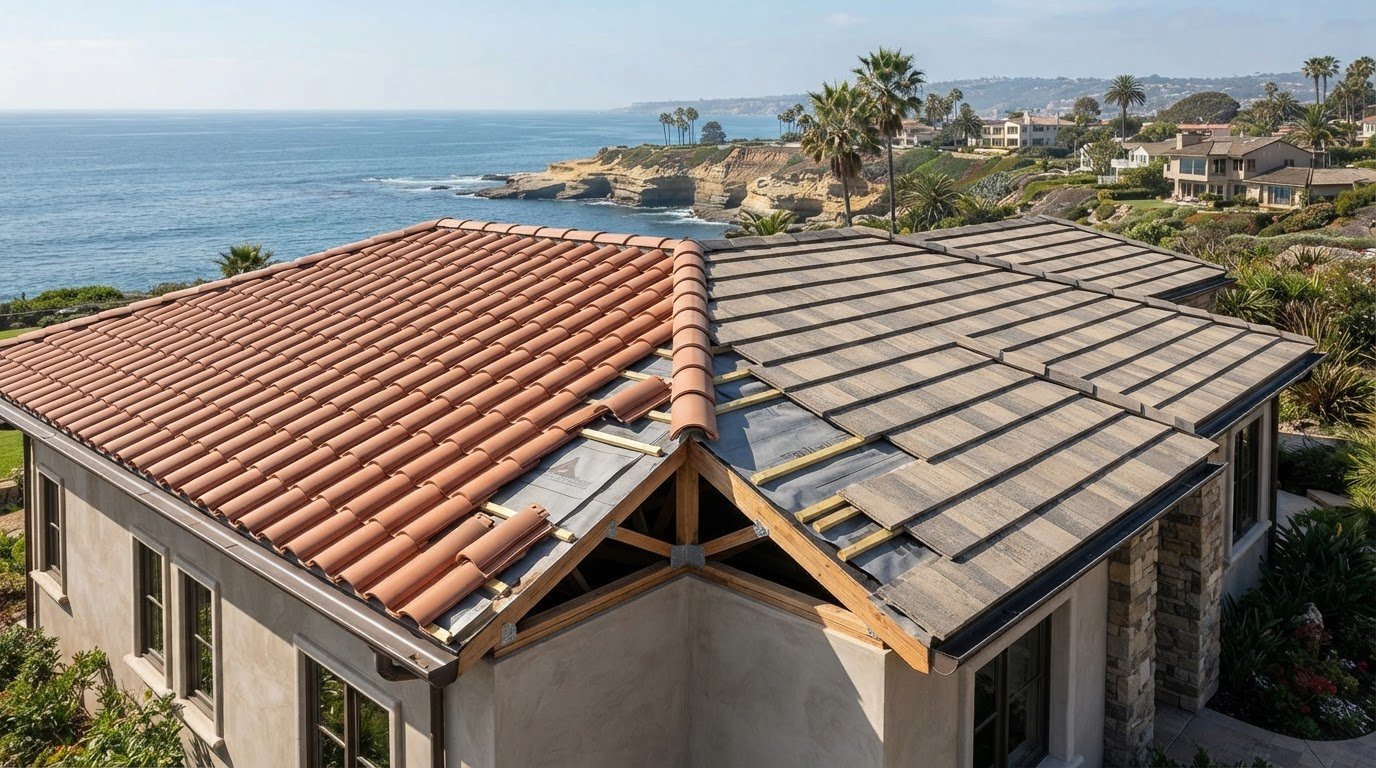
Most homeowners look at their house and see shingles or tiles. In reality, high-performance roofs residential projects involve a complex "sandwich" of protective layers. Each component must work in unison to keep your home dry and energy-efficient. If one layer fails, the entire system is compromised. Think of it as a precision engine where the outer casing is just for show; the real work happens deep inside the assembly.
The visible material actually accounts for roughly 30% of your actual protection. The remaining 70% consists of components you will likely never see once the installation is finished. Two of the most critical elements are the drip edge and perimeter seals. The drip edge is a specialized metal strip that directs water away from your fascia and into the gutters. Without it, water wicks back under the shingles, leading to silent wood rot. Perimeter seals ensure that wind-driven rain cannot find a way into your home’s structural skeleton during a heavy Southern California downpour.
Beyond the Surface: Decking and Underlayment
The roof deck provides the structural foundation for the entire system. It distributes the weight of the materials across your home’s rafters and provides a flat surface for installation. In San Diego’s climate, choosing the right underlayment is vital. While traditional felt was the standard for decades, modern synthetic underlayment offers superior tear resistance and does not absorb moisture. Roof underlayment is the secondary water barrier that protects the decking from moisture infiltration. This layer is your last line of defense when the outer material is tested by the elements.
Ventilation and Flashing: The Unsung Heroes
Proper attic ventilation is non-negotiable for San Diego homes. It prevents heat from building up in your attic during our hot summer months. Excess heat can "bake" your shingles from the inside out, significantly shortening their lifespan. Good airflow also lowers your energy bills by reducing the load on your air conditioning. Flashing acts as the armor for your roof’s most vulnerable spots, such as valleys and chimney penetrations. These are the areas where most leaks start. Ensuring these transitions are watertight is the hallmark of meticulous craftsmanship. If you suspect your current system is failing, a professional assessment of these hidden layers is a wise first step toward securing your home's future.
Decking: The structural plywood or OSB base.
Underlayment: The water-resistant shield beneath the shingles.
Flashing: Metal barriers at joints and edges.
Ventilation: Intake and exhaust vents that regulate temperature.
The 2026 Residential Roofing Material Roundup
Choosing the right material for roofs residential projects in San Diego involves more than just picking a color. You have to consider weight, longevity, and how the material interacts with our coastal environment. Some materials offer 50 years of life but require reinforced framing. Others provide a cost-effective 25-year solution that installs quickly. Your home’s existing structural capacity is the first thing to evaluate. It dictates whether you can support heavy tile or if a lighter shingle system is required. We always look at the structure first to ensure your home can safely carry the load of your chosen style.
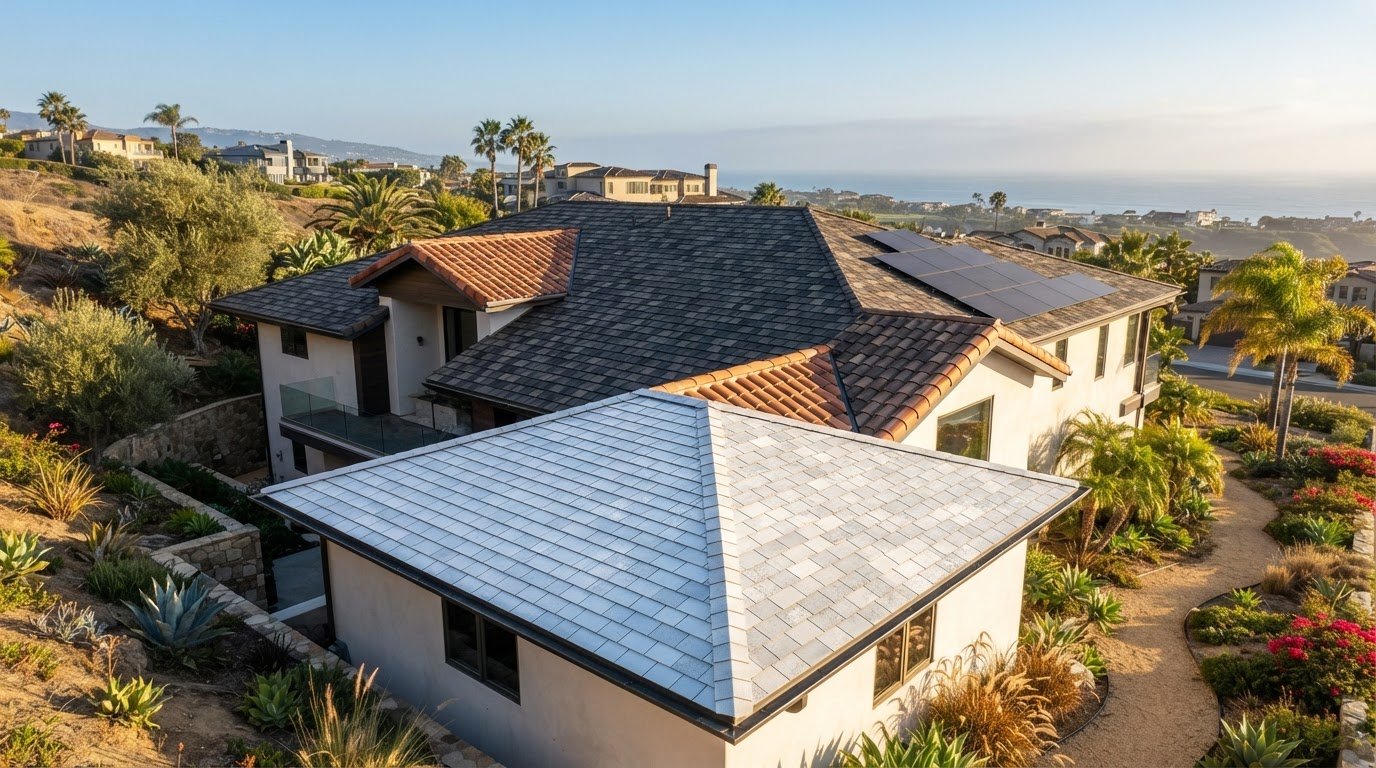
Future-proofing is another major consideration for 2026 homeowners. If you plan to add solar panels in the next few years, your material choice matters. Asphalt shingles and TPO membranes are exceptionally solar-friendly. They allow for secure mounting with minimal risk of leaks. While you can install solar on tile, it requires specialized mounting brackets and extra labor to prevent cracking. Thinking ahead now saves you significant headaches and costs down the road.
Asphalt Shingles: The Versatile Standard
Asphalt shingles remain the most popular choice for a reason. They're versatile and fit almost any architectural style. Architectural shingles provide a dimensional look that mimics wood or slate without the high price tag. For many, finding a reliable shingle roofing company is the first step to a successful upgrade. These systems are easy to maintain and offer a fantastic balance of performance and price. Modern asphalt technology has improved granule adhesion, meaning fewer "bald spots" even after years of intense UV exposure.
Concrete and Clay Tiles: The Coastal Classic
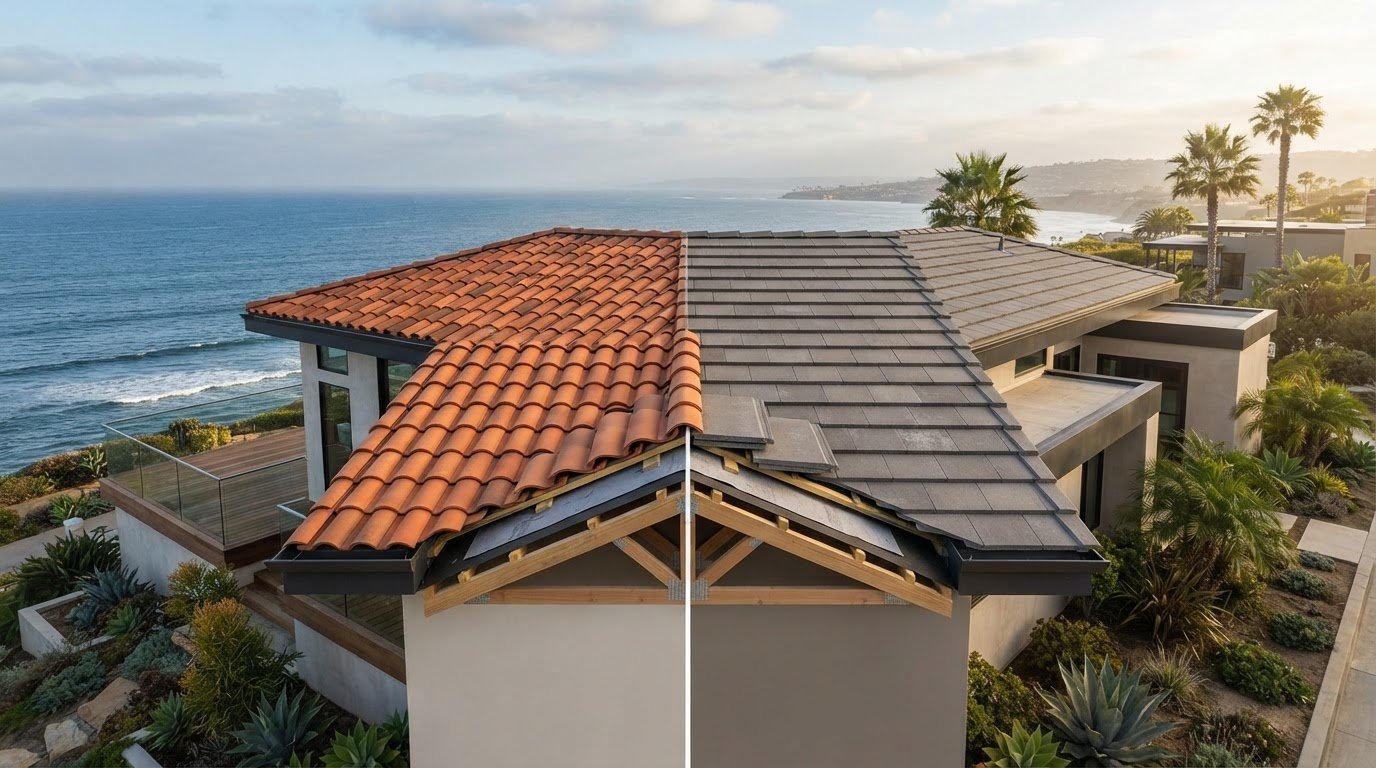
For that iconic Southern California look, roof tiles are the gold standard. Clay tiles are prized for their natural beauty and color that never fades. Concrete tiles offer a similar aesthetic with added durability and a wider range of profiles, including flat and "S" shapes. Both materials are non-combustible. This makes them the ultimate choice for fire resistance in San Diego County. While they're a larger upfront investment, their 50-year lifespan often makes them the most economical choice over time.
Flat Roof Solutions: TPO and Torch Down
Modern residential designs often incorporate flat roof sections or low-slope porches. TPO (Thermoplastic Polyolefin) is a brilliant white membrane that reflects heat. It's a core component of "Cool Roof" technology that keeps your home comfortable. For smaller areas or traditional flat roofs, rolled asphalt torch down offers a rugged, multi-layered defense. Both options are engineered to prevent ponding water from penetrating your home. They provide a seamless, watertight finish that stands up to San Diego’s coastal moisture and morning fog.
How to Evaluate Your Roofing Options: Performance vs. Price
California does not impose one identical cool-roof rule on every single-family reroof. Under the 2025 Building Energy Efficiency Standards, effective January 1, 2026, single-family roof-replacement provisions are generally evaluated when 50% or more of the roof is replaced. Criteria then depend on roof slope and climate zone: steep-slope provisions apply in climate zones 4 and 8–15, while low-slope provisions apply in climate zones 4 and 6–15, with listed exceptions and alternative compliance paths. Verify the address, slope, assembly, and CRRC-rated product. Official CEC guidance: https://www.energy.ca.gov/filebrowser/download/8300?fid=8300.
Planning your life around a major construction project is equally important. Understanding how long does roof replacement take is vital for managing your schedule and expectations. A shingle project might wrap up in a few days, whereas a custom clay tile installation involves meticulous cutting and fitting that extends the timeline. Rushing the process often leads to skipped steps in the underlayment or flashing layers we discussed earlier. Patience ensures the craftsmanship remains at the highest standard.
A change from shingles to clay or concrete tile requires checking the weight of the proposed complete roof assembly against the building’s capacity. Structural review or reinforcement may be needed. Confirm the selected product’s published weight and the requirements for your jurisdiction before committing to the change.
Longevity and ROI Analysis
A standard asphalt shingle roof typically offers a 25-year service life in our climate. In contrast, premium tile systems can easily surpass the 50-year mark. This longevity has a direct impact on your home's appraisal value. Buyers in La Jolla and Carlsbad look for the peace of mind that comes with a "forever roof." While tile has a higher upfront cost, its 50-year lifespan often makes it the cheapest material per year of service. It’s a strategic choice for those planning to stay in their home for the long haul.
Maintenance Requirements by Material
Every material has its own "personality" regarding upkeep. Shaded roofs in San Diego can occasionally develop moss or algae due to morning fog and humidity. For shingles, you should watch for granule loss in your gutters, which signals the material is thinning. Tile owners need to keep an eye out for slipped or cracked tiles after heavy winds. Annual professional inspections catch these small issues before they turn into costly interior damage. If you're ready to see how these factors apply to your specific property, request a detailed assessment from our local experts today.
Planning Your Project with Higher Levels Roofing
Roofing permit requirements depend on the project scope and the authority having jurisdiction. Within the City of San Diego, Information Bulletin 123 states that qualifying nonstructural reroofing may be permit-exempt when the roof structure and diaphragm are not altered. Permits are required for specified structural changes, heavier replacement roofing, removal and replacement of skip sheathing, and designated historic properties. Other cities and unincorporated county areas may use different rules, so the project address and scope must be verified before work begins. Official City guidance: https://www.sandiego.gov/development-services/forms-publications/information-bulletins/123.
Start with a clear discussion of the roof’s condition, your budget and the appearance you want. Higher Levels Roofing explains the proposed replacement system, relevant project details and written warranty terms so you can make an informed decision.
The Inspection and Estimating Process
We begin by conducting a thorough health assessment of your existing structure. This isn't a quick glance from the street. We examine the deck, the flashing, and the ventilation system to identify any underlying issues that could compromise a new installation. When you receive a document from us, it's a comprehensive roofing proposal rather than a simple bid. A bid only gives you a price; a proposal outlines the entire system of protection we are building for your home. For most San Diego residential projects, we provide clear timeline expectations from the start. We respect your time and work diligently to minimize disruption to your daily routine while maintaining our standards for meticulousness.
Local Expertise You Can Trust
Hiring a locally owned and operated contractor matters for your long-term security and warranty support. We are a licensed roofing contractor serving San Diego, La Jolla, and Carlsbad with a focus on high-end service. Our team has extensive experience with the asphalt shingle, clay tile, and TPO systems we've discussed in this guide. Because we live and work in this community, we take genuine pride in every finished product. We view every home as a contribution to the local landscape and a testament to our craftsmanship. If you're ready to secure your property with a system engineered for the Southern California coast, Schedule your free San Diego roof estimate today.
Securing Your San Diego Home for the Decades Ahead
Your journey toward a more resilient home starts with understanding that roofs residential systems are long-term investments in safety and property value. We have explored how the right combination of high-performance underlayment and climate-engineered materials can protect your property from coastal salt air and intense UV exposure. Whether you choose the timeless durability of clay tile or the versatile efficiency of architectural shingles, the goal is a system that performs as beautifully as it looks. You don't have to navigate these technical standards or permitting hurdles alone.
Higher Levels Roofing is a locally owned and operated business dedicated to meticulous craftsmanship. As a licensed and bonded San Diego contractor, we are specialists in asphalt, tile, and flat roof systems designed specifically for our unique Southern California architecture. We are ready to provide the expert guidance and transparent communication you deserve for your next project. It's time to move forward with confidence and secure your home's future. Get a Professional San Diego Roofing Estimate from Higher Levels Roofing and take the first step toward a worry-free roof today.
San Diego Residential Roofing: Frequently Asked Questions
What is the most popular roofing material for San Diego homes?
Asphalt shingles remain the most popular choice because they offer a reliable balance of affordability and versatility. Many homeowners choose architectural shingles that mimic the look of wood or slate to match local neighborhood aesthetics. In coastal areas, clay and concrete tiles are also highly favored for their classic Mediterranean style and superior resistance to salt air corrosion.
How much does a new residential roof cost in San Diego?
The total investment for a new roof depends on several factors, including the total square footage, the pitch of your roof, and your choice of materials. Premium options like clay tile require a larger upfront investment but provide a longer service life than standard shingles. We provide a comprehensive proposal that outlines all necessary components to ensure your home is fully protected without hidden surprises.
Can I install a tile roof if I currently have shingles?
A tile conversion may be possible, but the building must be evaluated for the proposed assembly’s weight and attachment requirements. Review product specifications, structural capacity and applicable approvals before selecting clay or concrete tile.
How long does a typical residential roof replacement take?
Most roofs residential projects in San Diego are completed within three to ten business days. A standard shingle replacement often wraps up in the shorter end of that window, while complex tile or TPO systems may take longer due to meticulous fitting requirements. Factors like permit processing times and weather conditions can also influence the final schedule. We always provide a clear timeline before work begins.
What are "Cool Roof" requirements in California?
Cool-roof benefits and code compliance should be evaluated separately. Reflective materials may reduce roof-surface heat, but savings vary, and product color alone does not establish compliance. Confirm the project climate zone, roof slope, complete assembly, CRRC rating, and any applicable exceptions before specifying material.
Do I need a permit to replace my roof in San Diego County?
Higher Levels Roofing verifies the project address and scope before stating that a permit is required or including a permit fee. City of San Diego Information Bulletin 123 is not a countywide rule, and requirements may differ in Carlsbad, San Marcos, Chula Vista, Encinitas, and unincorporated areas.
How do I know if I need a full replacement or just a repair?
If your roof is approaching the end of its expected lifespan or has widespread damage across more than 30% of its surface, a full replacement is usually the safest choice. Repairs are ideal for localized issues like a single leak or a few slipped tiles. However, systemic problems such as brittle shingles or recurring leaks suggest that the underlying layers have failed and a new system is necessary.
Does a new roof improve home energy efficiency?
A modern roofs residential system significantly improves efficiency by integrating advanced reflective materials and proper attic ventilation. By reflecting UV rays and allowing trapped heat to escape, these systems reduce the workload on your air conditioning unit. This results in a more comfortable indoor temperature and lower utility costs, making the new roof a functional upgrade that pays for itself over time.
Comments