


Professional Roof Inspection: What San Diego Property Owners Should Know

What if a small roof concern is an early warning, not a reason to panic? In San Diego, strong sun, seasonal rain, and coastal conditions can affect roofing materials in different ways. A professional roof inspection can help distinguish visible wear from signs that deserve prompt attention, giving you a clearer basis for deciding what to do next.
It’s understandable to wonder whether a stain, loose tile, or worn-looking shingle calls for monitoring, a repair, or a larger project. An inspection offers a more systematic view, but it can’t guarantee against future problems or reveal every concealed condition. Findings need to be interpreted in the context of the roof’s material, condition, and the property’s needs.
This article explains what an inspection may examine, how the process generally works, and what its limits are. You’ll also learn how to interpret findings and prioritize next steps, from monitoring an area to discussing roof repair or replacement. The goal is to help you make an informed decision without feeling rushed.
Table of Contents
What a Professional Roof Inspection Can Tell San Diego Property Owners
Before deciding whether to monitor a concern, arrange a repair, or discuss a larger roofing project, you need a clear picture of the roof’s visible condition. A professional roof inspection provides a systematic assessment of accessible roofing components and observable concerns. It can help put a lifted shingle, cracked tile, or interior water stain into context, but it isn’t the same as performing repairs or preparing a replacement estimate.
A roof inspection documents what can be observed in accessible areas. Its findings may point to maintenance, repair, or further evaluation, but they don’t rule out concealed conditions. Water can travel from its entry point before appearing indoors, and assessing layers beneath the visible surface may require additional investigation.
What does a professional roof inspection include?
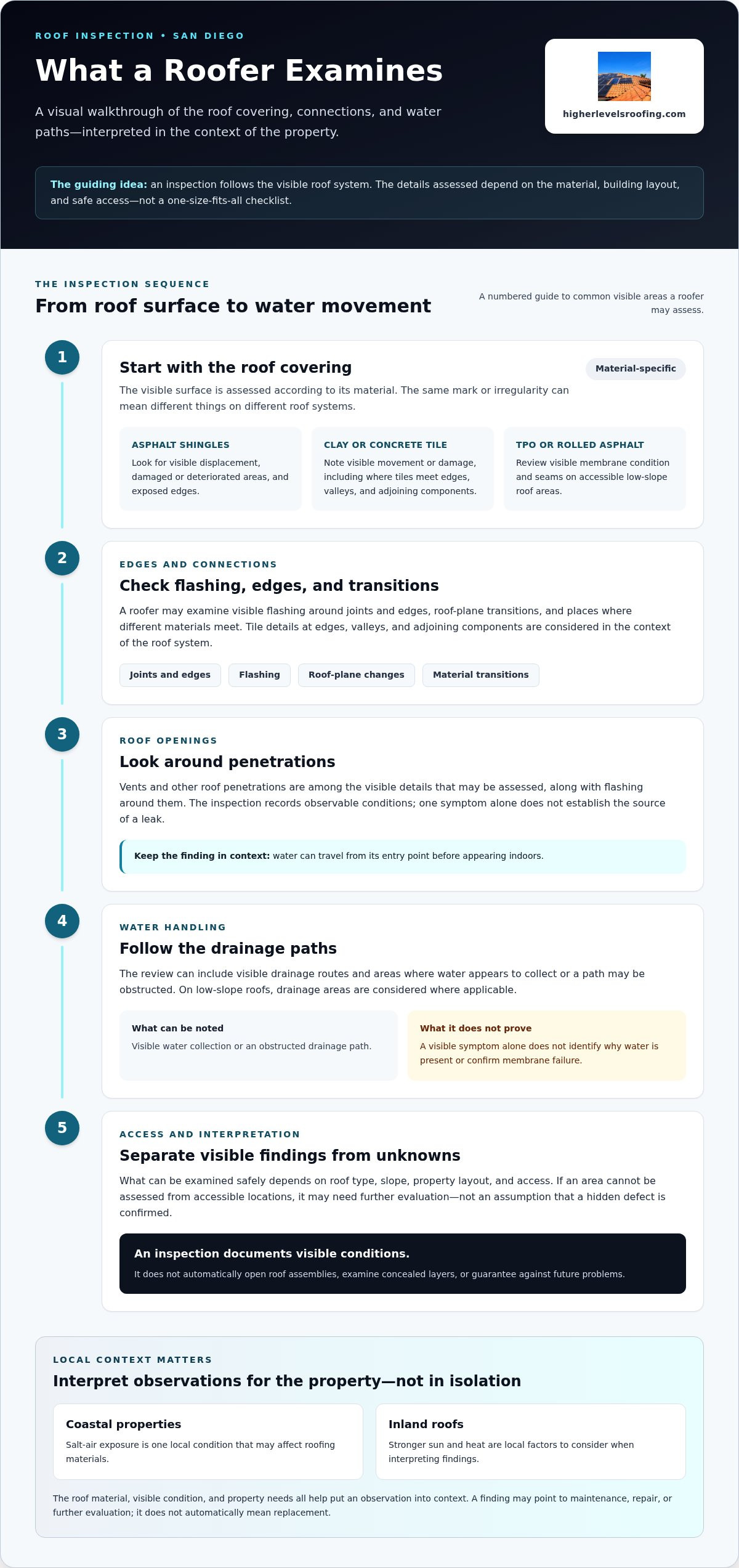
An assessment may cover the roof covering, visible flashing around joints and edges, penetrations such as vents, drainage paths, and accessible transitions where roof planes or materials meet. What can be examined safely depends on the roof type, property layout, and access. A shingle roof, for example, presents different visible details from a tile roof or a flat roof with a membrane.
A roof inspection is related to the broader process of a home inspection, but it focuses on the roof’s accessible components and visible condition. It doesn’t automatically include opening roof assemblies or examining concealed layers. If an observation suggests a hidden issue, further evaluation may be needed rather than assuming the cause from a visual check alone.
When should San Diego owners consider an inspection?
An inspection can be useful when planning roof maintenance, trying to understand a visible concern, or considering a roofing project. Examples include a recurring interior stain, visible damage after seasonal rain, or uncertainty about the condition of an older roof. You don’t need to wait until a problem seems severe to seek a clearer assessment. There’s no single schedule that fits every property.
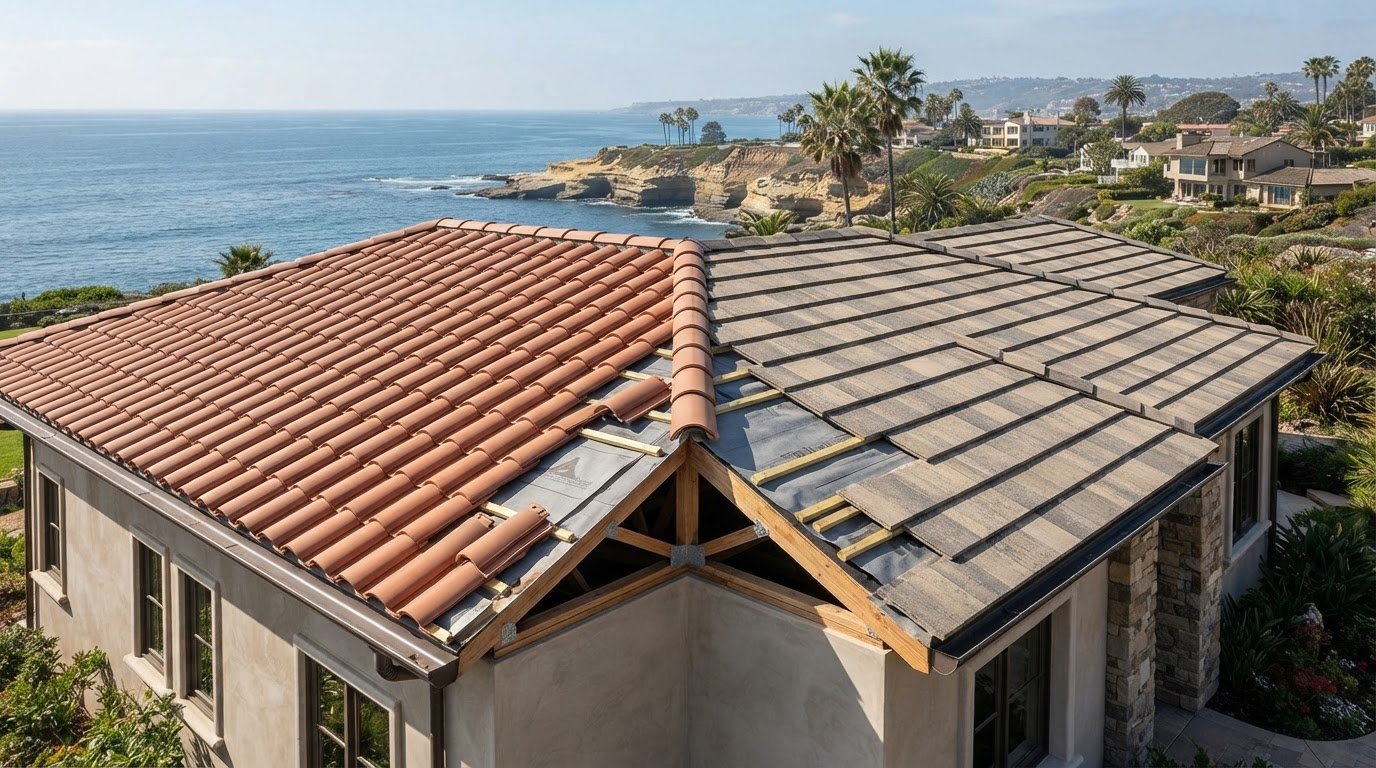
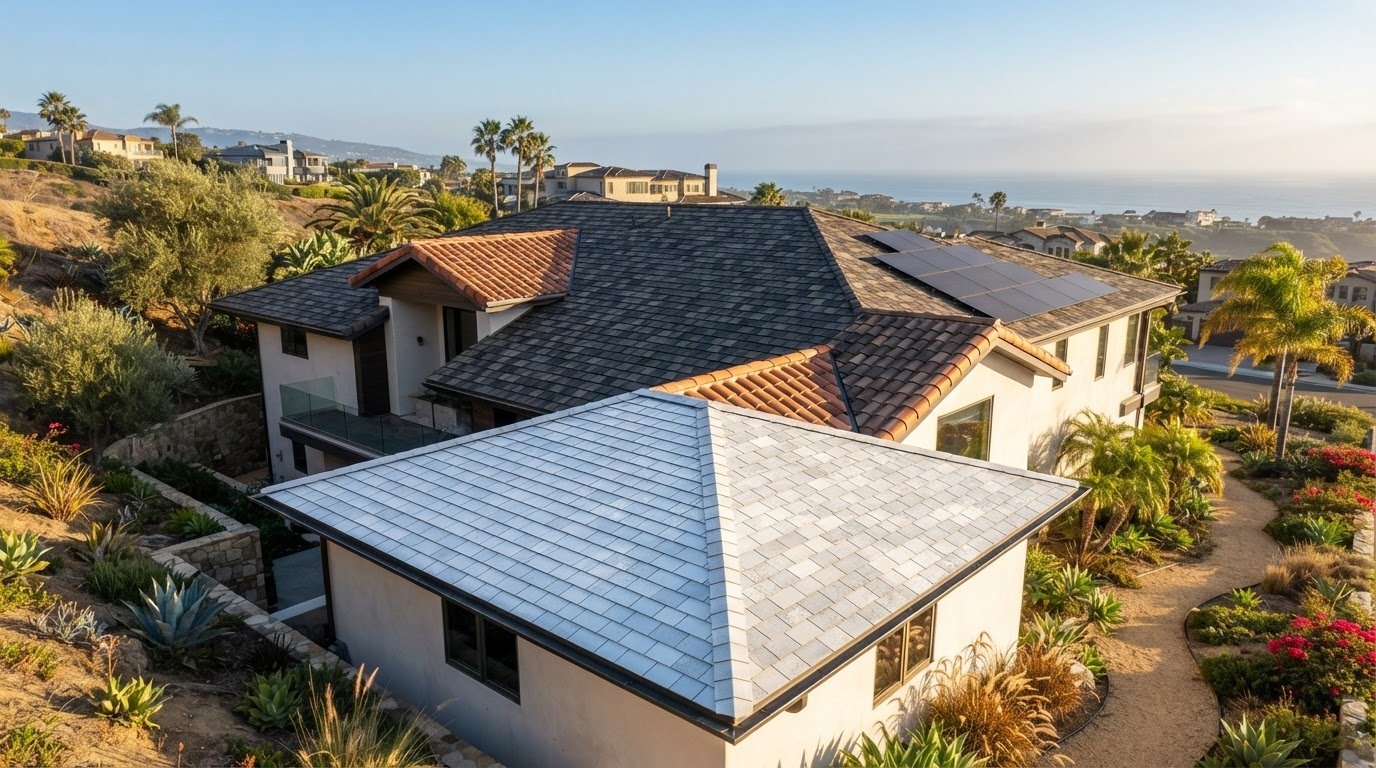
Local conditions also vary. Coastal properties may experience salt-air exposure, while inland roofs can face stronger sun and heat. These settings can affect roofing materials differently, so findings should be interpreted in light of the property’s location and roof type. A licensed roofing contractor serving San Diego, such as Higher Levels Roofing, can help property owners understand visible findings in the context of residential or commercial roofing materials. The aim is a practical next step, not a premature conclusion that the entire roof needs replacing.
What a Roofer Examines on Shingle, Tile, and Flat Roofs
A roof inspection follows the visible roof system, not a one-size-fits-all checklist. A roofer considers the covering, edges, penetrations such as vents, flashing around joints, transitions between roof areas, and paths where water should drain. The areas that can be assessed depend on the material, building layout, and safe access. On a home, that may mean examining a sloped roof and its edges. On a commercial property, it may include accessible sections of a low-slope roof.
Roof findings make sense only in the context of the material, assembly, and conditions visible on that particular property. A mark or irregularity can have different significance on asphalt shingles, tile, or a flat-roof membrane. A professional roof inspection records visible conditions. One symptom alone doesn’t establish the source of a leak or prove that a concealed defect is present.
Inspection details for asphalt shingles and tile roofing
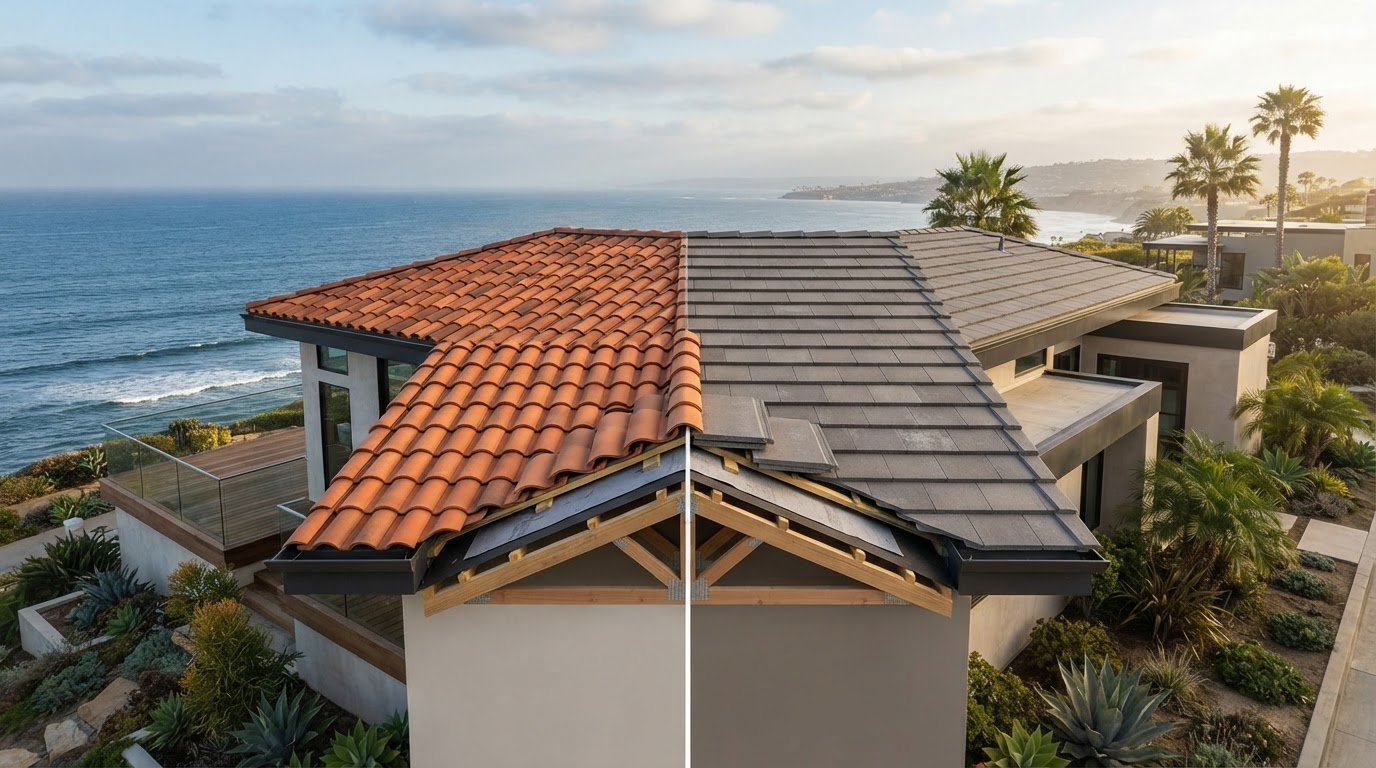
On asphalt shingles, attention may go to visible displacement, damaged or deteriorated areas, exposed edges, and details around roof penetrations and flashing. On clay or concrete tile, the roofer looks for visible movement or damage and notes areas that may merit closer assessment, including how the tiles meet edges, valleys, and adjoining components. The materials differ, so an observation that matters on a shingle surface may not apply in the same way to tile.
The visible covering is only part of the roof assembly. Access, slope, and the condition of surrounding components affect what can be examined safely and clearly. If something can’t be assessed from accessible areas, it should be described as needing further evaluation, not treated as a confirmed hidden problem.
Inspection details for TPO and rolled asphalt roofs
On low-slope roofs surfaced with TPO or rolled asphalt, the review can include visible membrane condition, seams, penetrations, transitions, edges, and drainage areas where applicable. Water movement matters. A roofer may note where water appears to collect or where drainage paths are obstructed, but a visible symptom alone doesn’t identify why water is present or establish that the membrane has failed.
After severe weather, property owners may also consult FEMA’s public resources for broader disaster-related context. A roofer’s assessment focuses on the specific roof, its materials, and the conditions visible at the property.
Clear observations make repair planning more grounded. If an inspection identifies an area that merits a repair discussion, learn more about roof repair services as a possible next step.
Inspection Findings: How to Separate Routine Wear from a Bigger Concern
An inspection observation doesn’t automatically mean your roof needs replacement. A roofer should explain what was seen, where it was found, and how the evidence supports any recommendation. Findings and recommendations are related, but they aren’t the same. If the cause or extent of an issue can’t be established visually, that uncertainty should be made clear.
Use this framework to understand possible next steps. It isn’t a diagnosis or a substitute for the roofer’s assessment.
The location and extent of a concern, the roofing material, and whether water intrusion or related damage is evident all affect its significance. A small area of displaced material may call for a different response from widespread deterioration. An indoor stain is useful evidence to report, but its location alone may not identify where water entered.
Which roof inspection findings may need prompt attention?
Active water entry, visibly displaced roofing materials, or an exposed area are reasons to seek a timely professional assessment. Don’t climb onto the roof to verify suspected damage. Note what you can safely see from the ground or indoors, then share where and when you noticed it. A roofer can assess accessible areas and explain whether the visible evidence supports a repair recommendation or calls for further investigation.
When does a finding point to repair or replacement discussions?
Repair versus replacement depends on the roof’s overall condition, the scope of work indicated by the findings, and the property’s needs. On an asphalt shingle roof, the extent and location of visible damage matter. With tile, observations should account for the tile surface and surrounding roof details. On a flat roof, membrane condition, seams, and drainage areas may inform the discussion. No single observation sets a universal replacement threshold.
If replacement becomes relevant, Higher Levels Roofing’s San Diego roof replacement guide can help you explore that next step. For broader storm preparedness information, see fema.gov. A clear professional roof inspection report should distinguish observed evidence, recommended actions, and unanswered questions, so you can weigh options without feeling pushed toward a larger project.
How to Prepare for a Professional Roof Inspection and Use the Report
A little preparation can help focus the discussion on what matters to your property. Before a professional roof inspection, gather what you’ve noticed and any readily available information about the roof’s history. You don’t need to investigate the roof yourself. Stay on the ground and leave roof-level assessment to a professional.
Use this sequence to prepare and make the findings easier to act on:
Share your concerns. Describe visible ceiling marks, signs of water entry, or changes you’ve noticed from a safe vantage point.
Identify known leak locations. Note which room or area is affected and whether the issue appears during or after rain.
Point out accessible areas. Show relevant places you can safely reach, such as an interior stain or an area where water has appeared. Don’t climb onto the roof.
Discuss what the findings mean. Review the observations, practical priorities, and any areas that need further evaluation.
What information should you share before the assessment?
Write down when a symptom first appeared and whether it has recurred. If a ceiling mark changes or water shows up in the same place again, that context may help guide the discussion. The visible indoor location doesn’t necessarily identify the roof entry point.
If you know the roof material or have records of past repairs, keep that information nearby. Photos of indoor symptoms can help illustrate what you’ve observed, but they don’t replace an assessment of the roof. For commercial properties, note which areas are affected and any operational concerns, such as a space that needs to remain in use. This helps keep the discussion specific to the building’s needs.
How to understand the inspection results
As you review the findings, ask for a clear distinction between what was directly observed, what action may be appropriate, and what remains unknown. For example, a visible concern may support monitoring or a repair discussion, while its cause or full extent may require further evaluation. That distinction helps you prioritize without treating every observation as proof of a larger problem.
Keep the findings, related photos, and notes with your property maintenance records. Revisit unresolved items as appropriate, especially if symptoms recur or conditions change. If an inspection leads to a roofing project discussion, the San Diego roofing contractor hiring checklist offers useful project-planning context.
For a clear conversation about inspection findings and possible roof repairs, discuss your roofing concerns with Higher Levels Roofing.
Turn a San Diego Roof Inspection into a Clear Plan with Higher Levels Roofing
Inspection findings are most useful when they lead to a practical decision, not an automatic sales pitch. A clear conversation can help you understand which observations call for routine maintenance, which may warrant roof repair, and whether replacement planning belongs in a longer-term discussion. The next step should reflect what was observed and what the property needs.
As a licensed roofing contractor serving San Diego and nearby communities, Higher Levels Roofing works with residential and commercial roofs. Whether your property is in La Jolla, San Marcos, Encinitas, or Carlsbad, a useful plan starts with the roof’s material and documented conditions, not a one-size-fits-all recommendation.
A roof plan should reflect the material and property
Roofing materials have different visible features and repair considerations. Asphalt shingles, clay or concrete tile, rolled asphalt torch down, and TPO each call for recommendations suited to their construction and condition. A concern in one area may support targeted repair, while broader or less clearly understood findings may call for further assessment or a discussion about replacement.
The property matters, too. A homeowner may prioritize addressing a recurring interior symptom, while a commercial property owner may need to account for affected spaces and building operations. A professional roof inspection can help establish what was observed, but planning should also consider the building’s use, the scope of any needed work, and the owner’s priorities. Clear reasoning helps you understand why a suggested step fits your roof.
What to do after the inspection
Turn the findings into an ordered plan:
Understand the observations. Separate visible evidence from recommendations and unresolved questions.
Prioritize the next step. Address active concerns separately from routine maintenance or longer-term planning.
Plan follow-up work. Use the findings to guide a repair discussion or, if the overall condition and property needs point that way, a replacement conversation.
This approach keeps immediate concerns from getting lost among routine upkeep, while avoiding the assumption that every issue calls for a major project. Higher Levels Roofing provides residential and commercial roofing services across the San Diego area, helping property owners connect roof conditions with sensible repair, installation, or replacement planning.
Explore Higher Levels Roofing’s services to discuss your property’s roofing needs and possible next steps.
Turn Roof Findings into Your Next Practical Step
A professional roof inspection helps you understand visible conditions and decide what deserves attention, without treating every observation as a reason for replacement. The roof’s material, the extent of the concern, and the property’s needs all shape whether the next step is monitoring, further evaluation, repair, or planning for a larger project.
With a clearer understanding of the findings, you can move forward at a sensible pace. Higher Levels Roofing is a licensed contractor serving the San Diego area, with residential and commercial roofing experience across asphalt shingles, clay and concrete tile, rolled asphalt torch down, and TPO.
If you’re ready to discuss your property’s roofing needs, explore Higher Levels Roofing’s services. A thoughtful plan can help you protect your property and feel more confident about what comes next.
Frequently Asked Questions
How long does a professional roof inspection take?
The time required depends on the property, roof layout, material, access, and areas that need attention. A straightforward roof may take less time to assess than a larger or more complex residential or commercial property. If the roofer finds an area that needs closer evaluation, that can affect the overall process. Allow time to review the observations and ask questions rather than relying on a set duration.
How often should a roof be professionally inspected in San Diego?
There isn’t one inspection schedule that suits every San Diego property. Roof material, age, condition, past repairs, and local exposure can all affect when an assessment makes sense. Coastal and inland settings may present different conditions for roofing materials, so consider your property’s particular context. An inspection can be useful when planning maintenance, noticing a change, or preparing for a roofing project. Seek an assessment sooner if you observe a concern.
Can a professional roof inspection identify a leak?
A roofer may identify visible signs associated with water entry, such as an interior stain or an area of concern on accessible roof components. However, a stain’s location doesn’t necessarily show where water entered, and a visual inspection may not reveal concealed conditions. Share where and when you’ve noticed water, including whether the symptom recurs. That information can help guide an assessment and show whether further evaluation may be needed.
Does a roof inspection mean I need a replacement?
No. An inspection observation alone doesn’t prove that a roof needs replacement. The appropriate next step depends on the evidence, the area and extent of concern, the roof material, and the property’s needs. Some findings may be monitored or lead to a repair discussion. Broader concerns may prompt further evaluation or replacement planning. Ask the roofer to distinguish what was observed from recommendations and any questions that remain unresolved.
Should I get a roof inspection after a storm?
Consider a professional assessment if you notice water entry, visibly displaced roofing materials, or an exposed area after a storm. Don’t climb onto the roof to check for damage. Instead, record what you can see safely from indoors or the ground, note when it appeared, and share the information with the roofer. A visible symptom may have more than one possible cause, so avoid assuming what repair is needed before the roof is assessed.
Can a roofer inspect shingle, tile, and flat roofs?
Higher Levels Roofing serves residential and commercial properties in the San Diego area, including La Jolla, San Marcos, Encinitas, and Carlsbad, and works with asphalt shingles, clay and concrete tile, rolled asphalt torch down, and TPO. Inspection details vary by material and roof layout. A roofer considers the visible features of the particular system, such as its covering, seams or flashing, transitions, and drainage, rather than applying an identical checklist to every roof.
Comments