


Preparing Your Home for a Roof Replacement: A Practical Checklist

Preparing your home for a roof replacement starts before the crew arrives. A little planning can help protect belongings, keep children and pets away from work areas, and make household routines easier to manage during construction. Knowing which areas need to stay clear and what to move ahead of time can make the workday feel more organized.
This step-by-step checklist covers indoor rooms, outdoor areas, access points, and household plans. You’ll learn what to move or secure, how to prepare for noise, and what details to share with your roofing team. Each home and project is different, so follow the instructions for your roof and property. Higher Levels Roofing provides residential roof installation, replacement, and repair in San Diego and nearby communities, including La Jolla, San Marcos, Encinitas, and Carlsbad.
Table of Contents
Preparing for a Roof Replacement in San Diego: What to Expect
The Homeowner's Roof Replacement Checklist: Prepare Inside and Outside
What Changes by Roofing Material and San Diego Property Type?
The Day Before Roof Replacement: Confirm Access, Safety, and Communication
Work with a San Diego Roofing Team for a More Confident Replacement
Preparing for a Roof Replacement in San Diego: What to Expect
Preparation means protecting belongings, clearing agreed work areas, and planning household routines before roof work begins. Expect construction noise and activity around the exterior, along with temporary changes to how you use parts of your property. If you work from home, have young children, or share outdoor spaces with pets, planning ahead can help you manage those disruptions.
Materials and equipment need to be moved to and from the designated work areas. A driveway, side path, or section of yard may need to stay clear, depending on your roof and property access. Before work begins, make sure you understand which routes and areas the crew needs to use. Share any constraints, such as a locked gate or narrow passage, with the project team.
What happens around the home during roof replacement?
Roof work can bring repeated sounds from overhead and activity around the outside of your home. Crew members may move between work areas and access points, and materials or equipment may be placed where the project requires. Keep household members and visitors away from active work zones and crew routes, and follow the safety instructions for your project. Mention a shared entrance, narrow path, or gate arrangement during planning so the team can account for it.
You can help by keeping agreed routes clear and following the site instructions. The roofing crew will direct work activity and provide guidance for the specific job. For an overview of types of roofs and their components, see Wikipedia’s roof reference.
Why preparation can differ by roof and property
Different roofing systems involve different materials and may have different access needs. Asphalt shingles, concrete or clay tile, and flat-roof systems such as TPO or rolled torch-down asphalt aren’t handled in exactly the same way. The practical setup depends on the roof, property, and project scope, so use the project team’s instructions rather than assuming another home’s preparation plan will apply.
Consider the whole property, not just the roof. Landscaping near the house, driveway access, neighboring homes, narrow side yards, and gate locations can all affect how the work area is organized. As the scheduled work period approaches, check the local forecast and share weather-related concerns with the project team. A clear plan helps you focus on the areas that need attention and make any necessary adjustments to your routine. That’s the foundation of preparing your home for a roof replacement with fewer surprises.
The Homeowner's Roof Replacement Checklist: Prepare Inside and Outside
Use this checklist to prepare rooms, outdoor spaces, and household routines. Start with the areas directly beneath the roof work and any routes the crew will use. Some tasks may not apply to your property, so follow the project instructions and prioritize the areas identified for access and work.
Inside the home: protect rooms, belongings, and routines
Secure fragile décor. Take down delicate wall hangings and move breakable items from shelves, especially in rooms directly beneath the active roof area.
Protect belongings below the roof. In an attic or upper room beneath the work, cover stored items or relocate them where practical and safe. Keep walkways clear so you can still move around comfortably.
Plan around noise. If you work remotely, schedule calls or meetings away from expected work periods when possible. Consider how household members will manage rest, schoolwork, or other routines while work is underway.
Make a pet and child plan. Decide where children and pets will stay, away from crew access and active work areas. Share the plan with everyone at home.
Outside the home: create clear and safe work areas
Move vehicles. Relocate cars from the driveway or other areas designated for crew access, materials, or equipment.
Clear personal items. Move patio furniture, grills, potted plants, and outdoor decorations if they’re near the planned work area or the project instructions call for it.
Keep routes open. Clear agreed paths to the home and roof access points. Check that gates can be opened as planned, and tell the project team about narrow paths or other access challenges.
Protect people and pets. Keep children and pets away from active work zones and crew access paths. OSHA provides roofing safety guidelines; for your project, follow the specific safety directions from the roofing team.
The day before: make a final pass
Review the project instructions and note any unresolved access or safety details.
Clear the agreed work and material-access areas, including the driveway if requested.
Secure indoor belongings and move outdoor items identified by the crew.
Set up a plan for calls, meals, children, and pets during work.
Prioritize clear access, protected belongings, and the crew’s instructions. Preparing your home for a roof replacement is a practical partnership: your preparation helps keep the household organized, while the project team provides guidance for the specific job. For a clearer sense of how replacement planning fits your home, explore residential roof replacement guidance.
What Changes by Roofing Material and San Diego Property Type?
Roofing material and property layout can affect where the crew needs access and what you’ll be asked to move or protect. Treat these as planning considerations, not fixed procedures. The project team will provide instructions for your roof and home. This overview explains why preparing your home for a roof replacement can look different from one property to another.
Shingle, tile, and flat-roof preparation compared
Use the table as a starting point, then follow the instructions for your project. If you’re also comparing materials, read Types of Roofing Materials: A Homeowner’s Guide to Durability and Style for a broader look at material considerations.
Plan for your property's location and layout
Access can be as important as the roof itself. A narrow driveway, shared entrance, low branches, nearby landscaping, or close neighboring homes may affect where people can move and which areas need to stay clear. Coastal and inland San Diego properties have different surroundings, but preparation should reflect the actual lot. Note gates, paths, parking constraints, and outdoor items near the planned work area. These details matter whether your home is in San Diego, La Jolla, San Marcos, Encinitas, or Carlsbad.
Check the local forecast as the scheduled work period approaches, and share weather-related concerns with the project team. Conditions can change, so avoid making assumptions about the work plan. Account for your access points, nearby property features, and the instructions for your roofing material. This helps you prepare the areas that matter without moving or disrupting more than necessary.
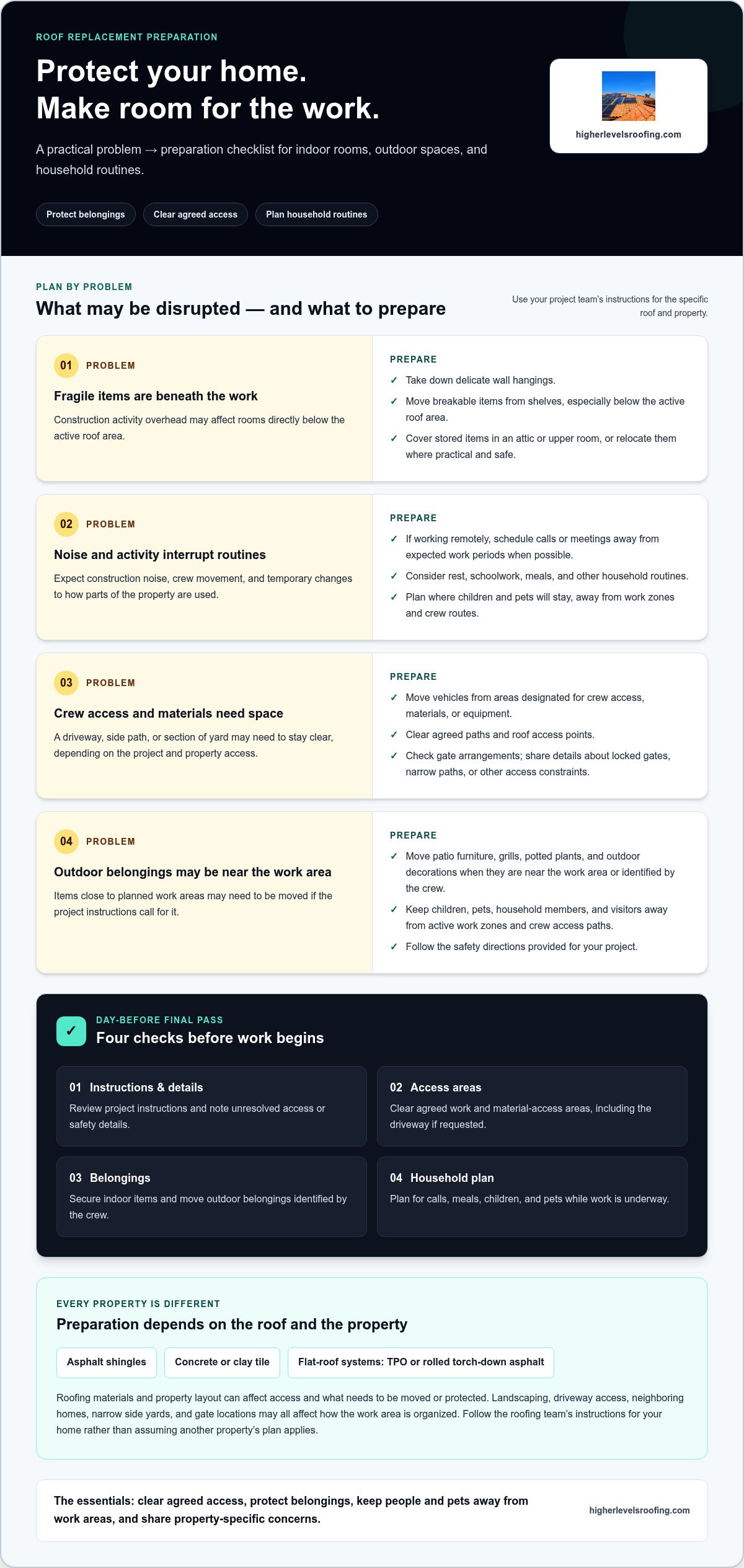
The Day Before Roof Replacement: Confirm Access, Safety, and Communication
A short final review can catch small issues before they disrupt the work plan. Use the project team’s instructions as your reference, since access needs and arrangements vary by home and roofing project. Preparing your home for a roof replacement is easier when everyone knows what to move, where to go, and which areas to avoid.
A four-step checklist for the day before
Review the project instructions. Revisit the information provided by the project team and review the agreed arrival and access details. Make sure you know which paths, gates, or areas need to be available.
Clear designated outdoor areas. Move vehicles from agreed work or material areas. Relocate outdoor furniture, planters, grills, and other belongings if they’re nearby or the instructions call for it.
Secure indoor belongings and plan household needs. Protect fragile items beneath the roof work and cover or move attic belongings where practical and safe. Decide where children and pets will stay, and plan around expected noise if you have remote work, calls, or rest to consider.
Keep useful information close. Have essential contact details and property-access information easy to reach. If someone else will be home, share the instructions so they understand the agreed plan.
What to coordinate with the roofing crew
Share details that could affect access or need attention, such as a gate code or latch, a narrow driveway, a shared path, or a specific area near the house that needs care. If a household routine or access constraint could affect the work, communicate it before work begins rather than relying on assumptions.
Clarify which entrances or outdoor areas household members should avoid while work is active. Keep children, pets, and visitors away from the roof work area and crew access paths, and follow the safety directions provided for the project. Setups differ from home to home, so use your project instructions rather than assuming the same staging or procedures apply everywhere.
Think of the final check as a shared handoff: you prepare the home and communicate property-specific details, while the roofing team guides you on the arrangements for the job. For more context on planning a residential project in the area, explore the San Diego roof replacement guide.
Work with a San Diego Roofing Team for a More Confident Replacement
A checklist is a useful starting point, but your home’s layout, access points, and roofing system determine the details. Sharing those specifics with the project team helps turn general advice into a practical plan. A narrow side yard, locked gate, or outdoor belongings near the work area may affect what you need to do before the crew arrives.
Turn the checklist into a plan for your home
Bring preparation questions to the project conversation. Point out access constraints, explain gate arrangements, and mention property features or household needs that could affect the work. The team can provide instructions suited to your home and roof, so you can focus on the checklist items that apply. Preparation directions may differ by layout and roofing system.
If you’re still learning about the replacement process, The Homeowner’s Guide to Roof Replacement in San Diego (2026) offers another resource to help you understand the project and plan ahead. As you read, note questions about your property to discuss with the project team.
Take the next step with Higher Levels Roofing
Higher Levels Roofing is a licensed contractor serving the San Diego area, including La Jolla, San Marcos, Encinitas, and Carlsbad. The company provides residential roof installation and replacement with asphalt shingles, clay and concrete tile, rolled torch-down asphalt, and TPO systems. These roofing options provide a starting point for a project conversation about preparation, access, and what to expect at your home.
Good coordination starts with clear communication. You prepare the property and share relevant details; the roofing team provides project-specific guidance and carries out the replacement work. This shared approach can help you feel more organized before work begins and better informed throughout the process.
Ready to plan a replacement? Explore roof replacement with Higher Levels Roofing and discuss a plan for your San Diego area home.
Make Your Roof Replacement Easier to Plan
A little preparation can make replacement day feel more manageable. Protect fragile belongings in rooms beneath the roof work, clear access areas identified for your project, and plan around household needs such as pets, children, and important calls. Share property-specific details with the roofing team and follow the instructions for your home and roofing system.
Preparing your home for a roof replacement is a shared effort, not a task you need to figure out alone. Higher Levels Roofing provides residential roof installation and replacement in San Diego and nearby communities, including La Jolla, San Marcos, Encinitas, and Carlsbad. The company works with asphalt shingles, clay and concrete tile, rolled torch-down asphalt, and TPO systems. Clear communication helps turn general checklist steps into a plan suited to your property.
Ready to take the next step? Explore roof replacement with Higher Levels Roofing and start planning with a local team.
Frequently Asked Questions
What should I remove from my home before a roof replacement?
Move or secure fragile wall décor and shelf items, especially in rooms directly beneath the active roof area. Cover or relocate attic belongings where practical, and move outdoor furniture or decorations away from designated work zones if the project instructions call for it. The right list depends on your home’s layout and the work planned, so follow the roofing team’s directions about areas needing extra attention.
Should I cover everything in my attic during a roof replacement?
You don’t necessarily need to cover everything, but protect or move stored belongings beneath the work area, especially fragile items or things that are difficult to clean. Dust or small debris may reach an attic during construction, though conditions vary by roof and project. Follow the preparation instructions for your home, and don’t enter active work areas while the crew is working on the roof.
Do I need to move my car before roof replacement begins?
Plan to move your car from any agreed work, access, or material areas before the scheduled workday. A vehicle left in a designated path may obstruct access or get in the way of project activity. Review which areas need to remain clear, then make a parking plan. This is especially useful if your driveway is narrow or shared.
Can I stay home while my roof is being replaced?
You can plan to stay home, but expect construction noise and activity around the property. If noise could disrupt remote meetings, focused work, or rest, consider scheduling those activities elsewhere or adjusting your routine. Keep children and pets away from active work areas, and follow the roofing crew’s safety directions. The best arrangement depends on your household’s needs and the project plan.
How should I prepare pets and children for a roof replacement?
Set up a supervised space for children away from crew access and active work areas, and explain clearly that the work zone is off limits. Keep pets indoors or arrange another comfortable place for them if outdoor activity could cause stress or create a safety concern. Review the plan with everyone at home before work begins, and follow the project team’s instructions.
Does roof replacement preparation differ for tile and shingle roofs?
Yes, some preparation details can vary with roofing material, roof design, and property layout. The basics remain useful: protect belongings, clear agreed access, and keep people and pets away from active work. Don’t assume a tile, asphalt shingle, or flat-roof project uses the same setup. Homeowners in San Diego, La Jolla, San Marcos, Encinitas, and Carlsbad should follow instructions tailored to their project.
What should I do if rain is forecast during my roof replacement?
Check the local forecast as the scheduled work approaches and share weather concerns with the project team. Rain may affect scheduling or how the work is planned, depending on the forecast and project conditions. Don’t climb onto the roof or attempt temporary repairs yourself. Follow the roofing team’s instructions for your home and keep communication clear if conditions change.



Comments