


New Roof Home Value in San Diego: What Buyers May Pay

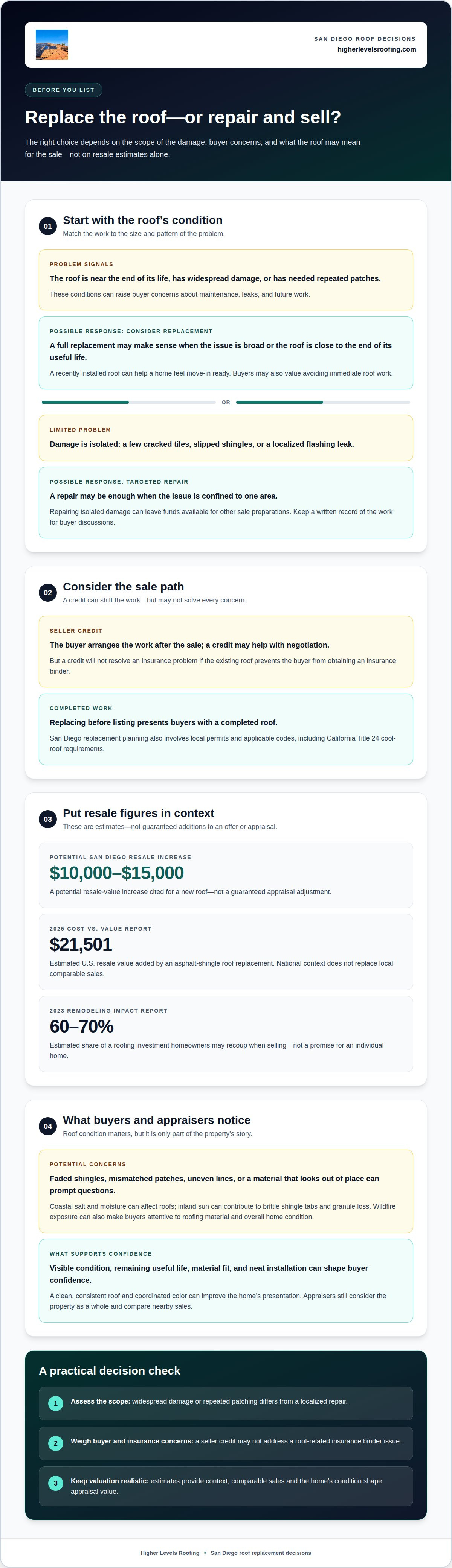
A new roof can increase home value in San Diego, but replacing one before a sale isn’t automatically the best financial move. A new roof may add $10,000 to $15,000 to resale value. Whether that makes replacement worthwhile depends on the roof’s condition and how buyers and appraisers view the home.
It’s understandable to expect a major upgrade to be reflected in the offer price. But a roof’s value isn’t judged in isolation: its age, visible condition, and remaining useful life can affect buyer confidence, while appraisers consider nearby home sales. A newer roof may also address concerns that arise during an inspection.
This article explains how a new roof may influence buyer offers and appraised value, and when replacing it before selling could make sense. You’ll also learn why a targeted repair may be enough for limited damage, what buyers and inspectors tend to consider, and how San Diego’s coastal and inland conditions can shape a roof assessment. The aim is to help you weigh the decision without assuming every replacement produces the same return.
Table of Contents
Do buyers pay more for a new roof?
Buyers may favor a home when a newer roof reduces visible maintenance concerns, but replacement doesn’t automatically raise every offer. In San Diego, material and workmanship can shape buyer confidence through durability, visual fit, and expected upkeep.
Recently Installed Roof Appeal
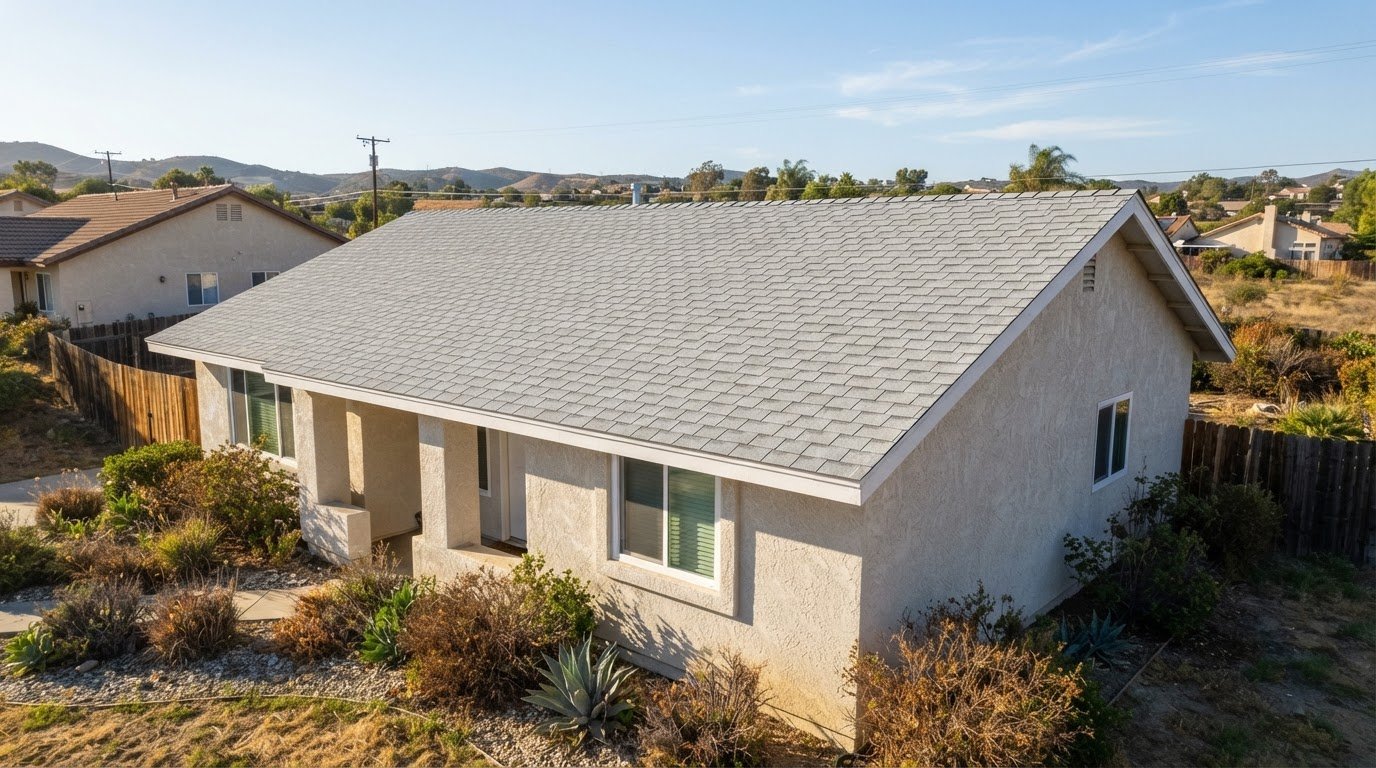
A recently installed roof can help buyers see a home as move-in ready, not an immediate repair project. As residential transaction specialists like Robert Caicedo Real Estate often highlight, move-in readiness can give buyers confidence and help homes sell faster by eliminating immediate repair concerns. An architectural asphalt-shingle roof may reassure buyers they won’t need replacement for 20 or more years. That expectation can stand out beside a comparable home with visibly worn shingles.
Curb Appeal and First Impressions
Curb appeal is the impression a home makes from the street, including the roof’s condition, color, and lines. A clean, consistent roof can signal care in listing photos and showings. Faded shingles, mismatched patches, or uneven lines may catch buyers’ attention before interior updates do. Compare the roof color with the home’s siding and trim: a coordinated palette can strengthen the overall presentation.
Roof Material and Quality
Material and workmanship affect how buyers view durability, visual fit, and future upkeep. In San Diego, asphalt shingles and concrete tile create different looks. Choose a material that complements the home’s architecture, rather than treating color as an afterthought. Installation details also matter: straight courses, consistent edges, and neat transitions make the roof look considered, while uneven finishes may raise questions.
For example, asphalt shingles on a home designed around a tile roof may look mismatched, even when the roof functions well. Buyers consider the home’s overall appearance as well as maintenance concerns, so material fit and finish both contribute to resale appeal.
Does a new roof increase appraised value?
A new roof may support resale value, but appraisers don’t value it in isolation. They compare nearby sales and consider how the roof’s condition fits the property.
Potential Resale Value Increase
A potential resale increase is the added value buyers may associate with a newer roof. In San Diego, a new roof may increase resale value by $10,000 to $15,000. That figure describes potential resale value, not a guaranteed adjustment to an appraisal. Nearby comparable sales, the home’s condition, and the roof’s quality all help shape the valuation.
The 2025 Cost vs. Value Report estimates that an asphalt-shingle roof replacement adds $21,501 in U.S. resale value. That national estimate can offer context, but it doesn’t replace local comparable sales. An appraiser weighs the property as a whole, including structural condition and features buyers value nearby.
Resale Cost Recovery
Cost recovery measures how much of a roofing investment may return through resale. The 2023 Remodeling Impact Report says homeowners can recoup 60-70% of a roofing investment when selling. That estimate helps frame expectations, but it isn’t a promise about an individual San Diego home.
A report’s stated range does not mean the full investment will return through the sale price. Buyers may value avoiding immediate work, while appraisers still rely on comparable homes. Consider resale recovery and peace of mind as related, but distinct, benefits.
Local Conditions and Roofing Value
Local conditions affect which roof qualities buyers notice. San Diego’s coastal areas can expose roofs to salt and moisture, while inland sun can contribute to brittle shingle tabs and granule loss. These different wear patterns can shape a roof’s appearance when you sell.
Wildfire exposure can also make buyers attentive to roofing material and the home’s overall condition. Climate Zone 7 and California Title 24 cool-roof requirements are relevant to roofing choices in San Diego. Reflective, code-compliant cool-roof materials can lower attic temperatures and reduce cooling costs. These factors may support buyer interest, but comparable sales remain central to appraised value. For a roof replacement, review roofing options that suit the property’s design and local conditions.
Is it worth replacing before selling in San Diego?
Replacing the roof before listing can address major concerns, but a full replacement isn’t always necessary. Compare the roof’s condition, likely buyer concerns, and the value of keeping the sale moving.
Roof Replacement Cost Recoupment
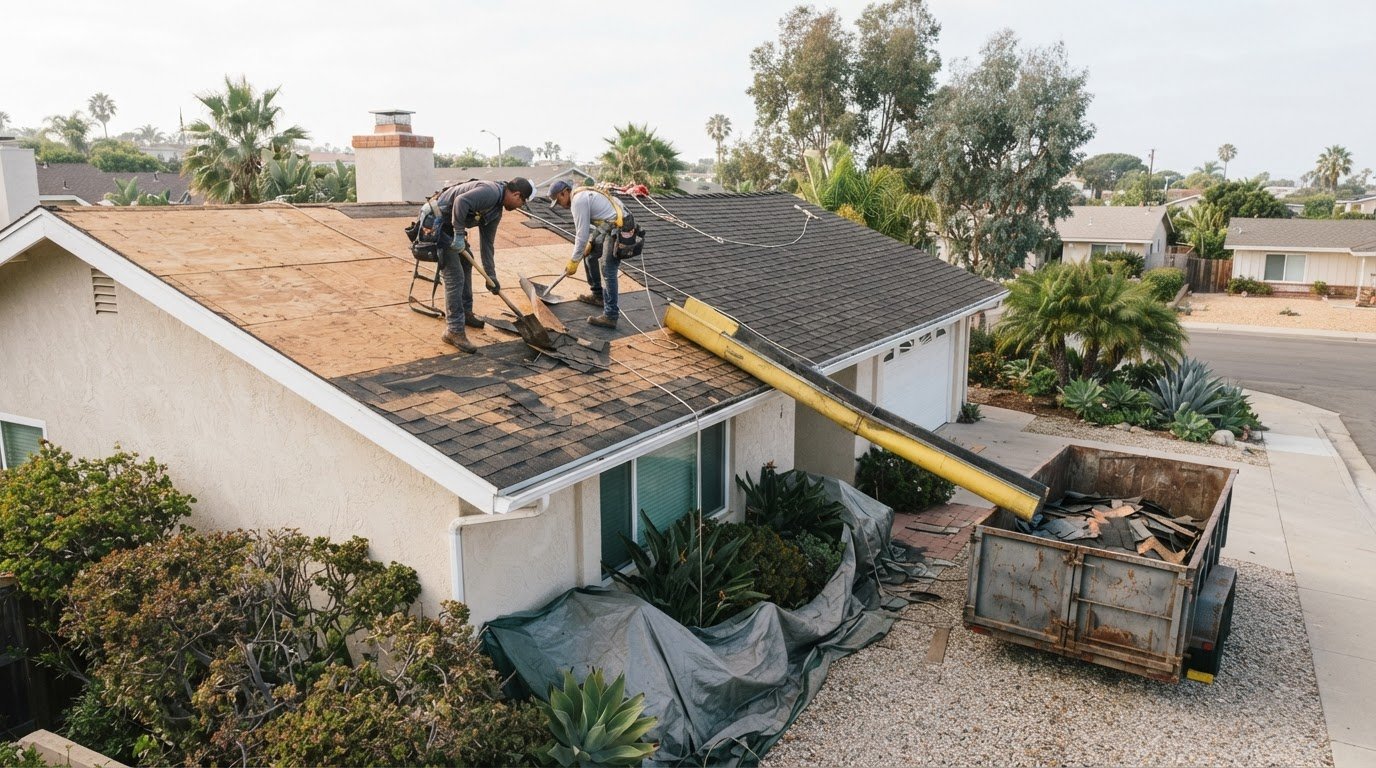
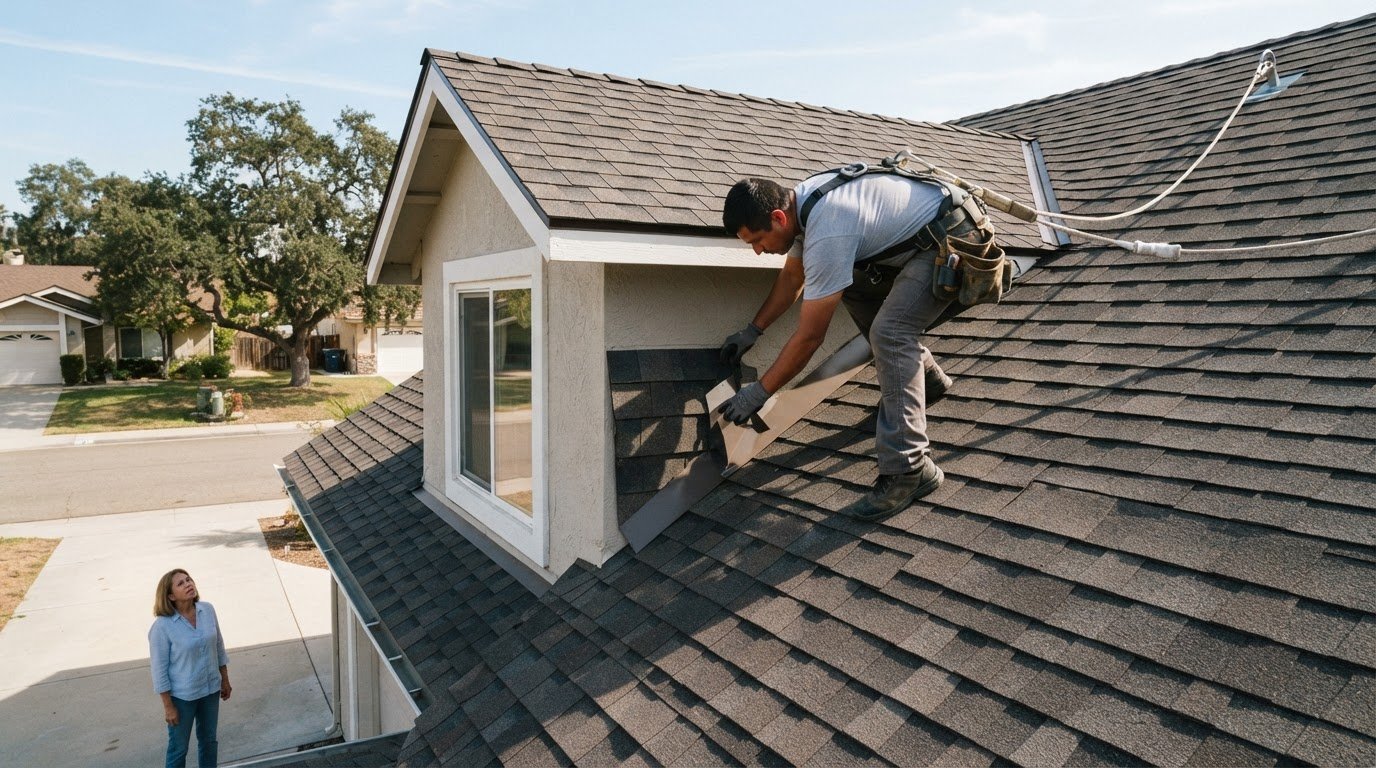
Cost recoupment is the share of a replacement investment reflected in resale, not a promise that you’ll recover the full amount. A full replacement may make sense when the roof is near the end of its life, has widespread damage, or has required repeated patches. A few cracked tiles, slipped shingles, or a localized flashing leak may instead call for a repair. The scope of the problem matters.
Replacement or Seller Credit
Replacing before listing presents buyers with a completed roof, while a seller credit leaves the work for the buyer to arrange. A credit can help with negotiation, but it won’t resolve an insurance problem if the existing roof prevents the buyer from obtaining an insurance binder. San Diego replacement planning also involves local permit requirements and applicable codes, including California Title 24 cool-roof requirements.
Repairing isolated damage can leave funds available for other sale preparations. Keep a written record of the work so you can explain the roof’s condition during buyer discussions.
Replacing Before Selling or Staying Put
The decision changes if you plan to stay rather than sell. A roof near the end of its life or showing widespread damage can raise ongoing concerns about leaks and water damage, so replacement may serve a longer-term purpose beyond resale. If you’re listing, weigh the roof’s visible condition against comparable homes nearby and the likely buyer response, or consult local real estate professionals at County Properties to see how presale improvements impact pricing in your market.
San Diego’s coastal salt and moisture, inland sun exposure, and wildfire risk can all influence roofing choices and buyer priorities. A repair may suit localized damage, while replacement addresses broader deterioration. Focus on the roof’s condition and the reason for the work, not simply the timing of a sale.
Buyer, appraiser, and inspector considerations
Buyers, appraisers, and inspectors assess a roof from different perspectives. Inspectors examine its age, material, remaining life, leaks, and failed flashing. Appraisers compare nearby sales, including homes in the same San Diego County neighborhood. Buyers may focus on visible condition and likely repair needs. These findings can shape negotiations, appraisal context, and the perceived savings of avoiding immediate work.
The National Association of Realtors identifies roofing as one of the fixes commonly requested after a home inspection. An inspector may flag a leak or failed flashing even when shingles or tiles look sound from the street. Sellers can give buyers clearer information by addressing documented defects and keeping repair records, rather than relying on appearance alone. Updates elsewhere in the home don’t establish the roof’s condition.
Roof age can also affect the transaction. In San Diego, escrow or a buyer’s lender may ask for a roof certification when a roof is 15 to 20 years old. A closing credit does not solve an insurance problem if the existing roof prevents the buyer from obtaining an insurance binder. That distinction matters: a negotiated allowance and an insurable property are separate issues.
Sellers should organize available installation and repair records, inspection findings, and warranty paperwork for buyers. New roofs may carry warranties lasting 20 to 50 years, depending on material; provide the actual warranty documents so buyers can understand the terms. A roof inspection can describe visible conditions, while records show what work has been completed. Clear documentation helps buyers assess remaining life without confusing a recent repair with full replacement.
For example, a home with a newer roof but dated paperwork presents a different picture from one with a documented repair for a localized flashing leak. Gather the roof’s material details, installation records, and known repair history. This gives buyers context for their inspection and helps appraisers distinguish documented condition from assumptions based only on the listing.
Higher Levels Roofing: Asphalt Shingle Roofing
Higher Levels Roofing installs asphalt shingle roofs for homeowners weighing replacement before a sale. If the roof needs broader work, replacement can give buyers a clearer picture of the home’s upkeep than patching alone. Choose a material that suits the home’s design and roofline, not just the listing schedule.
For homes where tile better suits the architecture, Higher Levels Roofing also installs flat concrete tile and concrete S tile roofs. Comparing roof types can help connect the project decision to the home’s appearance and concerns raised during a sale. The right scope depends on whether the roof needs repair or replacement.
For a conversation about roofing options for your home, contact Higher Levels Roofing.
Make Your Next Roof Decision With Clarity
Deciding whether a new roof increases home value in San Diego is only part of the decision. Consider what the roof needs now, how its condition may affect a sale, and whether replacement supports your plans beyond listing. Start by organizing inspection findings and repair records, then identify work that addresses the home’s actual condition.
The effect on value depends on the property, its condition, and nearby sales, so weigh potential resale appeal alongside practical benefits for the next owner. If you’re considering roof work, Higher Levels Roofing can discuss repair and replacement options for your home and selling timeline, without assuming a full replacement is always the answer.
Contact Higher Levels Roofing for roof advice and take the next step with a clearer view of your home’s needs.
Frequently Asked Questions
Does a new roof actually add value to a home in San Diego?
Yes, a new roof can increase home value in San Diego when it addresses a condition buyers might otherwise see as a drawback. For example, if two nearby listings have similar layouts but one has a visibly worn roof, buyers may favor the better-maintained property. The roof’s contribution depends on the home and market context, not a guaranteed dollar-for-dollar return.
How does a new roof affect a home appraisal?
A new roof can inform an appraisal as part of the home’s overall condition, but it doesn’t automatically add value on its own. Appraisers consider comparable sales and how the property’s features and upkeep compare with those homes. Keep installation records and material details together to give the appraiser useful context about the roof.
How much does a new roof cost?
The cost depends on the specific roofing project, including roof area, material, design complexity, and the work required to remove or prepare existing roofing. Price depends on the case and is given after a quote request; the project’s size, selected material, roof configuration, and preparation needs all affect the quote. A broad estimate may not reflect the scope of your home’s work.
How much does a new roof increase home value in San Diego?
There isn’t one fixed increase that applies to every San Diego home. The effect depends on the roof’s previous condition, the quality and appearance of the finished work, and comparable homes in the area. Replacing a roof that is a prominent concern may influence buyer interest differently from updating one that is already serviceable. Treat any estimate as context, not a promised increase in sale price.
What is the average cost to replace a roof in San Diego?
A single average can be misleading because San Diego roofs vary in size, material, layout, and installation needs. A simple roof and one with multiple slopes or complex transitions involve different scopes of work. Higher Levels Roofing provides a free estimate based on the property; roof dimensions, material, design, and preparation needs shape the quote.
What is the return on investment for a roof replacement at resale?
Roof replacement return on investment compares the project’s cost with the value reflected in resale. It can also include practical benefits, such as making the property easier for a buyer to evaluate and reducing concerns about near-term work. To assess the decision, compare the roof’s current condition with the replacement scope and your expected selling timeline, rather than judging it by resale proceeds alone.
Comments