


Licensed and Insured Roofers in Encinitas: A 2026 Homeowner’s Guide

What does a roofing license prove, and what happens if someone is injured or your property is damaged during a project? Those are fair questions when comparing licensed and insured roofers Encinitas homeowners may hire. A license and insurance serve different purposes, and neither credential alone shows whether a roofer has experience with your roof system. Look beyond a logo or a reassuring claim by understanding what each document covers and how the proposed work fits your property.
This 2026 guide explains the difference between licensing and insurance, how manufacturer certifications fit in, and which project details matter when evaluating a roofer’s experience. You’ll also learn why the roof material and scope of work should shape the conversation, whether your home has asphalt shingles, concrete or clay tile, or a flat roofing system. Higher Levels Roofing is a licensed roofing contractor serving Encinitas and the San Diego area, including La Jolla, San Marcos, and Carlsbad. The company provides residential and commercial installation, replacement, and repair. Here’s how to assess credentials with more confidence and prepare for a useful project discussion.
Table of Contents
Why licensed and insured roofers in Encinitas matter for your project
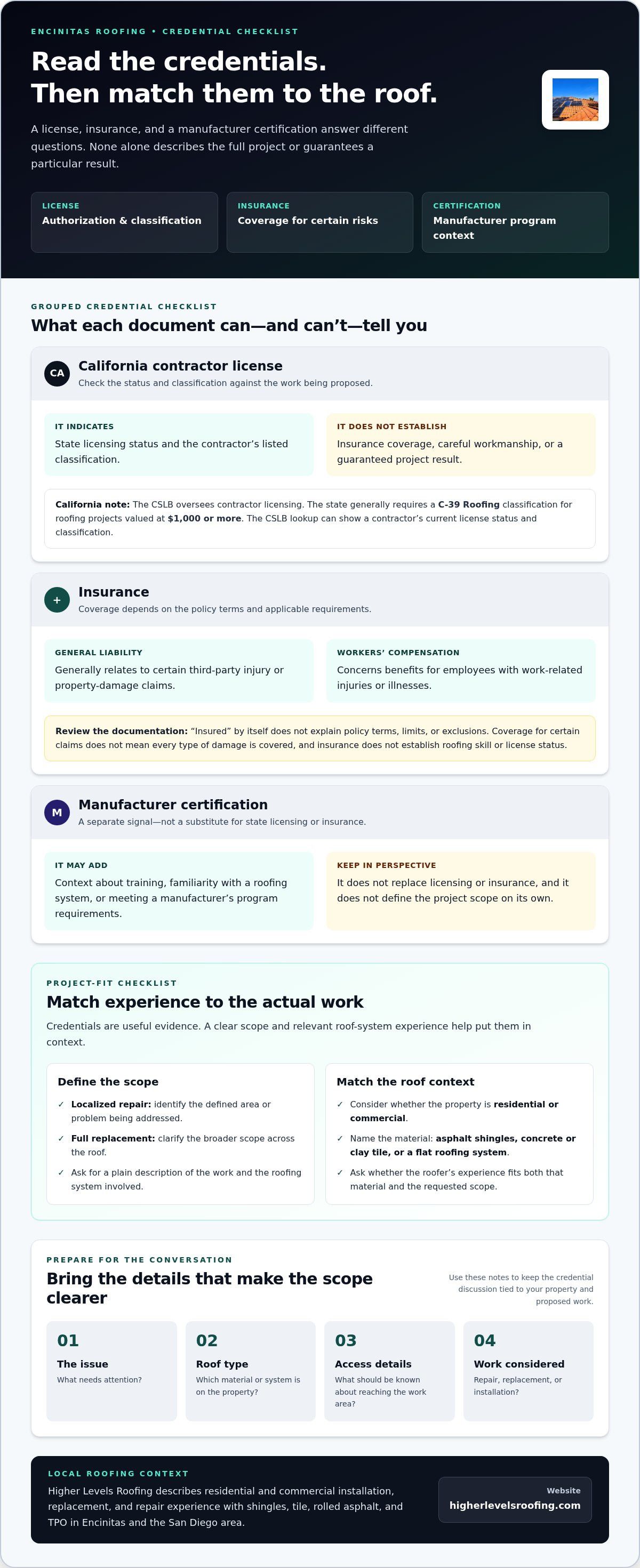
Who is responsible for planning and scoping roof work? That question matters whether you’re addressing a small leak or considering a complete replacement. A contractor’s license and insurance offer different kinds of accountability: the license relates to professional authorization, while insurance may address certain risks connected to the work, subject to the policy’s terms. Neither one, by itself, guarantees careful workmanship or a particular result.
A license speaks to a contractor’s authority to perform certain work; insurance concerns financial protection for covered risks. Keep the two separate as you review a roofing proposal. A manufacturer certification can provide added context about training or familiarity with a particular roofing system, but it doesn’t replace state licensing or insurance. Each credential answers a different question, and none explains the project scope on its own.
What a roofer’s credentials mean to an Encinitas homeowner
Credentials are one part of evaluating a roofing project. You also need a clear description of the work and communication you can follow. Before work begins, documentation can help you understand who is responsible for the agreed scope and what the proposal covers. That distinction is useful when comparing a focused repair with broader roof work. For homeowners searching “licensed and insured roofers Encinitas,” the goal is not simply to collect credentials; it’s to understand what each document does and how it relates to the job.
Think of credentials as useful evidence, not a promise. A license doesn’t explain every detail of a proposed repair, and insurance doesn’t establish that a specific material or installation approach is right for your roof. Manufacturer certifications can add context, especially when a project involves a particular roofing system. The Roof overview offers general background on roof purposes and materials, but your project still needs to be considered on its own terms.
Why the roof work itself matters
A localized repair addresses a defined area or problem; a full replacement involves a broader scope across the roof. These are different assignments, so experience with one may not fully represent experience with the other. Ask for the proposed scope to be described plainly, including the area being addressed and the roofing system involved.
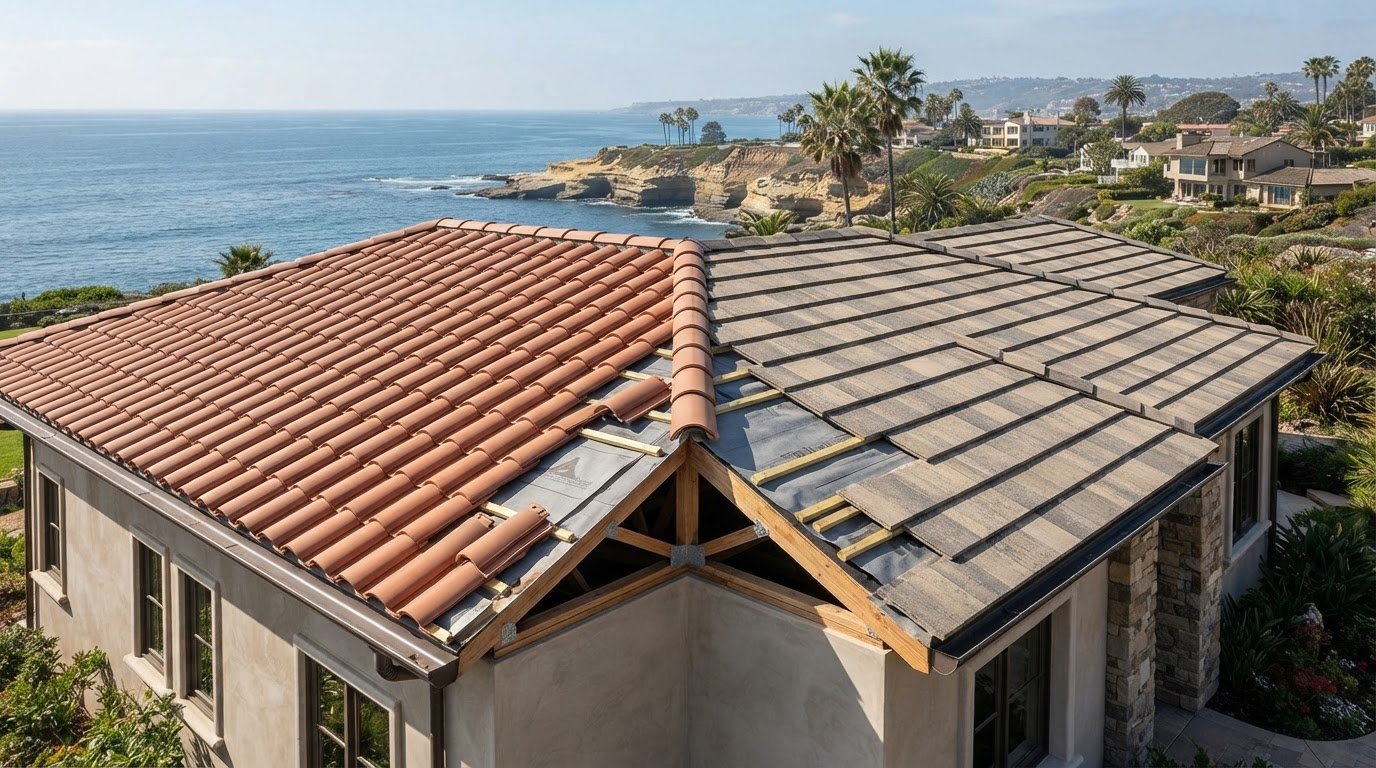
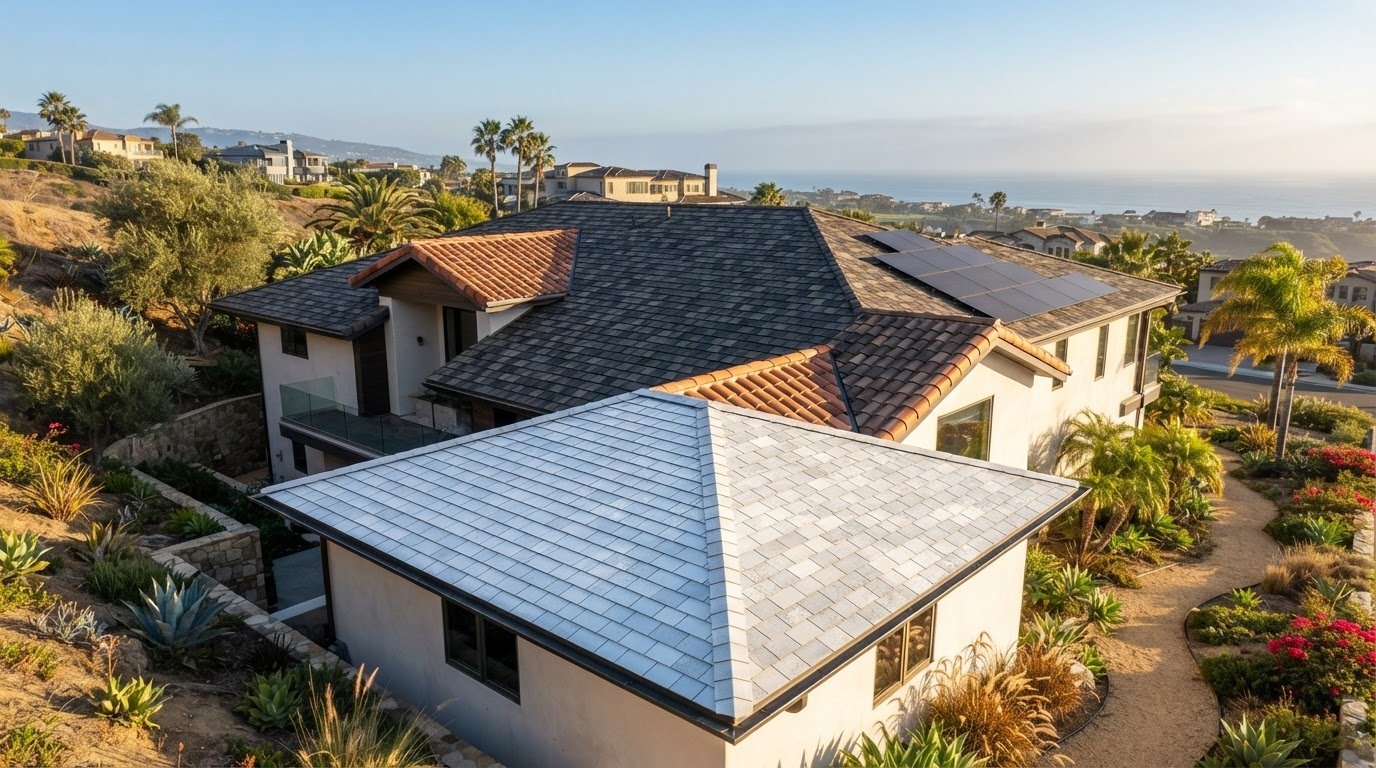
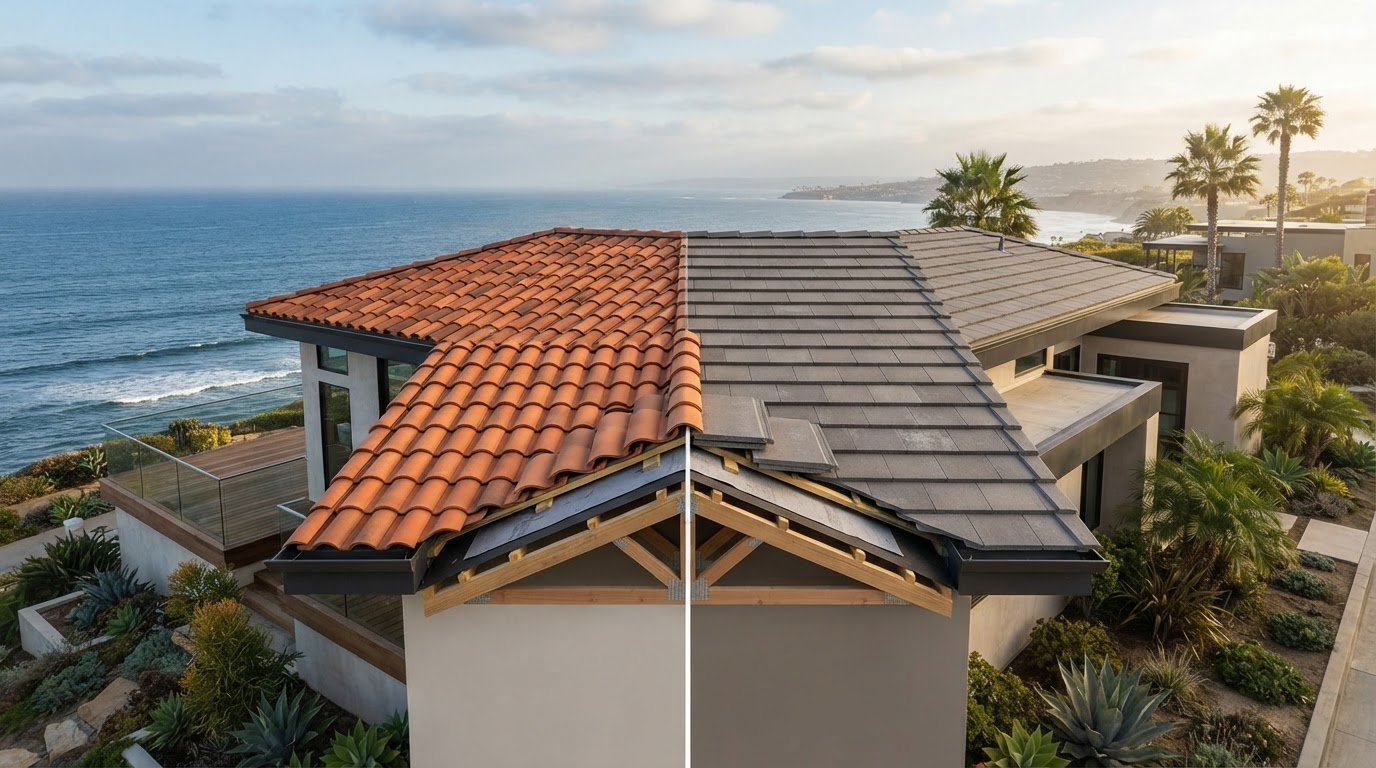
Property type matters, too. Residential and commercial projects can involve different roof layouts, materials, and scopes of work. A home with asphalt shingles, concrete or clay tile, or a flat roofing system calls for a discussion grounded in that material and the requested work. Higher Levels Roofing is a licensed contractor serving Encinitas and the San Diego area, with residential and commercial installation, replacement, and repair experience across these roofing systems. Matching the conversation to your roof is a practical first step toward an informed project decision.
California roofer licenses, insurance, and certifications: what each tells you
These credentials can appear together in a proposal, but they answer different questions. A state-issued contractor license relates to authorization to perform regulated contracting work. Insurance concerns coverage for certain risks, subject to policy terms. A manufacturer certification may indicate that a contractor meets a particular company’s program requirements. For homeowners searching for licensed and insured roofers Encinitas, separating these signals helps clarify what the paperwork does and what it does not promise.
What a California contractor license indicates
The Contractors State License Board (CSLB) oversees contractor licensing in California. The state generally requires a C-39 Roofing classification for roofing projects valued at $1,000 or more. Use the California Contractors State License Board (CSLB) website to look up a contractor’s current license status and classification, then compare the record with the work being proposed. A license is a credential, not a guarantee of workmanship or a specific project result.
How insurance differs from a license or certification
Insurance is separate from state licensing. General liability coverage generally relates to certain third-party injury or property-damage claims, while workers’ compensation concerns benefits for employees with work-related injuries or illnesses. The exact protections depend on the policy and applicable requirements. Because coverage descriptions should be accurate and current, documentation matters. A broad statement that a contractor is “insured” doesn’t explain the policy’s terms, limits, or exclusions.
Use this comparison as a starting point, not a substitute for reviewing the underlying records:
Manufacturer programs can offer useful context, especially when a project involves a roofing system tied to that manufacturer. Requirements and benefits vary by program. Manufacturer certification does not replace state licensing. Treat it as an additional credential, not as proof of insurance or a substitute for checking the CSLB record.
For a clearer project discussion, compare the proposed scope with the contractor’s licensing record and review current insurance documentation separately. Higher Levels Roofing is a licensed roofing contractor serving Encinitas and the San Diego area. Explore Higher Levels Roofing’s local roofing work in the context of the roof system and project scope you’re considering.
Match the roofer’s credentials to your Encinitas roof project
A credential is most useful when you connect it to the work being proposed. Before comparing contractors, describe the roof concern or planned project as clearly as you can: what you’ve noticed, what kind of roof you have, and whether you’re considering a repair, replacement, or new installation. This gives the conversation a practical focus. A license or insurance document alone can’t tell you whether the proposed scope fits your roof.
Repair, replacement, and installation are different scopes
A repair usually addresses a specific concern, while replacement covers a broader portion or the full roofing system. A new installation has its own scope, which may involve selecting and installing a roof system for a project. You don’t need to diagnose a leak yourself. Note where you’ve seen a stain or other visible concern and share what work you’re considering. For replacement projects, the San Diego roof replacement guide offers additional context.
Use the project scope to shape your discussion with a roofer:
For a repair: Describe the visible issue and its location, and ask how the proposed work addresses that specific area.
For a replacement: Clarify how much of the roof is included and which existing materials and system the scope concerns.
For a new installation: Identify the building type, planned roof system, and work being proposed so relevant experience can be discussed.
This approach helps you assess whether a contractor’s experience relates to the actual assignment, not just roofing in general. The broader San Diego County roofing contractor hiring checklist can help you organize other points to consider as you evaluate a project.
Residential and commercial roof systems need relevant experience
Residential projects may involve asphalt shingles or concrete and clay tile, while commercial buildings can include low-slope systems such as TPO or rolled asphalt torch down. These examples aren’t interchangeable: the material and building type affect what experience is relevant to discuss. If insurance terminology is part of your review, the California Department of Insurance (CDI) provides general consumer information about insurance. Policy documents remain the source for the terms of a particular coverage.
Higher Levels Roofing serves Encinitas and the San Diego area with residential and commercial roof repair, replacement, and installation. Its work with shingles, concrete and clay tile, rolled asphalt torch down, and TPO lets homeowners and property managers frame the conversation around their roof system and project scope. That’s a more useful starting point than treating a credential as a stand-in for project-specific experience.
Encinitas roofing considerations to discuss before work begins
A useful roofing conversation starts with details about your property, not assumptions about what the roof needs. For a home or commercial building in Encinitas, prepare a short description of the concern, roof type, access, and work you’re considering. That context helps define whether the discussion is about a repair, replacement, or installation and keeps the proposed scope grounded in the project.
Prepare useful details about the property and roof
Write down what you’ve noticed and when it first appeared. A ceiling mark, visible damage from the ground, or a recurring concern can help describe the issue without requiring you to climb onto the roof. If you know the roofing material or have records of previous work, keep that information handy. Photos taken from a safe location can also help communicate what you’ve observed.
Before an initial discussion, use this simple sequence:
Note the concern. Record its location and when you first noticed it, without trying to inspect a difficult or unsafe area yourself.
Identify the roof type. Share what you know, such as shingles, concrete or clay tile, or a low-slope system. If you’re unsure, say so.
Describe access. Mention practical details about reaching the property and the areas relevant to the work, including any access limitations.
State your desired scope. Explain whether you’re seeking an assessment of a specific issue, considering replacement, or planning a new installation.
The clearer your description of the roof and requested scope, the more useful the roofing consultation can be. This preparation doesn’t replace a professional evaluation; it helps focus the conversation and gives you a clearer basis for discussing the work.
Understand the proposed scope and next steps
As the project takes shape, look for a clear explanation of what the work includes and where its boundaries are. For a repair, that means understanding which area or concern the work addresses. For a replacement or installation, clarify which portions of the roof and which tasks are included. A defined scope makes it easier to compare the proposal with your needs and understand the next steps.
Material choices should relate to the existing roof system and the property’s requirements, rather than being treated as a stand-alone style decision. Asphalt shingles, tile, rolled asphalt torch down, and TPO are different roofing categories, each relevant to particular project discussions. For an overview of material types and characteristics, explore this roofing materials guide.
Higher Levels Roofing serves Encinitas and the San Diego area with residential and commercial roof repair, replacement, and installation. If you’re ready to turn your notes into a project conversation, discuss your Encinitas roofing project with Higher Levels Roofing.
Work with Higher Levels Roofing in Encinitas
A roofing project is easier to discuss when the contractor’s services relate to the roof you have and the work you need. Higher Levels Roofing is a licensed roofing contractor serving Encinitas and the San Diego area, including La Jolla, San Marcos, and Carlsbad. The company works on residential and commercial roofs, providing repair, replacement, and installation across several roofing systems. Bring a specific concern or project goal into the conversation to keep it focused on your property.
Roofing services for Encinitas homes and businesses
For homes, project needs may involve asphalt shingles, flat concrete tile, concrete S tile, or clay tile. Commercial and other low-slope roofing scopes may involve rolled asphalt torch down or TPO. The right discussion starts with your property, existing roof system, and intended work, rather than assuming one material or scope suits every building. Higher Levels Roofing provides roof repairs as well as installation and replacement.
Before discussing a project, it can help to gather a few practical details:
The property type, such as a home or commercial building.
The roof material, if you know it, and any available records of previous work.
The concern you’ve observed or the work you’re considering, such as a focused repair or a broader replacement.
Those details give the conversation a useful starting point. A repair request can focus on a specific concern, while replacement or installation calls for a broader discussion of the roof system and work involved. If you’re comparing licensed and insured roofers Encinitas, keep licensing and insurance as separate considerations, then weigh the contractor’s services and experience against your project scope. A credential should never stand in for a clear understanding of the work.
Take the next step with a local roofing contractor
You don’t need to know every technical detail before getting started. Describe the property, share what you know about the roof system, and explain whether you’re looking into repair, replacement, or installation. If you’re unsure about the material or the extent of the work, simply describe what you’ve observed. A straightforward conversation can help organize the next project questions.
Higher Levels Roofing serves Encinitas homeowners and businesses with roof repair, replacement, and installation across shingles, concrete and clay tile, rolled asphalt torch down, and TPO. Share the details you have so the discussion can begin with the needs of your roof and property in view. Discuss your Encinitas roofing project.
Make your next roofing decision with confidence
You don’t need every technical answer before taking the next step. Start with what you know: the concern you’ve noticed, the type of property, and any details about the roof or work you’re considering. A focused conversation can help turn those observations into a clearer project discussion, without needing to have everything figured out in advance.
If you’re still weighing licensed and insured roofers Encinitas homeowners can work with, focus on how the proposed scope relates to your property and roofing needs. Higher Levels Roofing serves Encinitas and the wider San Diego area with residential and commercial roofing work. Share the details you have and let the conversation begin with your project.
Discuss your Encinitas roofing project with Higher Levels Roofing. A thoughtful next step can make the path ahead feel more manageable.
Frequently Asked Questions
How can I verify a roofer’s license in Encinitas?
Use the California Contractors State License Board (CSLB) license lookup to review the contractor’s current record. Compare the listed business name and license details with the name on the proposal, and check the status and classification against the work being discussed. A directory listing or company website can be a starting point, but the CSLB record is the place to verify California licensing information. This is a practical first step when considering licensed and insured roofers Encinitas.
What is the difference between a roofing license and insurance?
A roofing license concerns a contractor’s state licensing status, while insurance is separate financial protection defined by policy terms. General liability and workers’ compensation are distinct coverage categories, and neither a license nor a manufacturer certification replaces insurance. When reviewing insurance documents, check whose name appears on them and the policy period, then make sure you understand which coverage is being described. Don’t assume one credential answers questions about the others.
Does a roofing contractor in California need workers’ compensation insurance?
Whether workers’ compensation coverage is required can depend on the contractor’s workforce and current California rules, so avoid relying on a blanket assumption. It’s also different from general liability coverage, which addresses a separate category of risk. For a specific situation, consult current guidance from California’s relevant official agencies and review any documentation provided. A general statement about insurance should not be treated as proof of a particular policy or coverage status.
Does a GAF certification mean a roofer is licensed and insured?
No. A GAF certification relates to a manufacturer’s contractor program; it doesn’t establish a roofer’s California license status or insurance coverage. Certification may offer context about a contractor’s relationship with that manufacturer, but it isn’t a complete credential check. If a proposal mentions a GAF certification, consider it separately from the contractor’s CSLB record and insurance documents. Each tells you something different, and none alone guarantees the quality or outcome of the work.
What should I look for in a roofing estimate from an Encinitas contractor?
Look for a proposal that makes the intended work easy to understand. It should identify whether the project concerns a repair or replacement, describe the roof area or system involved, and name the material being considered when relevant. For example, a proposal for a tile repair should make clear which work relates to the existing tile roof. If the boundaries or wording are unclear, ask for the scope to be explained before you decide.
Are roofing licenses and manufacturer certifications the same thing?
No. A California contractor license is a state-level credential, while a manufacturer certification belongs to a separate program with its own criteria. They’re not interchangeable: one doesn’t prove the other. If both appear in a contractor’s materials, note what each refers to and review them independently. This helps prevent a manufacturer’s logo or program description from being mistaken for a state credential, insurance document, or assurance about a particular project.
Can a licensed roofer handle both residential and commercial roofing?
A license by itself doesn’t describe a contractor’s complete service range or project experience. Higher Levels Roofing provides residential and commercial installation, replacement, and repair, including work with asphalt shingles, concrete and clay tile, rolled asphalt torch down, and TPO. To make a project discussion relevant, describe whether the property is a home or commercial building, what roof system is present if known, and whether you’re considering a repair or broader work.
Comments