


Is a New Roof a Good Investment in San Diego? 2026 ROI Guide

Updated: Sep 28
A roof replacement in Southern California is no longer just routine property maintenance. In a shifting housing market, it serves as an active financial defense against rising utility bills and statewide insurance challenges. If you are asking, is a new roof a good investment in San Diego, the answer lies in how modern materials protect both your hard-earned equity and daily peace of mind.
It's completely normal to worry about overcapitalizing on an exterior renovation. Between steep summer cooling costs under the relentless sun, confusing decisions between concrete tile and architectural shingles, and the genuine anxiety of insurance non-renewal notices due to aging materials, committing to a major project feels daunting.
This guide breaks down the exact financial return, energy savings, and property value gains of a roof replacement. You'll discover how a modern installation lowers your cooling load under California Title 24 standards, secures your home insurance policy, and recoups dependable equity across our unique coastal and inland microclimates.
Key takeaways
Discover why is a new roof a good investment in San Diego by exploring dependable equity recoup and preventing steep price cuts during buyer inspections.
Matching the right material, from architectural shingles to concrete or clay tile, to your microclimate protects against coastal marine dampness and inland heat.
Meeting California Title 24 cool roof standards reduces daily heat absorption to keep your home cooler and lower summer power bills.
Upgrading to a certified Class A fire-rated roofing assembly provides critical wildfire defense while helping you avoid sudden homeowners insurance non-renewal notices.
Prioritizing durable underlayment and verified local craftsmanship guarantees that your roof's waterproof foundation lasts as long as the exterior finish.
Table of Contents
Evaluating ROI & Home Value: Does a New Roof Pay Off in San Diego?
San Diego Climate Factors: Coastal Moisture, Sun, and Energy Efficiency
Material Comparison: Which Roofing Type Delivers the Strongest Return?
Beyond Equity: Homeowners Insurance, Title 24, and Wildfire Resilience
Maximizing Your Roofing Investment: Selecting the Right Local Contractor
Evaluating ROI & Home Value: Does a New Roof Pay Off in San Diego?
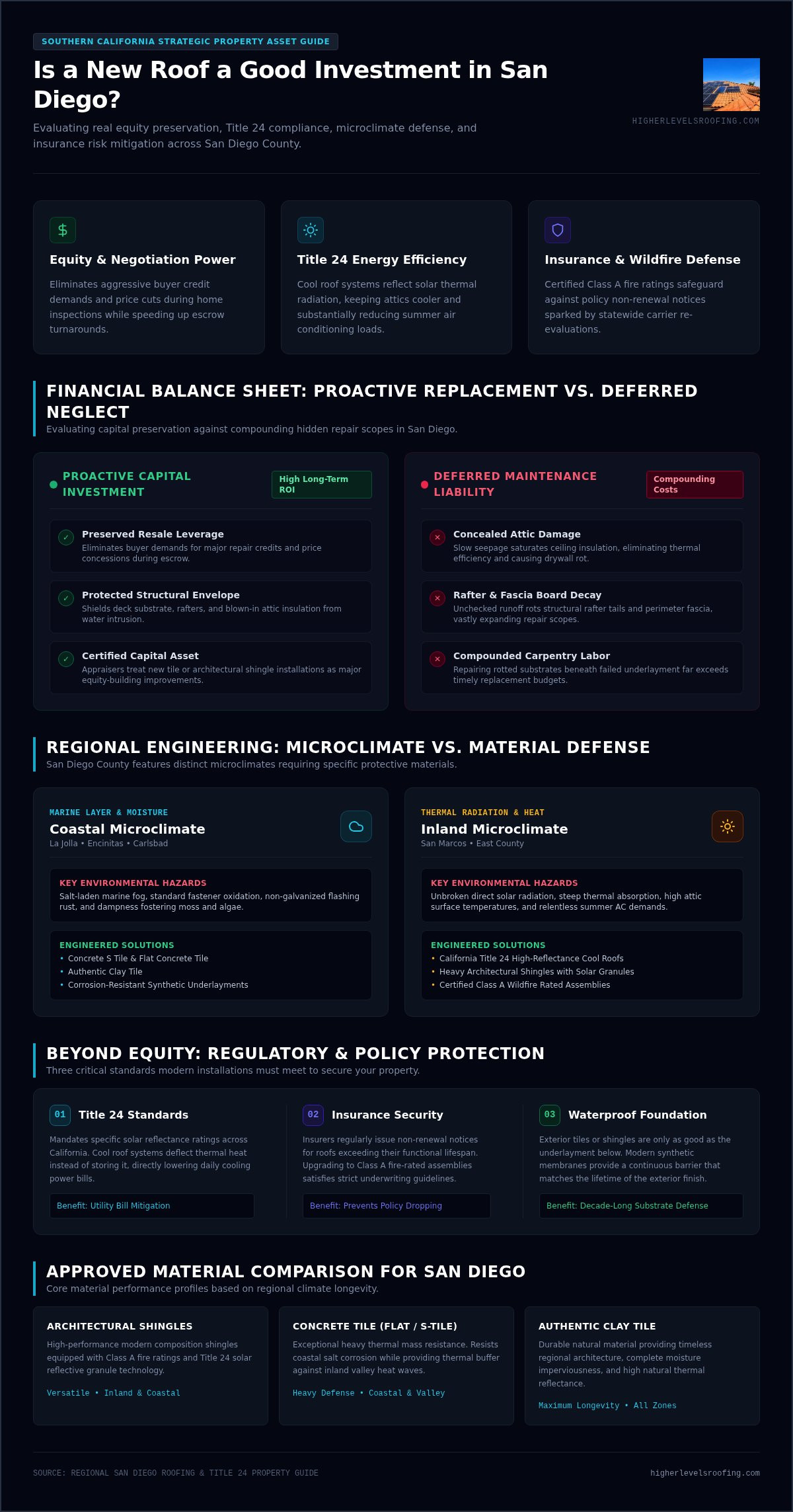
Home improvement projects rarely offer equal financial returns. In Southern California, a roof replacement consistently ranks among the highest-yield capital investments an owner can undertake. When determining whether is a new roof a good investment in San Diego, evaluate your balance sheet beyond simple curb appeal. Modern buyers in competitive coastal and inland neighborhoods look closely at mechanical and structural integrity. If a home inspection uncovers a roof approaching the end of its functional life, buyers routinely request substantial price reductions or repair credits before closing.
A proactive replacement defends existing equity against moisture intrusion, deck deterioration, and structural framing decay. Pairing durable materials with a certified cool roof system preserves the building envelope while immediately modernizing the asset. To explore how this process unfolds from planning through completion, check out The Homeowner’s Guide to Roof Replacement in San Diego.
Resale Value and Appraised Equity Gains
A documented roof replacement can help prospective buyers understand the roof's condition and warranty terms, but it does not guarantee a specific resale return, faster escrow or the elimination of inspection concerns. Keep the contract, product details, permits where applicable and warranty documents. Evaluate the roof's condition and your ownership plans rather than relying on a promised return on investment.
The Financial Risk of Postponing Replacement
Delaying a necessary upgrade often turns minor surface wear into severe financial liability. Patching leaks repeatedly bleeds household cash reserves without contributing a single dollar to overall home equity. Over multiple wet seasons, deferred maintenance leads to expensive structural complications:
Concealed Attic Damage: Slow water leaks saturate blown-in insulation, diminishing thermal performance and causing unseen drywall rot above ceilings.
Rafter and Fascia Decay: Unchecked runoff rots rafter tails and perimeter fascia boards, significantly expanding the framing repair scope during a future tear-off.
Compounded Labor Scope: Addressing structural substrate rot beneath degraded underlayment demands intensive carpentry labor, far exceeding the work of a timely, planned replacement.
Confirming that is a new roof a good investment in San Diego comes down to wealth preservation. Replacing an expired system protects structural equity, commands stronger buyer interest, and eliminates the cycle of reactive repair costs.
San Diego Climate Factors: Coastal Moisture, Sun, and Energy Efficiency
San Diego County does not share a single uniform climate. A homeowner overlooking the ocean in La Jolla encounters radically different weathering patterns than an owner nestled inland in San Marcos. Because localized microclimates dictate material wear, understanding regional exposure clarifies why is a new roof a good investment in San Diego. Selecting materials engineered specifically for your neighborhood prevents premature system degradation and delivers tangible, everyday energy savings.
California Title 24 standards now mandate strict solar reflectance ratings across the state. Installing high-performance products certified as Class A fire-rated materials satisfies strict regional building codes while lowering attic surface heat. When building assemblies reflect thermal radiation rather than absorbing it, your cooling bills drop across long, sunny summers.
Coastal Challenges in La Jolla, Encinitas, and Carlsbad
Coastal marine layers deliver dense morning humidity, salt-laden sea air, and persistent dampness. Standard metal fasteners and non-galvanized flashing rapidly oxidize in these oceanfront zones. In addition, moisture fosters moss and algae growth on shaded roof slopes. Flat concrete tile, concrete S tile, and clay tile paired with specialized synthetic underlayments resist this coastal corrosion, preventing hidden water infiltration beneath exterior surfaces.
Inland Solar Exposure in San Marcos and East County
Travel inland, and the primary threat shifts from damp salt fog to intense, unbroken solar radiation. Relentless ultraviolet exposure bakes standard roofing materials, which leads to distinct performance issues:
Asphalt Binder Oxidation: Sustained heat strips natural oils from shingles, speeding up granule loss and curling edges.
Thermal Expansion Fatigue: Wide temperature swings between blazing daytime heat and cool evening air cause expansion cracking along flat deck membranes.
Attic Heat Accumulation: High attic temperatures radiate directly into living spaces, forcing air conditioning units into constant operation.
Modern cool roof architectural shingles and reflective TPO membranes bounce infrared rays away from your home. This thermal barrier reduces mechanical cooling strain and protects indoor comfort year-round. If you want to determine which protective material matches your neighborhood's microclimate, consult with Higher Levels Roofing for tailored, local guidance.
Ultimately, evaluating whether is a new roof a good investment in San Diego requires weighing these distinct microclimatic stressors. When you pair verified craftsmanship with materials tailored to your specific zone, you secure decades of dependable weather protection.
Material Comparison: Which Roofing Type Delivers the Strongest Return?
Every home presents distinct architectural demands, and selecting the right material directly dictates your total return on investment. According to regional data from the annual Cost vs. Value Report, upgrading an exterior envelope remains one of the most reliable ways to recover project costs upon resale. For a comprehensive overview of performance attributes, explore Types of Roofing Materials: A Homeowner’s Guide. Aligning material strengths with your property goals is the key to proving whether is a new roof a good investment in San Diego.
Asphalt Shingles: Balanced Upfront Cost and Reliable Performance
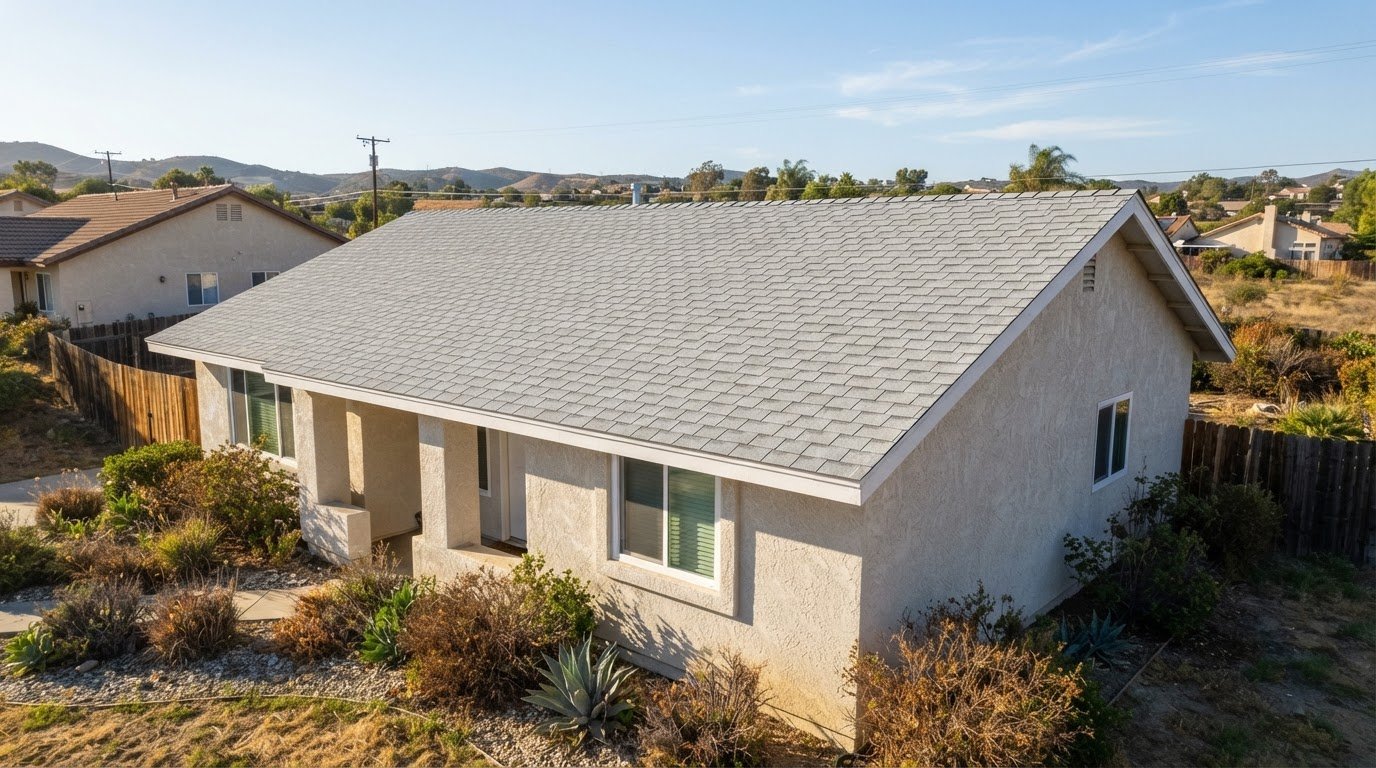
Architectural laminate asphalt shingles remain a favorite for single-family residences across the county. Their multi-layered construction delivers reliable wind resistance and rain deflection without overburdening your budget. Because shingles are lightweight, they avoid structural rafter reinforcement. Broad aesthetic palettes allow you to complement existing exterior paint, driving immediate neighborhood curb appeal.
Clay and Concrete Tile: Long-Term Durability and Architectural Elegance
For Spanish, Mediterranean, and Mission Revival architecture, tile systems deliver undeniable character and lasting protection. Read our deep dive in The Ultimate Guide to Roof Tiles. Concrete flat and S-tile profiles offer non-combustible durability and decades of resilience against coastal salt fog. Authentic clay tile handles punishing inland sun exposure, creating natural thermal airflow channels that keep living spaces temperate.
Low-Slope Systems: Torch Down and TPO Membranes
Flat and low-slope surfaces, such as home additions, detached garages, or mid-century modern designs, require specialized watertight engineering rather than standard sloped shingles:
Rolled Asphalt Torch Down Roofing: Layers of modified bitumen heat-fused directly to the roof substrate create a durable, seamless shield against standing rainwater.
TPO Single-Ply Membranes: A brilliant white thermoplastic polyolefin membrane heat-welds along the seams, reflecting heavy solar radiation and providing outstanding commercial and residential energy performance.
Deciding whether is a new roof a good investment in San Diego ultimately hinges on pairing your home's roof pitch with verified materials that maximize longevity, architectural harmony, and everyday performance.
Beyond Equity: Homeowners Insurance, Title 24, and Wildfire Resilience
Homeowners across Southern California face an increasingly strict property insurance market. Carrier policies have tightened significantly, and carriers frequently issue non-renewal notices to properties with roofs nearing twenty years of age. Underwriters now deploy aerial photography and high-resolution drone inspections to spot granular loss, cracked tiles, and curled edges. Because of these underwriting pressures, determining whether is a new roof a good investment in San Diego is directly tied to keeping your home insurable and avoiding forced-placement insurance policies.
A certified, code-compliant replacement provides physical proof of structural integrity. Providing your carrier with an official roof replacement certificate can prevent unexpected cancellation notices and helps qualify your property for standard coverage rates rather than expensive contingency pools.
Navigating San Diego Homeowners Insurance Requirements
Major carriers look for verified system reliability before renewing residential policies, especially near canyon rims and wildland-urban interface boundaries. Upgrading to a Class A fire-rated assembly removes an immediate underwriting red flag. Replacing an aged roof also helps owners eliminate sky-high mandatory deductibles tied to water damage, giving you financial predictability when heavy winter storms blow through the region.
Title 24 Energy Code Compliance and Attic Health
Building codes have evolved to treat a roof as an active thermal defense rather than a passive layer of material. State regulations set strict benchmarks for solar reflectance and thermal emittance, making full code compliance vital during a complete tear-off:
Ember-Resistant Ventilation: Upgraded intake and ridge vents feature specialized interior baffling that blocks wind-driven sparks during Santa Ana wind events while allowing natural heat ventilation.
Balanced Substrate Airflow: Proper airflow ratios eliminate hot, trapped attic air that cooks deck plywood and bakes underlayment from below.
Title 24 Solar Reflectance: Certified cool surfaces bounce back solar radiation, keeping attic spaces significantly cooler during inland heat waves.
A new roof protects your physical safety against wildfires while defending your household balance sheet from sudden policy cancellations. To review your roof's condition and secure documented compliance for your insurance provider, schedule an inspection with Higher Levels Roofing.
When you consider policy protection alongside everyday wildfire safety, it becomes clear that is a new roof a good investment in San Diego. It shields your equity, secures your insurance coverage, and brings vital structural peace of mind.
Maximizing Your Roofing Investment: Selecting the Right Local Contractor
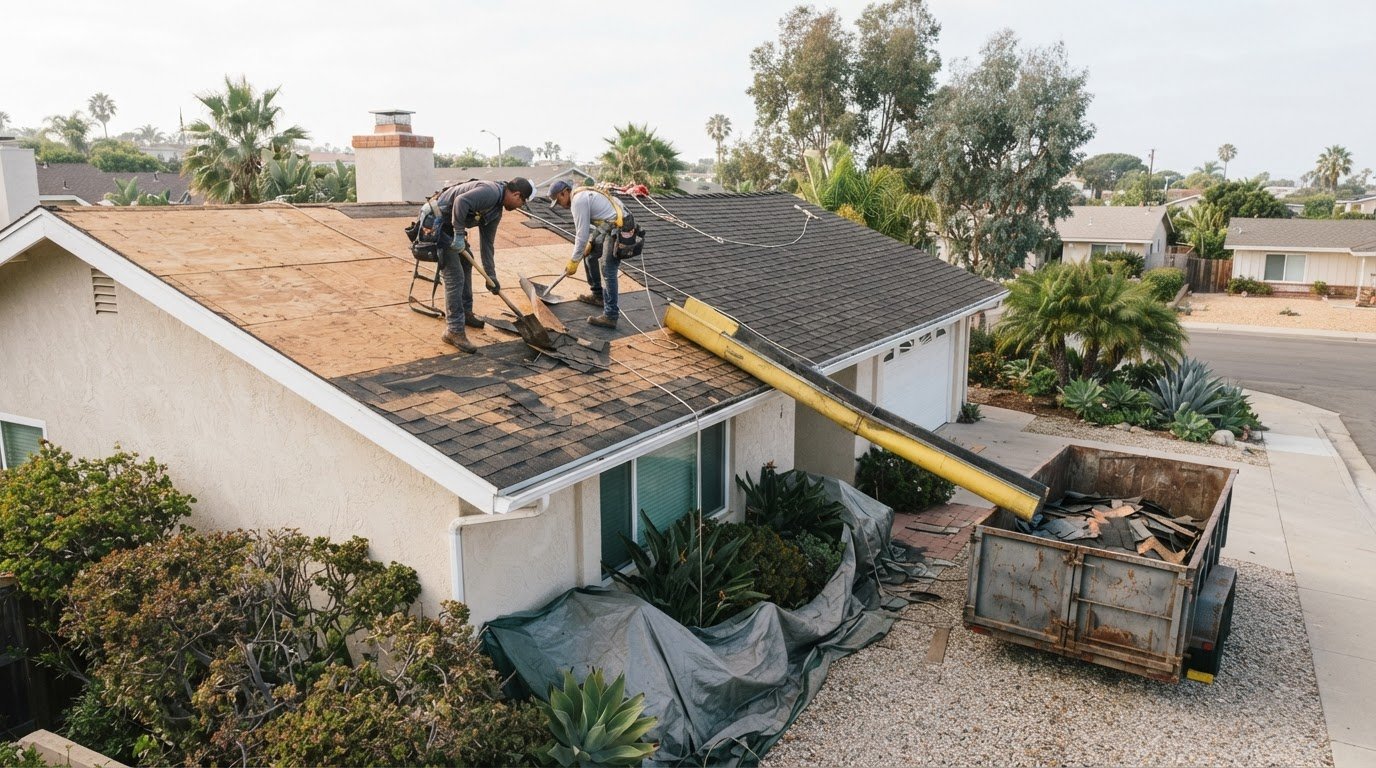
Top-tier materials only deliver their promised lifespan when installed with exacting precision. Substandard nailing patterns, rushed flashing details, or poorly sealed valleys will compromise premium tiles or architectural shingles long before their natural expiration date. To make sure that is a new roof a good investment in San Diego on your property, vet the crew performing the work as thoroughly as the materials you select. For a practical evaluation framework, consult The Ultimate San Diego County Roofing Contractor Hiring Checklist.
A comprehensive written proposal establishes total transparency before any demolition begins. Insist on contracts that itemize underlayment grades, flashing metals, ventilation modifications, and cleanup protocols. Clear project scopes eliminate unexpected mid-project change orders, keeping your budget intact and your project on schedule.
Verifying Contractor Credentials and Local Experience
Protect your household by confirming credentials before signing an agreement. Take these vital validation steps:
CSLB License Verification: Check active status with the California Contractors State License Board to ensure the contractor carries valid roofing credentials and clear bond standing.
Comprehensive Insurance Coverage: Confirm current general liability and workers' compensation coverage to protect yourself from liability during on-site labor.
Local Regional Portfolio: Review installations completed specifically in San Diego, Carlsbad, or San Marcos to verify firsthand experience with coastal marine layers and inland sun.
Workmanship Warranties: Require clear manufacturer warranties paired with written workmanship guarantees from the installation team.
The Higher Levels Roofing Approach to Asset Protection
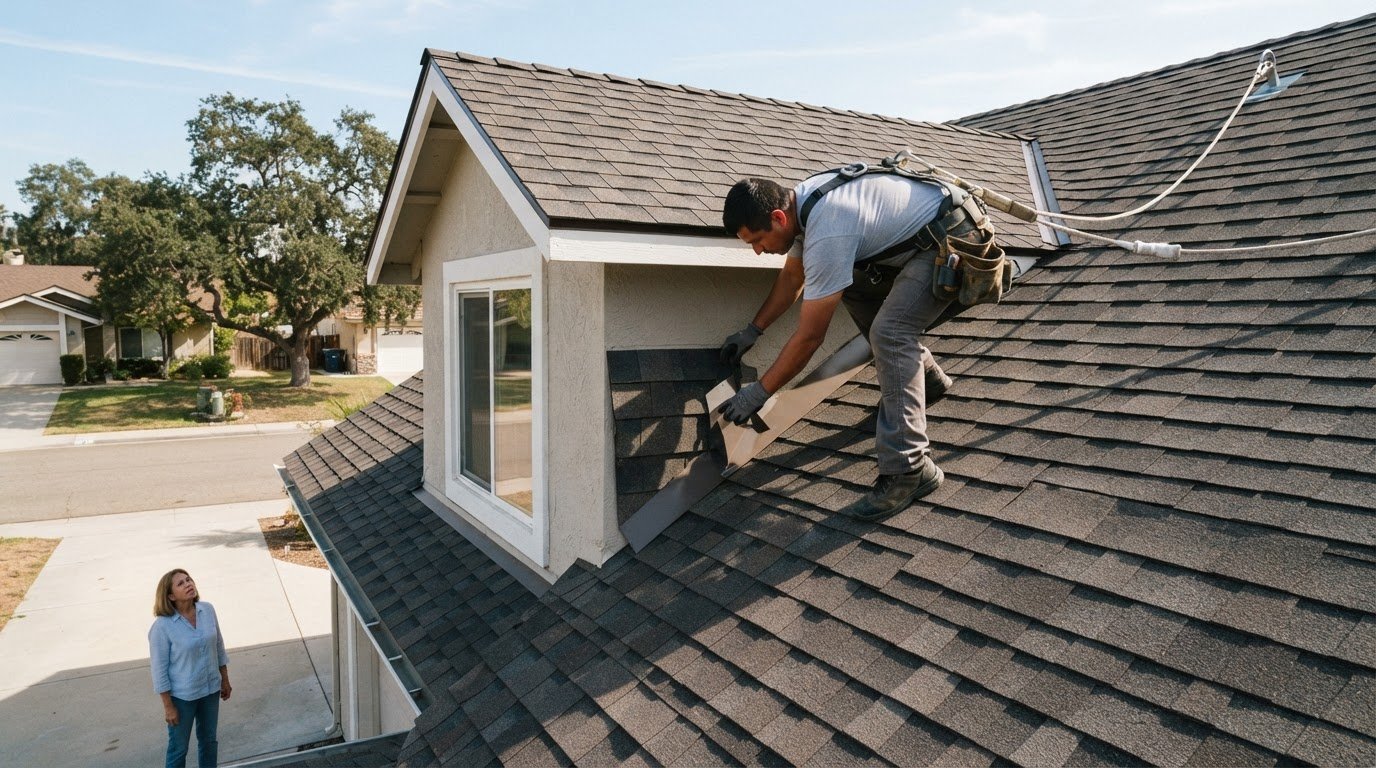
Superior installations begin beneath the surface. Higher Levels Roofing conducts thorough site evaluations to identify concealed dry rot, deteriorated perimeter flashing, and inadequate attic ventilation before installing new materials. Every recommendation is tailored to your microclimate and architectural goals, from fire-resistant concrete S-tile to cool roof architectural shingles. When you are ready to secure your property equity, schedule your consultation with Higher Levels Roofing today.
Realizing why is a new roof a good investment in San Diego comes down to accountability. By partnering with a licensed, experienced local specialist, you ensure that every shingle, tile, and flashing detail preserves your home value for decades to come.
Protecting Your Property Value and Long-Term Peace of Mind
When deciding whether is a new roof a good investment in San Diego, the true return extends far beyond immediate curb appeal. A modern replacement acts as an active financial safeguard. It shields your home against coastal moisture decay, meets mandatory California Title 24 cool roof guidelines to lower energy bills, and keeps your property securely insurable in a challenging carrier market.
Every microclimate across our region demands focused craftsmanship. As a licensed local contractor in San Diego County, Higher Levels Roofing provides specialized solutions engineered for coastal salt air and intense inland heat. Whether your residence requires architectural shingles, durable concrete or clay tile, or energy-efficient TPO, our team ensures your system stands firm for decades. Schedule your expert San Diego roof inspection with Higher Levels Roofing today to protect your equity and enjoy lasting peace of mind.
Frequently Asked Questions
How much return on investment can I expect from a new roof in San Diego?
Homeowners in Southern California typically recoup a substantial percentage of their replacement costs upon resale, often exceeding national averages due to strong local buyer demand. When evaluating whether is a new roof a good investment in San Diego, remember that buyers actively prioritize move-in-ready properties with certified structural integrity. A fresh roof eliminates requests for steep repair credits during escrow, protecting your equity and supporting higher appraisal values.
Will a new roof lower my summer cooling bills under California Title 24?
Yes, installing a compliant cool roof directly reduces your summer power usage. Under California Title 24 guidelines, certified shingles, tiles, and flat membranes must meet strict solar reflectance and thermal emittance standards. By reflecting radiant solar energy instead of absorbing heat directly into your attic space, these materials lower attic surface temperatures. This keeps your home cooler and substantially eases daily air conditioning runtime during inland heat waves.
Can a new roof prevent homeowners insurance cancellation in San Diego County?
Yes, replacing an aging roofing system is one of the most effective ways to avoid policy non-renewal. California insurance carriers increasingly cancel coverage on roofs that surpass twenty years or show visible surface deterioration during aerial evaluations. Installing a certified Class A fire-rated system provides physical documentation that your home meets current safety standards, satisfying underwriter risk reviews and helping you secure standard coverage rates in hillside areas.
Is clay tile a better financial investment than asphalt shingles for my home?
Clay tile offers a superior long-term return for properties you intend to keep for decades. Clay withstands relentless ultraviolet radiation, doesn't burn, and lasts over fifty years when installed over high-grade underlayment. Architectural shingles provide a lower initial barrier to entry and deliver dependable equity recovery, but clay tile enhances Spanish architectural curb appeal and eliminates the need for another full replacement during your ownership.
How long does an asphalt shingle roof last in San Diego coastal climates?
In coastal communities like La Jolla, Carlsbad, and Encinitas, quality architectural asphalt shingles typically last between twenty and twenty-five years. Persistent morning marine layer fog, high humidity, and airborne salt accelerate wear compared to arid inland zones. Choosing algae-resistant granules, corrosion-resistant flashing, and scheduling periodic inspections to clear trapped moisture ensures your shingle roof reaches its maximum engineered service life without substrate rot.
What signs indicate that my roof needs total replacement instead of repairs?
A complete replacement is necessary when damage spreads across entire slopes rather than isolated sections. Key indicators include extensive shingle curling, widespread granule loss exposing underlying fiberglass, daylight penetrating attic decking, and recurring leaks in multiple rooms. On tile roofs, if tiles appear intact but water enters the living area, the hidden waterproof underlayment beneath them has likely reached the end of its life.
Does a new roof increase my home property taxes in California?
No, a standard roof replacement generally does not raise your property taxes in California. Under Proposition 13 guidelines, replacing an existing roof is classified as routine maintenance and structural preservation rather than taxable new construction. As long as you are restoring the original roof footprint without expanding square footage or adding major structural additions, the county assessor will not reassess your property's taxable value.
Comments