


How Long Does a Roof Last? Lifespan by Material in San Diego

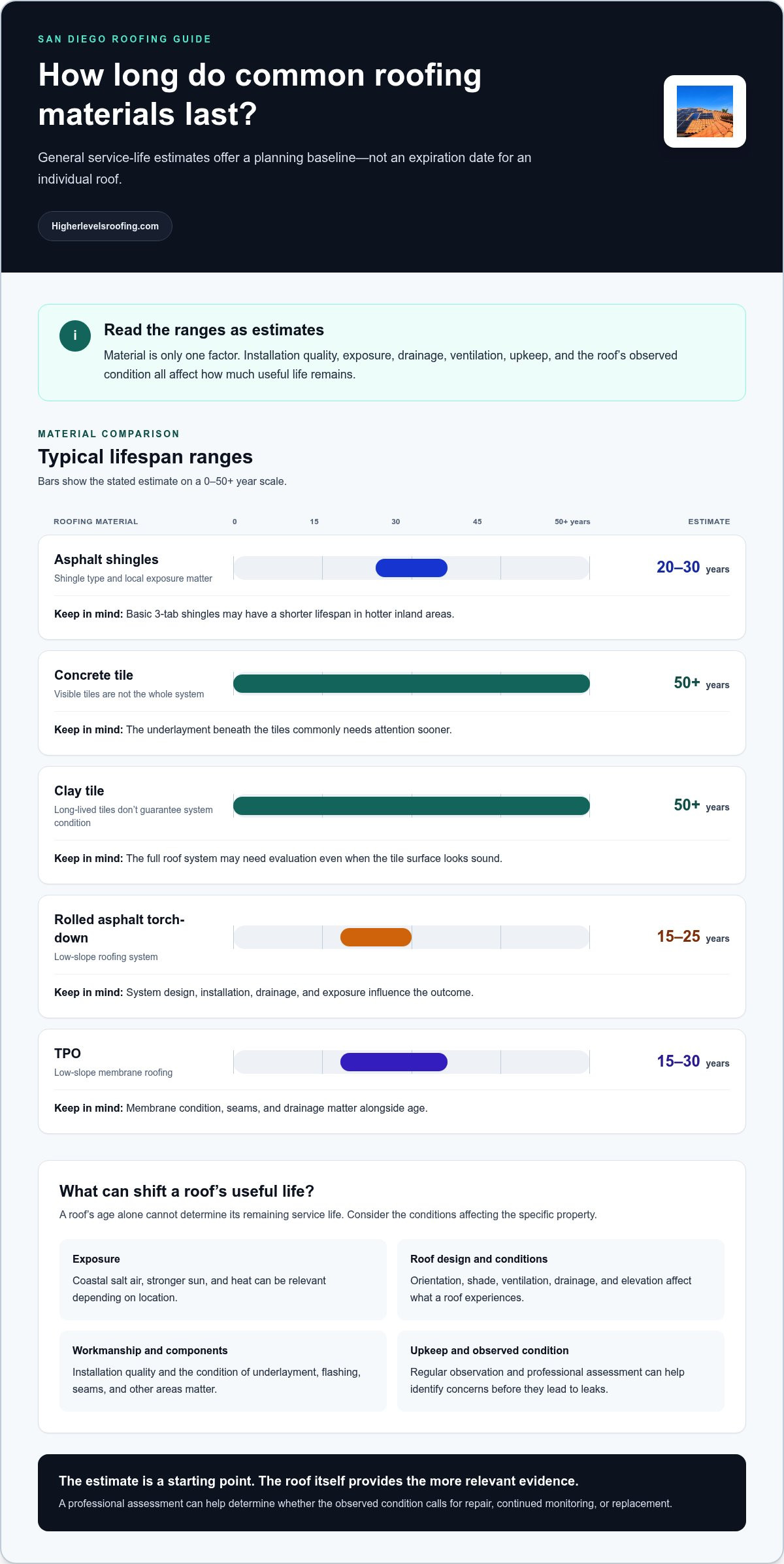
How long does a roof last in San Diego? The answer depends partly on its material: clay and concrete tile may last 50 years or more, while flat-roof membranes such as TPO are often estimated at 15 to 30 years. These ranges are useful for planning, but they are not a countdown for your home.
Material is only one factor. Coastal salt air, strong sun, installation quality, upkeep, and the roof’s current condition all affect how much useful life remains. Two roofs of the same age can need very different attention. Regular observation and professional assessments can help identify concerns before they lead to leaks.
This guide compares common roofing materials, including asphalt shingles, tile, torch-down, and TPO, and explains how San Diego conditions and workmanship can affect longevity. You’ll also learn which signs, from cracked tiles to ceiling stains, may warrant a closer look. An assessment can help clarify whether repair or replacement makes sense for the roof’s observed condition.
Table of Contents
How long does a roof last in San Diego, and what does lifespan mean?
Search “how long does a roof last” and you’ll find a wide range of estimates. That’s because a material’s lifespan describes what it may typically deliver under certain conditions, not the exact future of every roof made with it. Age is useful context, but it can’t tell you on its own whether the roof is still protecting your home effectively.
A roof lifespan estimate is a planning guide for typical service life, not a promised expiration date or guarantee for an individual roof. The roof’s observed condition is more useful than a date calculated from a general range.
What does a roof's expected lifespan actually tell you?
A lifespan estimate helps you compare materials and plan for future maintenance or replacement. It isn’t a precise deadline. One roof may need attention earlier, while another of the same age may remain serviceable. General references, such as this overview of roofing materials and expected service life, provide context but can’t assess a specific property.
The roof covering is only one part of the roofing assembly. Tiles or shingles may look sound while the underlayment, flashing, or other areas need attention. Workmanship, ventilation, drainage, and maintenance also influence how the complete system performs over time.
Why can roof life vary across San Diego County?
Conditions vary across the county. Salt air may be a factor near the coast, while stronger sun or heat may be relevant at some inland properties. These are considerations to assess, not assumptions about every home in La Jolla, Encinitas, San Marcos, Carlsbad, or elsewhere in San Diego.
Even nearby homes can differ. Roof orientation, shade from trees or buildings, ventilation, drainage, and elevation all affect the conditions a particular roof experiences. A shaded slope and a sun-exposed slope may weather differently. Water that drains slowly can also create concerns that a general material estimate won’t capture.
A useful answer to “how long does a roof last?” combines the material’s typical range with the roof’s installation history and present condition. A professional assessment can help determine whether a concern calls for repair, continued monitoring, or replacement. The estimate is a starting point; the roof itself provides the more relevant evidence.
How long do asphalt, tile, torch-down, and TPO roofs last?
These general estimates offer a starting point for comparing common roofing materials in San Diego. They aren’t guarantees. Specific products, installation quality, exposure, drainage, and maintenance all affect how a roof performs. For more background on material choices, see this guide to types of roofing materials.
What lifespan ranges are commonly cited for residential roofing materials?
Asphalt shingles cover a broad range, while clay and concrete tile can remain in service for decades. But a tile roof isn’t just its visible surface. Underlayment condition matters, too. A roof can look sound from the street while concealed components need evaluation. The U.S. Department of Housing and Urban Development’s home maintenance and safety resources address hazards such as lead rather than roofing lifespan, so they aren’t a source for these material estimates.
How long can commercial flat roofing systems last?
For low-slope applications, torch-down estimates range from 15 to 25 years, while TPO estimates range from 15 to 30 years. These systems differ, but neither lifespan is automatic. Installation details, exposure, drainage, and ongoing maintenance all shape real-world performance. For a local example of TPO use, explore this San Diego TPO commercial roofing case study.
So, how long does a roof last? You can make a more informed estimate by considering the material range alongside the specific roof’s condition. A professional evaluation can help identify whether repair or replacement is appropriate. Learn about roof repair and replacement as possible next steps.
What makes a roof wear out sooner or last longer?
Material sets a useful baseline, but it doesn’t determine a roof’s service life on its own. Installation details, property design, maintenance, and exposure work together. The same roofing material can last for different lengths of time because each roof faces a different combination of workmanship, weather, drainage, and upkeep.
How do installation and roof design affect longevity?
A roofing system depends on components that are correctly installed and work together. Flashing at roof edges, valleys, and penetrations helps manage water at vulnerable transitions. Proper drainage helps prevent water from lingering, while suitable ventilation can help manage heat and moisture in the roof assembly. The National Roofing Contractors Association provides roofing-industry resources. The details that matter most depend on the specific roof system and building.
Roof shape also influences performance. Valleys and complex transitions need careful detailing, while low-slope roofs rely on effective drainage and intact membrane seams. On a tile roof, durable tiles don’t mean every component lasts indefinitely. The underlayment beneath them may need attention while the tiles remain serviceable.
Does San Diego weather shorten every roof's life?
No single local condition applies equally to every property. Coastal homes may be exposed to salt air, while some inland roofs receive more direct sun and heat. San Diego also experiences seasonal rain, including heavy rainfall after dry periods. These are factors to consider during an assessment, not proof that any particular roof is wearing out faster.
Exposure varies even within one neighborhood. Roof direction, nearby shade, elevation, and how water moves across the surface can change conditions from one slope to another. A professional assessment can connect those site-specific details to the roof’s materials and observed condition.
Upkeep matters, too. Observing changes from the ground and arranging professional attention for concerns can help identify developing issues. That doesn’t add a guaranteed number of years, but it can clarify whether the roof needs repair, maintenance, or more extensive work. The best estimate of how long a roof may continue performing combines its material and age with its installation, exposure, and observed condition.
How can you tell whether your roof is nearing the end of its life?
No single visual clue proves that a roof needs replacement. Consider its age and history alongside visible changes and a professional assessment. That helps turn “how long does a roof last?” into a more useful question: what does this roof need now?
Identify the material and approximate age. Check home records, past invoices, or seller documents for the installation or replacement date. Note whether the roof has asphalt shingles, tile, or a low-slope membrane. If you’re unsure, record what you can see from the ground rather than climbing onto the roof.
Observe the condition and note changes. From a safe vantage point, look for missing, curling, or cracked shingles; cracked or slipped tiles; or visible membrane cracks, separation, and areas where water appears to collect on a flat roof. Indoors, note recurring leaks or water stains on ceilings and walls. These signs warrant investigation, but they don’t identify the cause by themselves.
Arrange an assessment if you see a concern. A roofing professional can evaluate visible damage and relevant roof components, then explain whether the issue appears localized or more widespread.
Which visible changes should prompt a closer look?
Pay attention to changes that are new, recurring, or spreading. One damaged shingle or tile may point to a limited repair need; damage in multiple areas may call for a broader review. On a low-slope roof, ponding water or membrane separation deserves attention. Water intrusion, active leaks, or growing interior stains should be evaluated promptly. Avoid walking on the roof to inspect it yourself.
When might repair be reasonable, and when is replacement considered?
A focused repair may be appropriate when damage is limited and the surrounding roof remains serviceable. Replacement may be considered if deterioration is widespread, problems keep returning, or the overall roof system is no longer performing well. Age is one part of the decision, along with repair history and the condition of both the covering and underlying components. No single symptom automatically settles the question.
For a clearer view of replacement planning, read the San Diego roof replacement guide. If you’ve noticed damage or recurring leaks, explore roof repair services from Higher Levels Roofing.
How to protect your roof's remaining lifespan?
You don’t need to climb onto the roof to keep track of its condition. A simple, safe observation routine can help you notice changes and share useful details during a professional evaluation. It won’t determine exactly how long a roof lasts, but it can help you respond thoughtfully when something seems different.
What roof maintenance can homeowners do safely?
From the ground, look for visible changes after seasonal weather or when you notice a concern. Indoors, watch for new or recurring water stains, damp areas, or signs of a leak. Don’t walk on the roof or attempt repairs beyond your abilities. Roof surfaces can be steep, fragile, or slippery, and damage may not be safe to reach.
Keep a simple record of visible changes, leaks, and previous roof work.
Note where and when water concerns appear, such as after rainfall.
If you can safely see water collecting or drainage concerns, record what you observe and arrange a professional evaluation rather than accessing the roof yourself.
These notes give a roofing professional useful context. Attention to a developing concern can help clarify what is happening before you decide on next steps.
How can a local roofing assessment clarify your options?
A useful assessment considers more than age. Material, installation history, visible condition, and past repairs all help shape recommendations. An evaluation can identify whether a concern appears localized, whether maintenance or repair may address it, or whether the roof’s overall condition calls for replacement planning. The right approach depends on what the roof shows, not a lifespan estimate alone.
Higher Levels Roofing provides residential and commercial roof repair, replacement, and installation in San Diego and nearby communities, including La Jolla, San Marcos, Encinitas, and Carlsbad. For guidance on evaluating a roofing contractor, review the San Diego roofing contractor hiring checklist.
Keep your notes, stay off the roof, and seek a professional assessment when you spot a change or have questions about its condition. Explore roofing services in San Diego to learn about repair, replacement, and installation options for your property.
Make a confident plan for your roof
So, how long does a roof last? Material lifespan ranges offer a helpful starting point, but your roof’s actual condition, installation, and exposure determine what it needs next. A tile covering may remain in place while components beneath it require attention. Visible damage may call for an assessment without automatically meaning full replacement.
Keep track of your roof’s age, repair history, and any changes you can safely observe. A professional evaluation can help clarify whether repair, replacement, or a new installation best fits the roof’s condition. Higher Levels Roofing is a licensed San Diego roofing contractor providing residential and commercial installation, replacement, and repair, with experience in asphalt shingles, tile, torch-down, and TPO.
Take the next step with a clear understanding of your options. Explore roofing services in San Diego for repair, replacement, and installation options for your property.
Frequently Asked Questions
How long does a roof last in San Diego?
There isn’t one lifespan for every San Diego roof. Material, installation, exposure, and upkeep all matter. General estimates range from 15-30 years for TPO and 15-25 years for torch-down roofing to 20-30 years for asphalt shingles. Clay and concrete tile may last 50 years or more, though the underlayment can need attention sooner. A roof’s actual condition is more useful than its age alone.
How long do asphalt shingle roofs last?
Asphalt shingle roofs generally last about 20-30 years, but that estimate isn’t a deadline or guarantee. Shingle type and property conditions make a difference. Basic 3-tab shingles may have a shorter service life, particularly in hotter inland settings, while other shingle types may last toward the upper end of the range. Installation quality, maintenance, and the roof’s current condition help determine how much life remains.
Do tile roofs last longer than shingle roofs?
Clay and concrete tiles can last 50 years or more, generally longer than the typical 20-30-year estimate for asphalt shingles. But a tile covering’s durability doesn’t mean the whole roofing system lasts as long. The underlayment beneath the tiles commonly needs attention or replacement after 20-30 years. An assessment should consider both the visible tiles and the components that protect the home underneath them.
How long does a TPO roof last?
A TPO roof has a general estimated lifespan of 15-30 years. Its actual service life depends on the specific system, installation quality, exposure, drainage, and maintenance. The estimate is a planning guide, not a promise for an individual roof. When assessing an existing TPO roof, visible membrane concerns, water that appears to pond, and the roof’s repair history can help guide a professional evaluation.
Can coastal salt air shorten a roof's lifespan?
Salt air near the coast can be a factor to consider during a roof assessment, but it doesn’t determine the lifespan of every roof. Exposure varies by property, even in coastal communities such as La Jolla and Encinitas. Material, roof design, installation, and maintenance also influence performance. A roofing professional can evaluate the roof’s observed condition in light of its location rather than assuming coastal exposure has caused damage.
Can roof maintenance extend its lifespan?
Consistent attention can help identify concerns early and keep minor issues from going unnoticed, but no maintenance routine guarantees a specific number of extra years. Observe the roof from the ground, note visible changes, and keep a record of leaks or past repairs. Avoid walking on the roof. If you notice damage or water concerns, a professional evaluation can clarify whether repair or further work is appropriate.
How do I know if my roof needs repair or replacement?
Visible damage or recurring leaks are reasons to arrange an assessment, not proof that the roof needs replacement. Note the roof’s approximate age, material, repair history, and any changes you can safely observe, such as damaged shingles, cracked tiles, or interior water stains. A professional can determine whether the issue is localized or widespread and explain whether repair or replacement best fits the roof’s overall condition.


Comments