


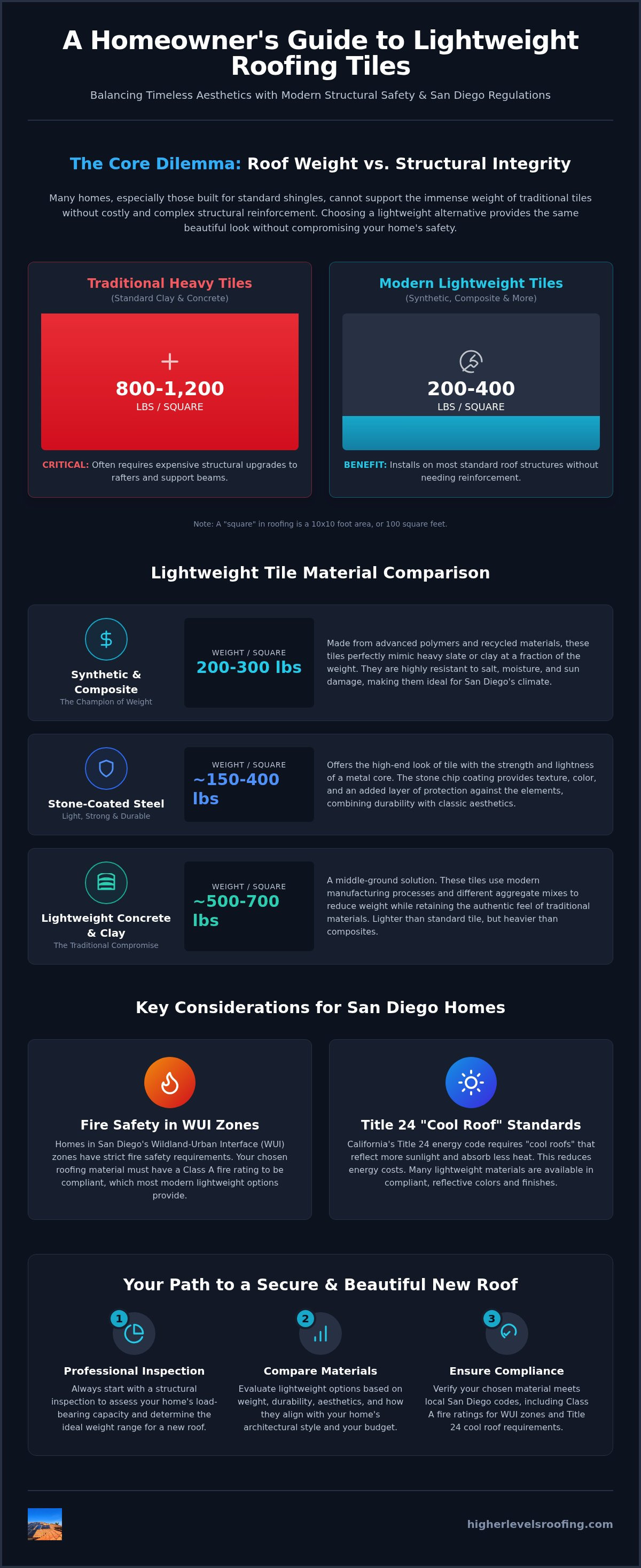
What Is the Lightest Tile Material? A Homeowner’s Guide to Lightweight Roofing

Updated: Aug 19
What if you could achieve the timeless look of a Mediterranean villa without the crushing weight that forces expensive structural retrofitting? It's a common dilemma for San Diego residents who want to upgrade their curb appeal but fear the hidden costs of reinforcing a standard roof frame. If you've ever wondered what is the lightest tile material, you're likely trying to balance aesthetic pride with your home's load-bearing capacity. Many assume heavy clay is the only way to get that classic silhouette, but that's no longer the case in 2026.
We understand that your home's safety and long-term security are your top priorities. You shouldn't have to choose between a beautiful exterior and a roof that's structurally sound. This guide will show you how to find a material that balances weight, durability, and visual excellence. You'll discover the specific weight-per-square of modern options, including how lightweight concrete and synthetic alternatives compare. We'll also explore how the latest Title 24 cool roof standards and 2026 fire safety regulations in San Diego impact your choice, ensuring your new roof is both compliant and stunning.
Table of Contents
Understanding Roof Weight: Why the Lightest Tile Material Matters
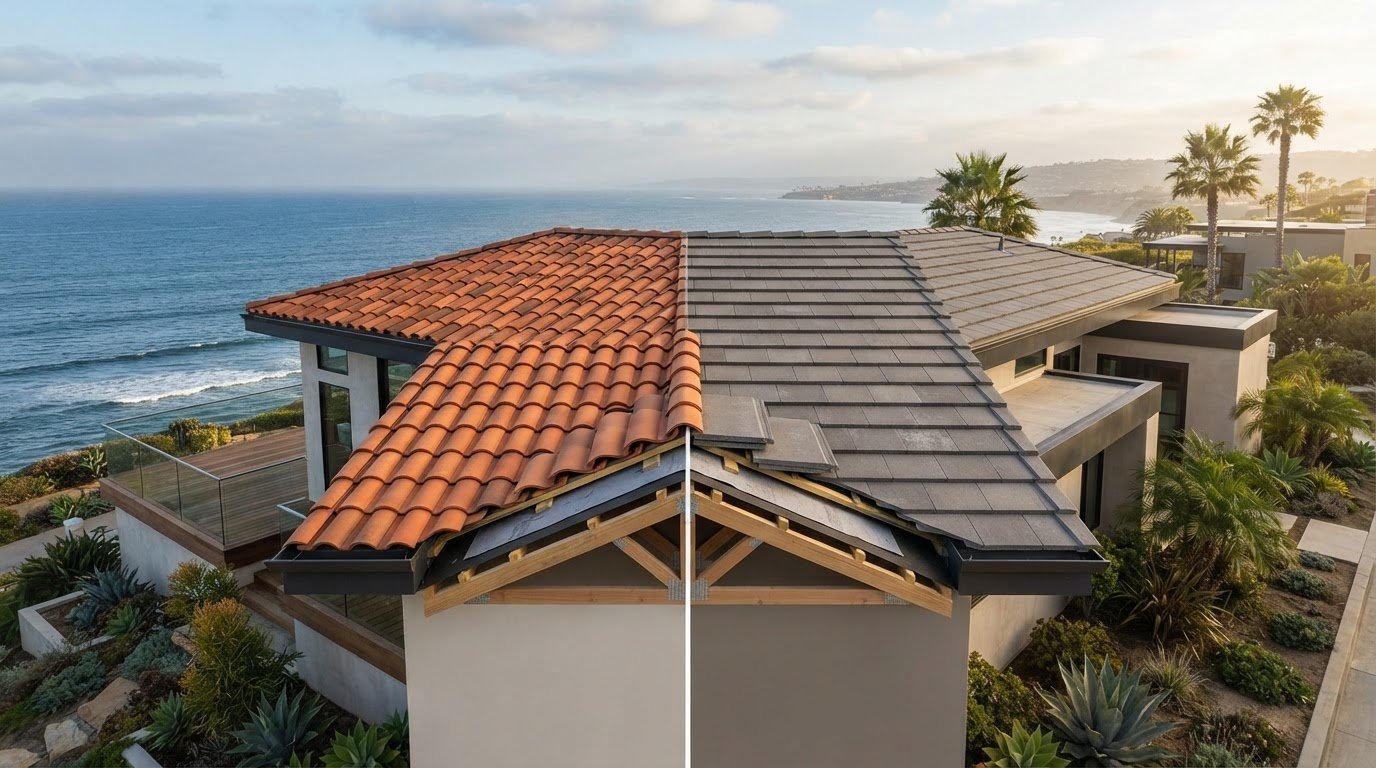
In the world of roofing, weight is a critical factor that dictates everything from your budget to your home's safety. We measure this weight by the "square," which represents a 100-square-foot area of your roof surface. Traditional options like standard clay and concrete are undeniably beautiful, but they are incredibly heavy. These materials typically weigh between 800 and 1,200 pounds per square. For a home originally built for lightweight asphalt shingles, jumping to a heavy tile system can be a recipe for disaster without expensive structural reinforcement of the rafters.
Many homeowners begin their journey by asking what is the lightest tile material because they want the Mediterranean aesthetic without the heavy price tag of structural upgrades. Modern engineering has revolutionized roof tile materials, allowing us to install beautiful, durable systems on homes that previously couldn't support them. At Higher Levels Roofing, we focus on ensuring your choice aligns with your home's specific engineering needs. We don't just look at the tiles; we look at the bones of the house to ensure a perfect fit.
The Impact of Weight on Structural Integrity
Heavy tiles do more than just press down on your rafters; they change how your home responds to movement. In Southern California, seismic activity is a constant reality. A heavy roof creates a "top-heavy" effect that can amplify the swaying motion during an earthquake, putting immense stress on your home's foundation and walls. You might notice signs of struggle like sagging ridge lines, sticking doors, or fresh cracks in your interior drywall. A professional inspection is the first step to avoiding these issues. Often, a structural engineer must sign off on heavy tile installations to meet local safety standards. By choosing a lighter material, you can often bypass these complex engineering requirements while still achieving the high-end look you desire.
Dead Load vs. Live Load in San Diego Roofing
San Diego building codes are very specific about how much weight a roof can carry. We categorize this into two types: dead load and live load. Dead load is the permanent, fixed weight of the roofing materials, underlayment, and the structure itself. Live load refers to temporary weight, such as roofing crews, equipment, or even heavy rainfall. If your dead load is too high, it leaves very little safety margin for live loads. This imbalance is why local regulations are so strict. We ensure every project complies with these codes, providing you with long-term security and peace of mind. Choosing a lightweight tile ensures your home stays well within these safety margins, even during maintenance or extreme weather events.
The Champion of Weight: Synthetic and Composite Tile Materials
When homeowners ask what is the lightest tile material, the answer is almost always synthetic composite. These innovative tiles are engineered from advanced polymers, recycled rubber, or high-strength plastics. They represent a significant shift in roofing technology, offering a solution for those who love the look of a heavy roof but own a home that wasn't built to support one. Weighing as little as 200 to 300 pounds per square, synthetic options are roughly a quarter of the weight of traditional clay. This makes them the undisputed champion for San Diego reroofing projects, especially on older homes that would otherwise require expensive rafter reinforcements.
The beauty of synthetic materials lies in their versatility. Manufacturers have mastered the art of texture and depth, creating tiles that perfectly mimic the rustic charm of Spanish S-tiles or the clean, sophisticated lines of flat slate. From the street, it's nearly impossible to tell the difference. You get the high-end aesthetic you desire without the structural anxiety. If you're curious about how these materials might look on your specific roofline, our team at Higher Levels Roofing can show you samples that match your home's unique style.
Benefits of Synthetic Composite Tiles
Synthetic tiles are built to withstand the specific environmental challenges we face in Southern California. In coastal areas, salt air can be incredibly corrosive to certain materials, but engineered polymers are naturally resistant to salt spray and moisture. They also feature "color-through" technology. This means the pigment is baked into the entire tile, not just sprayed on the surface. When the intense San Diego sun beats down, your roof won't peel or show unsightly white scratches. Additionally, these tiles are much more durable during installation. Unlike traditional clay, which can crack if a technician steps on it incorrectly, synthetic tiles are impact-resistant and flexible, leading to less waste and a smoother project timeline.
Weight Comparison: Traditional vs. Lightweight
To understand why choosing a lightweight option is so impactful, look at how the numbers stack up per square (100 square feet):
Standard Clay: 900+ lbs (Requires heavy-duty structural support)
Lightweight Concrete: approx. 600 lbs (A middle-ground traditional option)
Synthetic Composite: 250 lbs (The lightest tile material available)
By opting for a synthetic system, you're removing thousands of pounds of "dead load" from your home's frame. This choice preserves the structural integrity of your property while delivering the premium look that tile roofing is known for.
Stone-Coated Steel: The Lightest Metal Tile Alternative
If you are narrowing down your search for what is the lightest tile material, you might be surprised to find that metal is a top contender. Stone-coated steel roofing offers the iconic silhouette of traditional tile while maintaining the extreme lightness of high-grade metal. While we previously discussed synthetic composites that weigh around 250 pounds per square, stone-coated steel takes weight reduction even further. These systems typically weigh between 125 and 150 pounds per square. That is nearly ten times lighter than standard clay. This material represents the ultimate solution for homeowners who want a tile profile but have a structure that can only support the lightest possible load.
The secret to this material's success is its layered construction. Each panel features a structural steel core that provides incredible strength without the bulk. This core is then primed and finished with a decorative layer of stone chips. This creates a textured, matte finish that diffuses light just like natural clay or stone. It's a sophisticated engineering feat that delivers a high-end look without the structural anxiety. Because the panels are so light, they are often easier and faster to install, which can help streamline your project timeline while ensuring your home remains safe and secure.
Performance in Coastal Climates
San Diego’s coastal neighborhoods, such as La Jolla and Carlsbad, present unique environmental challenges. Salt-heavy air can be incredibly aggressive, leading to corrosion on standard metal products. Stone-coated steel addresses this through a protective aluminum-zinc alloy coating, often referred to as Galvalume. This barrier provides long-term resistance against rust and salt spray. It's a durable choice that stands up to the misty mornings and humid afternoons common along the Pacific. Maintenance for these systems is remarkably straightforward. A periodic check to ensure the interlocking panels are clear of debris is usually all that's required to maintain their performance and protective qualities for decades.
Aesthetic Versatility
You don't have to sacrifice your home's character for structural safety. Modern stone-coated steel can mimic the deep, rolling curves of a Mediterranean "S-Tile" or the sharp, clean lines of a flat concrete tile. It's available in a wide spectrum of colors and textures that complement everything from classic Spanish Colonials to modern San Diego architecture. Because these panels interlock and are fastened securely to the roof deck, they offer superior wind resistance during seasonal storms. When you choose this material, you're investing in a lifetime roofing solution. It provides the aesthetic pride you want with a level of durability that standard materials simply can't match.
Lightweight Concrete and Clay: The Traditional Compromise
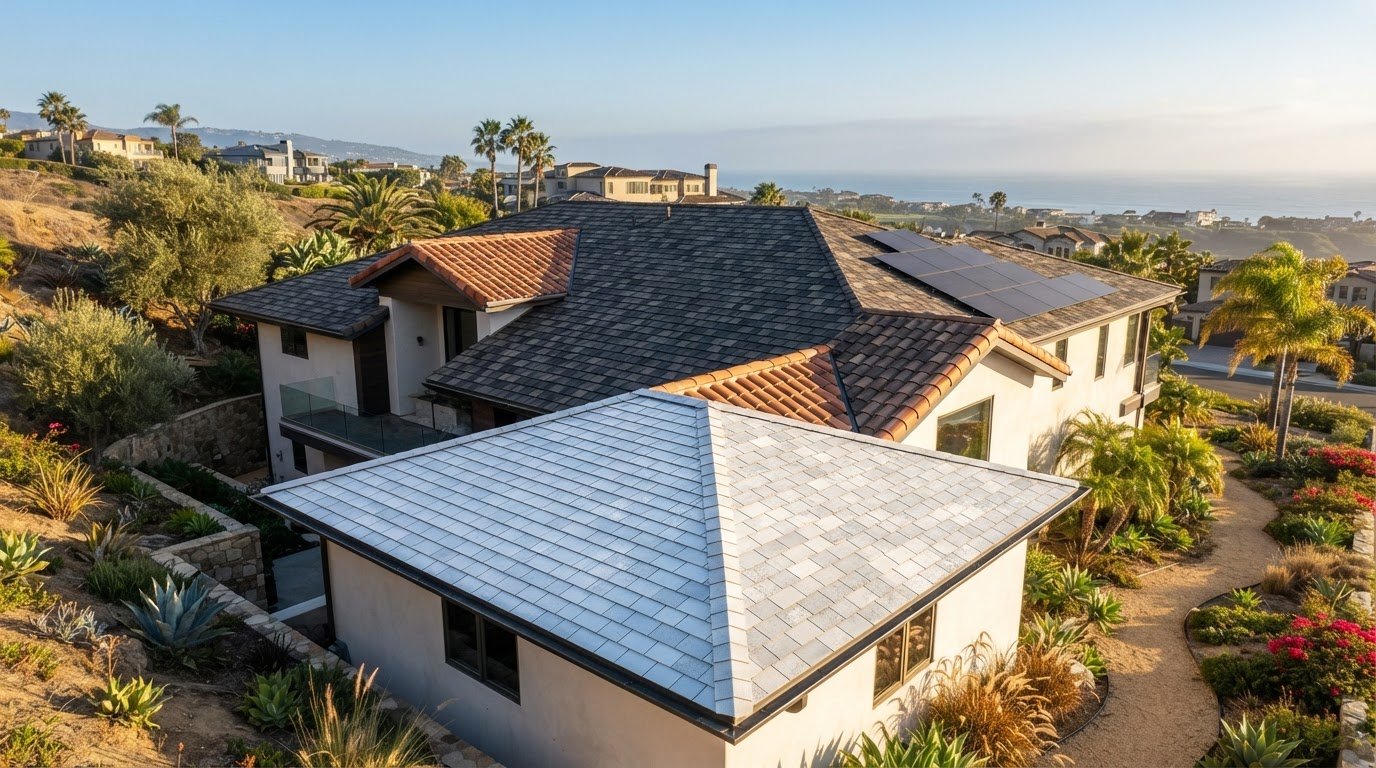
While synthetic and stone-coated steel represent the cutting edge of weight reduction, many San Diego homeowners still prefer the authentic feel of kiln-fired clay or cast concrete. If you insist on natural materials but your home has weight constraints, lightweight traditional tiles are the answer. These products bridge the gap between heavy standard systems and ultra-light modern alternatives. They provide the classic texture and thermal properties of masonry without the extreme mass of traditional products. While we have already established that synthetic options are technically what is the lightest tile material, these lightweight masonry versions are the lightest "traditional" options available today.
These materials typically weigh between 500 and 700 pounds per square. For a home that can't support the 1,000-pound load of standard clay, this reduction is often enough to skip the structural engineering phase. However, these tiles require a high-performance underlayment system. Because the tiles themselves are less dense, the secondary water barrier beneath them must be meticulously installed to ensure long-term waterproofing and protection against the elements.
How Lightweight Concrete Tiles are Made
The science behind these tiles involves a specialized manufacturing process that swaps standard heavy sand for expanded shale, clay, or slate aggregates. These aggregates are heated until they "pop" like popcorn, creating air pockets that reduce the overall density of the mixture. This aerated concrete maintains its structural shape while shedding significant mass. Lightweight concrete is roughly 30% lighter than standard concrete. While they're slightly less impact-resistant than their standard-weight counterparts, they still offer excellent fire resistance and the aesthetic pride that comes with a masonry roof.
Installation Considerations for Fragile Tiles
The very air pockets that make these tiles light also make them more brittle. They are significantly more prone to breakage during the shipping and installation process compared to standard concrete. This fragility makes it essential to hire an experienced tile roofing specialist who understands how to handle and fasten these delicate units. Meticulous craftsmanship is the only way to prevent waste and ensure the finished product is secure. Homeowners should also follow strict guidelines when it comes to roof access:
Don't: Walk on a lightweight tile roof yourself. The risk of cracking a tile is high, and even a small hairline fracture can lead to leaks.
Do: Use a professional for all inspections. We use specialized techniques to distribute weight and avoid damaging the fragile surface.
Don't: Allow non-roofing contractors, like solar installers or painters, to traverse the roof without professional supervision.
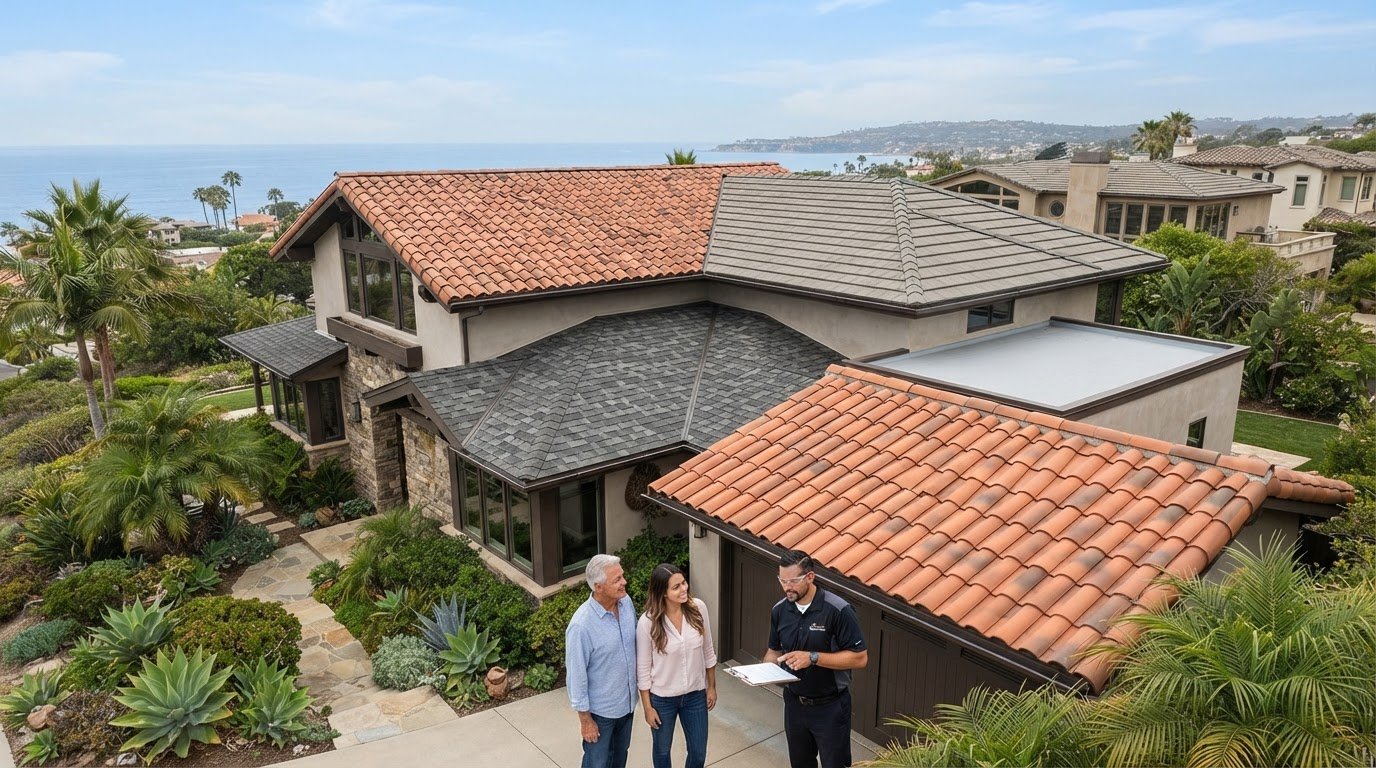
If you're trying to decide if your home's structure can handle a traditional look, reach out to Higher Levels Roofing for a professional inspection to determine if lightweight masonry is the right fit for your property.
Choosing the Right Lightweight Tile for Your San Diego Home
Selecting the perfect roof for your property involves more than just picking a color from a catalog. It requires a careful balance between your home's engineering and your personal style goals. You've seen that while synthetic composites are incredibly light, stone-coated steel is technically the answer to what is the lightest tile material available on the market today. However, the best choice for your neighbor in Carlsbad might not be the right fit for your home in Poway. You must evaluate your home's existing structural capacity before making a final decision. If your rafters were originally designed for asphalt shingles, choosing a material that mimics tile without adding significant "dead load" can save you thousands in structural retrofitting costs.
We encourage you to look at the big picture. While some lightweight materials have a higher upfront cost, the long-term savings are significant. You avoid the high cost of structural engineering and benefit from a faster installation process. Seeing samples in person is the final piece of the puzzle. The way light hits a stone-coated metal tile compared to a synthetic polymer can change your entire perspective on your home’s curb appeal. Consulting with a local specialist ensures you find a material that balances weight, beauty, and local regulations.
Fire Safety and Building Codes
San Diego homeowners face unique environmental risks, making fire safety a non-negotiable priority. As of the January 1, 2026, building code updates, many neighborhoods in High and Very High Fire Hazard Severity Zones now require Class A fire-rated roof assemblies. Most modern lightweight tiles, especially stone-coated steel and high-end synthetics, are designed to meet these rigorous standards. Beyond fire protection, these materials often qualify as "cool roofs" under Title 24. They reflect more sunlight than traditional dark shingles, which helps keep your home cooler and reduces your energy bills during our intense Southern California summers. This intersection of safety and efficiency is a hallmark of modern roofing craftsmanship.
The Higher Levels Roofing Advantage
Our team takes pride in being more than just installers; we are dedicated local advocates for your home's longevity. Our process for evaluating types of roofing materials starts with your home's specific needs and local code requirements. We prioritize meticulous craftsmanship because we know that even the best lightweight material will only perform as well as its installation. We focus on long-term structural security and aesthetic pride in every project we touch. Whether you are in a coastal zone or a canyon-side community, we ensure your roof is built to last. Contact Higher Levels Roofing for a professional structural assessment today.
Securing Your Home's Future with Lightweight Materials
Investing in a lightweight roof is a strategic decision that protects your home's structural integrity while elevating its visual appeal. We've explored how modern engineering has transformed the industry, offering solutions that range from aerated concrete to high-performance polymers. When determining what is the lightest tile material, stone-coated steel and synthetic composites emerge as the clear winners for homeowners who need to keep dead load to a minimum. These materials ensure you don't have to sacrifice the Mediterranean style you love for the safety your home requires.
As a trusted local family-owned business and a licensed and insured San Diego contractor, Higher Levels Roofing is here to guide you through every step of this transition. We're specialists in tile and shingle systems, focusing on meticulous craftsmanship that meets the latest 2026 fire safety and Title 24 standards. Your home deserves a roof that's both beautiful and structurally secure. Get a Free Estimate for Your Lightweight Tile Roof in San Diego today. We look forward to helping you find the perfect balance of durability, weight, and aesthetic pride for your property.
Frequently Asked Questions
Is synthetic tile really lighter than asphalt shingles?
Synthetic tile is comparable to or even lighter than most high-quality asphalt shingles. While standard shingles weigh between 200 and 400 pounds per square, synthetic options often fall in the 200 to 300-pound range. This makes them an excellent upgrade for homeowners who want a premium look without adding extra weight to their rafters. It's one reason why many consider them the best answer for what is the lightest tile material for residential reroofing.
Can I put a tile roof on a house that currently has shingles?
You can absolutely install a tile roof on a home currently capped with shingles, provided you choose a lightweight material. Most standard shingle roof frames aren't engineered for the 1,000-pound load of traditional clay. By selecting stone-coated steel or synthetic composite, you can achieve that classic aesthetic without the need for structural retrofitting. We always recommend a professional inspection to confirm your specific home's load-bearing capacity before starting.
Does a lightweight tile roof affect my home insurance in San Diego?
A lightweight tile roof can positively impact your insurance premiums, especially in San Diego's fire-prone regions. Many of these materials carry a Class A fire rating, which is the highest level of protection available. Since the 2026 update to the California Building Code expanded fire hazard zones, insurers often look favorably on non-combustible materials like stone-coated steel. It's best to check with your provider for specific policy discounts.
What is the most durable lightweight roofing tile?
Stone-coated steel is widely considered the most durable lightweight option due to its structural steel core and interlocking panels. It offers exceptional resistance to high winds and impacts. High-end synthetic tiles also provide incredible longevity because they don't rot, crack, or suffer from salt air corrosion. Both materials are designed to last 50 years or more, making them a wise long-term investment for your home's security and value.
How much does it cost to reinforce a roof for heavy tiles?
Structural reinforcement costs vary widely depending on the age of your home and the complexity of its frame. Since this process often requires a structural engineer's report and significant carpentry work, it can add substantial expense to your project. Choosing a lightweight tile material often bypasses these costs entirely. We focus on helping you find a material that fits your existing structure to keep your project efficient and affordable.
Are lightweight tiles more expensive than traditional clay tiles?
Lightweight tiles often have a higher upfront material cost than traditional clay, but the total project cost is frequently lower. Traditional heavy tiles require expensive structural upgrades and more labor-intensive installation. When you factor in the savings from avoiding rafter reinforcement and the long-term durability of modern composites, these lightweight options provide excellent overall value. They offer the premium look of tile with a much more efficient installation process.
Do lightweight tiles fade faster in the San Diego sun?
Modern lightweight tiles are specifically engineered to withstand the intense UV radiation of the San Diego sun. Synthetic manufacturers use advanced color-through technology to ensure the pigment stays vibrant for decades. Stone-coated steel uses ceramic-coated granules that are highly resistant to fading. While no material is completely immune to the elements, these options are designed to maintain their aesthetic pride far longer than standard asphalt shingles or lower-quality alternatives.
Can I walk on a lightweight tile roof for maintenance?
Your ability to walk on the roof depends entirely on the material you choose. Stone-coated steel and synthetic composites are generally safe to walk on because they are impact-resistant and flexible. However, lightweight concrete and clay tiles are much more brittle and can easily crack under a person's weight. We always advise homeowners to stay off their roofs and leave inspections to professionals who use proper weight-distribution techniques to prevent damage.
Comments