


What Does My Roofing Warranty Actually Cover? A Homeowner’s Guide

A roof can leak even when you have a warranty, and the repair may not qualify for coverage. That’s why San Diego homeowners ask, “what does my roofing warranty actually cover?” The answer depends on the warranty document and what caused the problem. A roofing warranty covers defined failures, not every issue that affects a roof.
It’s easy to assume a warranty covers leaks, weather damage, or an aging roof. In practice, manufacturer and workmanship warranties address different risks, and each may have exclusions, conditions, and claim deadlines. Read the specific terms before relying on either one.
This guide explains how to match a roof problem to the relevant warranty, what exclusions to look for, and which records can help you prepare for a claim. You’ll also learn how to interpret terms such as “lifetime,” prorated coverage, and transfer requirements without mistaking them for a promise that every repair is covered. Whether your San Diego property has shingles, tile, torch-down, or TPO roofing, clear expectations can help you plan installation, replacement, and repairs.
Table of Contents
What Does a Roofing Warranty Actually Cover?
A roofing warranty is a written set of terms that identifies specific defects or work that may qualify for a remedy, along with the conditions the owner must meet. It isn’t a blanket promise that the roof will never leak, wear down, or need attention. The general idea of a warranty is explained in Warranty, but the document for your roof defines its actual scope.
Roofing warranty coverage applies only to the failures, components, and remedies defined in the written terms, subject to their conditions and exclusions. To answer “what does my roofing warranty actually cover,” first identify the roof system and the specific document. A warranty might address a defect in a covered product or a defined installation issue, while leaving other components, resulting damage, or unrelated work outside its scope.
Coverage also depends on the circumstances of a claim. The roof’s installation, maintenance history, later alterations, and the cause of damage may all matter if the document addresses them. A warranty isn’t a substitute for routine maintenance, which helps keep a roof in serviceable condition. It also isn’t homeowners insurance: warranties and insurance have different terms and purposes, and neither should be read as protection against every future roof problem.
What is the difference between a manufacturer and workmanship warranty?
A manufacturer’s warranty generally addresses specified defects in the roofing product. A workmanship warranty, when provided in writing, addresses defined problems attributed to installation. The protections aren’t interchangeable: a product defect and an installation error are different potential causes, and each may have its own claim process. The written document determines eligibility, duration, available remedy, and conditions, so don’t rely on a general label alone.
Does a roofing warranty cover leaks?
A leak is a symptom, not proof that a covered defect occurred. Water may enter through a product failure, an installation issue, flashing, an altered roof area, or another source. The applicable warranty’s scope and exclusions determine whether that cause qualifies. A repair may stop visible water damage without identifying why the leak began, so distinguish the immediate repair from investigating and documenting the underlying source.
For example, a stain on a San Diego home’s ceiling doesn’t show whether water passed through a covered roofing product, a roof detail, or an area changed after installation. The location and extent of interior damage are useful observations, but they don’t establish warranty eligibility. Keep the relevant paperwork and note when the leak appeared. These details can help connect the reported problem to the correct roof area and warranty terms.
Start with the cause and the wording, not the assumption that “leak” automatically means “covered.” Read what the warranty names, what it excludes, and what remedy it describes. That distinction helps set realistic expectations before arranging a repair or making a claim.
How Roofing Warranty Coverage Works Across Materials and Roof Systems
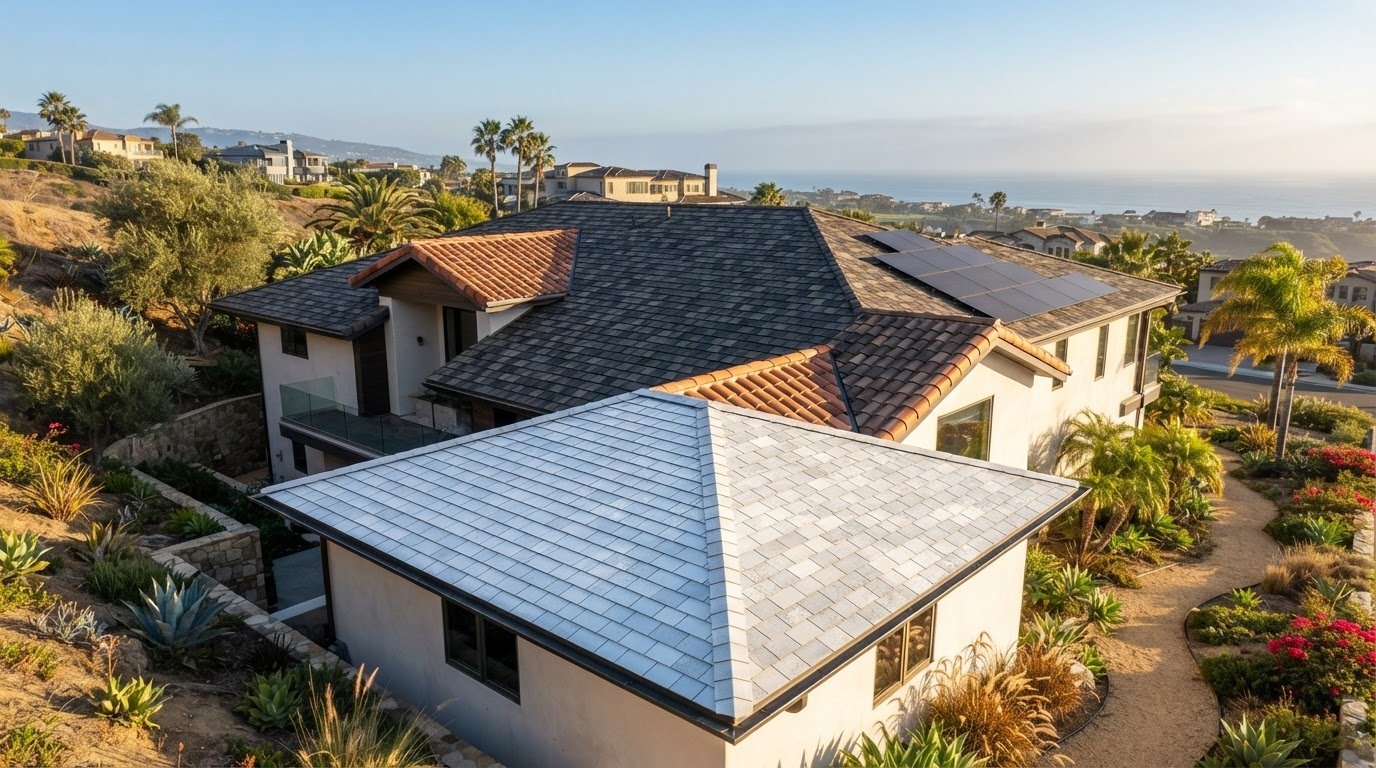
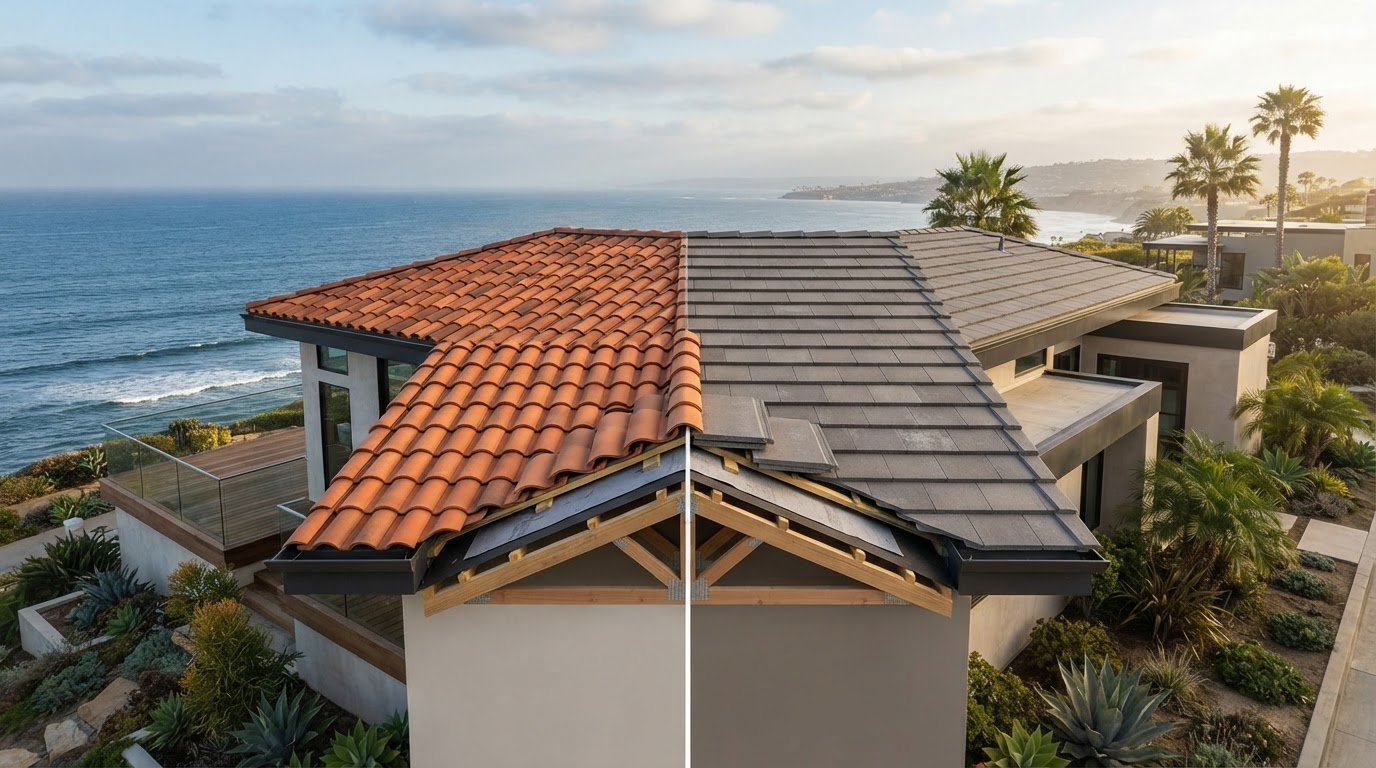
The roofing material is only the starting point. Asphalt shingle, clay or concrete tile, rolled asphalt torch-down, and TPO roofs use different products and construction details, so their warranty documents may differ too. One document might address a particular product, while another defines coverage for a larger assembly. Neither necessarily covers every layer or roof detail.
Read roofing warranty terms against the exact material and installed system, because coverage for one product doesn’t automatically extend to the entire roof. If you’re asking what does my roofing warranty actually cover, compare the product or assembly named in the paperwork with what’s installed on your home. Check which components are included and whether the stated remedy applies to materials, labor, or both.
For example, paperwork for shingles may identify the shingle product without naming underlayment, flashing, or ventilation components. A tile roof’s documents may describe the tile rather than every part of the assembly. Torch-down and TPO paperwork may likewise apply to a specific product or system. These are examples of what to look for, not assumptions about what a particular warranty includes.
What can a roofing product warranty include?
A product warranty may address specified manufacturing defects, subject to its written terms. If a claim qualifies, the stated remedy could involve repair, replacement, or another option described in the document. That remedy may not mean full roof replacement. Find the manufacturer and product identification, then check which system components the paperwork names and what evidence it requires to evaluate the claim.
Why do installation and roof-system details matter?
Installation instructions can be conditions of coverage, though requirements vary by document and product. Keep records that connect the installed roof to the applicable terms, including invoices, product labels, scope details, and available notes about system components. For a San Diego home with concrete tile, locate the tile product records; for a TPO or shingle roof, look for the corresponding product and installation paperwork. Location alone doesn’t establish that an event or defect qualifies.
As you review the paperwork, look for these details:
Product identification: Confirm the material, manufacturer, and product named in the document.
System scope: See whether the terms identify individual materials or multiple assembly components.
Installation conditions: Note any stated requirements for installation, documentation, or eligibility.
Remedy: Find what the document says may happen if a claim is accepted.
For a new installation, replacement, or repair, keep the written scope and product records together. This makes it easier to compare the finished work with the applicable terms. Explore roofing systems and repair options as you plan the project and organize the documents that describe its materials.
Roofing Warranty Exclusions and Conditions That Can Affect a Claim
A long warranty term can sound reassuring, but it doesn’t necessarily mean comprehensive coverage for the life of the roof. The headline period is only part of the picture. Conditions, exclusions, eligible components, and the stated remedy can narrow what the document covers. To understand what does my roofing warranty actually cover, read the limits alongside the advertised term.
Use this comparison as a guide to what to look for, not as a decision about whether a particular claim qualifies. The written document controls.
Situation
How to read it
Question for the document
Potentially covered
A defined product defect or installation issue may qualify if it falls within the stated scope.
Which defect, component, and remedy are named?
Commonly limited
Weather damage, ponding water, maintenance issues, or later alterations may be addressed by exclusions or conditions.
Does the document limit coverage for this cause or circumstance?
Needs closer review
Wear, aging, or damage to areas outside the covered product may not fit the defined claim.
How does the warranty distinguish a covered defect from ordinary deterioration?
Normal aging and a defined defect aren’t automatically the same thing. A roof material may change over time, while a warranty may focus on a specific failure described in its terms. The document’s definitions and evidence requirements matter. A long coverage period doesn’t, by itself, tell you whether labor, related components, or resulting interior damage are included.
Can weather or coastal exposure void a roofing warranty?
Weather-related coverage depends on the event and the exact wording. San Diego sun, coastal air, and storms provide context about a roof’s environment, but they don’t automatically establish coverage or an exclusion. Look for terms about weather, wind, water, maintenance, and causes of damage. Check whether the language describes a covered defect, excludes a particular event, or sets conditions that apply before a claim can proceed.
Can repairs, alterations, or missed maintenance affect coverage?
Some documents describe maintenance duties or conditions for work performed after installation. A repair or alteration may affect how a claim is evaluated, but don’t assume any change automatically voids coverage. Find the relevant clause and note which roof area or component it addresses. Keep dated inspection, repair, and maintenance records, including invoices and photos, so the roof’s history is clear if a claim arises.
Before relying on a warranty, look beyond its duration. Mark the exclusions, conditions, and claim steps, then compare them with the reported damage and its likely cause. That review can clarify whether the next step is documenting a potential claim, arranging maintenance, or addressing a repair.
How to Read Your Roofing Warranty and Prepare for a Claim
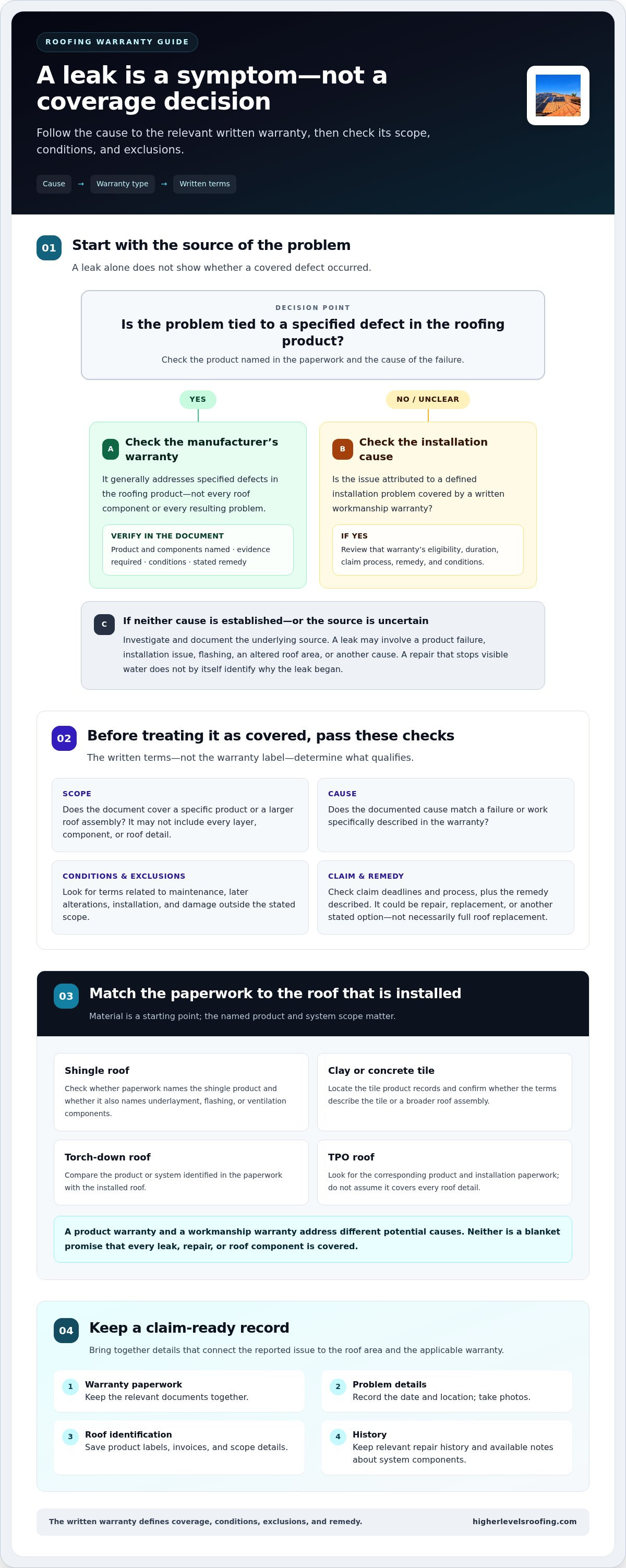
If you’re wondering “what does my roofing warranty actually cover,” start with the paperwork and the facts about the problem. A clear record helps you follow the claim process and explain what happened without assuming the issue qualifies. Work through this checklist in order.
Locate the documents. Gather the warranty certificate, installation paperwork, invoices, and product identification. If you can’t find a certificate, review the project file for manufacturer or installer documents.
Identify the roof system. Match the paperwork to the installed material and components, such as shingles, tile, torch-down roofing, or TPO. Note any sections repaired or replaced later.
Review the scope. Look for the products or work named, the defects addressed, and the remedy described. Check whether the terms apply to one component or a broader assembly.
Check the conditions and claim process. Find any maintenance or installation conditions, notice deadlines, claim channels, and required records. Follow the document’s instructions and keep a copy of anything you submit.
Document the damage. Record when you first noticed the issue, where it appears, and what you can observe. Take dated photos, note changes, and gather relevant inspection and repair history.
Which documents and details should homeowners gather?
Keep the warranty certificate with installation records, invoices, product labels or identification, and dated photos. Add inspection notes and records of earlier repairs, even if they involved a different roof area. Store copies together so you can find them quickly, and preserve original paperwork without writing on or altering it. A simple timeline can connect the roof’s history with the current concern.
What should you do when you notice a possible warranty issue?
Document visible symptoms promptly with photos taken from a safe, accessible location. Record the date and location, and take reasonable steps to limit further damage. Then follow the notice and claim process in the written terms, including the stated channel and supporting documentation. Protecting the home and documenting its condition are practical steps, but they don’t determine whether the warranty covers the issue.
Keep the investigation separate from the final coverage decision. A ceiling stain, for instance, records where water appeared inside, but it doesn’t establish where the water entered or which warranty, if any, applies. Note repairs made to address immediate damage and save related invoices or reports. If the problem leads you to weigh a repair against a larger project, explore roof replacement options in San Diego as part of your planning.
Choosing a San Diego Roofing Project With Clear Warranty Expectations
A roofing decision involves more than comparing materials or headline warranty terms. Start with the roof system that suits the property, then compare the written project scope, applicable warranty documents, and maintenance responsibilities. This makes it easier to understand what protection the paperwork describes and what care the roof will need after installation.
Ask “what does my roofing warranty actually cover” while reviewing documents for the specific system, not just a general description of a roofing material. A useful project comparison includes:
Roof system: Identify the material and components included in the proposed work, such as shingles, clay or concrete tile, torch-down roofing, or TPO.
Written scope: Check which roof areas and tasks the project covers, and note any work or components outside that scope.
Warranty documents: Review the applicable product and workmanship terms, including exclusions, conditions, remedies, and claim procedures.
Maintenance responsibilities: Understand any care or recordkeeping expectations described in the documents and plan how to keep relevant records.
Product coverage and workmanship quality are related, but they address different parts of a roofing project. A product warranty may describe terms for a specified material; workmanship terms, if included, may address defined installation-related issues. Careful installation matters to how the roof performs, while the written warranty explains what remedies may apply to eligible problems. Neither headline term tells the whole story. A guide to roofing material types can also help you compare system choices before weighing their documents.
How can homeowners compare warranty terms fairly?
Put the documents side by side and compare covered components, exclusions, conditions, remedies, and claim procedures. Treat the stated duration as one factor, not a complete measure of protection. Two documents may name different roof components or offer different remedies, even if their headline periods sound similar. Compare the terms with the actual project scope and material selection so you’re evaluating like with like.
San Diego properties don’t all face the same exposure. A coastal home and an inland property may have different surroundings and roof conditions; location alone, however, doesn’t establish that a particular warranty term applies. Focus on the project’s materials, installation details, and written conditions for that home.
How Higher Levels Roofing supports roofing projects
Higher Levels Roofing is a licensed contractor serving San Diego and nearby communities, including La Jolla, San Marcos, Encinitas, and Carlsbad. Its residential and commercial roofing work includes asphalt shingles, clay and concrete tile, rolled torch-down roofing, TPO, installations, replacements, and repairs. A clearly planned project connects the selected roof system with the written scope, while keeping product terms distinct from workmanship considerations.
Compare the documents and choose a roofing plan that fits your property and priorities. Explore local roofing services for installation, replacement, and repair planning.
Take the Next Step With Confidence
Your roof’s paperwork can be more than something you file away after a project. Keep it alongside a simple record of future work, and it can help you make informed decisions as your home’s needs change. If a concern comes up, you’ll have a clearer starting point for deciding what to document and which project questions to address.
Keep asking “what does my roofing warranty actually cover” as you weigh your next step, but let the property’s condition and your priorities guide the larger decision. A repair, replacement, or new installation is easier to plan when you understand the work involved and have realistic expectations about written coverage.
Higher Levels Roofing provides residential and commercial roofing work across shingles, tile, torch-down, and TPO systems. Explore roofing services from Higher Levels Roofing as you consider the right next step for your property. Start planning a roofing installation, replacement, or repair in the San Diego area.
Frequently Asked Questions
Does a roof warranty cover a leak?
It may cover a leak if the cause matches a defect or installation issue included in the applicable warranty. Water near a roof opening, for example, could involve a product, installation detail, or later alteration, and each may be treated differently. A ceiling stain alone can’t identify the source. Document where and when it appeared, then compare the findings with the warranty’s definitions and claim requirements.
What is the difference between a roof manufacturer warranty and a workmanship warranty?
A manufacturer warranty generally concerns defects in a specified roofing product, while a workmanship warranty, if provided, concerns defined installation-related problems. They may involve different claim contacts and remedies. Check whose name appears on each document and whether it covers materials, labor, or both. For a San Diego roofing project, keep product paperwork separate from installation records so you can identify which terms relate to the issue.
Can I transfer a roofing warranty when I sell my home?
Some roofing warranties can transfer to a new owner, but transfer rules vary and usually require action rather than happening automatically. Check the document for an application process, written-notice deadline, eligibility limits, and any fee. Some manufacturer terms require notice within a specified period after the sale. Include the warranty paperwork with the home’s roof records and complete the transfer steps required by that document.
Can roof repairs or maintenance affect my warranty?
They can affect a claim if the written terms set conditions for maintenance, alterations, or repairs, but a repair doesn’t automatically cancel every warranty. Keep dated invoices, photos, and notes showing what work was done and where. If a repair is needed before a claim is resolved, record the roof condition first when safe and practical. This creates a clearer record of the issue and the steps taken.
Does a roofing warranty cover storm or weather damage?
Not necessarily. Coverage depends on the warranty language and the cause of damage; a product-defect warranty may treat storm damage differently from a workmanship issue. In coastal communities such as La Jolla or Encinitas, and inland communities such as San Marcos, conditions can vary by property. Review the document’s weather exclusions and conditions, and keep storm dates, photos, and repair records together.
How do I make a claim under my roofing warranty?
Follow the claim instructions in the applicable document. Locate its notice deadline and submission channel, then gather proof of purchase or installation, product identification, dated photos, and a concise description of the problem. Keep copies of everything submitted and note the date. Don’t assume a repair estimate is claim approval; the warranty provider’s review determines whether the reported issue meets its terms.
Does a 50-year roofing warranty mean my roof is covered for 50 years?
Not necessarily. A 50-year term may apply only to named products and defined defects, and some warranties shift from non-prorated to prorated coverage after an initial period. “Lifetime” wording may also refer to the original homeowner’s ownership period under the document’s definition. Read the start date, covered components, remedy, transfer rules, and exclusions rather than treating the headline duration as full-roof protection.
Comments