


Types of Roofing Materials: A Homeowner’s Guide to Durability and Style

Updated: Aug 19
Most homeowners choose a roof based on how it looks from the curb, but the most beautiful tile in the world won't protect your investment if it isn't rated for your specific San Diego fire zone. It's completely normal to feel overwhelmed when you're staring at a sea of samples while worrying about shifting building codes or the next season of Santa Ana winds. You want a home that looks sharp, but you need a structure that stays secure and compliant.
This guide clarifies the different types of roofing materials available today, from classic asphalt shingles to modern TPO systems, so you can find the perfect match for your property's needs and local climate. We'll explore the pros, cons, and expected lifespans of each option, including the latest Class A fire-rating requirements mandated by the 2026 California Building Standards Code for high-risk zones. By the end, you'll have a clear shortlist of materials that offer the best return on investment and the peace of mind that your roof is built to last.
Table of Contents
Popular Residential Roofing Materials: Asphalt Shingles and Beyond
Asphalt shingles are the standard for a reason. They offer a reliable barrier against the elements without requiring a massive upfront investment. While there are many commercially available roofing materials, asphalt remains the top choice for a vast majority of residential projects. It's versatile enough to fit almost any architectural style, from a craftsman bungalow to a modern farmhouse. Most homeowners appreciate the balance of performance and aesthetics that this material provides, especially when considering the long-term value of their property.
3-Tab vs. Architectural Shingles
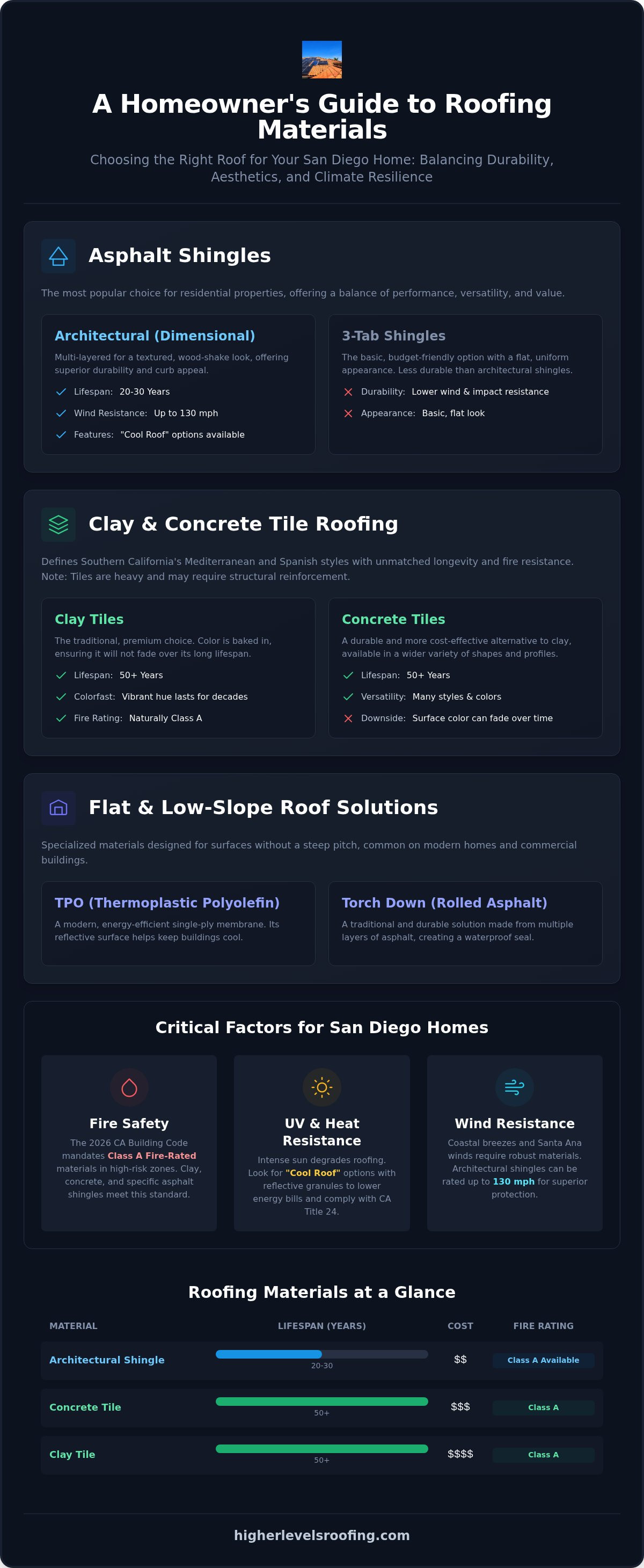
Traditional 3-tab shingles are the most basic version. They lay flat and have a uniform, brick-like appearance. While they are budget-friendly, they don't offer the same depth or wind resistance as their dimensional counterparts. Architectural shingles, often called dimensional shingles, are manufactured with multiple layers of asphalt. This creates a textured, wood-shake look that significantly boosts curb appeal. Beyond aesthetics, architectural shingles are built for durability. They typically carry higher wind ratings, often up to 130 mph, which is a major factor for coastal properties facing stiff Pacific breezes. For many, the slightly higher initial cost of architectural shingles is a wise investment because they typically offer a longer service life and better protection against the elements. Choosing the right design is a key step when evaluating different types of roofing materials for your home.
Asphalt Shingle Performance in High-UV Areas
In sunny regions like San Diego, the sun is actually a bigger threat to your roof than the rain. Intense UV radiation causes the protective granules on shingles to loosen and wash away over time. Once these granules are gone, the underlying asphalt mat is exposed to the heat, leading to cracking and "balding." High-quality shingles now feature specialized cooling granules that reflect solar energy rather than absorbing it. This helps keep your attic cooler and can lower your monthly energy bills. California's Title 24 energy code actually encourages these "cool roof" options to improve home efficiency. If you're ready to upgrade, finding an experienced shingle roofing company is the best way to ensure your installation meets these latest standards and provides maximum protection against the sun's relentless rays.
A standard asphalt installation generally lasts between 20 and 30 years. However, this lifespan depends heavily on proper ventilation and regular maintenance. In our local climate, a well-ventilated roof prevents heat from baking the shingles from the inside out. It's a small detail that makes a massive difference in the long-term ROI of your property. We always recommend choosing a shingle color that complements your home's exterior while considering its heat absorption properties. Lighter colors or specialized "cool" tones can make a noticeable difference in how your home feels during a September heatwave.
Architectural Classics: Clay and Concrete Tile Roofing
Tile is synonymous with the Southern California skyline. It defines the Mediterranean and Spanish Colonial styles that dominate our local neighborhoods. Beyond its undeniable curb appeal, tile offers a unique functional benefit known as thermal mass. Because tiles are thick and heavy, they absorb solar heat during the day and release it slowly at night. This natural regulation helps keep your living spaces cooler during scorching summer afternoons. When you compare different types of roofing materials, few can match the natural cooling properties and fire resistance of a well installed tile system.
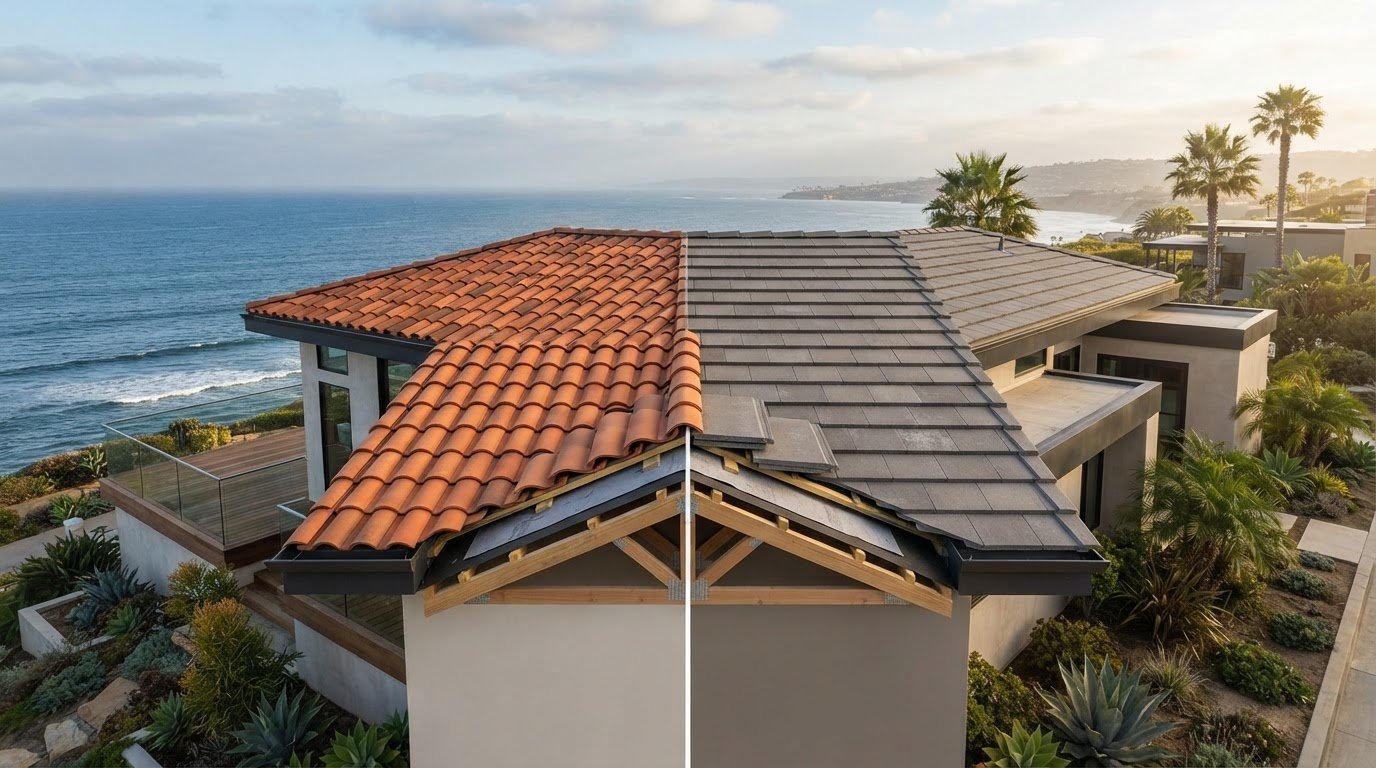
One factor you cannot ignore is weight. Tile is significantly heavier than asphalt shingles. Before you commit to this style, it's vital to determine if your home's existing frame can support the load. If your property was originally built with a lighter material, you might need structural reinforcement. The 2026 California Building Standards Code has strict requirements for roof assemblies, especially in Fire Hazard Severity Zones. Thankfully, both clay and concrete tiles are naturally non combustible and typically achieve the coveted Class A fire rating with ease.
Clay vs. Concrete: Which is Right for You?
Clay tiles are the traditional choice. They are made from natural earth and fired in a kiln, which bakes the color directly into the material. This means the vibrant terracotta hue you see on day one will look exactly the same fifty years later. Concrete tiles are a more modern alternative. They are composed of a mixture of cement, sand, and water. While concrete is often more cost effective and comes in a wider variety of shapes, the color is typically applied as a coating or mixed into the batch, which may fade slightly over decades of intense sun exposure. For a more technical breakdown of these options, explore our guide to roof tiles.
Tile Profiles: Flat Concrete vs. Concrete S-Tile
The profile of your tile completely changes the "vibe" of your home. Flat concrete tiles are surging in popularity for modern and minimalist designs. They provide a clean, slate like appearance that works beautifully with contemporary architecture. On the other hand, Concrete S-Tiles (or Spanish tiles) offer that classic "S" curve that creates deep shadows and architectural texture. While S-tiles allow for excellent airflow beneath the tiles, they can sometimes trap more leaves and debris in their channels compared to flat profiles. Flat tiles shed water efficiently but require a perfectly level roof deck to maintain their sleek, uniform look. If you are noticing shifted tiles or debris buildup, scheduling a professional tile roof assessment can help prevent underlayment damage.
While the tiles themselves can last for half a century, the underlayment beneath them has a shorter lifespan. This waterproof barrier is what actually keeps your home dry. Over time, heat and age can cause this layer to become brittle. We often see "tile slippage," where individual pieces shift out of place and expose the vulnerable underlayment to the sun. Meticulous craftsmanship during the initial installation is the only way to ensure these heavy components stay exactly where they belong for the long haul.
Flat Roof Solutions: TPO and Rolled Asphalt Torch Down
Traditional shingles rely on gravity to shed water. On a flat or low-slope surface, gravity isn't on your side. Water tends to pool or "pond," which eventually finds its way through the seams of standard materials. This is why choosing specialized types of roofing materials for flat sections is vital for the long term health of your home. Whether you're covering a modern flat-roof addition, a balcony, or a garage, you need a system that creates a continuous, watertight seal. While these solutions were once reserved for warehouses and office buildings, they've become a staple in modern residential design due to their sleek profile and exceptional performance.
Modern architecture often favors clean lines and flat rooflines. These designs require materials that can withstand standing water and intense sun without degrading. High performance membranes have stepped into this role, offering a level of protection that traditional asphalt rolls simply can't match. We often see homeowners transitioning to these commercial grade materials to ensure their high end renovations stay bone dry through every winter storm.
TPO Roofing: The Energy-Efficient Powerhouse
Thermoplastic Polyolefin, or TPO, is a single-ply membrane that has revolutionized flat roofing. It's a blend of polypropylene and ethylene-propylene rubber, which gives it incredible flexibility and resistance to punctures. One of its most significant benefits is its bright white surface. This membrane reflects a massive portion of solar radiation, preventing heat from soaking into your home. This "cool roof" effect can significantly lower your air conditioning costs during the summer. During installation, our technicians heat-weld the seams together using specialized equipment. This process fuses the sheets into one monolithic piece, making the seams actually stronger than the membrane itself. For a deeper look at how this material performs in our local climate, see our TPO commercial roofing case study.
Rolled Asphalt Torch Down Systems
If you're looking for a time-tested, multi-layer solution, rolled asphalt torch down roofing is a reliable choice. This system uses modified bitumen, which is asphalt that's been enhanced with rubber or plastic modifiers to increase its durability and flexibility. The name comes from the installation method: a professional uses a propane torch to melt the asphalt on the underside of the roll as it's applied. This creates a permanent, fused bond with the roof deck that's incredibly resistant to leaks. It's a thick, rugged material that handles foot traffic on balconies better than many other options. To keep these membranes in top shape, we recommend regular inspections to ensure the seams remain tight and the surface is free of sharp debris. This meticulous attention to detail is what separates a standard roof from a lifetime investment. When evaluating different types of roofing materials for your flat surfaces, the choice between TPO and torch down often comes down to your specific goals for energy efficiency versus traditional ruggedness.
Climate Factors: Matching Materials to San Diego Environments
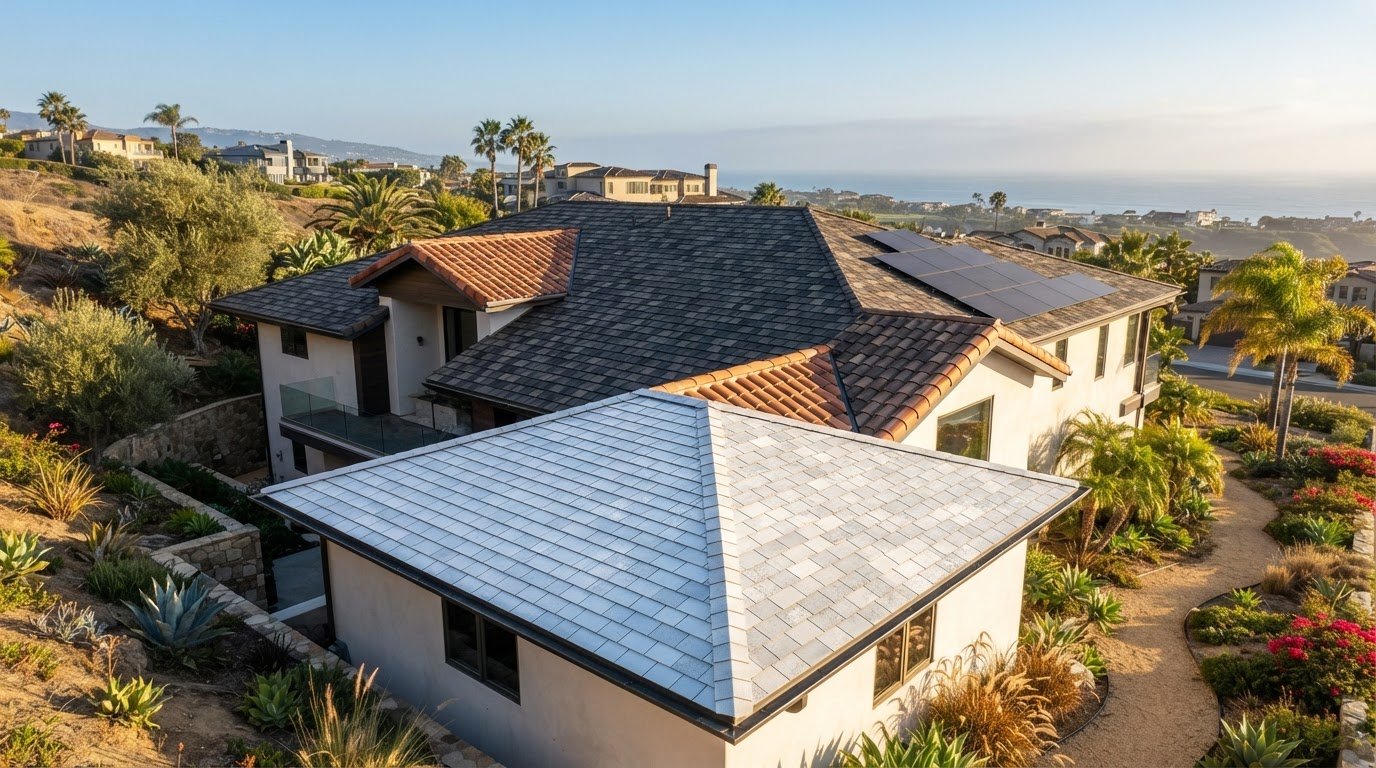
San Diego's microclimates require more than a one-size-fits-all approach. While a home in Ramona faces intense inland heat and wildfire risks, a property in Del Mar deals with constant salt spray and damp marine layers. Choosing between different types of roofing materials means looking past the brochure and understanding how these elements interact with your roof deck every single day. Meticulous planning now prevents expensive repairs five years down the road. Understanding the resilience of various types of roofing materials is the first step toward a secure home.
The "Marine Layer" also brings persistent moisture that encourages algae growth, particularly on the shaded north side of homes. This isn't just an aesthetic issue; moisture retention can eventually degrade certain underlayments. Many modern asphalt shingles now include copper-infused granules to resist these dark streaks. We also see 300 plus days of sun in many parts of the county, which makes UV resistance a top priority. Without the right protection, the sun's rays can make materials brittle and prone to cracking long before their expected lifespan ends.
Fire Resistance Standards
Fire safety is no longer optional for many local homeowners. As of January 1, 2026, the updated California Wildland-Urban Interface (WUI) code expanded its reach significantly. If you live in areas like Alpine, Ramona, or Fallbrook, you're likely now in a zone that mandates a Class A fire-rated roof assembly. This is the highest rating available, indicating the material can withstand severe fire exposure. Clay tiles and concrete tiles are naturally non-combustible, making them elite performers in these high-risk areas. Many architectural asphalt shingles also achieve this rating through specialized fiberglass mats and fire-retardant granules. It's vital to check the specific fire hazard severity map for your neighborhood before selecting a new system.
Salt Air and Coastal Longevity
Coastal living presents its own set of challenges, specifically related to corrosion. Salt air is a silent threat that eats away at standard metal fasteners and flashings long before the roofing material itself fails. Clay tile is a top performer in La Jolla and Carlsbad because it's completely impervious to salt. Salt air significantly accelerates the oxidation process on standard metal roofs, leading to structural weakness and unsightly rust staining. For those near the water, we prioritize corrosion-resistant components to ensure the entire system lasts as long as the tiles themselves. If you're unsure which material fits your neighborhood's specific microclimate, schedule a local roofing consultation to get an expert assessment of your property.
Decision Framework: Choosing Your Best Roofing Material
Selecting the right fit among various types of roofing materials involves looking at the big picture. It's not just about the price tag today. It's about how that material will perform over the next three decades of Southern California weather. A successful choice balances your personal style with the practical realities of your home's structure and your neighborhood's regulations. Taking the time to weigh these factors now prevents the frustration of a mismatched or non-compliant installation later.
Don't forget to check your HOA guidelines before falling in love with a specific color or texture. Many San Diego communities have restricted palettes to maintain a cohesive neighborhood aesthetic. Architectural harmony is equally important for your home's long-term value. A craftsman home typically shines with architectural shingles, while a Spanish Revival home feels incomplete without the classic profile of clay or concrete tile. Regarding modern or contemporary designs, the clean lines of flat concrete tile or a sleek TPO membrane often provide the best visual results.
If you're considering a transition from a lightweight material to heavy tile, a structural assessment is the most important step in your decision framework. We mentioned the weight of tile earlier, but it's worth repeating that your home's framing must be capable of supporting that load. This verification ensures safety and compliance with local building codes. It's a professional step that protects your investment and your family.
Cost vs. Lifespan Comparison
Look at the long-term math rather than just the initial quote. While asphalt shingles have a lower entry cost, you'll likely replace them twice in the time it takes for one clay tile roof to reach its half-life. Amortizing the cost over 50 years often reveals that premium materials are the more economical choice in the long run. Additionally, choosing reflective types of roofing materials like white TPO or cool-rated shingles provides a significant ROI through reduced air conditioning costs. High-quality roofing also boosts resale value. Prospective buyers view a 50-year tile roof as a massive asset that eliminates a major capital expenditure for decades.
Final Checklist Before You Buy
Confirm manufacturer warranties: Ensure the warranty covers both the material and the labor for your specific coastal or inland region.
Check local references: Ask for examples of how a specific material has held up in your exact neighborhood, especially if you face high salt spray or intense canyon heat.
Verify structural capacity: Never sign a contract for heavy tile without professional verification of your roof deck and trusses.
Review fire ratings: Double-check that your choice meets the 2026 California Wildland-Urban Interface requirements for your specific fire hazard zone.
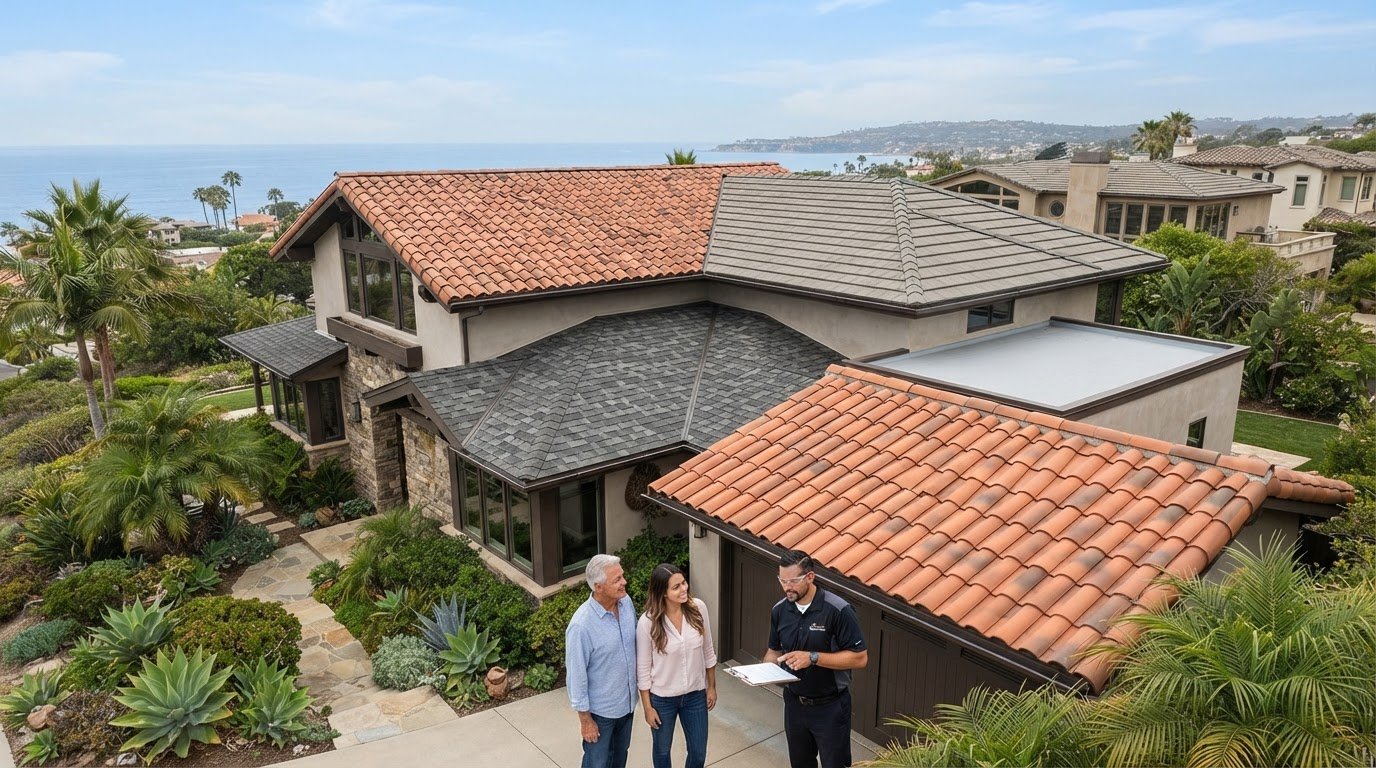
A professional consultation is the final piece of the puzzle. It turns this general guide into a specific, actionable plan for your property. When you're ready to move forward, a meticulous inspection will provide the clarity you need to choose with confidence.
Building Long-Term Security for Your San Diego Home
Your roof is the most critical line of defense for your property. Choosing between the various types of roofing materials isn't just about color or cost; it's about matching a system to your home's unique structural needs and San Diego's diverse microclimates. Whether you prioritize the energy efficiency of TPO, the timeless durability of clay tile, or the versatile protection of architectural shingles, the right choice will safeguard your investment for decades to come.
As a locally owned and licensed San Diego roofing contractor, we understand the meticulous craftsmanship required to meet the latest building codes and fire safety standards. We bring specialized expertise in asphalt, tile, and TPO systems to every project, ensuring your installation reflects our high standards for safety and aesthetic pride. Don't leave your home's long-term security to chance. You can get a professional roofing estimate for your San Diego property today. We're here to provide the expert guidance and steady hand you need to move forward with total confidence.
Frequently Asked Questions
What is the most durable roofing material for San Diego homes?
Clay and concrete tiles are the champions of longevity in our region, often lasting 50 years or more with proper maintenance. These materials are specifically designed to withstand intense UV exposure and high temperatures without degrading. While other types of roofing materials like architectural asphalt shingles offer great value, tile's natural resistance to rot and fire makes it the elite choice for long-term property protection in the Southern California climate.
How do I know if my house can support the weight of clay or concrete tiles?
A professional structural inspection is the only reliable way to verify if your home's framing can handle the significant load of tile. Standard asphalt roofs are much lighter, so homes not originally designed for tile often require additional bracing or reinforced trusses. We evaluate the roof deck and load-bearing walls to ensure the structure meets safety standards before any heavy materials are installed. Safety is always our primary concern.
Are asphalt shingles fire-resistant?
Most modern architectural asphalt shingles carry a Class A fire rating, which is the highest level of protection available. This resistance comes from a fiberglass base mat that doesn't ignite easily, combined with fire-retardant mineral granules. In San Diego's high-risk wildfire zones, choosing a Class A rated product is often a legal requirement under the 2026 building codes. It provides vital peace of mind during the dry Santa Ana wind season.
What is the difference between TPO and standard flat roofing?
TPO is a modern, single-ply membrane that is heat-welded at the seams, whereas standard flat roofing like rolled asphalt uses multiple layers of bitumen. TPO is highly reflective and energy-efficient, making it a "cool roof" favorite. Standard rolled systems are often thicker and more rugged for foot traffic. Both are effective, but TPO generally offers superior solar reflection and a more streamlined, monolithic barrier against standing water on low-slope surfaces.
How does salt air affect the lifespan of a roof near the coast?
Salt air acts as a corrosive catalyst that can significantly shorten the life of metal components like flashings, vents, and fasteners. While the roofing material itself might stay intact, rusted nails or valleys underneath can lead to structural failure and leaks. In coastal communities, we prioritize stainless steel or specialized corrosion-resistant hardware. This meticulous attention to detail ensures the entire system survives the harsh environment without premature oxidation.
Can I change my roofing material from shingles to tile?
Yes, you can transition from shingles to tile, but it almost always requires a structural upgrade to support the added weight. Our team assesses your current roof's pitch and framing to determine what reinforcements are necessary. While it's a more involved process than a simple replacement, switching to tile can dramatically improve your home's curb appeal and thermal efficiency. It's a popular way to modernize the look of a traditional property.
What are the most energy-efficient roofing types?
White TPO membranes and "cool roof" asphalt shingles are leading choices for reducing attic temperatures. These types of roofing materials are engineered to reflect solar energy away from the building rather than absorbing it. Clay and concrete tiles also provide excellent efficiency through thermal mass and natural airflow. By selecting materials that meet California's Title 24 standards, you can lower your cooling costs and improve indoor comfort during our warmest months.
Which roofing material is best for preventing leaks on a flat roof?
TPO and rolled asphalt torch down systems are the most reliable options for preventing leaks on flat surfaces. TPO uses heat-welded seams that create a permanent, watertight bond, while torch down roofing uses heat to fuse modified bitumen layers together. Both methods eliminate the gaps found in traditional shingle applications. The best choice depends on your specific needs for durability, but both provide a seamless barrier that handles ponding water with ease.
Comments