


Sustainable Roofing Guide for San Diego Properties

The most sustainable roof isn’t automatically the one with the greenest-sounding label. For San Diego properties, the better choice is often a system that fits the building and local conditions, performs reliably, and can be maintained appropriately. Comparing sustainable roofing options means looking beyond material claims to the roof’s full service life.
It’s reasonable to look for a roof that uses materials thoughtfully and supports energy performance. Durability, maintenance, repairability, and end-of-life considerations matter, too. Coastal moisture can create different demands from inland heat and sun, so a material that suits one property may not be the right fit for another.
This guide compares asphalt shingles, concrete and clay tile, and low-slope systems such as TPO and rolled asphalt torch-down. You’ll learn what sustainability can mean in a roofing decision, where the trade-offs lie, and which project details to consider before installation or replacement. The goal is a clear choice grounded in your property’s needs, not vague green claims.
Table of Contents
What Makes Sustainable Roofing Options Sustainable in San Diego?
A roof’s environmental value isn’t captured by a material name or a broad “eco-friendly” claim. A useful assessment considers the whole system: how its components are made and transported, how they’re installed, how the roof performs in service, what repairs it may need, and what happens to the materials when it’s removed. The most responsible choice balances these factors around the building’s needs.
Service life matters because a roof that remains functional and repairable may avoid premature replacement and the waste that comes with removing and disposing of materials. But durability alone doesn’t settle the question. Energy performance, maintenance, material sourcing, and end-of-life pathways also affect the overall picture. A material may perform well in one area while presenting trade-offs in another.
How should homeowners judge a roof’s environmental impact?
Think across the roof’s lifecycle, from production and transport through installation, use, repairs, and eventual removal. When a product is promoted for recycled content, energy performance, or recyclability, look for documentation specific to that product. General marketing language is less useful than product information. Avoid relying on numerical environmental benefits unless they’re supported by evidence for the particular product and roof assembly.
Repairability belongs in the assessment, too. If localized damage can be repaired without replacing a larger area, the roof may remain useful while less material is discarded. Installation quality matters as well: poorly executed details can lead to avoidable problems and shorten the roof’s useful service life, regardless of the material’s reputation.
Why does San Diego location matter to roof selection?
San Diego properties don’t all face the same conditions. Coastal air and moisture may affect a roof differently from strong inland sun and heat. Even within one community, roof slope, shade, exposure, drainage, and building design shape what the assembly needs to handle. Assess the specific property rather than assuming a material will perform identically across the region.
Local requirements can also depend on the building and proposed roof assembly. Before choosing a system, verify the current code and project requirements that apply to the property. That keeps the decision grounded in site conditions and applicable rules rather than a general recommendation written for another climate or building type.
Some sustainable roofing discussions include planted systems. Green Roofs: An Overview describes their types, components, and potential benefits, offering context on how a roof can serve purposes beyond weather protection. A green roof is a distinct system, and its suitability depends on the building and project requirements.
For a practical comparison, separate verifiable product information from broad promises, then weigh the complete assembly against the property’s needs. Consider roof condition, exposure, repair options, and installation details. This is a more dependable starting point than choosing by a sustainability label alone.
Which Roofing Factors Matter Most for Long-Term Performance?
Material is only one part of a roof’s performance. Roof shape, drainage, exposure, supporting structure, and installation details all affect how well the complete system protects a building. A covering suited to one roof may not fit another, even in the same part of San Diego.
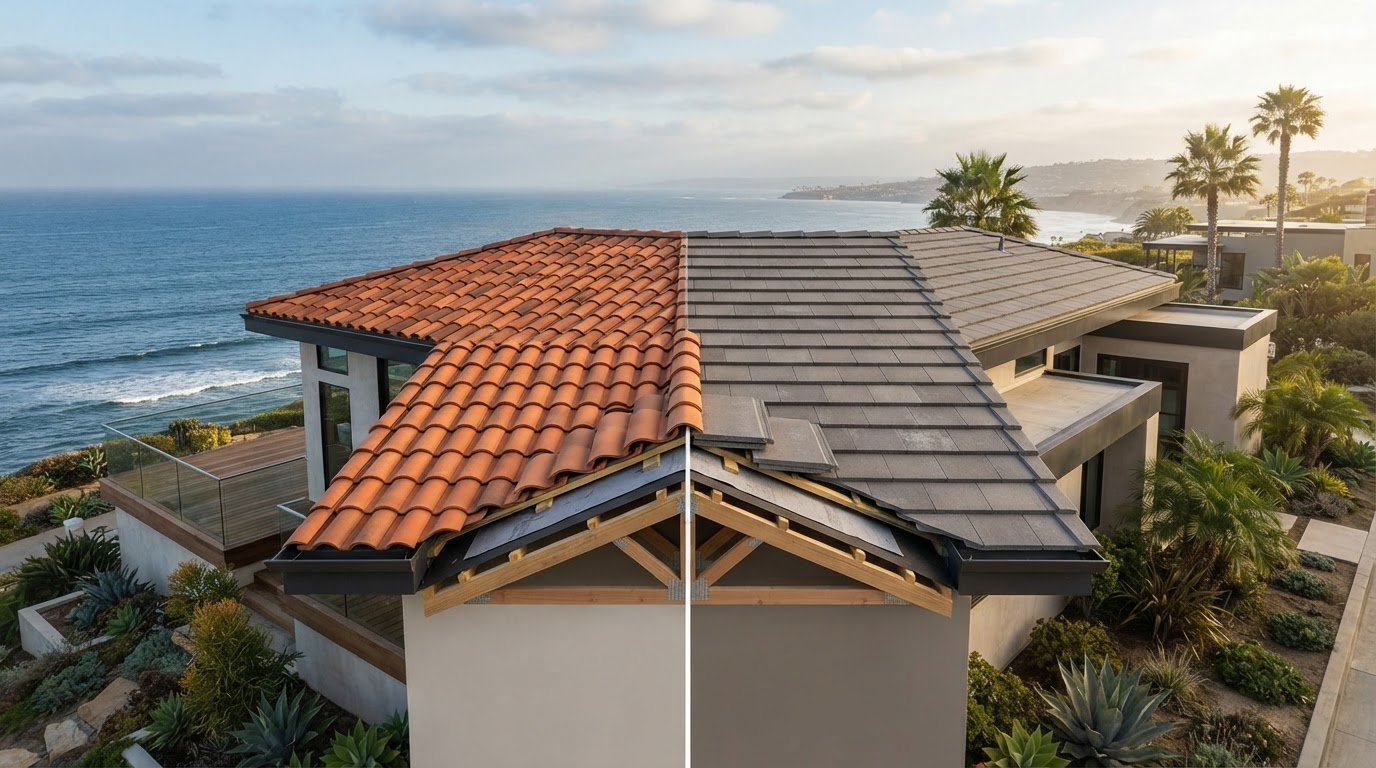
Lifecycle performance is how reliably a complete roof assembly serves its building through use, maintenance, and repair. This keeps the focus on practical results, not just the material label. Underlayment, flashing, transitions, and other details work together with the visible roof covering. If components are poorly matched or installed, they can undermine the assembly’s performance.
How do climate and building conditions shape a sustainable choice?
Start with the property. Coastal exposure can involve moisture and salt air, while inland roofs may face stronger heat and sun. These are useful distinctions, not rules for every neighborhood. Shade, roof slope, drainage paths, and the existing structure also influence which roofing system is practical. There’s no universally best material for every San Diego building.
For example, a low-slope roof depends on suitable water management and correctly executed seams and edges. A sloped roof has different drainage behavior and installation details. The existing structure matters, too, because its design can limit which assemblies are appropriate. Evaluate the complete system and verify the requirements for the specific building and project.
Why do maintenance and repairability belong in the comparison?
Inspection and timely repairs can address developing issues before they affect larger areas of a roof. A maintainable system may remain functional longer when its condition is monitored and repairs are carried out appropriately. Consider whether damaged sections can be accessed and whether compatible materials can be used for future repairs. Those details can determine whether a localized problem stays localized.
Routine upkeep also gives property owners a chance to notice changes such as cracked or displaced covering, worn sealant, or drainage concerns. The right inspection approach depends on the roof type and building. For practical guidance on caring for a roof over time, explore the site’s roofing and repair services.
Before comparing materials, consider these assembly-level factors:
Roof design: Slope and transitions affect how water moves and where details need careful attention.
Exposure: Sun, heat, coastal air, and shade vary by property and can shape material suitability.
Installation: Accurate preparation and detail work help components function together as intended.
Maintenance access: Practical inspection and repair can support continued use and help avoid unnecessary replacement.
These factors connect sustainability to workmanship and care. Start with the building’s actual needs, then account for the complete assembly and how it will be maintained. Higher Levels Roofing provides residential and commercial installations, replacements, and repairs in San Diego, including La Jolla, San Marcos, Encinitas, and Carlsbad. For property-specific roofing guidance, review local roofing project support.
How Do Sustainable Roofing Options Compare by Material?
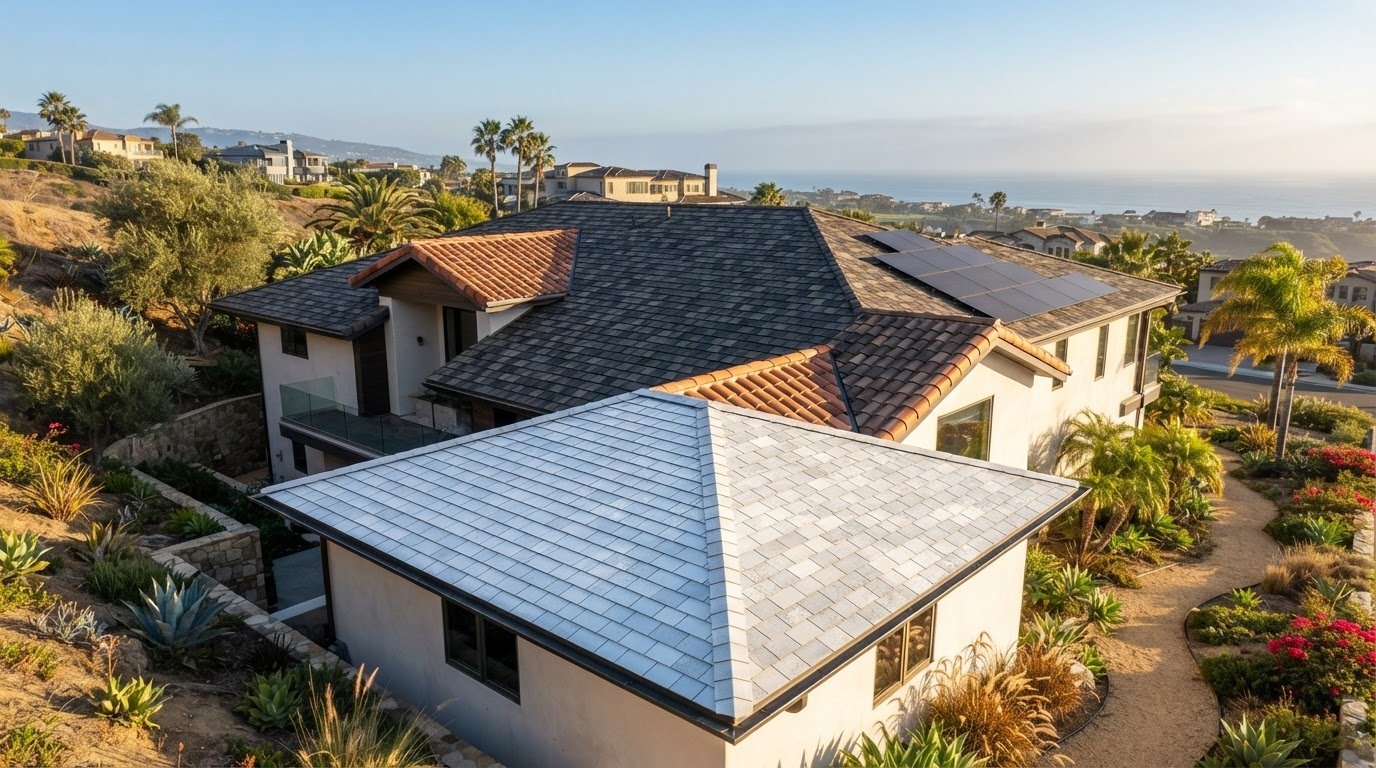
Material comparisons are most useful when they account for roof type and project needs. Asphalt shingles, clay and concrete tile, TPO, and rolled asphalt torch-down suit different applications, so they shouldn’t be ranked as if they were interchangeable. Their sustainability depends on the specific product, roof assembly, installation, maintenance plan, and evidence behind environmental claims.
The overview below is a starting point, not a declaration that one material is best. For each option, focus on fit and ask what documentation supports claims about recycled content, reflectance, recyclability, or environmental impact. Details can vary by product, so don’t assume a material category alone proves a particular benefit.
Material category | Common application | Maintenance questions | Evidence to review
Asphalt shingles | Sloped residential roofs | How will damaged shingles and roof details be inspected and repaired? | Product-specific information about material content, energy performance, and disposal options.
Clay tile | Sloped roofs where the building and assembly are suited to tile | How are displaced or damaged tiles identified, and how are repairs handled? | Documentation for the specific tile and assembly, including any stated environmental attributes.
Concrete tile | Sloped roofs where the existing structure and design are appropriate | What maintenance helps keep the covering and related details in service? | Product-specific sourcing, performance, and end-of-life information rather than broad category claims.
TPO | Low-slope roofing applications | How are seams, edges, and drainage areas checked and maintained? | Documentation for the membrane and complete assembly, including support for environmental claims.
Rolled asphalt torch-down | Low-slope applications designed for this type of roofing | How are seams and transitions inspected, and how are repairs approached? | Information about the actual product and assembly, not assumptions based on the material category.
Which options may suit residential roofs?
Asphalt shingles, clay tile, and concrete tile are distinct choices for sloped residential roofs. The right fit depends on roof design, supporting structure, local exposure, and maintenance needs. Tile selection deserves particular attention to the building’s structure and installation details. For a closer look at tile considerations, consult the guide to roof tiles and San Diego performance, then compare its guidance with the conditions at your property.
Which options may suit commercial or low-slope roofs?
TPO is a membrane roofing category, while torch-down uses rolled asphalt installed as a roofing system. They aren’t interchangeable. Building use, roof assembly, drainage, and maintenance access all shape suitability. A deeper system discussion is available in the San Diego TPO commercial roofing case study. For either option, review product-specific evidence and consider the complete assembly rather than the exposed covering alone.
For any of these sustainable roofing options, tie the comparison to the actual product and building. Review documentation that supports environmental claims and weigh it alongside application, repair needs, and installation requirements. This makes trade-offs visible without promising an unverified impact or treating a material label as a sustainability rating.
How Can You Evaluate a Sustainable Roof for Your Property?
A sound roofing decision starts with the building, not a material’s green label. Use a consistent process to understand the roof’s condition, clarify priorities, compare suitable systems, substantiate product claims, and plan for upkeep. This makes sustainable roofing options easier to compare for a home or commercial property.
For San Diego properties, choose the roof system that fits the building, local exposure, and realistic maintenance needs, then verify its claims.
What project details should you assess first?
Record the roof type, slope, existing assembly, drainage pattern, and visible condition. Clarify whether the work is a repair, replacement, or new installation, since each project starts with different constraints. Coastal exposure and inland sun may call for different considerations, but the building’s design and exact site conditions matter more than a broad regional label.
Priorities differ, too. A homeowner may focus on indoor comfort, appearance, and maintenance demands. A commercial property owner may weigh building operations, maintenance access, and how roofing work fits the facility’s needs. Define those priorities before comparing products.
A practical five-step evaluation:
Assess: Document roof condition, slope, drainage, and existing assembly.
Define: Rank priorities such as service life, energy performance, maintenance, and appearance.
Compare: Consider systems suited to the roof design and building use.
Verify: Review product-specific documentation for environmental and performance claims.
Plan: Identify inspection needs, repair pathways, and ongoing upkeep.
How can you compare claims and plan for upkeep?
Look for documentation tied to the actual product or assembly. A general sustainability statement doesn’t establish recycled content, reflectance, recyclability, or environmental impact. Compare the evidence with practical factors: how the roof will be inspected, what maintenance it needs, and how repairs can be handled. Give claims less weight when they can’t be connected to specific product information.
Use this short decision matrix to keep the comparison focused:
Service life: What product and assembly information supports expected performance, and how does installation affect it?
Energy considerations: What product-specific performance evidence applies to this roof and building?
Maintenance: What should be inspected, and how can damage be addressed?
Material documentation: Are sourcing, recycled content, or end-of-life claims supported for this product?
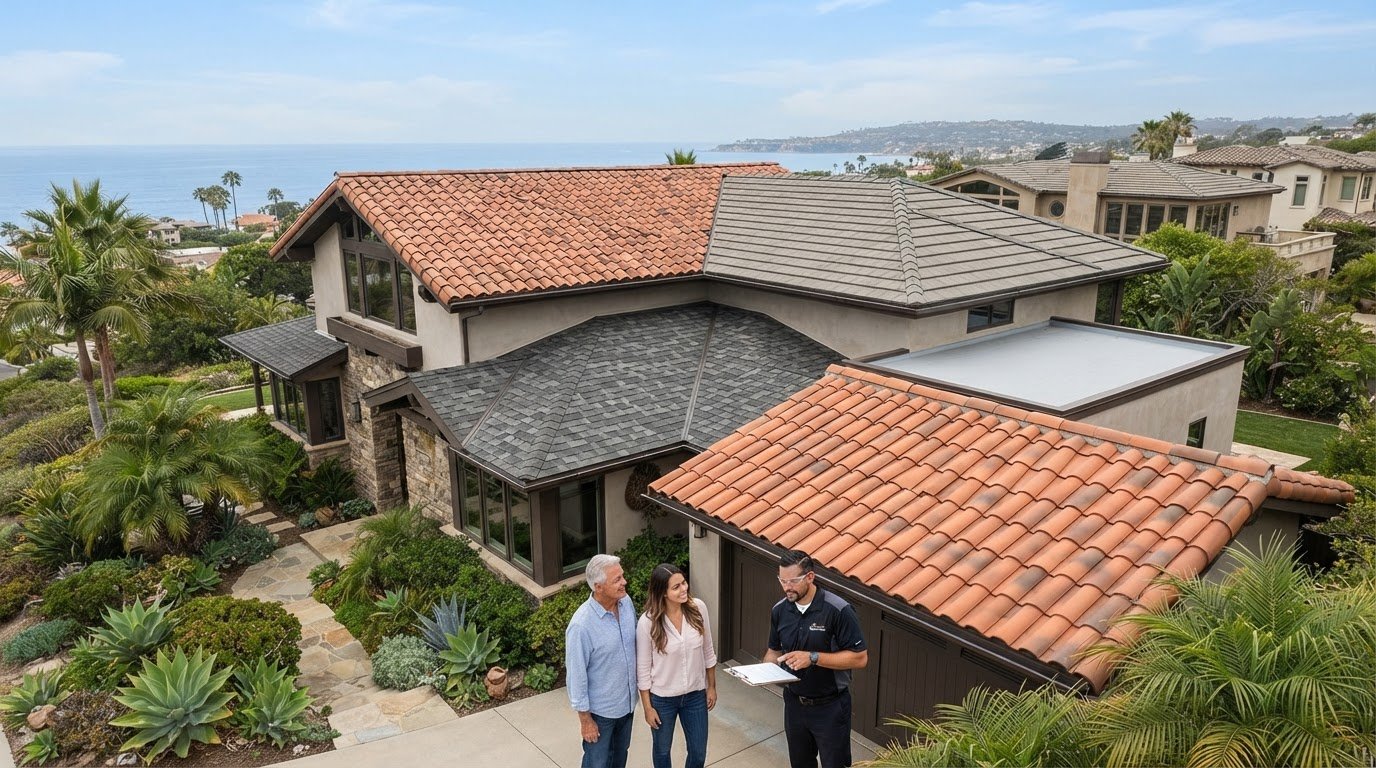
If you’re considering a full replacement, review the roof replacement guide as part of project planning. Higher Levels Roofing provides residential and commercial roofing installation, replacement, and repair in the San Diego area. Plan a property-specific roof assessment to connect the building’s needs with an appropriate roofing approach.
How Higher Levels Roofing Helps Plan a More Sustainable Roof
A thoughtful roofing plan begins with the property, not a promise attached to a material. Higher Levels Roofing is a licensed contractor serving San Diego and nearby communities, including La Jolla, San Marcos, Encinitas, and Carlsbad. The company provides residential and commercial roof installation, replacement, and repair, bringing the building type, roof condition, and site exposure into the material discussion.
Higher Levels Roofing works with asphalt shingles, clay and concrete tile, rolled asphalt torch-down, and TPO roofing. These are different categories for different applications. Their inclusion in a comparison doesn’t establish a particular environmental benefit: claims about reflectance, recycled content, recyclability, or other attributes need product-specific support. The practical goal is to select a suitable system and plan its installation and care carefully.
What should a project-specific roofing assessment consider?
A useful assessment connects what the roof needs now with how the property is used. Roof condition, slope, existing assembly, drainage, building type, and local exposure all inform the discussion. Coastal and inland properties can face different conditions, while shade and roof design also affect what matters most. No single material is automatically the right choice for every San Diego building.
Higher Levels Roofing handles repair, replacement, and installation work, so a project can begin with the roof’s current condition and the work being considered. A repair may suit a localized issue; a replacement calls for a broader look at the assembly and material fit. In either case, material selection and installation planning go together. Even a carefully selected covering needs appropriate preparation and attention to roof details to serve the building as intended.
What is a practical next step for San Diego property owners?
Before discussing a project, gather what you know about the roof’s age, visible concerns, past repairs, and any areas where water has entered. Then identify your priorities. A homeowner might value appearance and manageable upkeep, while a commercial property owner may also consider how roofing work relates to building operations. These details help focus the assessment without forcing every property into the same checklist.
Consider whether repair or replacement better supports continued use of the roof. Account for the existing system’s condition, the scope of needed work, and the suitability of potential materials rather than treating replacement as the only path. For a replacement, discussing the roof assembly and project requirements alongside product documentation can keep environmental claims grounded in evidence.
Higher Levels Roofing helps San Diego property owners consider roof condition, material suitability, and the work involved, whether the project concerns a home or commercial building. Discuss your roofing project with Higher Levels Roofing.
Make Your Next Roofing Decision with Confidence
You don’t need to choose a material immediately. Start by writing down what you want the roof to do for your property and which trade-offs matter most. A clear priority, such as manageable maintenance or documented product performance, can make the options easier to assess and keep broad environmental claims in perspective.
A thoughtful choice among sustainable roofing options is one you can explain in terms of your building’s needs, the available evidence, and the care the roof will require. Keep product information and project questions together so you can revisit the reasoning over time, especially if the roof needs repair or its condition changes. That record can support consistent decisions instead of a rushed choice based on a label alone.
If you’re ready to discuss your San Diego property, start a roofing project conversation with Higher Levels Roofing.
Frequently Asked Questions
What makes a roof sustainable?
A sustainable roof balances useful service, maintenance needs, energy performance, material sourcing, and end-of-life considerations. For example, an appropriate repair may keep a sound roof in service and avoid removing materials prematurely, while environmental claims need product-specific evidence. Consider the complete assembly and the building’s needs, not just the visible covering. No single sustainability label answers every question about a roof’s overall impact.
Are clay or concrete roof tiles sustainable options?
Clay and concrete tiles can be part of a sustainable roofing choice, but the material category alone doesn’t establish environmental impact. Consider whether the building structure and roof design suit tile, how damaged pieces can be repaired, and what documentation supports claims about the specific product. On an existing tile roof, assess whether a localized repair can address the issue before assuming the entire covering needs replacement.
Can a roof make a home more energy efficient?
Yes, a roof can influence how much solar heat a home absorbs, but results depend on the product, roof assembly, and building conditions. A qualifying cool-roof material may help reduce heat absorption, but it doesn’t guarantee a particular energy saving. Attic insulation, ventilation, shade, and air leakage also affect comfort and energy use. Review product performance documentation and consider the home as a whole.
How much does a sustainable roof cost?
There’s no single cost for a sustainable roof because the project depends on the property and selected system. Factors include roof area and design, existing layers, the condition of the underlying structure, removal and disposal needs, access, and installation details. Repair may have a different scope from full replacement. A project-specific assessment helps clarify the work before comparing material choices and their documented attributes.
Are sustainable roofing options suitable for San Diego’s coastal areas?
Yes, sustainable roofing options can suit coastal properties, but selection should account for the property’s exposure and roof design. In La Jolla, Encinitas, and Carlsbad, coastal air and moisture are factors to consider; inland San Marcos may present different sun and heat conditions. Asphalt shingles, tile, and low-slope systems each need evaluation in context. Don’t assume one choice fits every San Diego neighborhood.
Can I make my existing roof more sustainable without replacing it?
Often, the first step is to assess whether the existing roof can remain in service. An appropriate repair may address a localized issue without replacing sound sections, while regular condition checks can help identify problems before they spread. Keep records of repairs and product information for future decisions. If the roof has widespread deterioration or recurring issues, compare repair needs with replacement options before deciding.
Do California building codes require a cool roof in 2026?
California’s 2025 Energy Code took effect January 1, 2026, and applies prescriptive cool-roof requirements to most steep-slope residential re-roofs in San Diego County, as well as low-slope roofs. Requirements depend on roof type and project details. Covered materials must meet applicable ratings, including Cool Roof Rating Council listing. Verify current state and local requirements for the particular building and roof assembly before work begins.
Comments