


How Often Should You Inspect a Commercial Flat Roof in San Diego?

A commercial flat roof can look sound from the ground while a blocked drain or damaged seam goes unnoticed. If you’re wondering how often to inspect a commercial flat roof in San Diego, a practical baseline is twice a year, with additional checks when conditions call for them.
A planned schedule can help catch concerns early while limiting disruption to building operations. A useful seasonal approach is to arrange one professional inspection in spring, after the rainy season, and another in September or October, before the next rainy season. Treat these as planning dates, then adjust them to the roof’s documentation, condition, and maintenance history.
Heavy rain or strong Santa Ana winds may also prompt an additional check. So can water ponding, debris around drains, visible membrane changes, or signs of a leak indoors. If you notice one of these concerns, record where and when it appeared and arrange an assessment rather than waiting for the next scheduled visit.
This guide explains how to set an inspection cadence, recognize signs that call for follow-up, and keep useful records. Whether your property is in San Diego, La Jolla, San Marcos, Encinitas, or Carlsbad, a consistent process can help you make informed maintenance decisions.
Table of Contents
How often should you inspect a commercial flat roof in San Diego?
Which commercial flat-roof conditions change the inspection schedule?
Routine inspections, post-event checks, and maintenance visits: what is different?
How to build a commercial flat-roof inspection calendar in San Diego
When should San Diego businesses bring in a commercial roofing professional?
How often should you inspect a commercial flat roof in San Diego?
As a practical starting point, schedule a professional inspection twice a year. Then adjust the interval to the roof system’s documentation, condition, age, repair history, and exposure. This is a planning baseline, not a universal rule. Follow the guidance for the installed roof system and consider what previous inspections and repairs have shown. If you’re deciding how often to inspect a commercial flat roof in San Diego, put inspections on the calendar before a visible leak forces the issue. Regular reviews can help identify conditions that need closer assessment or planned follow-up.
Plan for two professional inspections a year, then tailor the timing and frequency to the roof’s documentation, condition, repair history, and exposure.
What does a twice-yearly inspection schedule mean?
Space routine inspections across the year rather than scheduling them close together. For a San Diego property, a practical seasonal approach is to arrange one check before the winter rainy season, often in September or October, and another in spring after the rainy season. These dates are useful calendar anchors, not fixed requirements. Review the roof system’s documentation and your building’s maintenance history when choosing exact dates.
Building staff can note visible changes from safe locations and report leaks, but those observations are not a substitute for a professional assessment. A flat roof has features such as seams, penetrations, and drainage areas that need deliberate attention. A professional inspection can document their condition and help determine what follow-up is appropriate.
Why should San Diego property managers avoid a one-size-fits-all interval?
Two roofs on similar buildings may need different schedules. A newer roof with a clear maintenance record may call for a different approach from an older roof with recurring repairs, unresolved concerns, or areas where water tends to remain. Use the roof system’s recommendations alongside past inspection and repair records to choose an interval that fits the property.
Location is one factor to consider, not a diagnosis. Coastal and inland properties can have different exposures, but location alone does not establish that a roof is damaged or needs more frequent inspections. Consider the site’s actual conditions and the roof’s documented performance instead of assuming that a neighborhood determines the right schedule.
Check the documentation: Use the roof system’s requirements as a starting point for routine planning.
Review the history: Consider roof age, previous repairs, and repeated findings when setting the next inspection date.
Respond to evidence: Arrange an additional assessment if staff report a leak or an inspection identifies a concern that needs follow-up.
Routine inspections are preventive, not just a response to visible problems. Keep a twice-yearly baseline on the calendar, then revise it when system guidance, roof condition, or maintenance history points to a different interval. This gives property teams a dependable starting plan without assuming every commercial roof has the same needs.
Which commercial flat-roof conditions change the inspection schedule?
A twice-yearly calendar is a starting point. The roof’s history and current condition help determine whether another inspection would be useful and whether an area needs follow-up before the next routine visit. When considering how often to inspect a commercial flat roof in San Diego, separate planned inspections from extra checks prompted by a new concern, severe weather, or building work.
Roof age, repair history, persistent ponding, drainage concerns, membrane condition, system guidance, and site exposure can all affect inspection timing.
How roof age, repairs, and drainage affect timing
An older roof or one with repeated repairs may benefit from closer monitoring, particularly if earlier inspections identified areas needing attention. After a repair, plan any follow-up based on the work completed and applicable system documentation. A repair to one detail does not automatically mean the entire roof needs a new inspection schedule, but it does make clear records and a timely review of that area valuable.
Report standing water and drains that appear blocked so the condition can be assessed. These observations can help focus an inspection, but neither one alone proves membrane failure. Note where and when the issue appeared and whether it happens again.
How San Diego exposure and roof-system type affect the plan
Coastal and inland properties may have different site exposures, but location alone does not establish roof damage or dictate an inspection interval. Base decisions on observed conditions and the roof’s history rather than assuming a neighborhood has a particular roof risk. For general maintenance context, the National Roofing Contractors Association offers roofing resources. The roof’s own documentation remains important for system-specific guidance.
TPO membrane and rolled asphalt torch-down roofs use different materials and details, so inspections should account for the installed system. Review its documentation for applicable inspection or maintenance directions. A commercial roofing professional can assess the relevant membrane, seams, and roof details without relying on a single visual sign to diagnose a problem.
Keep routine inspections distinct from additional checks. Consider an extra assessment when:
Severe weather may have affected the roof.
Building work changes or disturbs roof penetrations or other details.
A leak is reported, ponding recurs, or a repair needs follow-up.
An inspection records a change in membrane condition that needs interpretation.
Record the location, date, and observed condition, then connect each finding to a next step: monitor it, arrange a closer assessment, or plan a repair. If a concern involves commercial TPO or torch-down roofing, commercial roof repair expertise can help interpret findings and identify practical follow-up. This ties schedule changes to the roof’s actual condition rather than guesswork.
Routine inspections, post-event checks, and maintenance visits: what is different?
These visits all support roof care, but they answer different questions. An inspection identifies and documents conditions. A post-event check looks for changes after a particular event, while maintenance or repair involves work to address an identified need. A roof without an active leak can still benefit from review because water may not appear indoors until a roof concern has progressed.
Routine inspectionPurpose: Record the roof’s condition and note areas to monitor or address.Common trigger: A planned calendar review or a requirement in the roof system’s documentation.Next action: Save the findings, assign follow-up, and retain them for comparison with the next inspection.
Post-event checkPurpose: Assess whether a particular event or change affected the roof.Common trigger: Severe weather, a reported leak, unusual drainage, or nearby construction.Next action: Arrange a timely assessment if new water intrusion or a possible roof change is observed.
Maintenance visitPurpose: Complete planned upkeep or address a condition found during an inspection.Common trigger: A documented maintenance need or a recommended repair.Next action: Record the work completed and any areas that need later review.
Keep these visits distinct in your records. An inspection report may recommend maintenance or repair, but documenting a concern does not resolve it. Likewise, completed maintenance does not replace an inspection record. For work involving city requirements, distinguish property-condition reviews from official inspections. The City of San Diego Development Services Department provides information about the city’s inspection processes.
When should a commercial roof receive an extra check?
Arrange an additional assessment when severe weather may have affected the roof, a leak is reported, drainage behaves unusually, or nearby construction could have disturbed roof details. If new water intrusion appears, document where and when it occurred and arrange a timely roof assessment. Staff observations are useful, but they do not establish the cause. A ceiling stain or puddle is a clue to investigate, not a diagnosis.
What should an inspection record include?
A useful record makes it easier to compare findings, coordinate access, and track follow-up. Note the inspection date, roof areas reviewed, observed conditions, and photographs that show each location in context. Include reported leaks, drainage observations, completed or pending repairs, and recommended next steps. Where practical, assign a responsible person or a date for review.
Keep system details with the record, including whether the roof is TPO or rolled asphalt torch-down. This context helps ensure inspection notes reflect the installed system rather than relying on generic descriptions. Consistent records also give a roofing professional a clearer history when interpreting recurring concerns or planning repairs.
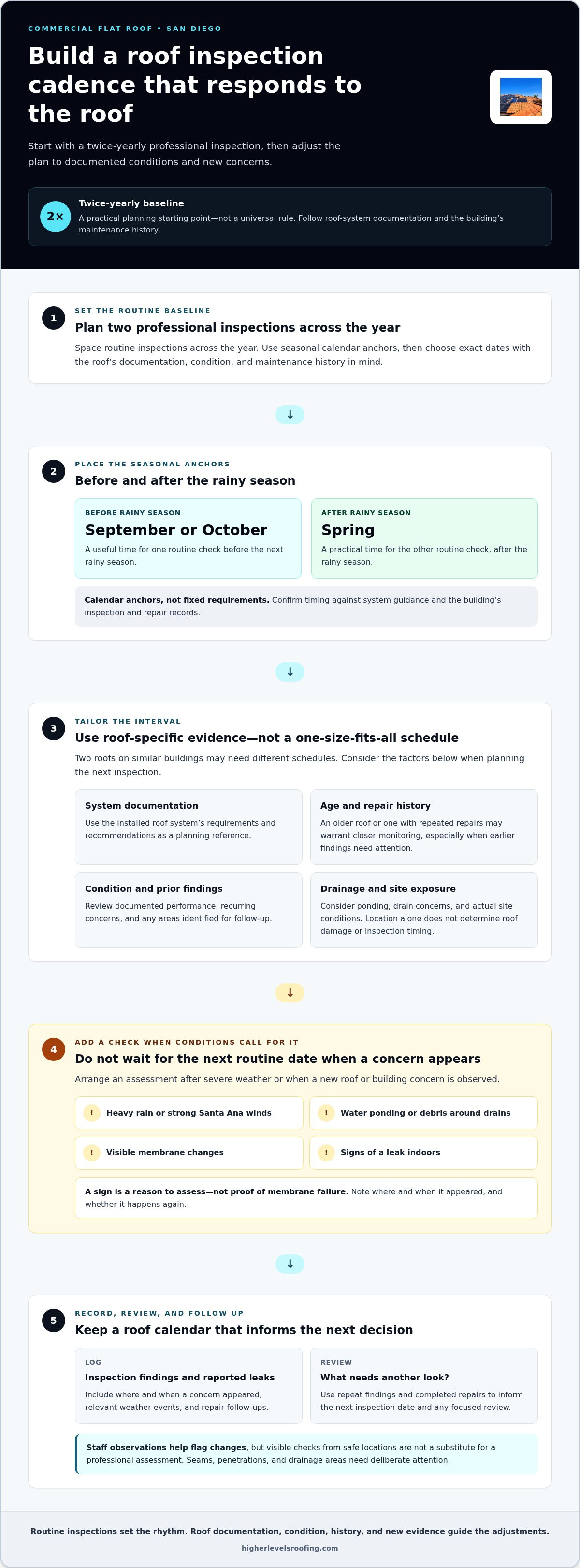
How to build a commercial flat-roof inspection calendar in San Diego
A useful roof calendar connects each review to the building’s records, operating schedule, and next steps. Keep the process simple: a shared digital calendar and a central folder for inspection reports can help property managers coordinate access, track open repairs, and preserve important roof details through staff or vendor changes.
Set up a practical annual roof-care calendar
Build the calendar around what is already known about the roof. Add planned reviews, then set reminders for findings that need another look.
Create a roof profile. Record the installed system, known installation and repair history, reported issues, and available system documents, past inspection reports, and repair records. Note gaps in the records so future findings can help fill them.
Add routine review dates. Set calendar entries around the twice-yearly baseline and any timing specified in the roof system’s documentation. Add a reminder before each visit so the property team can arrange access, identify areas of concern, and share relevant history.
Build in condition-based reminders. Track repairs, reported leaks, drainage concerns, and inspection recommendations as separate follow-up items. Add a reminder after relevant severe weather or nearby construction if either could have affected the roof.
Coordinate site access. Document who manages access, how the visit fits around building operations, and any site-specific safety procedures. Do not ask staff to climb onto the roof or investigate unsafe areas themselves. They can report observations from safe, approved locations.
This gives property teams a practical way to answer how often to inspect a commercial flat roof in San Diego for their particular building. The calendar supports the decision, but it does not replace system guidance or a professional assessment when conditions change.
Turn inspection findings into prioritized follow-up
After each review, turn the report into actions rather than letting it sit in a folder. Separate observations that need prompt attention from items recommended for routine monitoring. If the report identifies a new leak or a condition that needs repair, record the recommended next step and assign someone to coordinate it.
Capture the finding: Keep the report, photographs, location, and inspection date together.
Assign responsibility: Name the person coordinating the next step, whether that means arranging an assessment, repair, or later review.
Set a target date: Use the assessment’s recommendation to set a follow-up date, then add it to the calendar.
Close the loop: Attach repair records and update the item with work completed or follow-up still needed.
Store reports in date order so you can compare the same roof areas over time and spot recurring findings. For help interpreting commercial roof conditions and planning repair follow-up, schedule a commercial roof assessment.
When should San Diego businesses bring in a commercial roofing professional?
Bring in a commercial roofing professional when a concern keeps returning, is difficult to interpret, or involves unsafe access. A leak that returns after a repair, water intrusion with no clear source, visible membrane changes, or roof areas staff cannot safely reach all call for a closer assessment. Do not wait for a routine calendar date if a new leak appears. Document what is happening and arrange a timely review.
Professional input is also useful after repairs or building work that may have affected roof details. An assessment can help distinguish an isolated concern from a broader pattern and clarify practical next steps. That matters when deciding how often to inspect a commercial flat roof in San Diego: the right schedule depends partly on what the roof’s actual condition and records reveal.
What can a professional assessment help clarify?
A roof assessment can turn observations into a more informed discussion about maintenance, repair, or replacement. Share the roof system’s details, repair history, reported leaks, and previous inspection records so the reviewer can consider the property’s context. Findings should identify observed conditions and practical next steps rather than assume that one stain or surface mark proves a specific failure.
For commercial TPO and rolled asphalt torch-down systems, experience with the installed system can help interpret the relevant membrane and roof details. Higher Levels Roofing provides commercial roofing installation, replacement, and repair services. Before discussing a project, property teams can organize evaluation questions and relevant records, such as previous reports, repair notes, and photographs.
Plan the next step for your San Diego commercial roof
Use the assessment to connect the roof’s condition, installed system, site exposure, and maintenance records to a workable plan. Some findings may call for prompt attention; others may be suitable for monitoring or planned maintenance. Record the agreed action, who will coordinate it, and a target follow-up date. This creates a clear handoff between inspection findings and the building team’s next decision.
Make the plan work for the property and its operations. Coordinate roof access around building activity, communicate site-specific safety procedures, and keep reports and repair records together for future reviews. Higher Levels Roofing serves San Diego and nearby communities, including La Jolla, San Marcos, Encinitas, and Carlsbad, with commercial roofing installation, replacement, and repair services for TPO and torch-down systems.
For help interpreting roof conditions or planning repair, replacement, or installation work, explore Higher Levels Roofing’s commercial roofing services.
Make roof care part of your building plan
Make roof care part of building operations rather than a task remembered only after a problem appears. Add the next review to your calendar, keep past findings easy to retrieve, and assign someone to coordinate each follow-up. This simple structure helps your team make informed decisions without having to piece together the roof’s history later.
If you’re still deciding how often to inspect a commercial flat roof in San Diego, let documented roof conditions guide your planning rather than relying only on a fixed date or the absence of visible leaks. Use the time between reviews to resolve open questions, coordinate access, and keep building stakeholders informed about planned work. When an inspection finding is unclear, a commercial roofing professional can help interpret it and discuss practical options for repair, replacement, or continued monitoring.
Higher Levels Roofing provides commercial roofing installation, replacement, and repair services for businesses in San Diego and nearby communities, including La Jolla, San Marcos, Encinitas, and Carlsbad. Explore commercial roofing services in San Diego to plan a next step for your property.
Frequently Asked Questions
How often should a commercial flat roof be inspected?
A twice-yearly professional inspection is a practical starting point, adjusted for the roof’s condition and applicable system guidance. To decide how often to inspect a commercial flat roof in San Diego, review the installation and maintenance documents before finalizing dates. Keep reports together so each visit can compare current observations with earlier ones. That history helps property teams distinguish a new change from a condition already documented and being monitored.
Should a commercial roof be inspected after heavy rain or strong winds?
Consider an additional assessment if heavy rain or strong winds may have affected the roof, especially if staff notice new water intrusion or a change in drainage. Record when the event occurred and where any concern appeared inside the building. For example, a new ceiling stain near an exterior wall gives the assessor a useful starting point, but it does not establish the source. Arrange a timely review if water is entering.
Can a property manager inspect a commercial flat roof without a roofer?
A property manager can help monitor conditions, but should avoid unsafe roof access or diagnosing problems from a quick visual check. Staff can report ceiling stains, leaks, or other changes from safe areas and note when they first appeared. They can also maintain records and coordinate access for a professional assessment. Leave roof-level checks to people equipped to access and assess the surface safely, particularly around edges, equipment, or unfamiliar roof details.
What should a commercial flat-roof inspection include?
A useful inspection should document the roof areas reviewed, visible membrane or surface conditions, seams and transitions, penetrations, drainage points, and concerns inside the building. The report should identify where each observation was made and include photographs or a roof plan when helpful. Findings should distinguish observed conditions from recommended next steps. This gives the property team a clear record to compare during later reviews without treating an observation as a confirmed diagnosis.
Does a TPO roof need a different inspection schedule?
Not automatically. There is no single inspection interval that applies to every TPO roof. Use the system documentation, condition, repair history, and site circumstances to plan reviews. During an assessment, note membrane seams, penetrations, and areas with previous work so the findings reflect the installed system. If the documents specify inspection or maintenance steps, include those directions in the property’s roof-care records and calendar.
What are signs that a commercial flat roof needs an inspection?
Arrange a closer review if you notice recurring ceiling stains, active water intrusion, unexplained dampness, new pooling observed after rain, or visible changes around roof penetrations. A leak that returns after repair also deserves attention because the source may not be obvious from inside. Record the location and timing, and take photographs from safe areas. These clues help an assessor investigate; none alone confirms the cause or proves membrane failure.
Do roof warranties specify how often inspections are required?
Warranty documents may include maintenance, inspection, or recordkeeping conditions, but requirements depend on the specific warranty and roof system documents. Review the actual paperwork rather than relying on a general schedule or assumption. Keep dated reports, repair details, and relevant photographs together, and note any required follow-up stated in the documents. If the wording is unclear, have it reviewed by the appropriate roofing or warranty professional before building a maintenance plan around it.

Comments