


Asphalt Shingle Roofing: Types, Selection, and Installation in San Diego

The best asphalt shingle roof for your home isn’t necessarily the one that looks best in a sample. With three-tab, architectural, and luxury options to compare, look beyond appearance and consider how the roofing system fits your home and its San Diego setting. That’s the heart of choosing asphalt shingle roofing with confidence.
It’s understandable to feel unsure about the differences. Shingle construction, roof features, and local conditions all play a part, and the right choice depends on more than style preference. A property-specific assessment connects those details to your home and helps define the project scope.
In this guide, you’ll learn how asphalt shingles are constructed, how common types compare, and which practical factors can help you narrow your options. We’ll also explain what to expect from a local roofing assessment and professional installation, so you can make an informed decision about a new or replacement roof in San Diego, La Jolla, San Marcos, Encinitas, or Carlsbad.
Table of Contents
What Asphalt Shingle Roofing Is, and What San Diego Homeowners Should Know
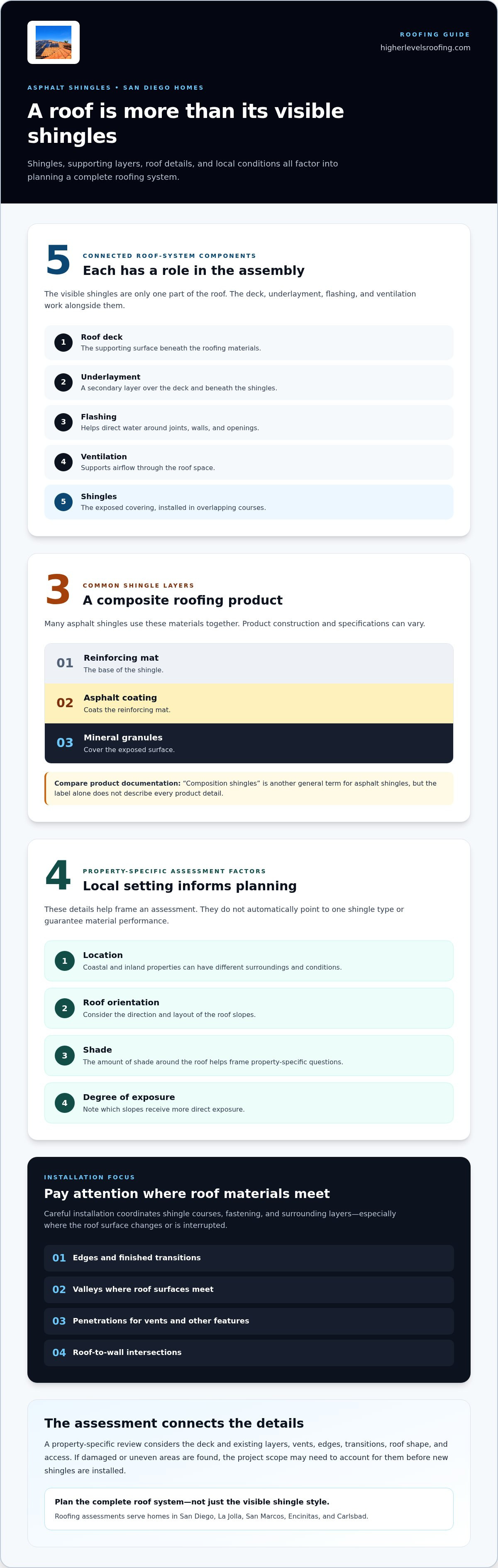
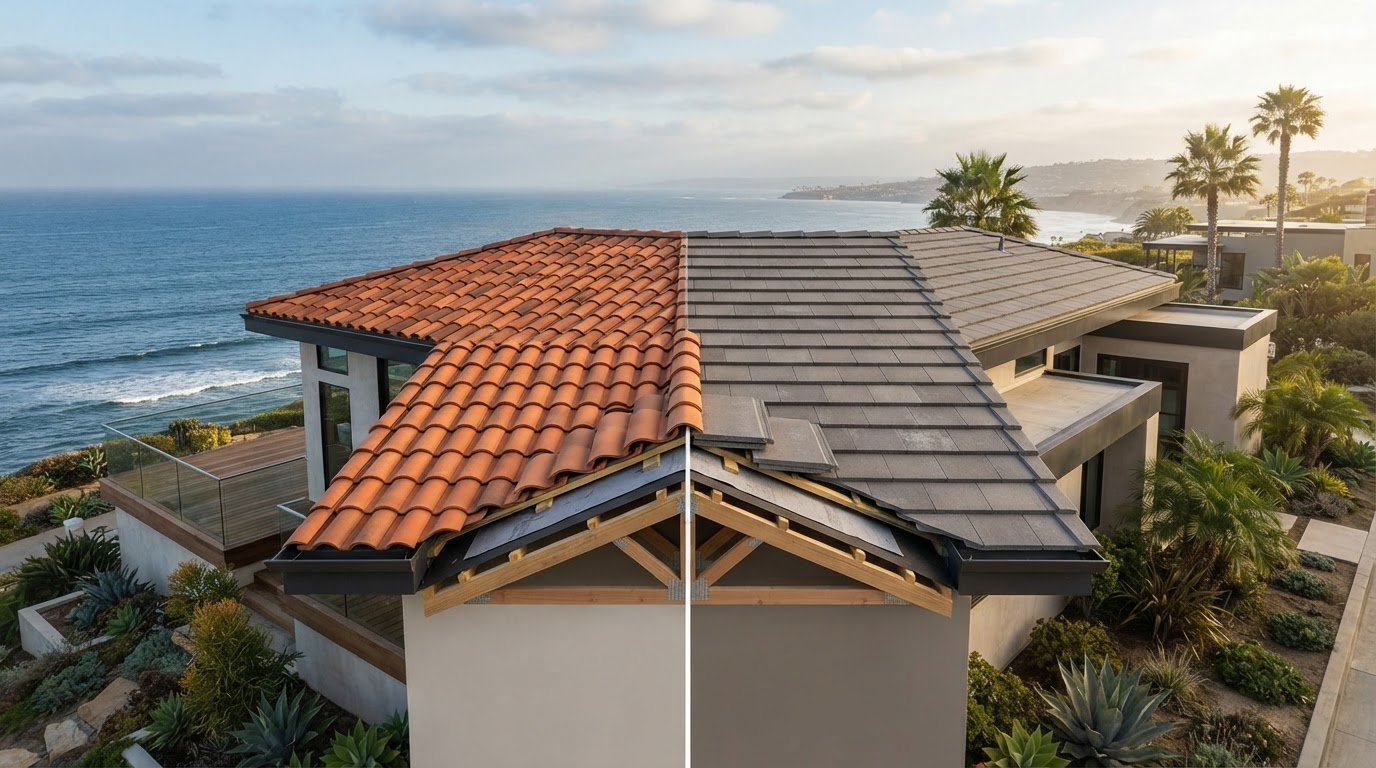
Asphalt shingle roofing uses overlapping pieces of roofing material to shed water, but the visible shingles are only one part of the roof. The full assembly also includes the roof deck, underlayment, flashing, ventilation, and finished edges and transitions. Each component has a role, so choosing shingles is only one part of planning a roof.
Asphalt shingles are layered roofing products made with a reinforcing mat, asphalt coating, and mineral granules, assembled in overlapping courses as part of a complete roof system. The deck provides the base, and underlayment covers it as a secondary layer beneath the shingles. Flashing helps direct water around joints and openings, while ventilation supports airflow through the roof space. The shingles form the exposed covering, and their placement alongside the surrounding details matters to the assembly as a whole.
Because these parts work together, a roof assessment looks beyond the surface. It considers the condition of the deck and existing layers, as well as details such as vents, edges, and roof-to-wall transitions. That broader view helps match material choices to the property instead of treating shingle selection as a stand-alone decision.
What asphalt shingles are made of
Many asphalt shingles use a reinforcing mat as a base, asphalt coating around that mat, and mineral granules on the exposed surface. Together, these layers create the shingle’s basic composite structure. “Composition shingles” is another general term for asphalt shingles, though individual products can differ in construction and specifications. For broader background on common types and materials, see this asphalt shingle roofing overview.
The label alone doesn’t tell you every detail about a specific shingle. Product construction and specifications vary, so compare the documentation for the options under consideration with the needs identified during the roof assessment.
How local conditions affect the roofing assessment
San Diego isn’t one uniform setting. A home’s location, roof orientation, shade, and degree of exposure are useful planning factors, but they don’t automatically point to one shingle type. Coastal and inland properties can have different surroundings and conditions. An assessment considers the particular home instead of assuming every property in either area faces the same demands.
For example, the amount of shade around a roof and which slopes receive more direct exposure help frame questions about the property and the roof’s existing condition. These observations inform planning; they don’t guarantee how a material will perform. Higher Levels Roofing connects site-specific details to the project scope during an assessment for homes in San Diego and nearby communities, including La Jolla, San Marcos, Encinitas, and Carlsbad. Homeowners comparing broader material categories can also explore this San Diego roofing materials guide.
How Asphalt Shingles and the Roof System Work Together
Shingles alone don’t make a complete roofing system; the supporting layers, drainage details, and installation all work together to manage water and protect the home. Shingles overlap so water can move down the roof toward its edges, while layers beneath them provide additional protection. Water needs a clear path over the roof and away from openings, seams, and transitions.
Think of the roof as a series of connected details, not a broad surface covered in shingles. Valleys, roof edges, wall intersections, and openings for vents or other features interrupt the surface. These areas need careful detailing so adjoining materials work together rather than leave gaps or create a route for water to travel beneath the covering.
Ventilation and drainage are also part of the plan. Roof drainage depends on the slopes and details that guide water off the covering. Ventilation involves the movement of air through the roof space, with the layout considered alongside the roof design. Neither should be treated as a stand-alone feature or a guarantee of a particular outcome.
The components beneath and around the shingles
The roof deck is the supporting surface beneath the roofing materials. Underlayment lies over the deck and beneath the shingles, while flashing helps manage water where the roof meets a wall or an opening. Roof edges and transitions connect these areas. Their condition and layout help determine the appropriate work, especially when an assessment reveals damaged or uneven areas beneath the existing covering.
Installation details that support dependable performance
Careful installation means keeping shingle courses aligned, fastening them as directed, and handling penetrations and transitions with attention to the surrounding layers. A vent, for example, needs to be integrated with the roofing rather than treated as a hole to cover. The Asphalt Roofing Manufacturers Association offers industry information on asphalt roofing materials and installation. Product instructions and applicable current requirements guide the work on a specific project.
Existing conditions can change the scope. If the deck or roof details need attention, covering them with new shingles may not address the underlying issue. An assessment helps identify what is visible, what needs closer examination, and how the layers should be coordinated. That is why a project plan should account for the complete roof, not just the number or style of shingles.
During installation, workmanship at edges, valleys, penetrations, and roof-to-wall transitions deserves particular care because these are points where materials meet or the roof surface changes direction. Consistent alignment and fastening help keep the courses orderly, while properly integrated flashing and underlayment support the intended water-shedding path.
For homeowners planning installation or replacement, a local assessment connects the roof’s existing condition and layout to the work ahead. Higher Levels Roofing’s asphalt shingle services include installation, replacement, and repair for San Diego-area homes and commercial properties.
Compare the Main Asphalt Shingle Types for Your Home
Shingle categories help narrow the choices, but they don’t identify a universal best option. Compare how each type is constructed and looks, then weigh those features against the home’s roof condition and your priorities. In San Diego, an assessment can also connect the selection to the roof’s layout and project scope.
Strip, dimensional, and luxury shingles compared
Category names describe broad designs, not guaranteed performance. Two products in the same category may differ in construction, appearance, and published specifications. The National Roofing Contractors Association provides roofing information and resources, while manufacturer documentation is the source for exact claims about a specific shingle.
Match the comparison to the property’s priorities
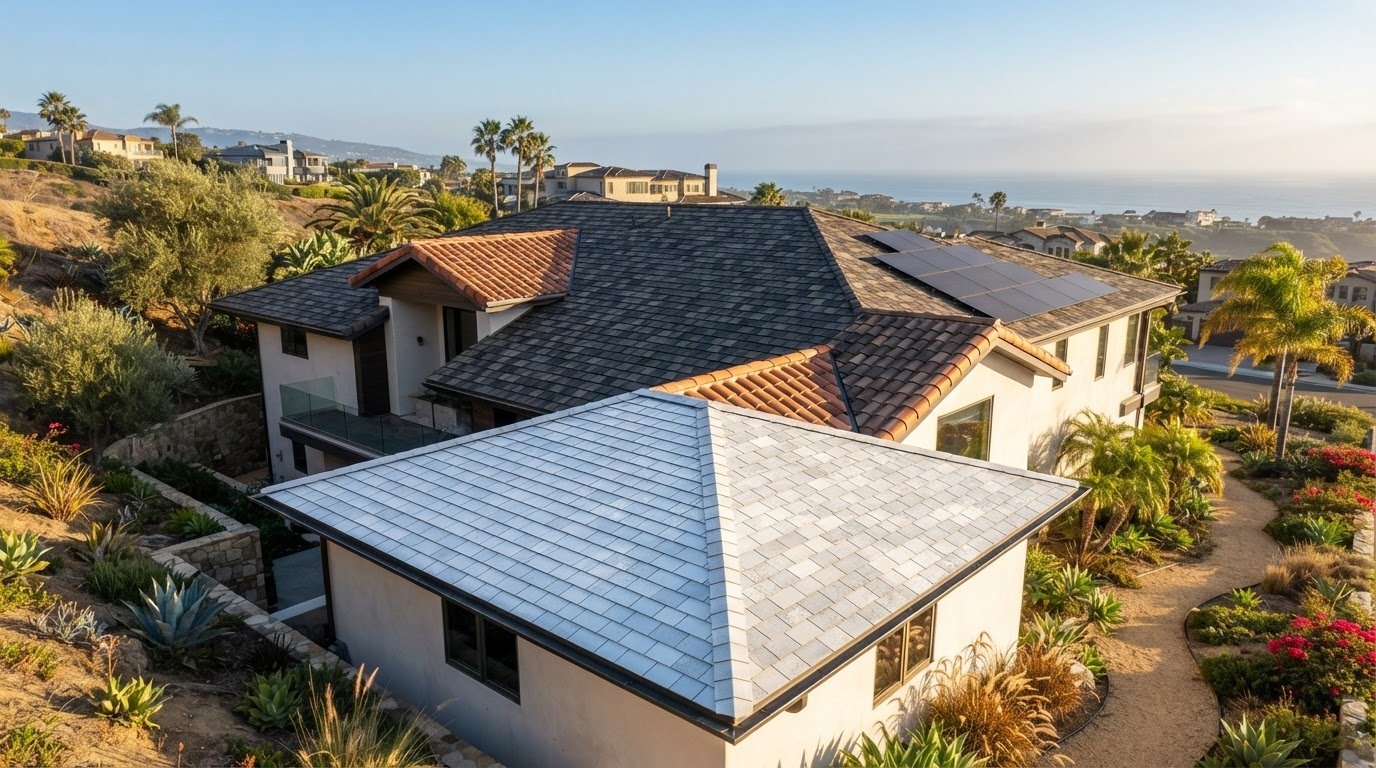
Start with the result you want. Is a clean, understated pattern the goal, or would more roof texture complement the home? Then consider the roof itself: its shape, visible slopes, existing condition, and details that may affect the work. A prominent front-facing roof plane, for example, can make visual consistency especially noticeable. A roof with multiple slopes may show several parts of the selected style.
Use this checklist to keep the comparison grounded:
Appearance: Compare how the pattern and profile look with the home’s exterior and roof shape.
Project scope: Factor in what the assessment finds about existing materials and roof conditions.
Specifications: Rely on documentation for the actual product instead of assuming a category guarantees a rating, lifespan, or warranty.
This approach makes asphalt shingle roofing selection more deliberate: match the product to the property and desired result, then account for the full installation scope. For more context on evaluating the work itself, this guide to choosing a shingle roofing company covers contractor-selection considerations.
Plan an Asphalt Shingle Roofing Project in San Diego
A clear plan starts with the roof itself, not a preset material or schedule. Roof shape, existing conditions, access, and required work all influence how an asphalt shingle project is scoped. In San Diego, a property-specific assessment keeps decisions grounded in the home’s location and exposure rather than assumptions about the region as a whole. This applies to homes in La Jolla, San Marcos, Encinitas, and Carlsbad as well as San Diego.
Step 1: Assess the roof. Review visible areas, roof edges, penetrations, drainage paths, and the condition of existing materials. The findings help establish whether the project centers on repair or replacement. The recommendation should be based on the individual property, not a remote guess.
Step 2: Define the scope. Roof geometry affects how the work is planned. Multiple slopes, valleys, openings, and transitions add details to address. Existing layers and visible concerns also inform the scope. Access to the work area matters when planning material handling and protecting the home’s surroundings.
Step 3: Compare materials. Use the assessment and your priorities to narrow shingle options. Consider appearance alongside roof conditions and the full project scope. Product-specific documentation provides details about an individual shingle, while the selection should make sense for the property and intended result.
Step 4: Review applicable requirements. California and local requirements can depend on the project and property. Before work proceeds, applicable rules and permit requirements should be verified for the specific address and scope. A general statement about permits cannot determine what applies to your roof.
Step 5: Prepare for installation and final review. Planning covers the work area and the sequence for carrying out the agreed scope. Installation follows the selected product’s instructions and applicable requirements. A final review provides an opportunity to look over completed work and discuss project closeout.
What a roof assessment should establish
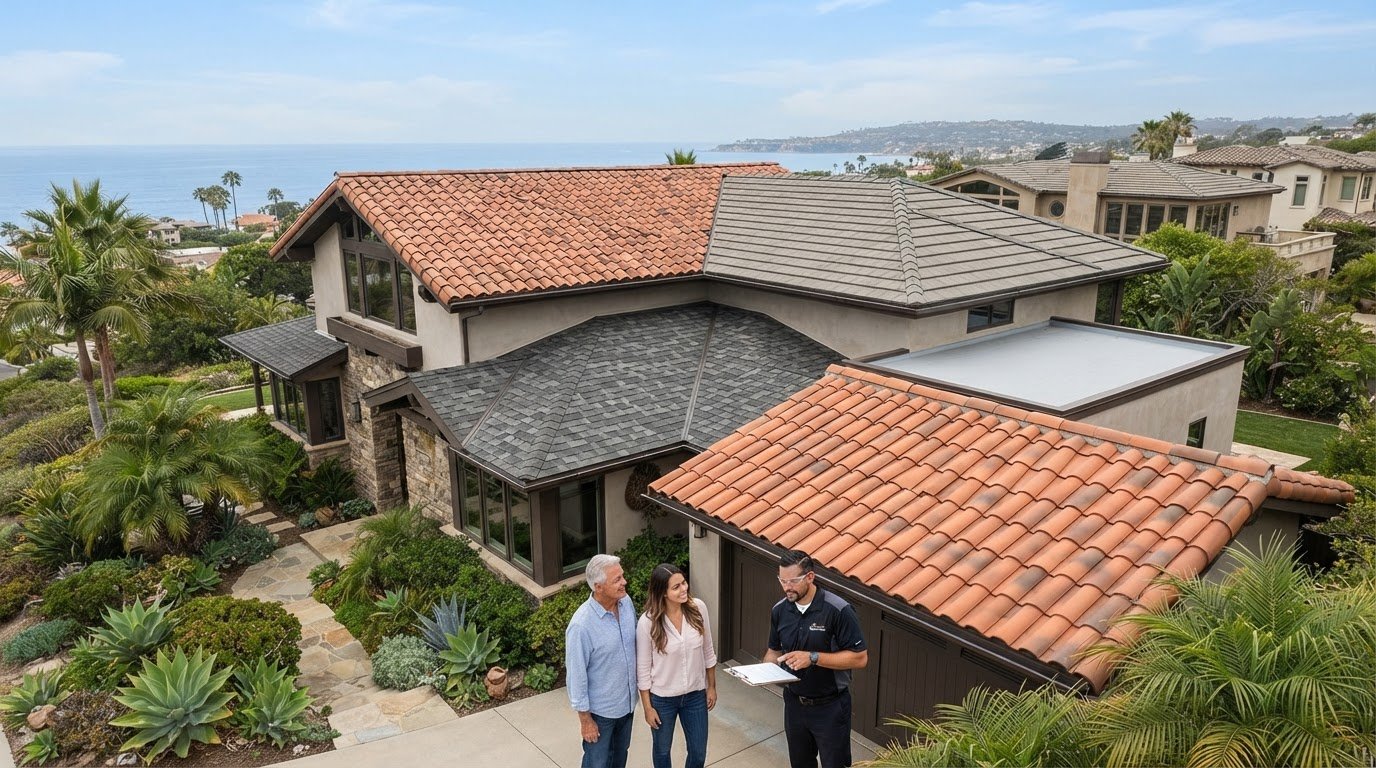
An assessment considers visible roof conditions and details that affect the planned work, including edges, penetrations, and drainage features. It can identify areas that need closer attention and help explain the repair-versus-replacement recommendation. Higher Levels Roofing is a licensed roofing contractor serving properties in San Diego and nearby communities. The San Diego roof replacement guide offers further context for planning a replacement.
What to expect during installation planning
Once the scope and material choice are established, Higher Levels Roofing can explain the planned work, preparation, installation approach, and final review. Details depend on the property; a complex roof or existing conditions may call for a different plan than a simpler layout. Clear communication helps you understand what the work includes without relying on assumed timelines, prices, or outcomes.
A property-specific assessment is the starting point for asphalt shingle installation or replacement in San Diego and nearby communities such as La Jolla, San Marcos, Encinitas, and Carlsbad.
Get Asphalt Shingle Roofing Installed by a San Diego Contractor
Choosing between shingle types is only one part of planning a roof. The next step is connecting your priorities, the roof’s condition, and the work required. Higher Levels Roofing is a licensed roofing contractor serving San Diego and nearby communities, including La Jolla, San Marcos, Encinitas, and Carlsbad. The company installs, replaces, and repairs asphalt shingle roofs for residential and commercial properties.
A project-specific assessment helps bring the decision into focus. Rather than treating a shingle category as a solution on its own, the assessment considers how the material choice fits the property and the scope of work. That gives homeowners a clearer basis for understanding the project before work begins.
How a local roofing team supports the project
Every roof has its own layout and existing conditions. An assessment considers the property and its roofing needs to help shape recommendations and the work plan. This applies whether the next step is a repair, a replacement, or installation for a new project. The appropriate scope depends on the roof, not a one-size-fits-all assumption.
Clear communication is part of planning. Homeowners should understand what work is proposed and how the selected shingle option relates to the roof and project priorities. Careful workmanship means attending to installation details as the work proceeds, including how materials fit into the overall roof assembly.
For a home or commercial property, project conversations can focus on practical questions such as:
Which shingle type best fits the desired appearance and the roof’s conditions?
What work is included in the repair or replacement scope?
How will the plan address the roof’s layout and existing details?
Take the next step with Higher Levels Roofing
You’ve now seen how the roof system works, what distinguishes the main shingle categories, and how an assessment helps shape installation planning. Bringing those points together can make the next decision more manageable. Start with your priorities and what you know about the roof, then connect them to the property and the work it needs.
Higher Levels Roofing provides asphalt shingle installation, replacement, and repair across San Diego and nearby communities, including La Jolla, San Marcos, Encinitas, and Carlsbad. The licensed team works with residential and commercial properties, connecting material selection with project scope through a local roofing assessment.
To discuss asphalt shingle roofing for your property, contact Higher Levels Roofing and take the next step toward a plan suited to your roof.
Move from Shingle Options to a Confident Plan
A shortlist is a useful start, but the final choice should make sense for the roof you have and the result you want. Before settling on asphalt shingle roofing, consider what you still need to understand about the property, the work involved, and how the selected material fits the overall plan. A focused conversation can turn open questions into practical next steps.
Higher Levels Roofing is a licensed San Diego-area contractor providing asphalt shingle installation, replacement, and repair for residential and commercial properties. Recommendations are shaped around the roof and project scope rather than a one-size-fits-all answer.
When you’re ready to discuss your options, talk with Higher Levels Roofing about your roofing project. A well-planned roof starts with a useful conversation.
Frequently Asked Questions
What are asphalt shingles made of, and how do they work as a roofing system?
Asphalt shingles commonly combine a reinforcing mat, asphalt, and mineral granules, though construction varies by product. Their overlapping arrangement helps shed water, but shingles aren’t the only protection: the underlayment, flashing, roof deck, and ventilation also matter. When comparing options, check the product documentation for its actual materials and installation requirements. A roofer can assess how the existing roof components fit together and identify details that may need attention.
What is the difference between 3-tab, architectural, and luxury asphalt shingles?
Three-tab shingles generally have a flatter, uniform appearance, while architectural shingles have a layered look that adds visual depth. Luxury shingles are a broad premium-style category, and their designs and construction vary by product. Compare samples with your home’s exterior and roof shape, then review the specific product details. Category names alone don’t establish a shingle’s exact specifications, warranty, or expected performance.
Are asphalt shingles a suitable roofing option for homes in San Diego?
They can be a suitable option, but the right choice depends on the home and project rather than location alone. A roof assessment considers the property’s orientation, shade, roof design, existing condition, and exposure. Homeowners in San Diego, La Jolla, San Marcos, Encinitas, and Carlsbad should also account for requirements that apply to their specific project. Product documentation and a site-specific evaluation help inform the decision.
How long can an asphalt shingle roof last?
There isn’t one lifespan that applies to every asphalt shingle roof. The product selected, installation quality, roof design, ventilation, exposure, and ongoing care can all affect how it ages. A manufacturer’s stated coverage period isn’t necessarily the same as the roof’s service life. For a useful estimate, review the documentation for the installed product and have the roof’s condition assessed rather than relying on a category-wide number.
Can new asphalt shingles be installed over an existing shingle roof?
Possibly, but an overlay isn’t appropriate for every roof. The condition of the existing shingles and roof deck, the number of existing layers, product instructions, and applicable local requirements can affect whether it’s an option. An overlay may also leave underlying damage less visible. A property-specific assessment helps determine whether a new layer is suitable or whether removing existing materials should be part of the project scope.
How much does asphalt shingle roofing cost in San Diego?
The cost depends on the property and work involved, so a general figure may not reflect your project. Factors can include roof size and shape, access, existing material condition, and whether the scope involves repairs or replacement. Shingle selection and work needed beneath the visible covering can also affect the estimate. A site-specific assessment is the practical starting point for understanding the proposed work and its cost.
Do asphalt shingle roofs require regular maintenance?
Periodic attention can help homeowners notice changes before they become harder to address. From the ground, look for visibly displaced or missing shingles, debris collecting in roof valleys, or signs of water staining indoors. Don’t climb onto the roof to investigate; a professional can safely assess areas that aren’t visible from below. After severe weather or if you notice a leak, arrange an assessment to identify the cause and appropriate repair.
What happens during an asphalt shingle roof replacement?
A replacement typically begins with an assessment and a clear scope of work. The plan may include removing existing roofing, reviewing the exposed deck, addressing needed repairs, and installing the selected materials according to product instructions and applicable requirements. The exact steps depend on the home’s condition and roof layout. Higher Levels Roofing handles residential and commercial roofing projects in San Diego and nearby communities, with the work plan tailored to the property.
Comments