


Signs You Need a New Roof San Diego: 2026 Homeowner’s Checklist

What if your roof’s true age has less to do with the calendar and more to do with whether you’re catching coastal salt spray or scorching Santa Ana winds? In San Diego, a ten year old roof in La Jolla faces vastly different threats than one in San Marcos. It's completely natural to feel a sense of anxiety as the rainy season approaches, especially when you are searching for the signs you need a new roof San Diego weather patterns might have accelerated. You want to protect your home and ensure long term security without feeling pressured into an unnecessary project by a pushy salesperson.
We understand that your home is your most significant investment and a source of aesthetic pride. This guide is designed to help you identify critical damage before a small leak becomes a costly structural issue, focusing on the specific risks of our local microclimates. We'll provide a clear framework to help you make a confident "stay or go" decision while navigating 2026 Title 24 energy standards and fire zone compliance. You will learn how to spot "silent" leaks in tile systems and understand when the California building code requires a full replacement. By the end, you'll have a professional checklist to move forward with calm, expert certainty.
Table of Contents
Evaluating Your Roof’s Age Against San Diego’s Microclimates
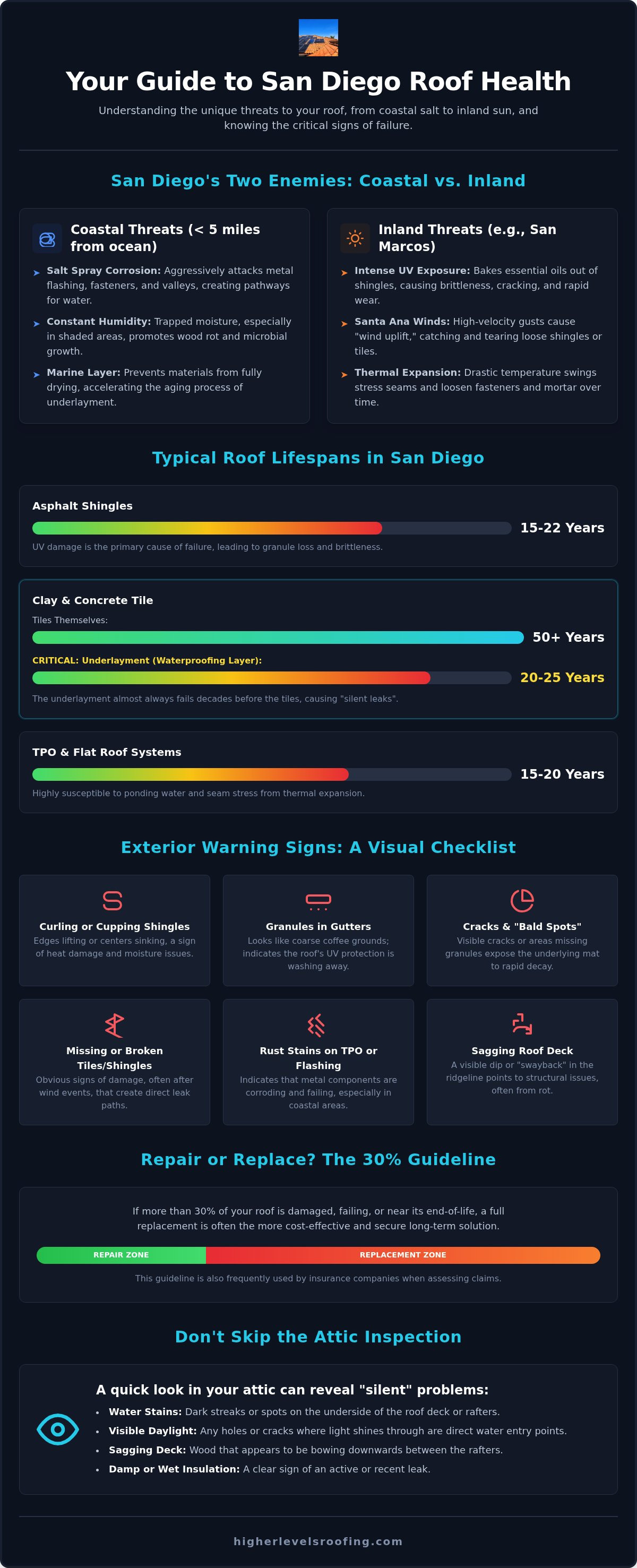
In San Diego, the date on your installation permit only tells half the story. Your home’s location within our county’s diverse microclimates dictates how quickly materials degrade. While a standard roof shingle might last thirty years in a milder climate, San Diego’s intense UV exposure and coastal humidity often shorten that window. Understanding the specific environmental stressors of your neighborhood is one of the first steps in identifying the signs you need a new roof San Diego homeowners often overlook until a leak occurs.
Standard Material Lifespans in San Diego:
Asphalt Shingles: 15 to 22 years. Intense UV rays bake out essential oils, causing premature brittleness.
Clay and Concrete Tile: 50 or more years for the tiles themselves; however, the critical underlayment usually fails between 20 and 25 years.
TPO and Flat Systems: 15 to 20 years. These systems are highly effective but sensitive to ponding water and seam stress.
The Coastal Factor: Salt Air and Humidity
Living within five miles of the Pacific Ocean in areas like La Jolla, Encinitas, or Carlsbad introduces constant moisture and salinity. The marine layer doesn't just provide a cool breeze; it traps moisture in shaded roof sections, which can promote microbial growth and wood rot. Salt Spray Corrosion is the primary silent killer of coastal roof integrity. This process aggressively attacks metal flashing, valley tins, and even the fasteners holding your shingles or tiles in place. Once these metal components fail, water finds a direct path into your roof deck. A twenty year old roof in La Jolla often shows significantly more structural fatigue than the same roof in a drier, inland environment.
The Inland Factor: Heat and Santa Ana Winds
Move east to San Marcos, and the threats shift entirely. Here, the primary enemy is the sun. High UV index levels bake the flexibility out of asphalt shingles, making them brittle and prone to cracking. This leads to rapid material degradation, especially on south facing slopes that bear the brunt of the afternoon heat. Santa Ana wind events present another major risk that many homeowners underestimate. These high velocity gusts create significant wind uplift, catching the edges of aged shingles or loose tiles. Thermal expansion also plays a role. The dramatic temperature swings between hot days and cool nights cause materials to expand and contract. This constant movement eventually stresses the seams of TPO systems and loosens the mortar on older tile ridges. If you notice shingles lifting or "chattering" after a wind event, these are clear signs you need a new roof San Diego inland weather has compromised.
Visible Exterior Warning Signs: Shingles, TPO, and Salt-Air Corrosion
A quick visual check from the ground or a ladder often reveals the most obvious signs you need a new roof San Diego weather has caused. While some issues appear minor, others signal that your home's primary shield is failing. Identifying these red flags early can prevent moisture from reaching your rafters and ceiling drywall before the next storm arrives.
One of the clearest indicators of an aging asphalt roof is the "bald spot" phenomenon. Over time, shingles lose the protective ceramic granules that shield them from intense UV rays. You'll likely find these granules in your gutters, looking like dark, coarse coffee grounds. When these granules wash away, the underlying asphalt mat is exposed to the sun, leading to rapid deterioration. If your gutters are full of these "grounds," your roof is losing its ability to reflect heat and shed water effectively.
Key indicators to watch for during your walk-around:
Shingle edges that have begun to lift or claw toward the roof deck.
Visible cracks or "alligatoring" on flat asphalt surfaces.
Orange or red rust staining on white TPO membranes or metal valleys.
Accumulations of dark granules at the base of your downspouts.
Shingle Deterioration Patterns
Not all shingle wear looks the same. Curling occurs when the edges of the shingle turn upward, while cupping happens when the center of the shingle sinks. Both patterns are often symptoms of poor attic ventilation or extreme heat cycles common in inland San Diego. If you notice missing shingles, it's a sign that the factory adhesive strips have failed, leaving your roof deck vulnerable to wind uplift. You can learn more about these specific material challenges in our guide to Asphalt Shingle Roofing San Diego.
For homes near the water, rusted metal is a replacement-level threat. Flashing and valleys are critical points because they redirect high volumes of water. In our local climate, coastal roof corrosion can eat through standard galvanized steel flashing in a matter of years. If you see orange streaks or pitted metal around your chimney or in your roof valleys, the structural integrity of those seals is likely gone. This usually requires a professional solution to ensure the underlying wood stays dry.
Commercial and Flat Roof Red Flags
Commercial properties and modern homes with flat sections face different challenges. For TPO systems, look for "ponding water" that remains 48 hours after a rainstorm. This standing water puts immense pressure on the membrane seams, eventually leading to separation. You should also watch for small punctures or "alligatoring," which is a pattern of deep cracks on older rolled asphalt roofs. If you're seeing these signs, a professional evaluation of your TPO Commercial Roofing in San Diego can help you decide between a targeted repair or a full upgrade before leaks compromise your inventory or interior space.
The Hidden Danger of Tile Roofs: Underlayment and "Silent" Leaks
Many San Diego homeowners assume their clay or concrete tiles will last forever. While the tiles themselves are incredibly durable, they often mask the most common signs you need a new roof San Diego properties experience. This is the "silent leak" phenomenon. You might look up and see a perfectly aligned roof, while the waterproofing layer underneath is slowly disintegrating. Because tiles are designed to shed water rather than provide a total seal, the material beneath them does the heavy lifting.
The real barrier isn't the tile; it's the underlayment. In our local climate, most standard underlayments reach their performance threshold between 20 and 25 years. After this point, the material becomes brittle and loses its elasticity. When the next heavy rain hits, water that naturally migrates under the tiles finds its way through cracks in the underlayment and into your ceiling. If your home was built in the late 1990s or early 2000s and still has its original roof, your underlayment is likely approaching its expiration date.
Underlayment: The True Barrier
Traditionally, local roofs used organic asphalt felt paper. This material is prone to drying out and cracking after two decades of San Diego heat. Modern replacements now utilize synthetic underlayment, which offers superior tear resistance and longevity. If you're noticing damp spots in your attic but your tiles look fine, the paper has likely failed. For a deeper look at how these layers work together to protect your home, see The Ultimate Guide to Roof Tiles.
Identifying Tile-Specific Failures
Look for "tile slip" during your visual inspection. This happens when the fasteners fail and tiles slide down, exposing the underlayment to direct sunlight. UV rays can destroy exposed underlayment in a matter of weeks. Another indicator is efflorescence, which appears as white, chalky stains on the surface of your tiles. This suggests the tile is absorbing excessive moisture rather than shedding it, which can lead to weight issues and further signs you need a new roof San Diego weather will only worsen.
Check these critical areas for tile failure:
Valley Debris: Pine needles or palm fronds can create a "dam" that forces water sideways under your tiles.
Mortar Cracking: Check the ridge caps for crumbling mortar, which allows wind-driven rain to enter the peak.
Widespread Breakage: While isolated cracked tiles are repairable, widespread damage often suggests the roof deck has shifted or the tiles have become too porous.
While some contractors suggest a "Lift and Reset," this is often a temporary fix for an aging system. If the underlying paper is already brittle, moving the tiles can cause even more fractures. In these cases, a full replacement is the only way to ensure long-term security and aesthetic pride.
Assessing Structural Integrity and Interior Damage
Sometimes the most undeniable signs you need a new roof San Diego homeowners encounter aren't found on the shingles but inside the home. A thorough investigation begins in the attic. This space acts as the early warning system for your property. By catching structural fatigue here, you can prevent a minor leak from turning into a full scale emergency that compromises your family's safety.
The "Daylight Test" is your first step. On a bright day, turn off all attic lights and look toward the roof peak. If you see pinpricks of light coming through the roof deck, you have holes that water will eventually find. While some might think a few small gaps are normal for ventilation, they often indicate that the material has reached its limit. This is especially true after our intense summer heat cycles have stressed the roof's core and caused wood to shrink or crack.
The Attic Inspection Checklist
Grab a flashlight and look for these specific indicators of failure. Moisture often travels along rafters, leaving dark stains or "trails" that don't always match where the water eventually drips. Check your insulation as well. If it looks compressed or feels damp, it has lost its R-value and is no longer protecting your home's temperature. Deck Deflection is the visible bowing of wood between rafters. This sagging suggests that the plywood or OSB has been softened by long term moisture exposure and can no longer support the weight of your tiles or shingles.
Structural Red Flags
A sagging ridgeline is a serious concern that requires immediate professional attention. While a dip in the middle of the roof can sometimes be a simple rafter issue, it often points to a failure in the structural decking. In a region with frequent seismic activity, a compromised roof structure is a significant safety risk. If your roofline looks wavy instead of straight, it's one of the most critical signs you need a new roof San Diego residents should never ignore. You can find more details on planning for these structural repairs in The Homeowner’s Guide to Roof Replacement in San Diego.
Interior ceiling stains are another red flag, but they are often deceptive. Water rarely drips straight down. It often hits a rafter and travels several feet before appearing as a brown ring on your drywall. If you see mold or mildew in the corners of your ceiling, it suggests a slow, persistent leak that has been present for months. This moisture creates an unhealthy environment and can lead to expensive remediation if left unaddressed. High energy bills can also signal roof failure. When your roof's integrity is compromised, your HVAC system works harder to combat the heat leaking through the gaps. If you've noticed these interior issues, it's time to schedule a professional roof inspection to protect your property value and aesthetic pride.
Repair or Replace? Choosing the Best Path for Your San Diego Property
Deciding between a patch job and a full overhaul is often the most stressful part of home ownership. You don't want to overpay for a replacement you don't need, but you also don't want to throw money at a "band-aid" fix that fails during the next Santa Ana wind event. This decision framework helps you weigh the immediate costs against long term security and property value. In many cases, the signs you need a new roof San Diego homeowners observe are actually a call for a strategic upgrade rather than a temporary repair.
The "30% Rule" is a helpful industry standard. If the cost of necessary repairs exceeds 30% of the price of a total replacement, the return on investment shifts heavily toward a new system. This is especially relevant given the California Building Code's "25% Rule." As of 2026, if more than 25% of a roof is repaired or replaced within a 12 month period, the entire structure must be brought into compliance with current building codes. This includes meeting the strict 2025 Title 24 "Cool Roof" requirements for solar reflectance and thermal emittance.
Insurance considerations are also driving many San Diego replacements. Carriers have become increasingly strict, often flagging roofs older than 15 or 20 years for non-renewal or significant premium hikes. A proactive replacement often pays for itself by maintaining your coverage and lowering your monthly costs. Modern materials, like Class A fire rated shingles or TPO for flat sections, provide the long term security that both you and your insurer demand.
When to Opt for Professional Repair
Repairs make sense when the damage is localized and the rest of the system is healthy. Perhaps a fallen palm branch cracked a few tiles, or a single storm caused minor shingle lift on one isolated slope. If your roof is under ten years old and the underlayment remains pliable, a targeted repair is a responsible choice. We often find specific flashing issues around chimneys that can be resealed before moisture reaches the decking. These small, meticulous fixes can extend the life of a younger roof by several years.
The Case for Full Replacement
Widespread material failure across multiple slopes is a clear indicator that your roof's lifespan has ended. If you're dealing with recurring leaks in different areas of the home or seeing the brittle, "bald" shingles discussed in previous sections, it's time to act. A Higher Levels Roofing inspection provides the meticulous detail you need to make this decision with confidence. We act as a dedicated local advocate, ensuring you understand the specific risks of your neighborhood's microclimate. Before choosing a partner, review The Ultimate San Diego County Roofing Contractor Hiring Checklist to ensure you find a trustworthy local specialist who values craftsmanship as much as you do.
Securing Your Home Against San Diego’s Unique Elements
Identifying the signs you need a new roof San Diego weather has accelerated is the first step toward long term peace of mind. From the hidden vulnerabilities of aging tile underlayment to the visible toll of salt air and Santa Ana winds, understanding your roof’s condition allows you to act before costly damage occurs. A secure roof doesn't just protect your belongings; it preserves your home's value and your family's safety.
Carlos and the Higher Levels Roofing team are dedicated local advocates who understand the specific needs of our community. We combine an A+ attention to meticulous detail with specialized knowledge of coastal durable materials to provide a steady, expert hand for your maintenance needs. Request Your Professional San Diego Roof Inspection from Higher Levels Roofing to receive a clear, honest assessment of your property. Let’s ensure your home is ready for whatever the 2026 season brings.
Frequently Asked Questions
How many years does an asphalt shingle roof last in San Diego?
While manufacturers often cite thirty years, San Diego’s high UV index typically limits asphalt shingles to 15 to 22 years. Intense sunlight bakes the oils out of the shingles, making them brittle and prone to granule loss. If you live in an inland area like San Marcos, the heat accelerates this process. Regularly checking for these signs you need a new roof San Diego weather has caused can help you avoid major leaks.
Can I just replace the underlayment on my tile roof and keep the old tiles?
Yes, this process is known as a "Lift and Reset," where tiles are carefully removed to install new synthetic underlayment. It is a viable option if your concrete or clay tiles are still in excellent condition and not overly porous. However, tiles often become brittle after 25 years. If a large percentage of tiles break during the removal process, a full replacement with new materials is usually more cost-effective for long term security.
What are the signs of roof damage after a Santa Ana wind event?
Look for lifted or missing shingles and "chattering" tiles that appear shifted from their original alignment. Santa Ana winds create significant wind uplift that can break the adhesive seals on asphalt roofs. You should also check your valleys for debris like palm fronds or pine needles. These can create dams that force water under your roofing material during the rain that often follows these dry wind events, leading to hidden interior damage.
Is a sagging roof always a sign that I need a full replacement?
A sagging roofline almost always indicates a serious structural issue that requires professional attention. While it could be a localized rafter problem, it often points to "deck deflection" where the wood underneath has softened from moisture. In San Diego’s seismic environment, a compromised roof deck is a safety risk. A full replacement is typically necessary to swap out the damaged wood and ensure the entire structure meets current 2026 building codes.
How does San Diego coastal salt air affect my roof warranty?
Coastal salt air can significantly impact material longevity by corroding metal flashing and fasteners. Some manufacturers have specific "coastal clauses" that may limit warranty coverage if the home is within a certain distance from the ocean. This makes choosing coastal durable materials, such as clay tile or high quality TPO, essential for homes in La Jolla or Carlsbad. Always verify that your contractor uses corrosion resistant fasteners to maintain your long term protection.
Will my home insurance cover a new roof if I see these signs?
Insurance typically covers sudden and accidental damage, such as a fallen tree limb or storm related wind uplift. It rarely covers standard wear and tear or age related degradation. If you notice signs you need a new roof San Diego carriers have likely already flagged your property for its age. Proactively replacing an old roof can prevent a non-renewal notice and may even qualify you for lower premiums by improving your home's fire rating.
What is the best time of year to replace a roof in San Diego County?
The dry months between late spring and early fall are the most efficient times for a replacement. This window avoids the anxiety of the winter rainy season and allows for a safer, faster installation. However, because San Diego’s climate is relatively mild, projects can be completed year round. Scheduling your inspection in the summer ensures your home is fully compliant with the 2026 Title 24 energy standards before the first major storm arrives.
How long does a typical roof replacement take in San Diego?
Most residential roof replacements in San Diego take between three and five days to complete. This timeline includes the removal of old materials, any necessary wood repairs, and the installation of the new system. Larger homes or complex tile projects may take slightly longer. Our team focuses on a methodical pace to ensure every detail, from the underlayment to the ridge caps, meets our high standards for craftsmanship and long term durability.


Comments