


Roof Repair San Diego: The Complete Homeowner’s Guide (2026)

Did you know that the same coastal breeze that makes our evenings perfect is actually accelerating the wear on your home's most vital defense? In our unique climate, a small leak isn't just a nuisance; it's a countdown to structural damage that often hides until the first heavy rains of an El Niño winter arrive. If you're feeling anxious about the state of your roof repair San Diego needs, you're not alone. Most homeowners worry about hidden water damage or getting pressured into a full replacement when a precise repair would suffice.
We understand that your home is your most significant investment, and maintaining it shouldn't feel like a high-stakes gamble with high-pressure sales tactics. This guide is designed to hand the control back to you. You'll learn how to evaluate damage specific to our saltwater environment, understand the ROI of different materials like asphalt shingles or clay tiles, and navigate the 2026 "Cool Roof" mandates. From identifying early warning signs to finding a meticulous local craftsman who values transparency, we're laying out everything you need to secure a leak-free home and lasting peace of mind.
Table of Contents
Identifying Common Causes of Roof Damage in San Diego
San Diego’s Mediterranean climate is a major draw for homeowners, but the very elements we love can be incredibly harsh on our rooftops. While national roofing guides often focus on heavy snow or large hail, local properties face a unique set of environmental stressors. Between the corrosive marine layer and the intense seasonal winds, your home's exterior is constantly under pressure. Understanding these regional factors is essential before you begin searching for a professional to handle your roof repair San Diego project.
Coastal Air and Material Corrosion
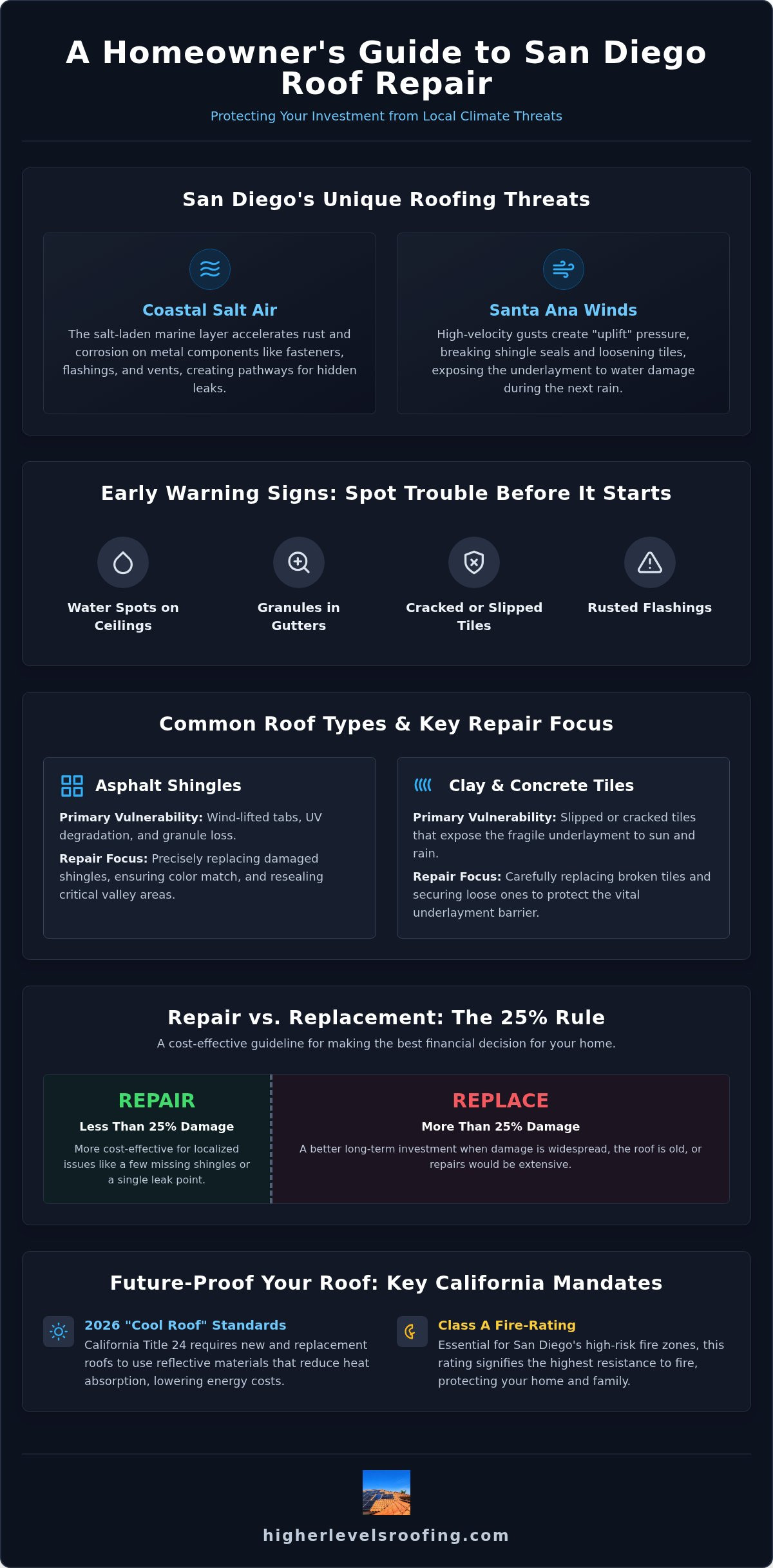
If you live in coastal neighborhoods like La Jolla or Coronado, the salt-laden marine layer is your roof's primary antagonist. This salt air accelerates the oxidation process, causing metal flashings, valleys, and fasteners to rust much faster than they would inland. When these metal components corrode, they lose their ability to divert water, leading to "hidden" leaks that often start behind the walls. We frequently see failed sealants in high-sun areas where the combination of salt and UV rays makes the material brittle and prone to cracking. Annual checks of chimney caps and vents are a simple resolution to prevent these small failures from becoming major structural issues.
Wind Damage from Santa Ana Seasons
The Santa Ana wind seasons bring high-velocity gusts that test the structural integrity of every home. These winds create significant "uplift," a force that can pull at the edges of asphalt shingles or loosen clay tiles. You might not see the damage from the ground, but "wind-lift" often breaks the adhesive seal of a shingle without blowing it off entirely. This allows the next rainstorm to drive water directly under the material. For tile roofs, these winds can cause individual pieces to chatter and shift. Proactive maintenance before the fall wind season begins is the best way to ensure your roof remains stable and secure.
Beyond wind and salt, the Southern California sun is a constant factor. Intense UV exposure gradually bakes the oils out of roofing materials, causing shingles to shrink and crack. Understanding how roof shingles deteriorate under this constant solar radiation helps homeowners recognize when their system is nearing its end of life. When the underlying felt or synthetic underlayment becomes exposed, the countdown to a leak begins.
Keep a close eye on these early warning signs to stay ahead of the curve:
Water spots on ceilings: These often indicate a slow leak that has finally saturated your insulation.
Granules in the gutters: A sign that your asphalt shingles are losing their protective UV coating.
Cracked or slipped tiles: Even one missing tile can expose the vulnerable underlayment to the elements.
Rusted flashings: Discoloration around chimneys or vents suggests the metal is no longer watertight.
Catching these issues early is the key to a successful roof repair San Diego homeowners can rely on. Being attentive to these small details now will protect your property value and ensure your home stays dry through the upcoming winter season.
Material-Specific Repairs: Shingle, Tile, and Flat Roofs
Every roofing material has a specific failure point that requires a tailored restoration strategy. A patch that works for a shingle roof will fail on a flat TPO system. Effective roof repair San Diego homeowners trust depends on identifying these nuances before the first raindrop hits your ceiling. By addressing material-specific weaknesses, you extend the life of your system and maintain your property's value.
Residential Shingle and Tile Restoration
Asphalt shingles are popular for their versatility, but they are prone to losing tabs during high winds. Restoring these systems involves more than just nailing down a new piece; we focus on resealing valleys where water volume is highest. A key challenge for homeowners is matching asphalt shingle colors to ensure the repair doesn't look like a mismatched eyesore. We use precise color-matching techniques to blend new materials with your existing roof for a seamless finish.
Tile roofs present a different challenge altogether. While the clay or concrete tiles look indestructible, they are actually just a protective shell. The underlayment beneath them is the real hero that keeps your home dry. When tiles "slip" or move, it isn't just an aesthetic problem. It exposes this underlayment to UV rays that cause it to degrade rapidly. Repairing these requires a steady hand and specialized knowledge. Professionals use specific techniques for walking on tile roofs to distribute weight and prevent further breakage. If your tiles look out of alignment, it's a sign that the system needs professional attention immediately.
Commercial Flat Roof Leak Detection
Flat roofing systems like TPO and rolled asphalt torch down require a different level of precision. On commercial properties, ponding water is the most common enemy. When water sits for more than 48 hours, it puts immense pressure on seams and penetrations. Identifying these issues early prevents the water from saturating the insulation board below.
For TPO systems, we prioritize heat-welding over simple adhesives. Heat-welding creates a monolithic bond that is significantly stronger than chemical glues. This level of detail is a hallmark of proper TPO roofing installation and long-term repair. Meanwhile, rolled asphalt systems often suffer from blisters or open seams. These must be carefully resealed using professional-grade torching or cold-applied adhesives. We pay extra attention to HVAC curbs and roof penetrations, as these are the most frequent sites for commercial leaks. If you notice standing water or bubbling on your flat roof, higherlevelsroofing.com can help you evaluate the best path forward for your specific material.
Roof Repair vs. Replacement: Making the Best Financial Choice
Deciding between a targeted fix and a complete overhaul is often the most stressful part of property ownership. We use a professional framework called the "25% Rule" to help homeowners navigate this choice with confidence. If the estimated cost of a roof repair San Diego project exceeds 25% of the total cost of a new system, pivoting to a full replacement is usually the more responsible financial move. This prevents you from sinking significant capital into a system that has already reached its structural limit.
Age and current building codes also play a massive role in this decision. As of January 1, 2026, any roof alteration affecting more than 50% of the roof area must comply with updated California Title 24 "Cool Roof" standards. If your current roof is over 20 years old, a repair might only buy you a few months of security before another issue arises. A professional assessment helps determine how much life you can truly squeeze out of different types of roofing materials before the ROI on maintenance begins to vanish.
When to Patch and When to Pivot
The decision to repair often hinges on what lies beneath the surface. We prioritize analyzing the structural integrity of the roof deck before recommending a patch. If the plywood or skip sheathing shows signs of rot or sagging, a simple shingle replacement won't solve the underlying problem. Additionally, homes with multiple layers of shingles already installed usually necessitate a full tear-off. You can't simply add a third layer; it adds too much weight and violates modern safety codes. While a patch is faster, a new system eliminates the cycle of recurring small repairs that can drain your budget over time.
Insurance and ROI Considerations
Navigating insurance adjusters is a vital step if your damage was caused by recent Santa Ana wind events or historic rainfall. A documented inspection can often bridge the gap between a denied claim and a successful settlement. Beyond immediate costs, a full roof replacement in San Diego offers substantial long-term returns. Modern "cool roofs" are designed to reflect more sunlight, which can reduce air conditioning demand by 10% to 30%.
Investing in a Class A fire-rated roof also provides a significant advantage in our fire-hazard zones. This upgrade doesn't just protect your family; it can help stabilize insurance premiums and significantly boost your home's resale value. When buyers see a new, code-compliant roof, they see a home that is secure and ready for the future. Crafting a budget for long-term protection is about more than just fixing a leak; it's about ensuring your home remains a safe, efficient sanctuary for years to come.
The Professional Roof Inspection and Repair Process
A professional inspection is far more than a quick glance from a ladder. It is a methodical investigation designed to uncover the root cause of a leak rather than just treating the symptom. Most roof repair San Diego projects we handle follow a strict four-step protocol to ensure your home remains dry and your investment is protected. This systematic approach eliminates guesswork and provides you with the clarity needed to make an informed decision.
Our process begins with a comprehensive attic and interior ceiling moisture assessment. We look for water staining on rafters and damp insulation, which often points to a leak far from where the water actually enters the living space. Once the interior is evaluated, we move to a detailed exterior walk-through. We pay close attention to valleys, eaves, and penetrations like vents and chimneys, as these are the most common failure points in our coastal environment. We then perform material testing to check for brittleness and granular loss, which are clear indicators of UV degradation. Finally, we provide a transparent, itemized estimate so you know exactly what is being fixed and why.
Advanced Leak Detection Methods
We use modern tools like moisture meters and thermal imaging to find intrusion that is invisible to the naked eye. These tools detect temperature variations that suggest trapped moisture behind flashings or underlayment. We also examine the drip edge and gutter integration to ensure water is being shed away from the fascia boards correctly. Capillary action occurs when water is pulled into narrow gaps between roofing materials against the force of gravity, often leading to leaks in seemingly sound areas. By identifying these hidden paths, we can stop a leak before it causes significant rot or mold growth. If you suspect your system is compromised, schedule a professional inspection to identify issues before they escalate.
Timeline and Project Management
Most standard roof repair San Diego projects are completed within one to two days. We understand that having contractors at your home can be stressful, so we focus on minimizing disruption to your daily routine. Our team maintains a tidy workspace and follows strict safety protocols to protect your landscaping and property. Once the technical work is finished, we perform a final safety check and a thorough debris removal process, including a magnetic sweep for stray nails. This meticulous attention to detail ensures that your roof is not only watertight but that your property is left in pristine condition.
Why Choose Higher Levels Roofing for San Diego Repairs
Finding a reliable partner for your roof repair San Diego needs shouldn't feel like a high-pressure transaction. At Higher Levels Roofing, we believe the best work comes from a foundation of transparency and meticulous attention to detail. Every project we undertake is managed with direct oversight by Carlos, our owner. This ensures that the craftsmanship remains consistent and that every shingle or tile is installed to the highest professional standards. We don't just fix leaks; we build long-term security for your family.
Our team brings deep expertise in the materials that define the San Diego skyline. Whether you have a classic clay tile roof in Mission Hills or a modern asphalt shingle system in North County, we understand the specific installation requirements for each. We avoid high-pressure sales tactics because we believe our work speaks for itself. Our goal is to provide a service-oriented experience that prioritizes your safety and property value over a quick sale. By focusing on building genuine relationships within our community, we've become a trusted name for homeowners who value accountability.
Local Craftsmanship and Accountability
Hiring a local roofing contractor in San Diego county means you are working with someone who understands our unique building codes and weather patterns. Our "neighborhood first" approach means we treat every home as if it were our own. This mindset extends to our safety protocols and the way we stand behind our finished product with professional warranties. We view every roof repair San Diego project as a contribution to the local landscape, ensuring that our work enhances both the structural integrity and the aesthetic pride of your property.
Request Your Expert Inspection Today
Securing your home for the upcoming season is a straightforward process. You can schedule a no-obligation roof assessment to get a clear, itemized understanding of your system's current health. Before our visit, we recommend clearing any vehicles from the driveway and ensuring easy access to the perimeter of your home. This allows us to perform a thorough walk-through without delays. Don't wait for a small leak to become a major structural headache. Protect your home with Higher Levels Roofing and experience the difference that dedicated, local craftsmanship makes for your peace of mind.
Securing Your Home for the Seasons Ahead
Protecting your property starts with a clear understanding of how our unique coastal environment impacts your roof's longevity. By identifying the early signs of salt air corrosion and wind-lift before the winter rains arrive, you can avoid the high costs of hidden water damage. Whether you're weighing a targeted fix against a full replacement using the 25% rule or navigating the latest 2026 building codes, making an informed decision is the key to long-term security. Professional roof repair San Diego homeowners trust is about more than just a patch; it's about meticulous craftsmanship that stands up to the elements.
Higher Levels Roofing is here to be your steady, expert hand in this process. As a licensed and locally owned business owner-operated by Carlos, we specialize in the specific needs of asphalt shingle, clay tile, and TPO systems. We focus on transparency and neighborly warmth, ensuring you never feel pressured into unnecessary work. Your home is your sanctuary, and it deserves the attention of a meticulous craftsman who values our community landscape as much as you do. Schedule Your San Diego Roof Inspection with Higher Levels Roofing today to ensure your roof is ready for whatever the forecast brings. We look forward to helping you protect your investment with confidence.
Frequently Asked Questions
How much does a typical roof repair cost in San Diego?
The final cost of your project depends on several local factors, including the material type and the height of your home. Asphalt shingles are generally different to repair than clay tiles due to the labor involved in handling fragile materials. Accessibility and the specific location of the leak also play a role. We focus on providing transparent, itemized estimates that reflect the unique requirements of your property's architecture and current condition.
Can I repair a tile roof myself if I see a cracked tile?
We don't recommend repairing a tile roof yourself because these materials are incredibly fragile. Walking on clay or concrete tiles without specialized equipment often leads to more breakage than you started with. A cracked tile is usually a symptom of a failing underlayment, which requires professional handling to ensure a watertight seal. Our team uses specific weight-distribution techniques to navigate your roof safely while protecting the structural integrity of your home.
How do I know if my roof leak is an emergency?
A leak is considered an emergency if water is actively entering your living space or contacting electrical systems. You should also watch for visible ceiling sagging or damp spots near light fixtures. These signs indicate that the interior structure is saturated and requires immediate attention to prevent mold or collapse. While we don't provide 24/7 emergency services, identifying these issues early allows us to prioritize your roof repair San Diego project during regular hours.
Will my homeowners insurance cover the cost of roof repairs?
Homeowners insurance typically covers damage resulting from sudden, accidental events like high Santa Ana winds or fallen branches. It won't usually cover leaks caused by gradual wear and tear or a lack of routine maintenance. We recommend reviewing your policy's specific exclusions regarding age and material type. Providing a detailed, professional inspection report can help your adjuster understand the scope of the damage and how it relates to recent weather events.
How long do roof repairs usually take to complete?
Most standard projects are completed within one to two days. This timeline includes the initial setup, the actual repair work, and a thorough cleanup of the surrounding property. Larger commercial projects or complex tile restorations might take slightly longer depending on the availability of matching materials. We prioritize efficient project management to minimize disruption to your daily routine while ensuring that every detail of the craftsmanship meets our high professional standards.
What happens if I ignore a small roof leak during the dry season?
Ignoring a small leak during the dry season is a risky gamble that often leads to expensive structural rot. Even without rain, San Diego's morning marine layer provides enough moisture to feed mold growth in your attic. UV rays also continue to degrade the exposed underlayment beneath a slipped tile or cracked shingle. By the time the first winter storm arrives, a minor patch could have evolved into a major structural failure requiring a full replacement.
Are there specific San Diego building codes I need to worry about for repairs?
Yes, you must comply with the 2025 California Title 24 Energy Code and local fire-hazard regulations. For any roof repair San Diego project affecting a significant portion of your roof, you may be required to use "Cool Roof" materials that reflect solar heat. Additionally, homes in fire-hazard zones must utilize Class A fire-rated materials. We stay current on all local mandates to ensure your repair is fully compliant with the latest safety and efficiency standards.
Does Higher Levels Roofing offer commercial flat roof repairs?
Yes, Higher Levels Roofing specializes in commercial flat roof systems, including TPO and rolled asphalt torch down roofing. We understand the unique challenges of commercial properties, such as managing ponding water and reinforcing HVAC curbs. Our team uses heat-welding for TPO membranes to create a stronger, more durable bond than traditional adhesives. Whether you manage a small retail space or a large warehouse, we provide meticulous repairs designed for long-term industrial performance.


Comments