


San Diego Roofing Cost Estimator: 2026 Concrete Tile & Material Guide
- Carlos Gomez
- 1 hour ago
- 12 min read

A 50-year-old tile roof isn't just a design choice; it's a strategic financial shield that often costs less than asphalt over the long haul. Most homeowners understand that a new roof is a major investment, yet the complexity of calculating a concrete tile roof cost San Diego residents can trust often leads to more questions than answers. You're likely balancing the need for a fire-rated exterior with the anxiety of meeting California's strict 2026 Title 24 energy mandates. It's a lot to manage, especially when you're trying to avoid hidden markups in coastal neighborhoods like La Jolla.
We're here to provide the professional assurance and technical clarity you need to move forward. This guide offers a comprehensive breakdown of your 2026 roofing budget, including how different tile profiles impact resale value and energy efficiency. You'll learn how to navigate the latest "Cool Roof" requirements and why underlayment is often more critical than the tiles themselves. We also walk through permit compliance and the specific material choices that stand up to Southern California microclimates, ensuring your investment is both beautiful and legally sound.
Table of Contents
Why San Diego Roofing Costs Differ from National Averages
National roofing calculators often provide a false sense of security. They use broad averages that don't account for the unique economic pressures of Southern California. When calculating the concrete tile roof cost San Diego homeowners face, you have to look beyond the price of the tiles. Local labor markets in 2026 remain highly competitive, and California's strict safety protocols require specific equipment and training that contractors in other states don't always factor in. These safety standards protect workers and homeowners alike, but they do contribute to the overall job site overhead.
Disposal and recycling mandates also set our region apart. San Diego County enforces rigorous construction and demolition recycling rules. You can't just toss old materials into a generic landfill. Contractors must document the recycling of asphalt and masonry, which adds administrative time and specialized hauling fees to your project. This ensures we keep our local environment clean, though it requires a more meticulous approach to site management than you'll find in less regulated markets.
The Impact of San Diego Microclimates on Your Bid
San Diego isn't a single climate zone. Homes in La Jolla or Carlsbad deal with relentless salt-laden air that eats through standard metal flashings in years, not decades. We recommend stainless steel or heavy-duty copper for these coastal properties to prevent premature corrosion. Conversely, inland areas like San Marcos and Escondido face intense UV exposure. Standard "economy" materials often become brittle and crack under this thermal stress. Investing in high-quality Roof tiles designed for high solar reflectance isn't just a luxury; it's a necessity for longevity in the San Diego sun. These choices ensure your home stays protected while meeting local performance expectations.
Logistics and Material Availability in Southern California
Logistics play a massive role in your final estimate. Concrete and clay tiles are exceptionally heavy, which makes shipping and delivery a significant expense. Local fuel prices in 2026 directly influence the mobilization fees required to get crews and heavy machinery to your job site. To help establish a baseline for your project, it's helpful to know that a roofing square is 100 square feet of area. This weight-to-distance ratio is why the concrete tile roof cost San Diego residents pay often reflects the logistical reality of moving tons of material across our hilly terrain. Working with a local specialist ensures these logistical hurdles are managed efficiently without unnecessary delays.
2026 Cost Breakdown: Concrete Tile vs. Clay vs. Flat Roof Systems
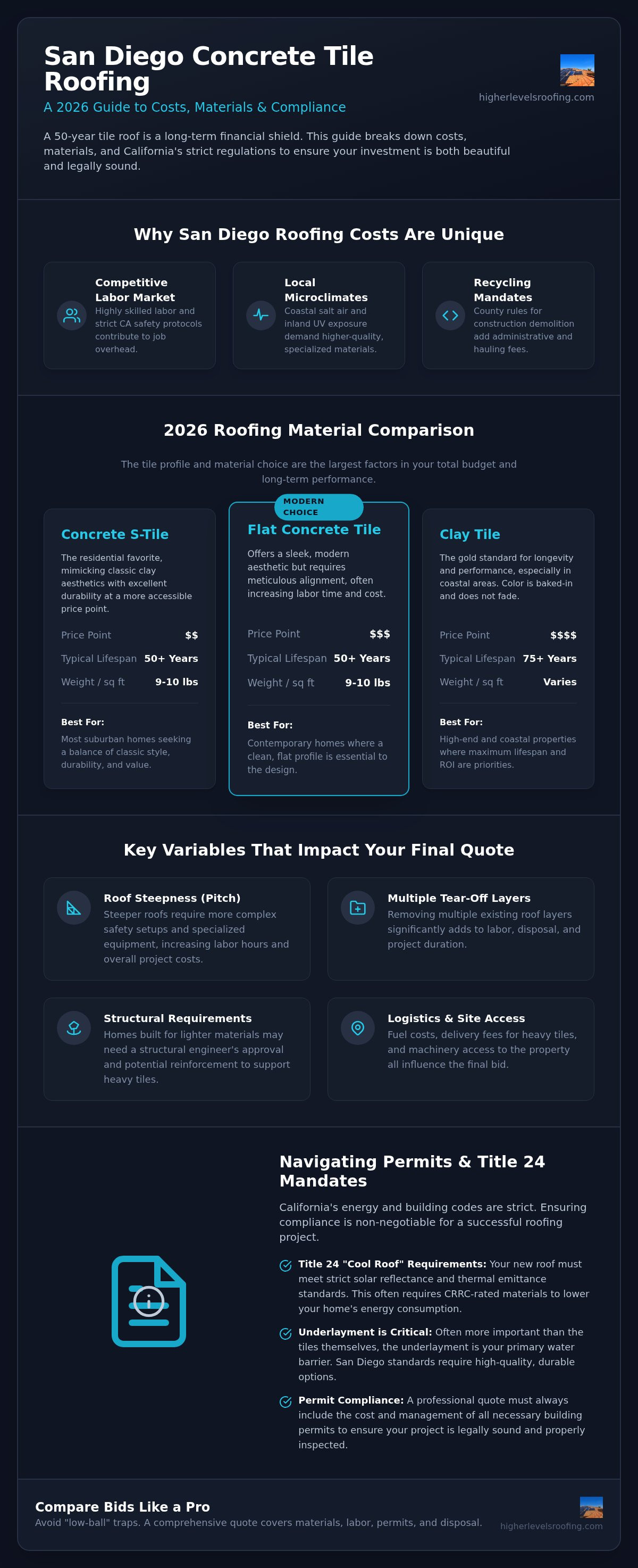
When homeowners weigh their options, the concrete tile roof cost San Diego families budget for depends largely on the profile and material weight. Concrete S Tile is a residential favorite because it mimics the classic look of clay while providing exceptional durability at a more accessible price point. It's a reliable choice for the vast majority of suburban San Diego homes. If you prefer a sleek, modern aesthetic, Flat Concrete Tile is a compelling alternative. However, flat profiles are often more labor-intensive to install because the interlocking system requires meticulous alignment. This precision adds to the installation time compared to the more forgiving S-Tile shape.
Concrete Tile Variations: S-Tile vs. Flat Profiles
Weight is a critical factor for any tile installation. Concrete tiles typically weigh between 9 and 10 pounds per square foot. If your home was originally built for lighter materials like wood shake, you might need a structural engineer to sign off on the added load. You can explore the differences in more detail in The Ultimate Guide to Roof Tiles. Our team always checks these structural requirements before starting a project to ensure long-term safety and compliance with local codes.
Clay Tile: The Gold Standard for Coastal San Diego
Clay tile is widely considered the gold standard, particularly for high-end properties in coastal areas like La Jolla. It offers an incredible ROI because a well-maintained clay system can last 75 years or more. Unlike concrete, which is often surface-dyed, clay's color is baked in. This means it won't fade under the intense Southern California sun. It also meets the most stringent Title 24 mandates for solar reflectance. Choosing a "cool" clay tile can lower your roof's surface temperature by up to 50 degrees, which significantly reduces the strain on your air conditioning during heatwaves.
Commercial and Flat Roof Costs: TPO vs. Torch Down
For commercial properties and residential flat sections, TPO and Torch Down are the primary solutions. TPO is a highly reflective membrane that's perfect for large San Diego warehouses or office buildings. It’s a specialized system that requires heat-welded seams for a watertight finish that lasts for decades. For smaller residential flat sections or additions, Rolled Asphalt Torch Down remains a popular choice for its rugged reliability and resistance to pooling water. While the initial concrete tile roof cost San Diego residents see might be higher than flat roof alternatives, each system has a specific purpose. You can see how these systems perform in our TPO Commercial Roofing in San Diego case study. If you're ready to see which material fits your vision, a professional roof assessment is the best place to start.
Structural Variables That Impact Your Final Quote
While material selection defines the aesthetic, the physical structure of your home determines the labor intensity of the project. A significant portion of the concrete tile roof cost San Diego contractors quote is tied to the "pitch" or steepness of your roof. Mediterranean-style homes, common throughout the county, often feature steep slopes that require specialized safety equipment and slower, more methodical movement. This isn't just about safety; it's about the technical challenge of securing heavy masonry on a sharp incline. Laborers must use harnesses and roof jacks, which naturally extends the project timeline.
The complexity doesn't stop at the slope. Many older San Diego homes have multiple layers of old roofing materials hidden beneath the surface. Removing these layers, known as a "tear-off," is a labor-heavy process that involves significant disposal fees at local recycling centers. If your home is a multi-story structure in a dense neighborhood with limited street access, expect additional logistical costs. Crews may need cranes or specialized conveyor loaders to get materials onto the roof safely without damaging your landscaping or neighboring property.
Measuring Complexity and Roof 'Cuts'
A roof's complexity is often measured by the number of "cuts" or intersections it has. Every valley, dormer, and skylight adds hours of precision cutting and flashing work. Simple gables are the most budget-friendly option because they allow for a straightforward installation with minimal material waste. In contrast, complex layouts require a higher "waste factor" for the tiles, as many must be custom-cut to fit unique angles. Understanding these variables helps demystify why the concrete tile roof cost San Diego homeowners receive can vary so significantly from one property to the next.
The Hidden Cost of Decking and Dry Rot
In San Diego, we frequently encounter structural issues once the old materials are removed. Our local climate and proximity to the coast create a breeding ground for dry rot and subterranean termites, both of which can compromise the integrity of your roof deck. Replacing damaged plywood or OSB is a necessary step to ensure your new tiles have a stable foundation. This is also where compliance with California's Title 24 Building Energy Efficiency Standards becomes vital, as structural repairs must meet current safety and efficiency codes. It's wise for homeowners to set aside a 10% contingency for unforeseen structural wood damage. By addressing these issues during the reroofing process, you protect your long-term investment and ensure your home remains secure against the elements for decades.
Understanding San Diego Building Permits and Title 24 Mandates
Effective January 1, 2026, California's Title 24 energy standards require any roof replacement exceeding 2,000 square feet to meet "Cool Roof" requirements. This legal mandate directly impacts the concrete tile roof cost San Diego homeowners see in their initial estimates. Materials must now feature a specific Solar Reflectance Index (SRI) verified by the Cool Roof Rating Council (CRRC). For steep-slope roofs, this usually means an SRI between 16 and 20. While these specialized materials may carry a slight premium, they're designed to reflect solar energy rather than absorbing it into your attic space.
Title 24 Compliance for San Diego Residences
Compliance is particularly beneficial for homes in inland communities like San Marcos and Escondido. A CRRC-rated "Cool Roof" can lower surface temperatures by up to 50°F during the peak of summer. This thermal efficiency reduces air conditioning demand by 10% to 30%, which helps offset the overall concrete tile roof cost San Diego residents pay by lowering monthly utility bills. You can explore how these standards apply to different architectural styles in The Homeowner’s Guide to Roof Replacement in San Diego. Modern manufacturers now offer reflective tiles in various earth tones, so you don't have to sacrifice your home's Mediterranean charm for energy efficiency.
Additionally, 2026 codes require roofs to be "solar-ready." Even if you aren't installing panels today, the roof system must be prepared for future integration. This involves ensuring the structural load-bearing capacity and flashing points are sufficient to support a solar array later on, preventing the need for costly retrofits down the road.
Navigating the Local Permitting Process
Permits are a non-negotiable part of the process in San Diego County. In 2026, residential reroofing permit fees typically range from $450 to $700 depending on your specific jurisdiction. For example, the City of San Diego averages around $600, while fees in Carlsbad often reach $700. As your contractor, we handle the entire building department paperwork and inspection schedule for you. This professional oversight is vital for your home's long-term value. Unpermitted roofing work is a major red flag that can void your homeowner's insurance policy and complicate your property's resale process. Most lenders and buyers now require a finalized permit as a condition of sale.
We take pride in managing every technical detail of your project, from Title 24 compliance to the final city inspection. If you're ready to ensure your new roof meets all 2026 standards, contact us for a professional permit and compliance review.
How to Compare Roofing Quotes in San Diego County
Comparing bids is more than just looking at the bottom line. A comprehensive concrete tile roof cost San Diego estimate should be fully itemized to prevent surprise charges halfway through the project. Professional 2026 bids must clearly list material grades, underlayment types, permit fees, and specialized disposal costs. If a quote is significantly lower than others, it's often a red flag. These "low-ball" offers often skip essential steps like Title 24 compliance or omit the cost of workers' compensation insurance, leaving you liable for on-site accidents.
Verification is your best defense against unlicensed operators. Always confirm a contractor’s standing with the Contractors State License Board (CSLB) and request proof of active workers’ comp and general liability insurance. For a deep dive into the vetting process, refer to The Ultimate San Diego County Roofing Contractor Hiring Checklist. Taking the time to verify these credentials ensures that your project is handled by a legitimate professional who follows all state and local regulations.
Vetting Your San Diego Roofing Contractor
Experience with heavy masonry is non-negotiable. Concrete and clay tiles require a specific skill set that isn't found in every general roofing crew. Ask for local references in neighborhoods like La Jolla or Scripps Ranch where tile roofs are the standard. At Higher Levels Roofing, we believe in complete transparency. Carlos and our team provide detailed, line-item estimates so you know exactly where your investment is going. This level of detail helps eliminate the typical anxieties associated with major home maintenance.
When reviewing your options, distinguish between manufacturer warranties and workmanship guarantees. A manufacturer warranty covers material defects, such as tile cracking or fading, while a workmanship guarantee protects you against installation errors. A reputable local specialist will stand behind their craft for years, providing you with long-term security and peace of mind. Make sure these guarantees are clearly defined in writing before you sign any contract.
Finalizing Your 2026 Roofing Budget
Timing can influence your final quote. While San Diego enjoys relatively mild weather, demand often spikes right before the winter rainy season. Scheduling your project during off-peak periods can sometimes lead to more flexible timelines and smoother logistics. Most professional replacements follow a standard payment schedule, typically involving a small initial deposit followed by progress payments as specific milestones are met. This structure keeps the project moving forward while ensuring accountability at every stage.
If you're ready to move from estimation to installation, we're here to help you navigate the process. Our goal is to provide a stress-free experience that leaves you with a beautiful, durable roof that meets all 2026 standards. Request a detailed, transparent roofing estimate from Higher Levels Roofing today.
Protecting Your Home for the Next Half-Century
Navigating the complexities of a major reroofing project doesn't have to be overwhelming. By understanding how Title 24 mandates and local structural variables influence the concrete tile roof cost San Diego homeowners can expect, you're already ahead of the curve. You've learned that the right material choice isn't just about curb appeal; it's about matching your home's microclimate and ensuring your structure can handle the weight of modern masonry. From coastal salt air to inland heat, your roof is your first line of defense.
As a Licensed San Diego Contractor specializing in Concrete Tile and TPO systems, we're dedicated to providing the technical expertise your project deserves. We prioritize a transparent, itemized bidding process so you can move forward with total confidence in your investment. Our goal is to ensure your home remains a safe, energy-efficient sanctuary for decades to come. When you're ready to take the next step toward a secure and beautiful home, we're here to help. Request Your Professional San Diego Roofing Estimate today. Your home's long-term security is our greatest source of pride.
Frequently Asked Questions
How much does a typical concrete tile roof replacement cost in San Diego in 2026?
The total investment for a replacement depends on your home's total square footage and the specific tile profile selected. While national averages vary, local labor rates and disposal fees in Southern California make the concrete tile roof cost San Diego homeowners pay unique to our region. Most projects are calculated per "square," which represents 100 square feet of roof area. Your final quote will also include the cost of premium underlayment and required city permits.
Does San Diego require a building permit for a tile roof replacement?
Yes, a building permit is mandatory for any reroofing project within San Diego County. Skipping this step can void your homeowner's insurance and lead to legal issues when you attempt to sell your property. In 2026, permit fees typically range between $450 and $700 depending on your specific city jurisdiction. As a licensed contractor, we handle the entire application process and coordinate all required inspections to ensure your new system is fully compliant.
What is a 'Cool Roof' and is it mandatory for my San Diego home?
A "Cool Roof" uses materials designed to reflect more sunlight and absorb less heat than standard roofing. Under the 2026 Title 24 standards, these systems are mandatory for most San Diego roof replacements exceeding 2,000 square feet or affecting more than 50% of the roof area. These requirements help lower your home's internal temperature and reduce energy consumption. We use CRRC-rated tiles that meet these strict solar reflectance and thermal emittance values for every project.
How long does it take to replace a concrete tile roof in San Diego County?
A standard residential project usually takes between 5 and 10 working days to complete. This timeline includes the initial tear-off of old materials, any necessary structural wood repairs, and the precise installation of the new tile system. Factors like roof steepness and complex architectural "cuts" can extend this duration. We always provide a clear schedule before starting work so you know exactly what to expect from day one until the final city inspection.
Which roofing material is best for San Diego coastal homes in La Jolla or Carlsbad?
Clay tile is often the superior choice for coastal properties because it's naturally resistant to salt-air corrosion and UV degradation. For homeowners considering a more budget-friendly alternative, high-quality concrete tile is also effective when paired with upgraded stainless steel or copper flashings. These specialized components prevent the premature rust that typically plagues homes within five miles of the ocean. We tailor our material recommendations to the specific microclimate of your neighborhood to ensure maximum longevity.
Can I install a new tile roof over my existing shingles to save on labor?
No, installing heavy masonry tiles over existing asphalt shingles is not a viable or legal option in San Diego. The combined weight would likely exceed your home's structural load capacity, creating a major safety hazard. A full tear-off is necessary to inspect the underlying roof deck for dry rot or termite damage. This process also allows us to install modern, high-performance underlayment, which is the most critical component for preventing leaks and ensuring your roof's 50-year lifespan.
What factors cause roofing estimates to increase after the project starts?
The most common cause for a price adjustment is the discovery of hidden structural damage. Once we remove the old roofing layers, we might find rotted deck sheathing or termite infestations that weren't visible during the initial inspection. Replacing rotted plywood is essential for a stable installation. Other variables include the need for structural reinforcements if you're switching from lighter shingles to heavy concrete tiles, as well as unanticipated fees for solar panel detachment and reinstallation.
Are there any San Diego rebates for energy-efficient or Cool Roof materials?
While direct cash rebates vary, installing a Title 24-compliant "Cool Roof" offers significant long-term financial benefits. These systems can reduce your air conditioning costs by 10% to 30%, providing a return on investment through lower monthly utility bills. Some local utility providers occasionally offer programs for energy-efficient upgrades, so it's wise to check current offerings from SDG&E. Additionally, the improved energy rating can enhance your property's market value and appeal to environmentally conscious buyers in the local market.


Comments