


Clay Tile Roof Installation Cost in Encinitas: 2026 Homeowner’s Guide
- Carlos Gomez
- 4 days ago
- 11 min read

If you knew a single home improvement could protect your property for the next fifty years while instantly elevating its coastal character, would the initial price tag still feel like a barrier? Most Encinitas homeowners recognize that clay tile is the gold standard for our Mediterranean climate. However, the variables involved in a full replacement often lead to more questions than answers. You might be weighing the higher upfront investment against cheaper alternatives or worrying about how your HOA's strict architectural guidelines will impact the final bill.
It's natural to feel some hesitation when balancing aesthetics with a long-term budget. We're here to provide the transparency you need to make an informed decision for your home. This guide explores the real-world factors driving the clay tile roof installation cost Encinitas residents see in 2026, from the necessity of marine-grade fasteners to the structural requirements of heavy tile. You'll learn how to distinguish between clay and concrete options, navigate recent local permit fee increases, and choose a system that withstands the unique challenges of our salt-air environment for decades to come.
Table of Contents
The Value Proposition of Clay Tile Roofing in Encinitas
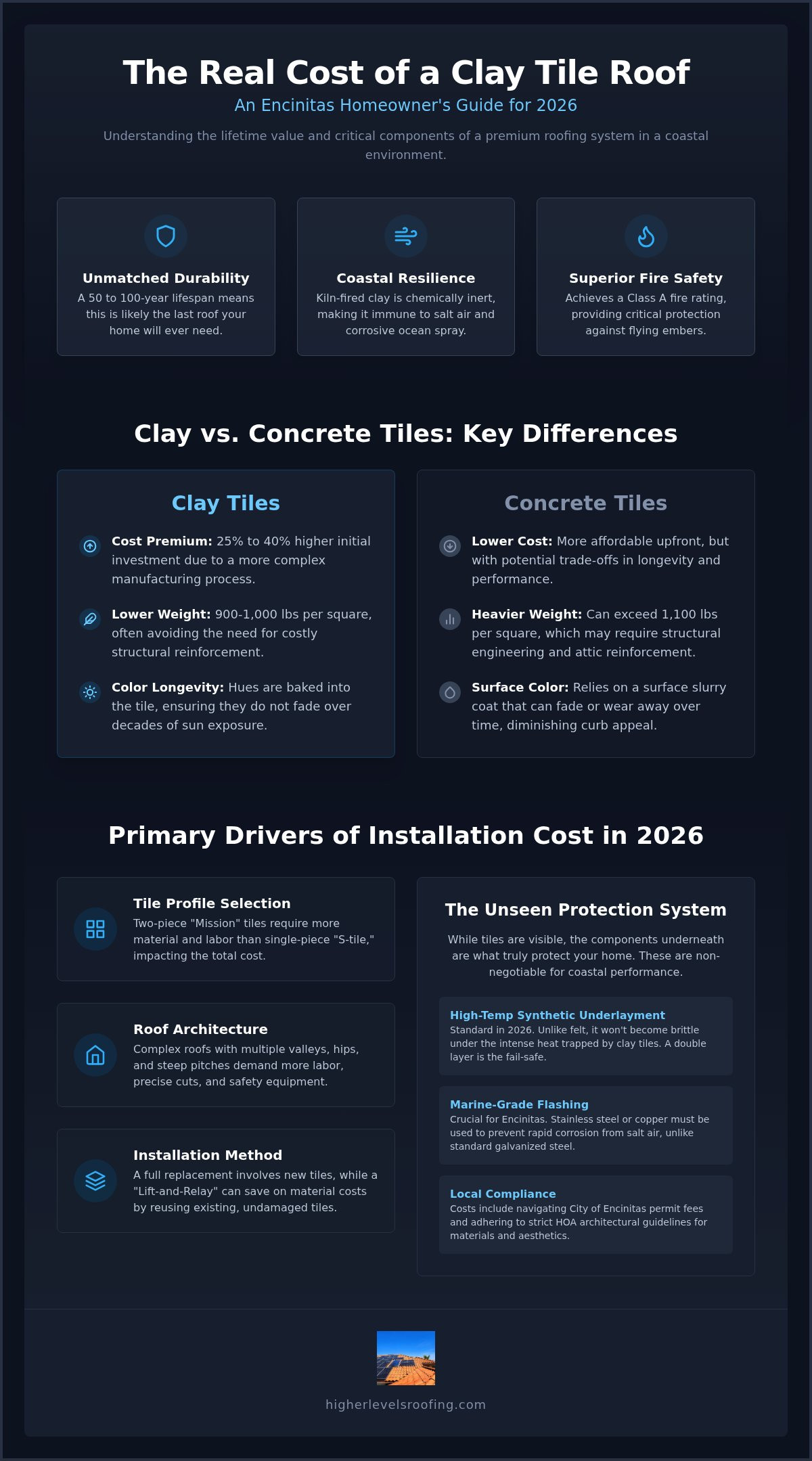
Clay tile represents the pinnacle of residential roofing in coastal California. It's a natural material, shaped from earth and fired in high-heat kilns to achieve a level of durability that synthetic products simply can't match. In neighborhoods across Encinitas, from the bluffs of Leucadia to the estates of Olivenhain, clay tile serves as the architectural signature for Mediterranean and Spanish Colonial homes. Choosing this material often increases a property's appraisal value in the 92024 zip code because buyers recognize it as a lifetime investment. While the clay tile roof installation cost Encinitas homeowners encounter is higher than asphalt, the return comes in the form of unmatched coastal performance. Salt air and high humidity quickly corrode metal fasteners and degrade shingle granules, but kiln-fired clay remains chemically inert and physically unaffected by the marine environment.
Clay vs. Concrete: Understanding the Price Gap
Many residents ask why clay commands a 25% to 40% premium over concrete alternatives. The answer lies in the manufacturing process and the physical properties of the tile. Understanding the history and characteristics of clay roof tiles reveals that they are significantly lighter than their concrete counterparts. A typical clay roof weighs between 900 and 1,000 pounds per square, whereas concrete can exceed 1,100 pounds. This weight difference is crucial for your home's structural integrity, often determining whether you'll need expensive attic reinforcements. Additionally, clay offers superior color longevity. Because the hues are baked into the tile during the firing process, they don't fade. Concrete tiles often rely on a surface slurry coating that can lose vibrancy after a decade of intense San Diego sun.
The Longevity Factor: 50 to 100-Year Performance
Investing in clay often means you're buying the last roof your home will ever need. These systems are designed for 50 to 100 years of service, which significantly lowers the annualized cost of the property over several decades. Beyond durability, clay provides a Class A fire rating. This is a vital safety feature for semi-rural zones like Olivenhain where wildfire risks are a constant consideration for homeowners. By choosing a material that resists both flying embers and corrosive ocean spray, you secure your home's future while maintaining the classic aesthetic that defines our local landscape. It's a choice that balances immediate beauty with long-term financial wisdom.
Primary Drivers of Clay Tile Installation Costs in 2026
The total clay tile roof installation cost Encinitas homeowners experience depends heavily on the specific profile of the tile selected. Two-piece Mission tiles, which consist of separate "pan" and "cover" pieces, require significantly more material and labor than a standard S-tile profile. While S-tile provides the classic wave look with a single interlocking piece, the authentic Mission style offers a depth and shadow line that many local HOAs prefer. Beyond the tile itself, the complexity of your roof's architecture plays a major role. A simple gable roof is straightforward, but most Encinitas residences feature multiple valleys, hips, and steep pitches that demand more precise cuts and additional safety staging. If your home was originally engineered for lighter asphalt shingles, we must also assess if structural reinforcement is needed to support the 900 to 1,000 pounds per square that clay requires.
Underlayment and Flashing: The Real Cost of Protection
While the tile is the most visible part of the project, it's actually the secondary water barrier that does the heavy lifting. In 2026, synthetic high-temp membranes have become the non-negotiable standard because clay tiles can trap significant heat against the roof deck. Standard felt often becomes brittle under these conditions, leading to premature failure. Double-layered underlayment acts as a critical fail-safe that ensures the internal structure remains dry even if a tile shifts or breaks over the next five decades. Because of our proximity to the Pacific, we prioritize marine-grade flashing. Using stainless steel or copper instead of standard galvanized steel prevents the rapid salt-air corrosion common in coastal zones. Adhering to the latest standards in California's building code ensures these hidden components meet the rigorous safety and "cool roof" requirements mandated for new installations.
Labor and Craftsmanship Requirements
Setting clay tile is an art form that requires a specialized skill set. Skilled tile setters are increasingly scarce in San Diego County, and their expertise is reflected in the labor portion of your estimate. This craftsmanship is especially evident in how a contractor handles "bird stops" at the eaves and custom-cut tiles at the ridges. Each cut must be precise to maintain the roof's water-shedding capabilities and aesthetic symmetry. For multi-story homes, the cost of specialized safety equipment and debris removal also factors into the final price. To get a clear picture of how these variables apply to your specific property, consider scheduling a professional site assessment with a team that understands local coastal challenges. This meticulous approach prevents the "hidden surprises" that often derail roofing budgets mid-project.
New Installation vs. Lift-and-Relay: Cost Comparison
When evaluating the total clay tile roof installation cost Encinitas homeowners often ask if they can reuse their existing tiles. This process, known as a "lift-and-relay," involves carefully removing the current tiles, stacking them safely, and replacing the underlying components. Since kiln-fired clay can easily outlast the synthetic underlayment beneath it, a relay allows you to preserve the historic look of your home while ensuring the structure remains watertight. Deciding between a relay and a full replacement isn't always straightforward. It depends on the age of your tiles, their current physical condition, and whether the specific profile is still in production for necessary replacements.
The Economics of the Lift-and-Relay
The primary appeal of a lift-and-relay is the reduction in material expenses. By avoiding the purchase of several thousand new tiles, you can allocate your budget toward premium flashing and high-performance membranes. It's important to remember that this is a labor-intensive process. Workers must handle every tile twice, which often makes labor costs higher than a standard new installation. While average tile roof costs provide a baseline, a relay requires meticulous cleaning and sorting to identify cracked pieces. Breakage rates typically range from 10% to 15% during the handling process. If your tile profile is discontinued, finding matching replacements can become a significant hurdle that adds time and expense to the project.
Full Replacement: Starting from Scratch
A full replacement is often the better choice if your roof is more than 30 years old or shows signs of widespread tile degradation. Starting from scratch allows you to upgrade to modern "Cool Roof" tiles that reflect more sunlight and improve your home's energy efficiency. This is also the ideal time to explore different types of roofing materials for accent areas or to change the color palette of your home entirely. A total tear-off includes professional debris management, which is vital in dense Encinitas residential neighborhoods. While the upfront material cost is higher, you gain the security of a full manufacturer’s warranty on every component of the system. This provides a fresh 50-year baseline for your property's protection.
Navigating Encinitas HOA and Permitting Hurdles
Replacing a roof in our coastal city involves more than just selecting materials; it requires a deep understanding of local bureaucracy. The City of Encinitas building department mandates a formal Re-Roof Permit Application for any change in material. Effective July 1, 2026, the city adjusted Planning and Engineering fees by 3.8 percent to reflect the annual Consumer Price Index. These administrative updates, along with the Development Impact Fee increase that went into effect on July 20, 2026, are small but important factors in the total clay tile roof installation cost Encinitas residents should anticipate. Working with a contractor who handles the permit submission ensures your project meets current municipal standards without unnecessary delays.
HOA Compliance in Encinitas Neighborhoods
If you live in communities like Olivenhain or the gated enclaves of Encinitas Ranch, your Homeowners' Association (HOA) likely has a separate layer of oversight. Most Architectural Review Committees (ARC) require specific color palettes and profiles to maintain the neighborhood's aesthetic character. You'll often need to submit physical material samples and technical specifications for approval before any work begins. We recommend starting this process early to avoid scheduling conflicts. Beyond the paperwork, managing neighbor expectations is a key part of local project management. A tile installation is a multi-week commitment, so clear communication about staging and noise helps maintain the neighborly warmth our community is known for.
Title 24 and Cool Roof Standards
California's building code, specifically Title 24, has strict energy efficiency requirements for 2026 that directly impact roofing choices. These standards focus on the Solar Reflective Index (SRI), which measures a tile's ability to reject solar heat. High-SRI clay tiles can significantly reduce your indoor cooling costs during our warm autumn months. While clay is naturally efficient, choosing a "cool-roof" rated product is often a requirement for passing your final inspection. Local inspectors verify Title 24 compliance by cross-referencing the Cool Roof Rating Council labels on your materials with the data submitted in your permit application.
To ensure your project meets all city and HOA requirements, request a consultation with our local compliance experts today.
Choosing an Encinitas Tile Specialist: The Higher Levels Advantage
Selecting the right partner is the final, most critical step in securing your home's future. While many companies offer general services, hiring a specialized roofing contractor San Diego County ensures that the unique technical requirements of clay are met. At Higher Levels Roofing, we approach every project with the eye of a meticulous craftsman. We understand that the clay tile roof installation cost Encinitas homeowners pay should result in a system that lasts for generations. Our team prioritizes the intricate details of flashing and valley construction, where most coastal roofs are vulnerable to salt-air intrusion. We maintain a clean, organized job site and treat your property with the respect it deserves. This neighborly approach ensures the process is as stress-free as possible for you and your family.
What to Look for in a Tile Quote
When you receive estimates, it's vital to compare the specific materials listed rather than just the final price. A low bid often masks the use of inferior underlayment or standard galvanized steel flashing that will corrode within a decade in our marine environment. Ensure your quote specifies high-temp synthetic membranes and marine-grade metals like copper or stainless steel. A comprehensive roof replacement San Diego warranty should cover both the premium materials and the precision of the installation. We provide transparent, no-pressure consultations that break down these components, so you know exactly where your investment is going. This clarity prevents the frustration that arises when a shortcut leads to a leak just a few years after completion.
Your Next Steps for a New Clay Roof
The journey to a beautiful, durable roof begins with a thorough assessment of your current structure. We offer professional drone and physical inspections to identify any structural needs or potential challenges before the project starts. This data-driven approach ensures your quote is accurate and your home is ready for the weight of premium clay. Once we establish a plan, we guide you through the methodical timeline from HOA approval to the final tile placement. Our team handles the heavy lifting of logistics and permitting, allowing you to focus on the aesthetic transformation of your home. We view every project as a contribution to the local community landscape. If you're ready to protect your investment with a system built for the coastal climate, contact Higher Levels Roofing today for a customized estimate. We look forward to being the steady, expert hand that secures your home for the next fifty years.
Securing Your Coastal Home’s Legacy
Investing in kiln-fired clay is a choice for longevity that pays dividends in both property value and peace of mind. We've explored how the clay tile roof installation cost Encinitas residents navigate is shaped by the meticulous details that happen beneath the tile. From high-temp synthetic membranes to marine-grade fasteners, these components ensure your Mediterranean-style home remains a sanctuary against the Pacific’s salt air. Navigating the 2026 permit fee updates and local HOA reviews is simply the final step in securing a 50-year legacy for your property.
As a licensed and insured San Diego specialist, Higher Levels Roofing offers a local Encinitas project portfolio that reflects our commitment to excellence. We provide a meticulous craftsmanship guarantee because we view your roof as a contribution to our shared community landscape. We're ready to guide you through a transparent, no-pressure process from the first drone inspection to the final tile placement. Request Your Custom Clay Tile Estimate from Higher Levels Roofing and take the first step toward a roof built to last. We look forward to helping you protect what matters most.
Frequently Asked Questions
How much does a clay tile roof cost per square foot in Encinitas?
The total clay tile roof installation cost Encinitas homeowners encounter depends on several variables, including tile grade and roof complexity. Factors like the coastal premium for marine-grade fasteners and recent 2026 city permit fee increases also influence the final estimate. While we don't provide flat rates, the investment reflects the material's 50 to 100-year lifespan. It's best to request a customized quote that accounts for your home's specific pitch and structural requirements.
Is clay tile too heavy for an older house in Old Encinitas?
It's possible, but a structural engineering assessment is essential before you begin. Older homes in Old Encinitas weren't always designed to carry the 900 to 1,000 pounds per square that clay requires. This is significantly heavier than standard asphalt shingles. We often find that older rafters need reinforcement or sistering to safely support the load. A professional drone or physical inspection helps determine if your home's skeleton is ready for a premium tile upgrade.
How long does it take to install a clay tile roof?
A typical clay tile installation usually takes between two and three weeks to complete. This timeline accounts for the initial tear-off, any necessary structural repairs, and the precise laying of the new underlayment and tiles. Variables like coastal weather patterns or the complexity of your roof’s valleys can impact the schedule. We prioritize job site cleanliness and community respect throughout the process, ensuring your project moves forward at a methodical and steady pace from start to finish.
Can I change from asphalt shingles to clay tile?
You can certainly make the switch, provided your home's structure is reinforced to handle the added weight. This upgrade is popular in Encinitas for its classic aesthetic and superior Class A fire rating. The process requires a new building permit and likely an HOA architectural review to ensure the profile matches neighborhood standards. You'll also need to upgrade your underlayment to a high-temp synthetic membrane, which is designed to handle the heat trapped by clay tiles.
Does clay tile roofing require maintenance?
Clay tiles are remarkably low-maintenance, but the overall system requires periodic professional inspections. We recommend a check every few years to identify cracked tiles or debris buildup in the valleys. Keeping your gutters clear and ensuring bird stops remain intact prevents water from backing up under the tile surface. While the kiln-fired clay itself won't decay, maintaining the integrity of the flashing and the secondary water barrier is what ensures the roof reaches its 50-year potential.
What is the difference between Spanish S-tile and Mission tile?
The difference lies in the installation method and the final visual profile. Spanish S-tile is a single interlocking piece that creates a classic wave pattern, offering a more efficient installation. Mission tile, or two-piece tile, consists of separate pan and cover pieces. This traditional style provides more variety in color blending and deeper shadow lines. Your choice often depends on personal aesthetic preference or specific HOA guidelines in neighborhoods like Olivenhain or Encinitas Ranch.
Will a clay tile roof lower my home insurance in California?
Many California insurers offer credits for homes with Class A fire-rated roofing materials like clay. Because clay is non-combustible and resists flying embers, it provides a safety advantage in semi-rural zones. You should contact your specific provider to see if they offer discounts for fire-resistant upgrades. Given the increasing threat of wildfires, moving to a durable, fire-rated system is a proactive step toward long-term security and potential savings on your annual premiums.
How do clay tiles handle the salt air in Leucadia?
Clay is an ideal material for homes in Leucadia because it's naturally resistant to salt air corrosion. Unlike metal or asphalt, kiln-fired clay doesn't degrade when exposed to constant marine moisture and humidity. To maximize this durability, we use marine-grade stainless steel or copper fasteners and flashing. These specialized components prevent the rust-out issues common with standard galvanized materials, ensuring your roof remains structurally sound and beautiful despite the challenging coastal environment for decades.


Comments