


7 Critical Signs You Need a New Roof in San Diego (2026 Homeowner's Guide)
- Carlos Gomez
- Aug 15
- 12 min read

Updated: 5 days ago
What if the age of your roof has less to do with the year it was installed and more to do with your specific ZIP code? In San Diego, a roof in the salt-heavy air of La Jolla faces a completely different battle than one baking in the dry heat of Escondido. Identifying the signs you need a new roof San Diego homeowners often overlook is the difference between a simple maintenance task and a catastrophic interior leak. You shouldn't have to wait for the first heavy rains of the 2026 El Niño cycle to find out your home's primary defense is failing.
We understand that the thought of a full replacement brings a wave of anxiety about high costs and complex 2026 Title 24 energy codes. It's a major investment; you want to be certain you're making the right call between a localized repair or a total overhaul. This guide will give you the clarity you need. You'll learn how to spot early warning signs specific to our local microclimates, understand how new fire hazard regulations impact your material choices, and walk away with a clear checklist to evaluate your roof's health with total confidence.
Table of Contents
Understanding the San Diego Roof Life Cycle: When 'Old' Becomes 'Risky'
In San Diego, the calendar is often a poor judge of a roof's integrity. While a home in a mild climate might see a roof last decades, our unique environmental stressors accelerate wear in ways that aren't always visible from the curb. The relentless Southern California sun delivers a high UV index year-round, which slowly bakes the essential oils out of your roofing materials. This process makes shingles brittle and prone to cracking, eventually compromising their ability to shed water efficiently.
Understanding the asphalt shingle composition and lifespan is vital for local homeowners. In our region, standard asphalt shingles typically provide 18 to 22 years of reliable service. Clay and concrete tiles can technically last 50 years; however, the organic felt underlayment beneath them often fails around the 20-year mark. When evaluating types of roofing materials for our specific climate, it's clear that durability depends heavily on the installation quality and local exposure.
Coastal vs. Inland: The Microclimate Factor
Your proximity to the Pacific Ocean drastically changes the signs you need a new roof San Diego inspectors look for during a visit. Coastal homes in areas like La Jolla face salt-saturated air that acts as a corrosive agent. It quietly eats away at metal valley liners and chimney flashings long before the shingles fail. Meanwhile, the "June Gloom" cycle traps moisture against the roof, creating a breeding ground for algae and moss that can rot organic components over time.
Inland communities like Escondido face the opposite challenge. Rapid temperature swings between blazing days and cool nights cause materials to expand and contract rapidly. This "thermal shock" pulls at fasteners and loosens seals. When the Santa Ana winds arrive, they can easily lift these weakened, brittle shingles, leaving your roof deck exposed to the elements. These microclimates mean two identical houses built in the same year can have vastly different replacement needs.
The 20-Year Threshold for San Diego Homes
If your roof is approaching its 20th birthday, it's time for a professional evaluation. This isn't just about leaks; it's about shifting industry standards. In 2026, many California insurance carriers have tightened their policy renewal requirements. They often demand proof of a roof's functional health or a full replacement once it hits the two-decade mark to mitigate the risk of water damage claims during El Niño cycles.
There's a significant difference between "aesthetic age" and "functional failure." A roof might look decent from the street, but "silent" failures like brittle underlayment or corroded fasteners mean it can no longer protect your home. Proactive monitoring ensures you aren't caught off guard when the next rainy season begins. Our team at Higher Levels Roofing focuses on these hidden vulnerabilities to ensure your home stays dry and compliant with local standards.
Material-Specific Warning Signs for Shingle and Tile Roofs
Identifying the early signs you need a new roof San Diego homeowners frequently miss requires knowing exactly what to look for on your specific material. While a leak is an obvious red flag, most roofs broadcast their failure through subtle physical changes years before the first drop of water hits your ceiling. By the time you notice interior damage, the underlying structure may already be compromised. Taking a proactive approach to these visual cues can save you from the stress of an emergency replacement during our winter rainy season.
Asphalt Shingle Deterioration Patterns
Asphalt shingles rely on a layer of mineral granules to protect the underlying bitumen from UV radiation. When you see "bald spots" on your shingles or find piles of granules in your gutters, it's a sign the material is reaching the end of its functional life. Without these granules, the sun quickly makes the shingles brittle. You might notice "clawing," where the edges curl upward, or "cupping," where the center sinks. These deformities create catch points for San Diego’s occasional high winds, making it easier for entire sections to blow away and expose your roof deck to the elements.
Tile Roofs: The 'Silent Failure' of Underlayment
Tile roofs are common in our area because clay and concrete are excellent disaster-resistant roofing materials that stand up well to heat and fire. However, the tiles themselves are rarely the cause of a leak. They act as a primary shield, but the true water barrier is the organic felt underlayment hidden beneath them. This underlayment often fails long before the tiles do. If you see tiles that have slipped out of place or notice white, crusty salt deposits known as efflorescence, it's a strong indicator that water is traveling where it shouldn't.
Don't wait for a damp spot to appear on your drywall to take action. Interior signs like peeling paint near the roofline or mysterious water stains in the attic are often the final warnings of a systemic failure. If your home is showing these symptoms, you can schedule a meticulous roof inspection to determine if a targeted repair can buy you more time or if the signs you need a new roof San Diego experts identify are already present. Our team focuses on finding these "silent" failures in tile systems to ensure your home remains secure and dry year-round.
Beyond the Shingle: Signs of Failure in Flat and Commercial Roofing
Flat roofing systems require a different diagnostic approach than their sloped counterparts. In San Diego, modern residential designs and commercial properties often rely on TPO (Thermoplastic Polyolefin) or rolled asphalt torch down roofing to manage low-slope water drainage. One of the most immediate signs you need a new roof San Diego owners should monitor is "ponding." If water remains on your roof surface 48 hours after a rainstorm, your drainage system or the structural integrity of the roof deck has likely shifted. This standing water adds immense weight and accelerates the degradation of the underlying membrane.
The primary cause of failure in these systems is seam separation. Unlike shingles that overlap, flat roof membranes are chemically or heat-welded at the joints. Over time, the intense San Diego sun causes the material to expand and contract; this eventually pulls the seams apart. Once a seam is compromised, water can travel horizontally for dozens of feet before entering your building, making the source of the leak notoriously difficult to find without a professional inspection.
TPO and Membrane Integrity
TPO is prized for its reflective properties, which help homes meet 2026 "cool roof" standards. However, its longevity depends on the integrity of its white surface. You should regularly check for punctures or tears, especially if you have had recent HVAC maintenance. Foot traffic is a common culprit for membrane damage. Additionally, look for "tenting" near the edges. This occurs when the membrane shrinks and pulls away from the parapet walls, creating air pockets that are highly susceptible to wind uplift and water intrusion.
Rolled Asphalt and Torch Down Issues
For rolled asphalt or torch down systems, the most visible sign of aging is "alligatoring." This is a pattern of deep, interconnected cracks that resemble reptile skin, caused by decades of UV exposure drying out the bitumen. If you notice blisters or bubbles on the surface, it indicates that moisture has become trapped between the layers of the roof. This moisture can boil in the summer heat, expanding the bubble and eventually rupturing the membrane. In low-slope areas with poor drainage, you might also see organic growth like moss or algae, which further traps moisture against the material and speeds up the rot of the organic components.
Identifying these failures early is the best way to avoid the high costs of structural remediation. If your flat roof is showing these symptoms, it's time to consult with a specialist who understands the nuances of low-slope systems in Southern California.
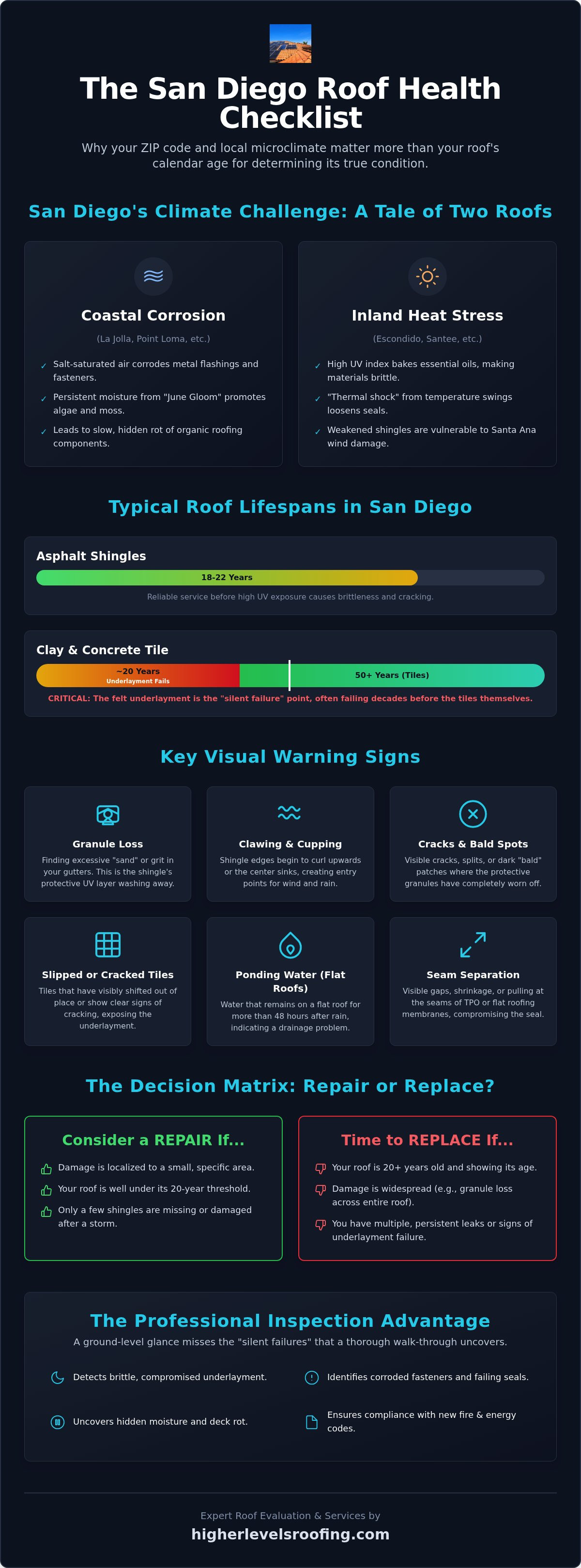
The San Diego Decision Matrix: Is it a Simple Repair or a Full Replacement?
Deciding between a targeted patch and a full replacement is often the most stressful part of home maintenance. We use the "Rule of Three" as a guiding principle for our clients. If your roof has three or more separate areas of concern, such as a leak in the kitchen, missing shingles over the garage, and cracked tiles on a valley, you're likely looking at a systemic failure rather than isolated damage. These are the clear signs you need a new roof San Diego homeowners should not ignore. From a financial perspective, we generally recommend a replacement if the total repair costs exceed 30% of the system's total replacement value. Investing heavily in an aging system often leads to "throwing good money after bad," especially as material lifespans in Southern California are dictated by microclimate stressors.
Environmental Damage vs. Structural Failure
Distinguishing between a few wind-blown shingles and pervasive rot is critical for your home's safety. You can often spot a sagging roofline from the street by looking for dips in the ridge or "waves" in the shingle courses. However, the most honest assessment happens in your attic. If you see daylight through the roof boards or notice dark, soft spots on the rafters, your structural deck is compromised. This is a non-negotiable sign that the system has reached the end of its functional life and can no longer protect your interior from the next rainy season.
The Impact of Solar Panels on Your Decision
San Diego's high density of solar installations adds a unique layer to the replacement timeline. You should never install new solar panels on a roof that is more than 15 years old. The cost to remove and reinstall a solar array just to fix a leak five years later is often prohibitive. If you're considering a transition to clean energy, it's the perfect time to consult The Ultimate Guide to Roof Tiles to find solar-compatible, high-performance options that match our local aesthetic. We often find that leaks in newer systems are specifically caused by improper solar mounting penetrations rather than the material itself. Identifying these specific signs you need a new roof San Diego experts look for ensures you don't compromise a brand-new solar investment with a failing foundation.
To get an honest assessment of your home's unique situation and avoid unnecessary costs, schedule a professional evaluation with our team today.
Protecting Your Investment: The Higher Levels Roofing Inspection Process
A ground-level estimate is often little more than a guess. While some contractors might offer a quick price quote from the sidewalk, this approach misses the critical "silent" failures that occur in valleys and behind chimney flashings. A professional walk-through is essential because it allows us to feel for soft spots in the roof deck and inspect the integrity of the fasteners. By the time the visible signs you need a new roof San Diego homeowners usually notice appear, the damage has often migrated into the structural timber. Our meticulous process ensures we identify these vulnerabilities before they become emergency repairs.
During our consultation, we carefully evaluate different types of roofing materials based on your home's specific exposure to coastal salt or inland heat. We don't just look at the surface; we examine the entire system. This includes a thorough check of your attic's ventilation and insulation levels. Poor airflow can trap heat and moisture, which essentially "cooks" your shingles from the inside out and voids many manufacturer warranties. A healthy roof requires a balance of intake and exhaust to reach its full life expectancy in our Southern California climate.
What a Meticulous Roof Inspection Uncovers
Our inspections focus on the hidden components that keep your home dry. We prioritize evaluating the flashings, vents, and valleys; these are the areas where 90% of leaks originate. By using moisture detection tools, we can often find the source of a leak that has traveled far from its entry point. Once the inspection is complete, we provide a detailed report. This documentation is invaluable for insurance claims or real estate transactions, as it offers a clear, professional assessment of the roof's functional age and remaining service life.
Planning Your San Diego Roof Project
If the signs you need a new roof San Diego experts identify are present on your home, the next step is a structured plan for replacement. We coordinate our projects around the local rainy season to ensure your home is never left vulnerable to a sudden storm. This planning phase also includes selecting materials that comply with your neighborhood's aesthetic requirements and HOA rules. Whether you need a fire-resistant clay tile or a modern, energy-efficient TPO system, we guide you through the selection process with transparency.
Transitioning to a full roof replacement in San Diego shouldn't be a source of anxiety. Carlos and the Higher Levels team take pride in maintaining a clean job site and providing clear communication from the initial inspection to the final walkthrough. We view every project as a contribution to our community's safety and curb appeal. When you're ready for an expert hand to secure your home's future, we are here to provide a steady, professional solution.
Secure Your San Diego Home’s Future with a Proactive Plan
Your roof is the primary shield against the unique environmental pressures of Southern California. Whether you are managing the salt air of the coast or the intense UV exposure of our inland valleys; recognizing the specific signs you need a new roof San Diego experts identify is essential for long-term safety. By understanding the "Rule of Three" and the impact of the 2026 Title 24 energy codes, you can make an informed decision before the next El Niño cycle begins.
Don't leave your property's integrity to chance with a ground-level guess. As licensed and insured San Diego roofing specialists, our team brings deep expertise in asphalt, tile, and TPO systems to every project. We are locally owned and operated with a focus on meticulous craftsmanship and transparent communication. We view every home as a vital part of our community and treat it with the care it deserves.
Schedule Your Meticulous Roof Inspection with Higher Levels Roofing Today
Taking action now ensures your home remains a dry, energy-efficient sanctuary for years to come.
Frequently Asked Questions
How long does a typical roof last in San Diego?
A typical asphalt shingle roof in San Diego lasts between 18 and 22 years; however, your specific microclimate plays a major role in that timeline. Homes in coastal areas like La Jolla may see faster corrosion of metal components due to salt air, while intense inland heat can make shingles brittle sooner. Clay and concrete tiles can last 50 years, but the critical underlayment beneath them often requires replacement after 20 years to maintain a water-tight seal.
Can I just layer new shingles over my old ones to save money?
While "reroofing" by layering shingles was once common, it's generally not recommended for San Diego homes today. Adding a second layer traps heat, which shortens the life of the new shingles, and adds significant weight to your structure. More importantly, it prevents a thorough inspection of the roof deck for rot and may not comply with the strict 2026 fire-rating and Title 24 energy requirements mandatory in many local zones.
Will my homeowners insurance cover a new roof if it's just old?
Homeowners insurance typically covers sudden, accidental damage from events like fire or severe storms, but it doesn't cover replacement due to age or wear and tear. In 2026, many California insurers have implemented stricter guidelines, often requiring a professional inspection or replacement for roofs exceeding 20 years to maintain coverage. Proactive maintenance is considered a homeowner responsibility rather than an insurable loss under standard policies.
How do I know if my roof leak is an emergency?
A roof leak becomes an emergency if it threatens your home's structural integrity or the safety of its occupants. Look for signs like a sagging ceiling, water dripping near electrical panels or light fixtures, or large-scale interior flooding. If you notice these issues during a heavy storm, it's vital to clear the area and contact a professional to assess the stability of the roof deck and prevent further structural compromise.
Is it better to repair or replace a tile roof with slipped tiles?
The decision depends entirely on the condition of the underlayment. Slipped or cracked tiles are often the visible signs you need a new roof San Diego experts use to identify systemic underlayment failure. If the felt beneath the tiles is brittle or rotting, simply replacing the tiles won't stop water intrusion. A professional walk-through can determine if a localized repair is sufficient or if the system requires a complete "lift and reset" to be effective.
How much does a roof inspection cost in San Diego?
Roof inspection costs in San Diego vary based on the size of your home, the roofing material, and the depth of the report required. A standard maintenance inspection is different from a certified report needed for a real estate transaction or an insurance claim. Many local contractors provide a professional evaluation as part of a project consultation to help you understand your roof's current health and remaining functional lifespan without guesswork.
What happens if I ignore a small roof leak during the summer?
Ignoring a small leak during the dry summer months often leads to more expensive structural damage later. Even without heavy rain, moisture from "June Gloom" or high humidity can promote mold growth and wood rot in your attic space. By the time the winter rains arrive, a small, manageable leak can turn into a major failure that damages your insulation, drywall, and electrical systems, resulting in much higher repair costs.
Do I need to remove my solar panels for a roof inspection?
You don't need to remove your solar panels for a standard roof inspection. An experienced inspector can evaluate the visible portions of the roof and check the attic space for signs of leaks around solar mounting penetrations. If the inspection reveals that the underlying material has failed, the panels will typically need to be professionally removed and reinstalled during the subsequent roof replacement process to ensure the new system is properly sealed.


Comments